Start With Material, Gas and Cut Quality
Thin mild steel, stainless steel and aluminium do not all ask for the same nozzle. A smaller bore can give a tighter gas column, while a wider bore gives more tolerance when conditions are less forgiving. The trade-off is always between cut focus and process margin.
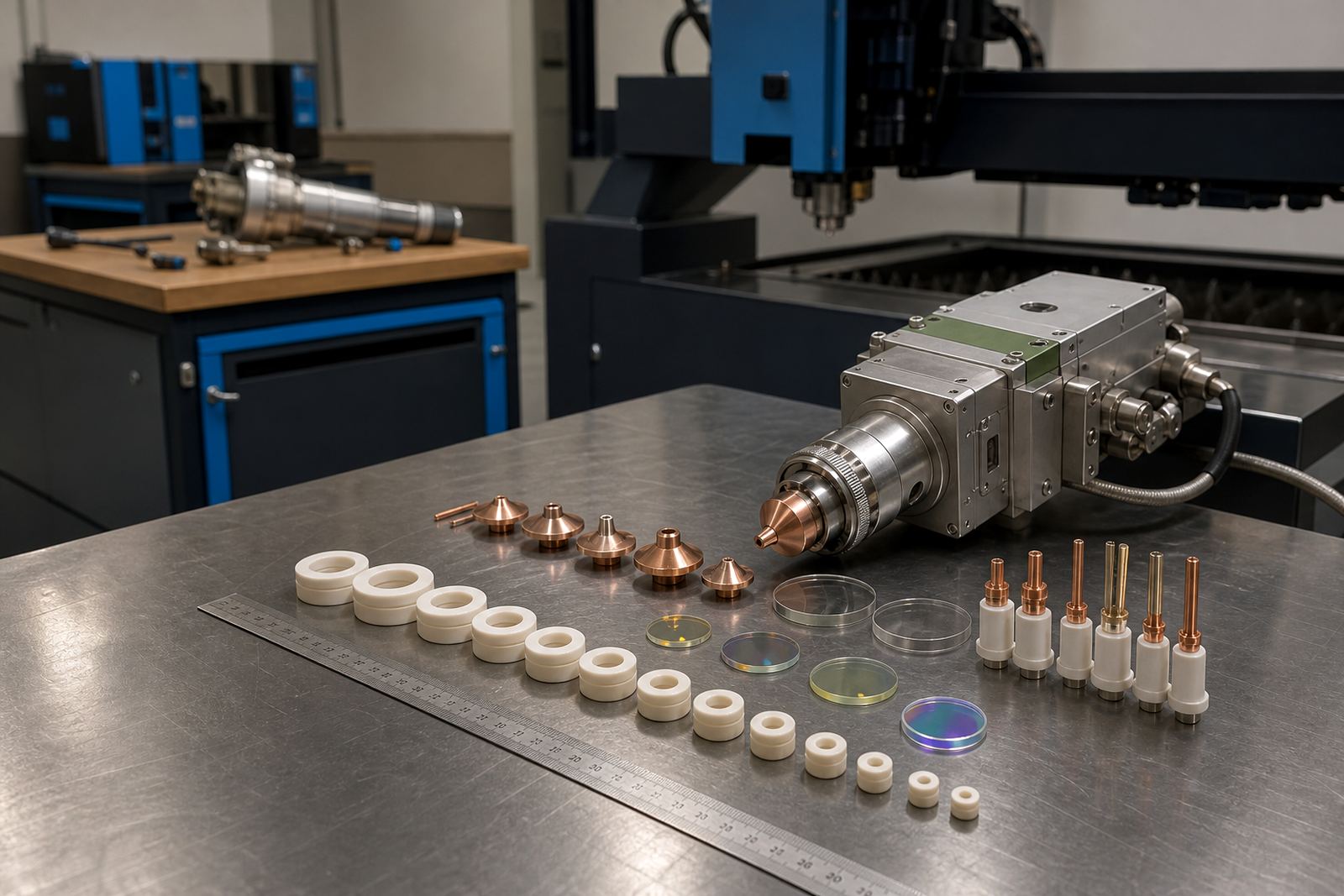
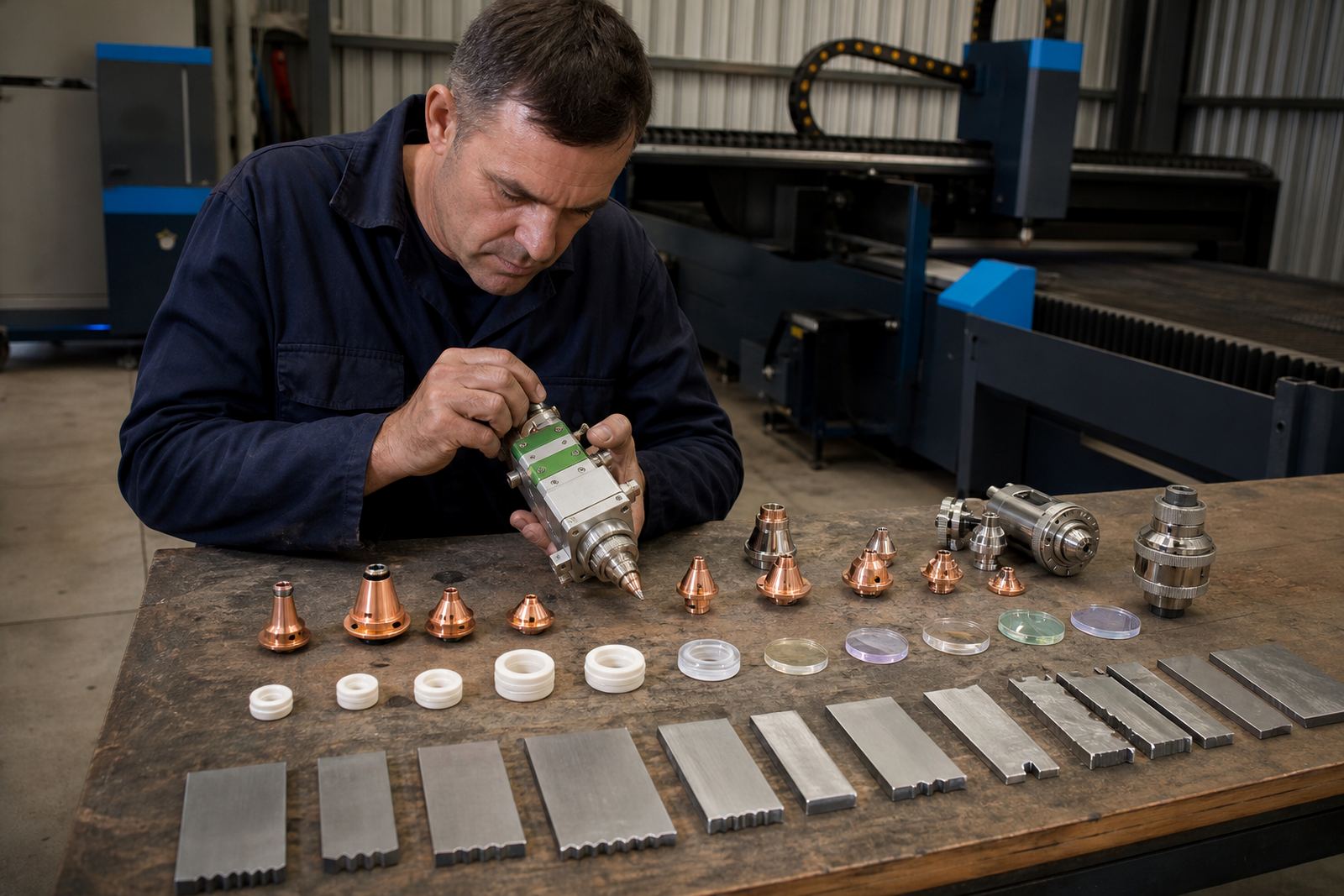
Single layer nozzles are commonly used where the gas stream needs a neat, direct path. Double layer nozzles are often selected when the setup benefits from a more stable gas flow and a little more tolerance around heat and spatter. Neither is automatically better, because the job decides that.
What Single Layer Nozzles Usually Suit
Single layer nozzles are often preferred on cleaner cutting runs, especially where the material and pierce settings are already well controlled. They can work well on finer work, small features and parts where the kerf must stay narrow and the edge must hold detail.
- Useful where gas flow needs to stay concentrated
- Often chosen for thinner sheet and tighter features
- Needs careful centring and a clean nozzle face
- Less forgiving if the head is slightly off set
If the nozzle is used with a worn ceramic ring or a dirty protective window, the cut quality can fall off faster than expected. A clean path through the head matters as much as the nozzle bore itself.
Where Double Layer Nozzles Earn Their Place
Double layer nozzles are a common choice when the cut needs steadier gas delivery and a little more breathing room around the process. They are often used where piercing is demanding, or where the machine is running heavier sheet and the operator wants more process stability.
They can help when edge drag, spatter or intermittent cut quality starts showing up during a shift. That said, a double layer nozzle will not fix poor focus, a damaged seal or a bent head. It works best when the full cutting stack is in order.
- Often used for heavier plate or tougher pierce conditions
- Can give a more stable gas column
- Useful when cut consistency matters more than fine detail
- Needs matching settings for standoff and pressure
Bore Size, Standoff and Focus Must Match
Nozzle bore choice is tied to focus position, standoff height and the gas recipe. A bore that is too small can choke the flow and show rough edges, while one that is too large can loosen the cut and push dross back onto the part. The right answer is usually found in the material thickness and the cut finish you are chasing.
Capacitive height sensing must be behaving properly, because a noisy sensor or poor calibration changes standoff from part to part. If the head is not sitting square, even a good nozzle can cut badly. Focus settings and nozzle size should be checked together, not separately.
A Clean Changeover Routine Pays Off
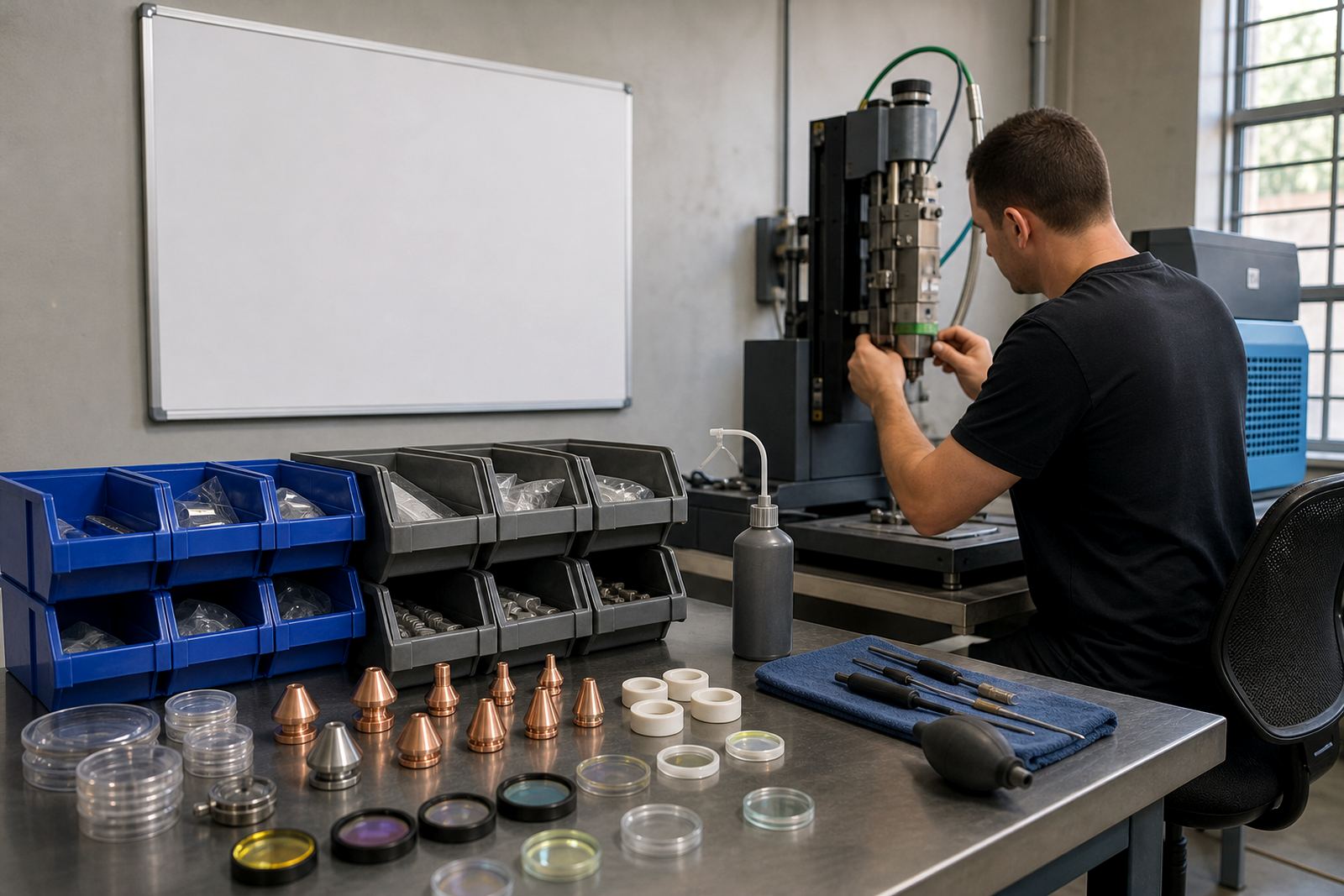
Whenever a nozzle is swapped, the face should be checked for marks, heat tint and spatter. A quick wipe is not enough if the bore has carbon build-up or the tip has been knocked. Cleaning should be careful and dry, with no rough tools that widen the bore.
- Inspect the nozzle bore under light before fitting
- Check the ceramic ring for cracks or heat damage
- Look at the protective window before chasing other faults
- Confirm the nozzle seats fully and straight
- Recheck the cut after any change in material or gas
On jobs around Spartan, Kempton Park and the East Rand we often find nozzle problems sitting next to lens contamination or a tired seal. The fault shows up as a cut issue, but the cause can be higher up in the head.
When Bench Service or On-Site Alignment Makes Sense
If the machine keeps drifting out of cut even after a fresh nozzle, the head may need bench service or on-site alignment. That can include nozzle centring, focus setting check, protective window replacement, lens cleaning, ceramic ring replacement, capacitive sensor check and gas path inspection. Crash damage inspection is worth doing too when a head has taken a knock.
For sheet-metal shops in Johannesburg, Pretoria, Durban, Cape Town and Rustenburg, the aim is simple enough: keep the cutting head straight, match the consumables, and keep the gas route clean so the nozzle can do its work. A good nozzle only performs properly inside a head that is set up square.
Use This Quick Selection Check
- What material are you cutting most often
- Which assist gas are you using on that job
- Do you need tighter detail or steadier pierce behaviour
- Is the head clean, aligned and centred at the nozzle
- Are the lens, window and ceramic ring in good order
If the answer to any of those is uncertain, start with inspection before changing nozzle type. That saves time and avoids chasing a cut problem that lives somewhere else in the head.