What nozzle centring covers on a fibre head
Nozzle centring is the check that places the nozzle aperture in line with the optical axis and the gas stream. When that alignment drifts, the assist gas leaves the tip unevenly and the cut can show striations, rougher lower edges or a wider kerf than expected. We work on fibre laser cutting heads used for mild steel, stainless steel and aluminium sheet, with the nozzle type matched to the job and the gas used.
Our workshop in Spartan, Kempton Park handles single layer and double layer nozzles, along with the ceramic ring, focus setting check and the condition of the head seat. Where the head has seen a small crash or a heavy slag build-up, centring is only part of the fix, so we inspect the full tip area before sending the assembly back into service.
- Nozzle centring for single layer nozzles
- Nozzle centring for double layer nozzles
- Tip seat inspection and cleaning
- Gas path check around the nozzle zone
- Head seal and ceramic ring condition review
How we set the nozzle true
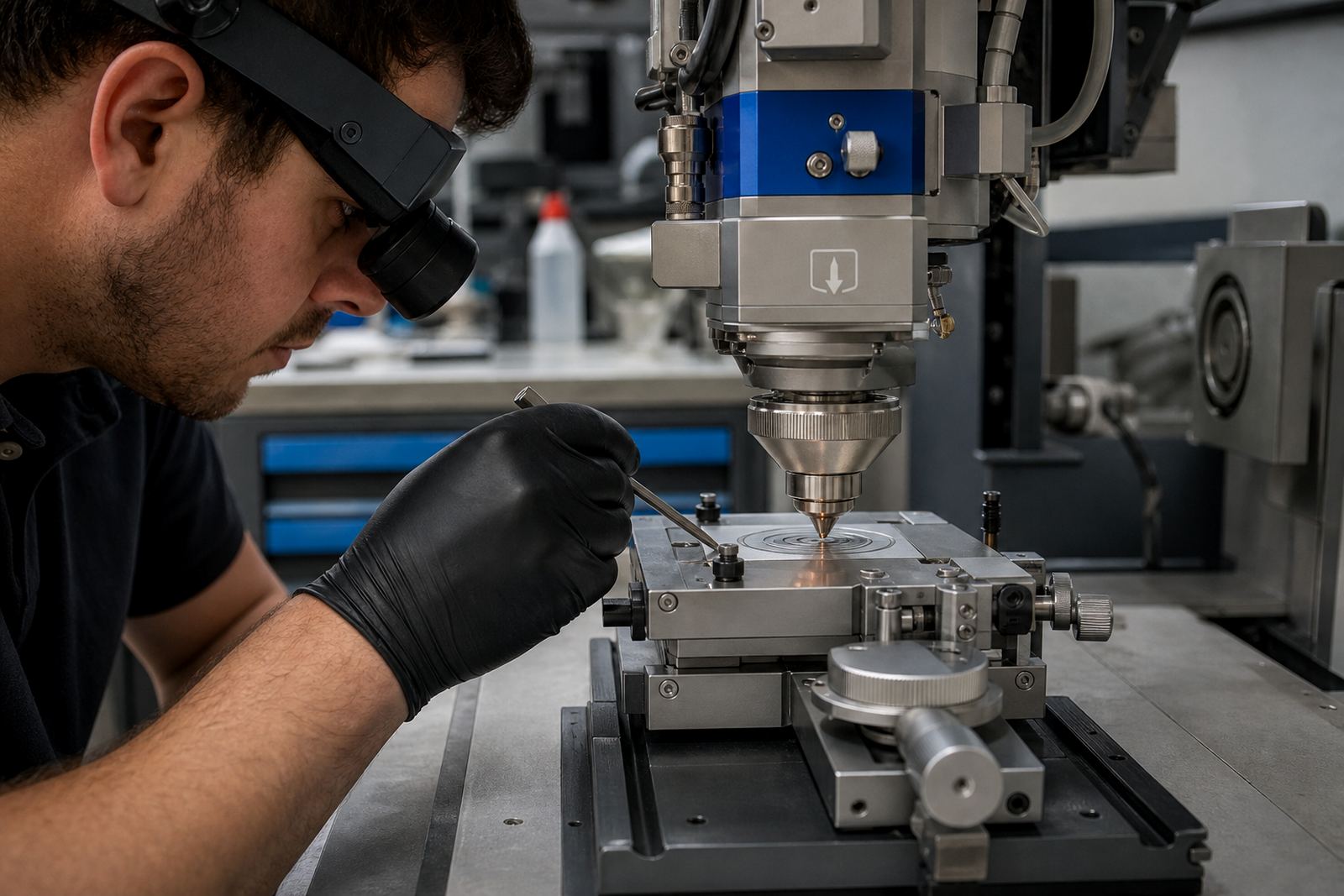
The process starts with removal of the head or the nozzle assembly, then a visual check for burrs, dents and heat marks. We clean the mating faces, inspect the thread or clamp surface, and check that the ceramic ring sits squarely. From there the nozzle is measured and adjusted so the opening sits concentric with the beam path and the gas flow leaves without a side bias. If the head uses capacitive height sensing, we also look at the sensor face and the surrounding stack-up because poor sensing can mask a centring problem.
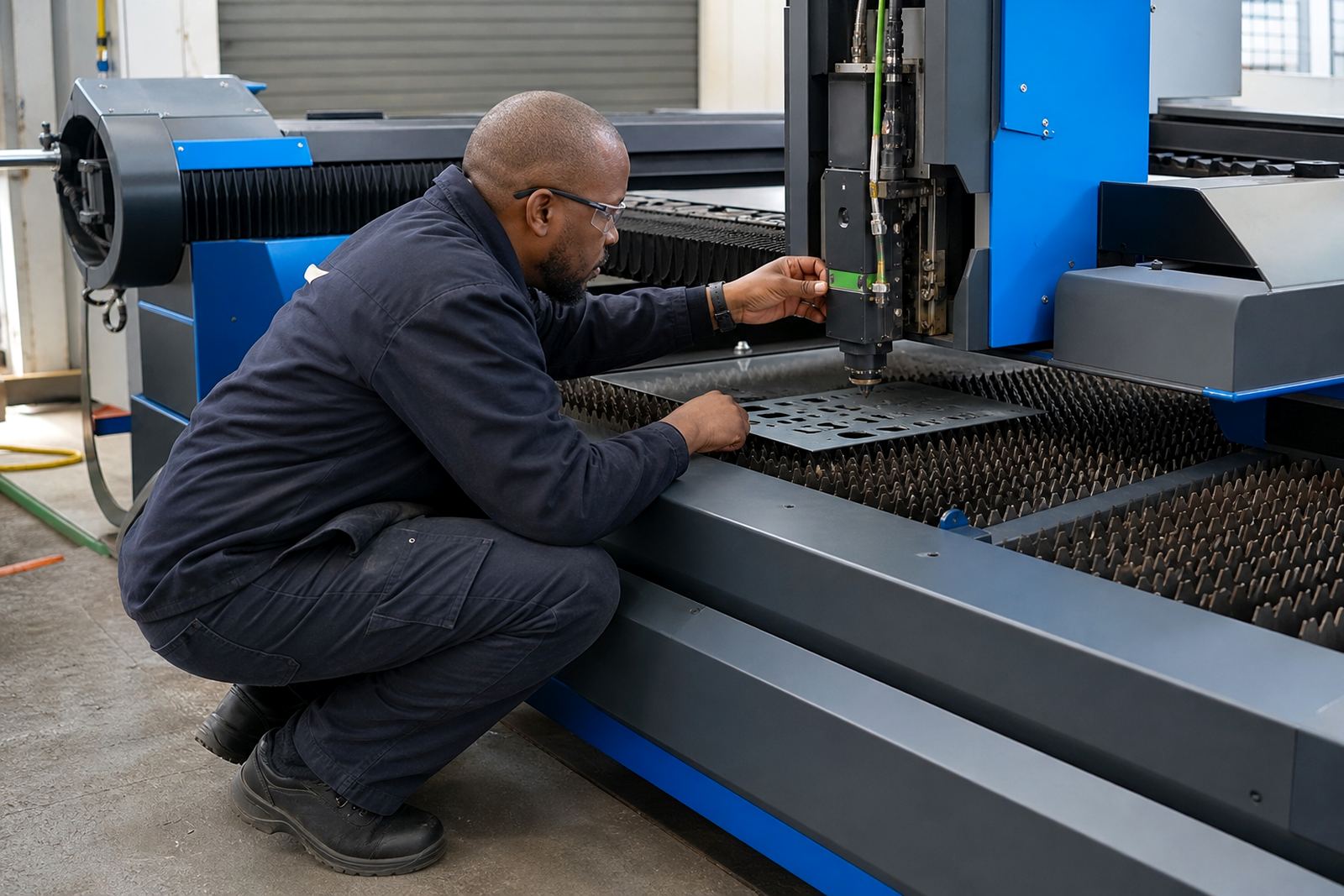
On the bench, Jaco Essop checks the head under controlled conditions and verifies the focus position against the cutting setup. On site, Lerato Tau handles the alignment work at the machine, which helps when the issue is linked to mounting, vibration or a head that has drifted after a collision. The aim is not just a neat-looking nozzle, but a usable cut edge at the thickness the shop actually runs.
- Bench inspection and centring measurement
- Cleaning of seating surfaces and nozzle area
- Adjustment of the nozzle position
- Verification of focus setting and head seating
- On-site alignment where machine conditions affect the result
Signs the nozzle is out of line
Most shops notice nozzle problems through the cut, not the head itself. The machine may pierce, but the edge shows uneven dross, extra spark scatter or a corner that burns heavier on one side. In thinner stainless, a small centring error can show up as inconsistent edge shade or a weak pierce at higher speed. On thicker mild steel, the gas stream may drag slag to one side and leave more rework at the bench.
A bent nozzle, a dirty ceramic ring or a focus point that has shifted can all look similar from the outside, so we check the full assembly instead of replacing parts one by one. Where the cut problem comes and goes across shifts, the fault is often a mix of nozzle wear, dust inside the head and a slight alignment drift after cleaning or handling.
- Uneven dross on one side of the kerf
- Rough lower edge after cutting
- Weak pierce on repeat jobs
- Scatter marks around the cut face
- Inconsistent results after nozzle changes
Workshop service and on-site support
Some heads are best sent in for a proper bench service, especially when the nozzle seat, protective window area or lens stack needs attention. That gives us room to check the focus and collimator lenses, clean the optical path, and confirm the centring under steadier conditions. If the machine is hard to move or the problem comes from the mounted head position, on-site service in Johannesburg, Pretoria, Durban, Cape Town, Rustenburg or the East Rand is the better choice.
Our team prepares the parts and the head for the setting the shop uses, rather than treating every machine the same. A cut on 1.5 mm mild steel does not ask for the same nozzle behaviour as a heavier stainless run, and a high-pressure nitrogen job needs different care from an oxygen cut. That is why the service notes focus on the actual sheet thickness, gas type and head condition on your machine.
- Bench service for stripped, dirty or damaged heads
- On-site alignment for mounted heads
- Checks on focus lens, collimator lens and protective window condition
- Gas path inspection around the nozzle zone
- Spare head preparation where downtime planning matters
Pricing is tied to the work, not a flat guess
Nozzle centring is charged based on the head condition, how much cleaning is needed and whether the work is done on the bench or at your plant. A head that only needs centring and a quick clean is different from one that also needs a ceramic ring, seal work or protective window replacement. That keeps the quote tied to the real job, not a loose estimate built before the head is seen.
We also factor in whether the issue is isolated to the nozzle or linked to the wider optical stack. If the focus setting check shows a drift, or the capacitive sensor is not reading cleanly, the service scope changes. For sheet-metal shops, that is usually the sensible way to plan spend, because the cut result depends on the whole path from the beam to the gas exit.
- Bench or site service affects the scope
- Parts use is based on actual wear
- Extra checks are added when the head shows damage
- Work is matched to the cutting application and material range
Aftercare once the centring is corrected
After the nozzle is centred, we talk through the handling points that protect the setup without turning the job into something delicate. Keep the seating faces clean, handle nozzles with care and avoid finger marks on optical parts. If the head has recently been opened, the first few cuts should be watched for edge condition, pierce shape and any change in gas sound at the nozzle. That gives the shop a clear read on whether the alignment held under the machine’s normal rhythm.
We also note any parts that should be kept on hand, such as spare nozzles, ceramic rings or a protective window for the head model in use. When the machine runs in dusty conditions or on long cutting shifts, a clean lens path and a sound gas path help the centring hold its value. Willem Pretorius and Anele Daniels handle the technical and parts side of that conversation, so the handover stays practical rather than vague.
- Keep seating faces clean after nozzle changes
- Watch the first cuts for edge and pierce changes
- Handle ceramic rings and nozzles without scratching the contact surfaces
- Track any change in gas sound or cut behaviour
Key facts
| Service area | Spartan, Kempton Park with on-site coverage across Johannesburg, Pretoria, Rustenburg, the East Rand, Durban and Cape Town |
|---|---|
| Compatible heads | Fibre laser cutting heads for sheet-metal cutting machines |
| Nozzle types | Single layer and double layer nozzles |
| Related checks | Focus setting, capacitive sensor, gas path, ceramic ring and head seal |
| Common materials | Mild steel, stainless steel and aluminium sheet |
| Service formats | Bench servicing and on-site alignment |