
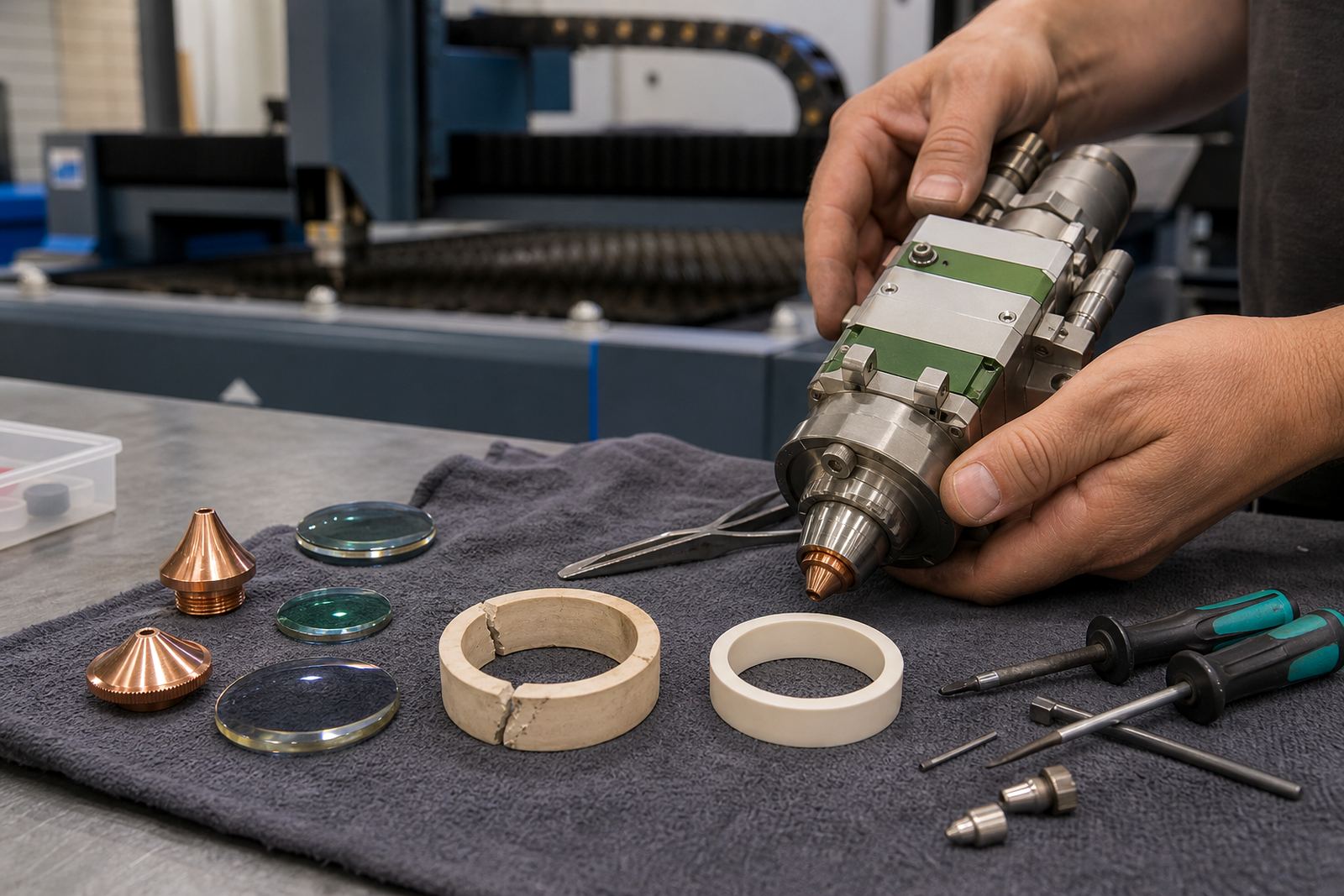
The ceramic ring inside the head keeps the cutting head aligned and insulated during laser cutting.
We look for cracks, burnt edges, loose fitment, distorted seating surfaces and tracking marks around the head body. If the ring has been stressed after a collision, the nozzle may still screw in but it will not sit true, and that can show up as uneven kerf, poor pierce starts or sensor drift.
- Cracked or chipped ceramic ring replacement
- Nozzle seat inspection and clean-up
- Capacitive sensing contact check
- Related gas path and seal inspection
What our ceramic ring replacement includes
The service is practical and measured. We strip the affected section, inspect the mounting face, remove carbon and fine metal dust, fit the correct ceramic ring size and check that the nozzle sits true after reassembly. If the head has signs of impact, we add a closer look at the nozzle threads, ceramic holder, seal surfaces and any nearby window contamination.
We also check the head for common causes of repeat ring damage. These usually include crash marks, a bent nozzle seat, debris inside the shroud area or a sensing issue that has been ignored for too long. If the ring failed because the head took a knock, that needs to be found before the next cut starts shifting again.
- Removal of the damaged ceramic ring
- Fitment of the correct replacement ring
- Inspection of nozzle seating and thread condition
- Cleaning of contact faces and sensor area
- Check for collision damage or distorted seating
How the job is handled on the bench
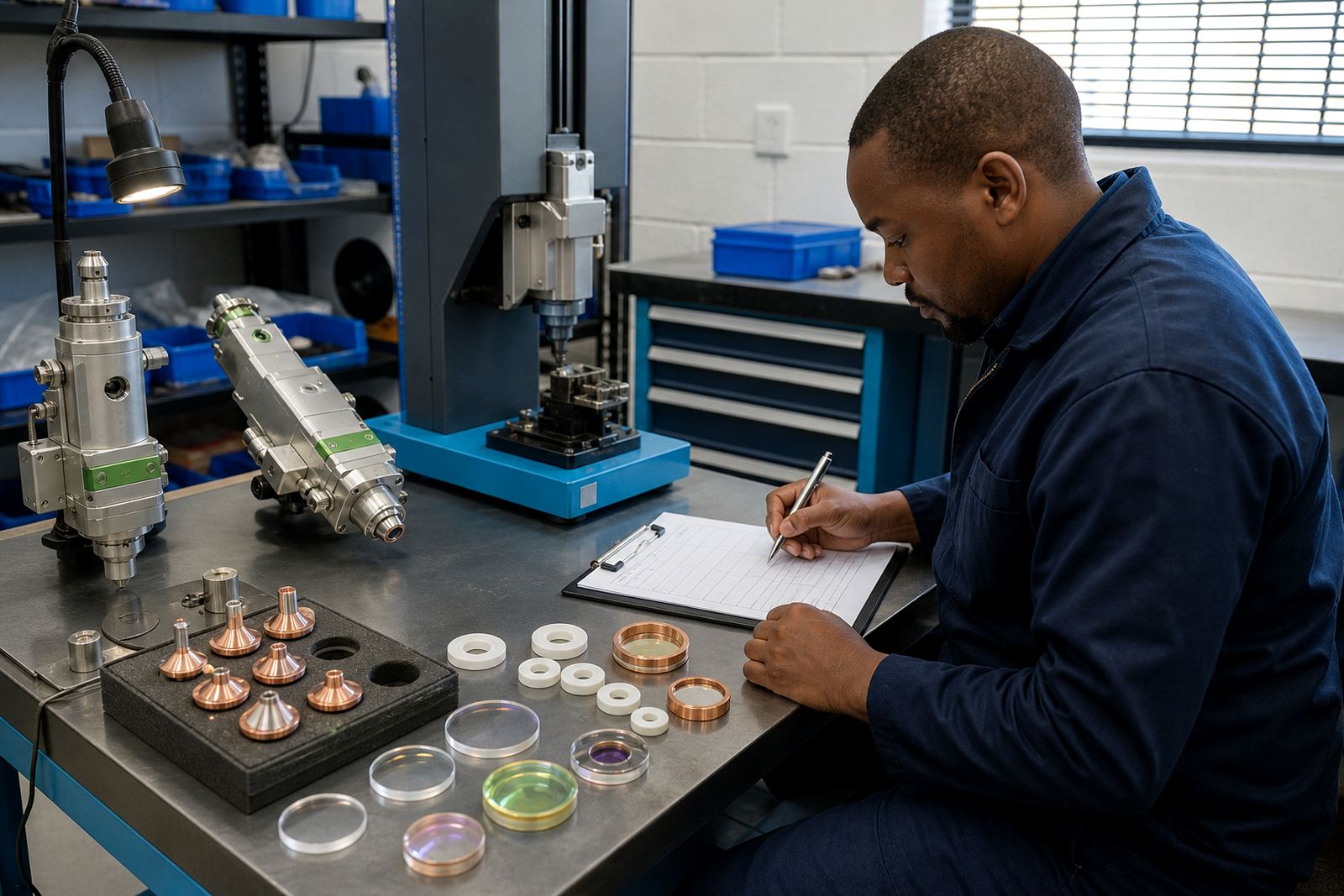
For heads that come through our Spartan bench service, the process starts with a physical inspection under proper light and magnification. We separate the parts carefully so that the focus lens, collimator lens and protective window are not exposed to unnecessary handling. That matters on sheet-metal machines where dust and metal fines travel further than people expect.
Once the damaged ring is removed, the seating surfaces are cleaned and checked for burrs, pitting or heat marks. We then fit the new ceramic ring, confirm alignment at the nozzle end and test for stable engagement with the sensing system. If the head has a head seal issue or a dirty gas path, we note it before the assembly goes back into service.
- Bench strip and visual inspection
- Cleaning of the ring seat and adjacent faces
- Replacement and refit of the ceramic ring
- Final fit check for nozzle centring and stability
On-site replacement and alignment where the machine stands
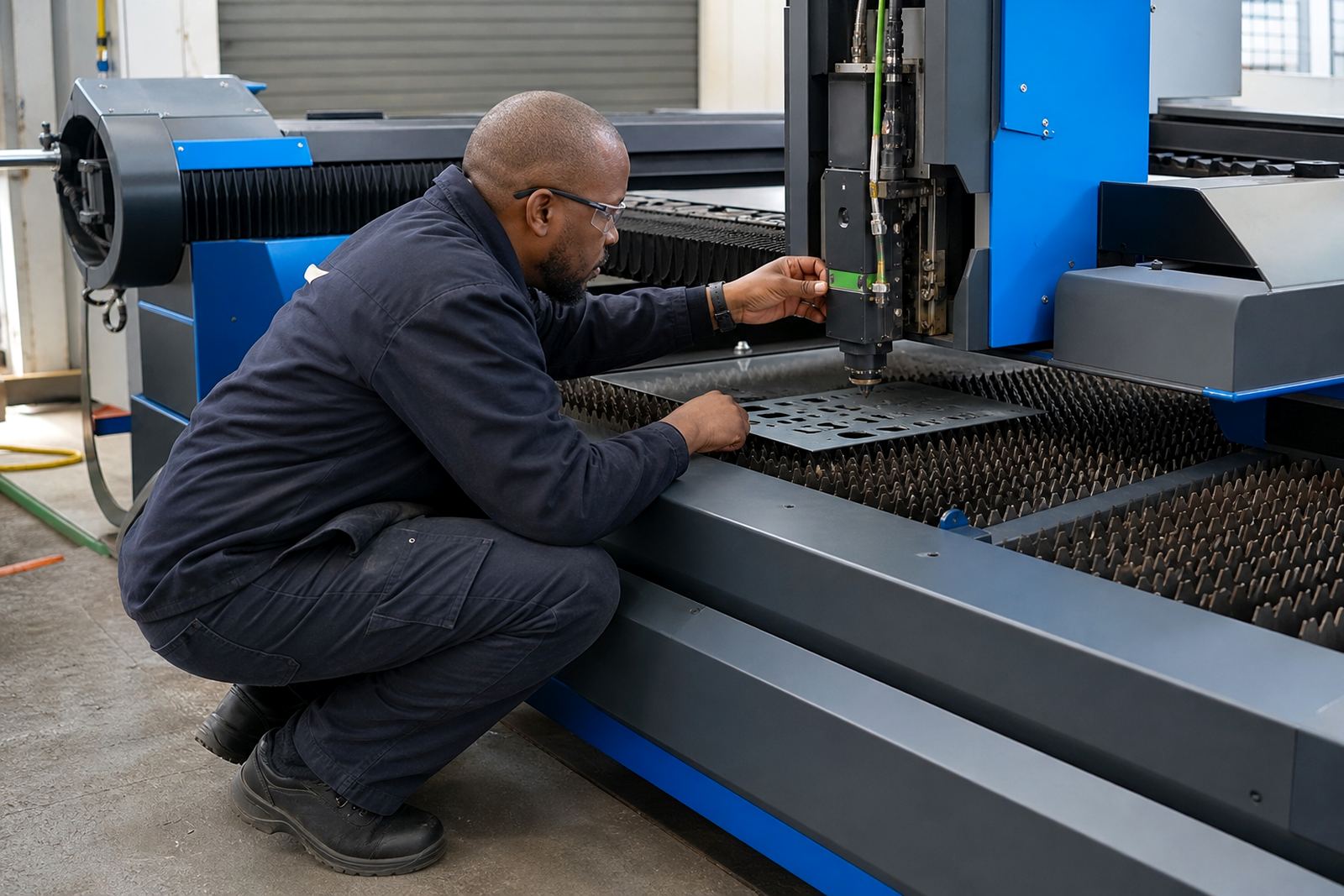
Some heads are best dealt with on site, especially when moving the machine is not practical or when the fault relates to gantry alignment. We service and align cutting heads in Johannesburg, Pretoria, Rustenburg, the East Rand, Durban and Cape Town and surrounding industrial areas, with the same attention to fit and sensing that we use in the shop.
On site we first confirm the fault, then check whether the ceramic ring problem is linked to nozzle centring, focus setting or capacitive sensor behaviour. If the head took a crash, we inspect the surrounding parts before replacing anything. A fresh ring only helps when the rest of the seat is sound, otherwise the machine keeps drifting and the operator chases settings that will never hold.
- Field inspection of the head and nozzle area
- Replacement where access allows it
- Alignment check after refit
- Review of sensing behaviour and cutting position
Turnaround, parts and pricing approach
Turnaround depends on whether the head comes in for bench work or needs field attention, and on whether extra damage is found around the nozzle seat or gas path. Simple ceramic ring swaps are quicker than heads that have taken a hard knock or need companion parts replaced at the same time. If a protective window, seal or nozzle also needs work, that gets done as part of the same job instead of waiting for another round.
Our pricing approach is based on the actual parts used, the condition of the head and the labour required for strip, clean, fit and test. That keeps the quotation tied to the real work in front of us, not a broad guess. If the head needs spare preparation, that is priced separately from the ring replacement itself.
- Quoted to the condition of the head
- Separate line items for parts and labour
- Bench work and site work priced differently
- Extra damage noted before further steps are taken
Aftercare once the ring is replaced
After the replacement we check that the nozzle seats cleanly and that the sensing path is behaving as expected. The operator should keep the area free of dust, metal fines and oil mist, because a clean ring seat lasts longer than one that is repeatedly handled with dirty gloves. A small amount of care around the nozzle end saves a lot of nuisance on the next shift.
We also explain what to watch for if the head starts drifting again: unstable pierce starts, changing standoff, rougher edges or an unusual sensor reading. Those signs point to a seating problem, contamination or another part in the head that needs attention. If the machine has a habit of clipping the sheet or dragging on the edge, the setting sequence needs a closer look too.
- Keep the nozzle area clean and dry
- Avoid handling the ceramic with oily gloves
- Watch for shifting cut height or unstable pierces
- Report repeat contact marks before the next run
Key facts
| Service name | Ceramic Ring Replacement |
|---|---|
| Area | Spartan, Kempton Park |
| Coverage | Shops on the East Rand, in Pretoria and out in Rustenburg send heads to our Spartan bench, and Durban and Cape Town orders go by courier |
| Parts handled | Ceramic rings, nozzles, protective windows and related head seals |
| Service method | Bench replacement or on-site fitting and alignment |
| Typical head checks | Nozzle centring, capacitive sensing, gas path and seating faces |