When the window needs attention
The protective window sits between the beam path and the cutting head internals, so it takes the knocks from splashback, dust, vapour and fine slag. On sheet-metal work it often shows the first signs of trouble as hazing, pinholes, edge chips, heat tint or a dull patch that will not clean off. If the cut face starts to show more burr, stray marks or unstable pierce points, the window is one of the first parts worth checking.
We handle replacement for fibre laser cutting heads used on sheet-metal machines in Spartan, Kempton Park and across South Africa. The job suits shops cutting mild steel, stainless steel, aluminium and coated sheet where optics need to stay clean and well seated. A window that is fitted correctly helps protect the focus lens and keeps the beam path more predictable at the nozzle end.
- Contamination from smoke, fine dust and back spatter
- Cracks, chips or edge damage from a minor crash
- Heat staining that changes the view through the glass
- Marks that stay after normal lens cleaning
What the replacement covers
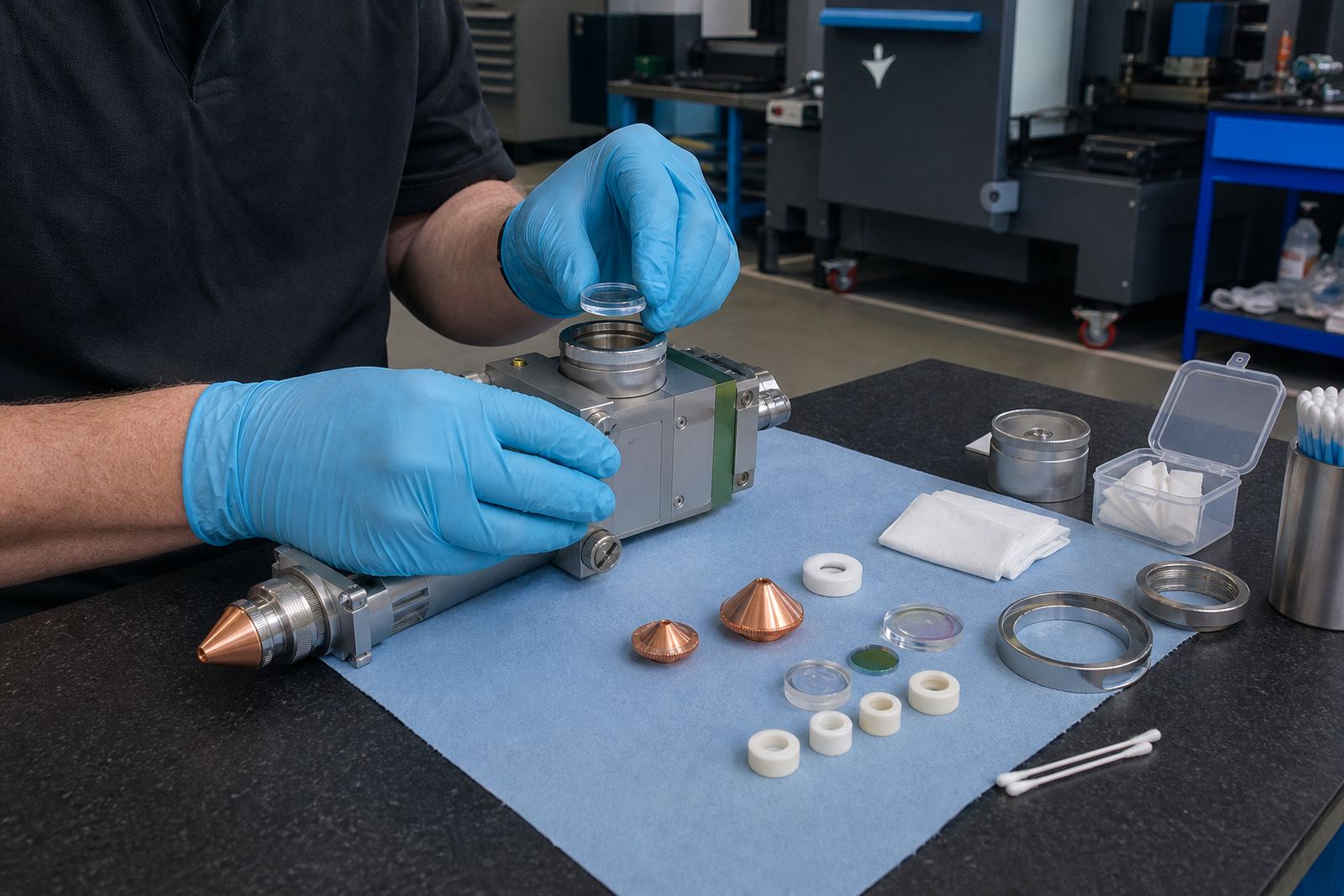
Our service covers removal of the old window, inspection of the holder and sealing faces, fitment of the correct replacement, and a clean reassembly of the head section. Where required we also check the ceramic ring, nozzle seat, head seal and the nearby lens area so the new window is not installed into a dirty or uneven housing. Clean handling matters here, because a good window can still fail early if dust is trapped on the sealing face.
We work with windows used in common fibre laser cutting head layouts, including standard protective glass for cutting heads with capacitive height sensing and fine focus control. The job is done on the bench when the head is in the workshop, or on site where the machine setup and access allow it. If there are signs of a wider issue, such as a damaged nozzle holder or worn ceramic ring, we flag it before the head goes back into production.
- Removal and disposal of the damaged window
- Inspection of seals, rings and seating surfaces
- Fitment of the replacement window in clean conditions
- Check of lens area for dust, tint or surface marks
- Reassembly with correct orientation and seating
How we work on the head
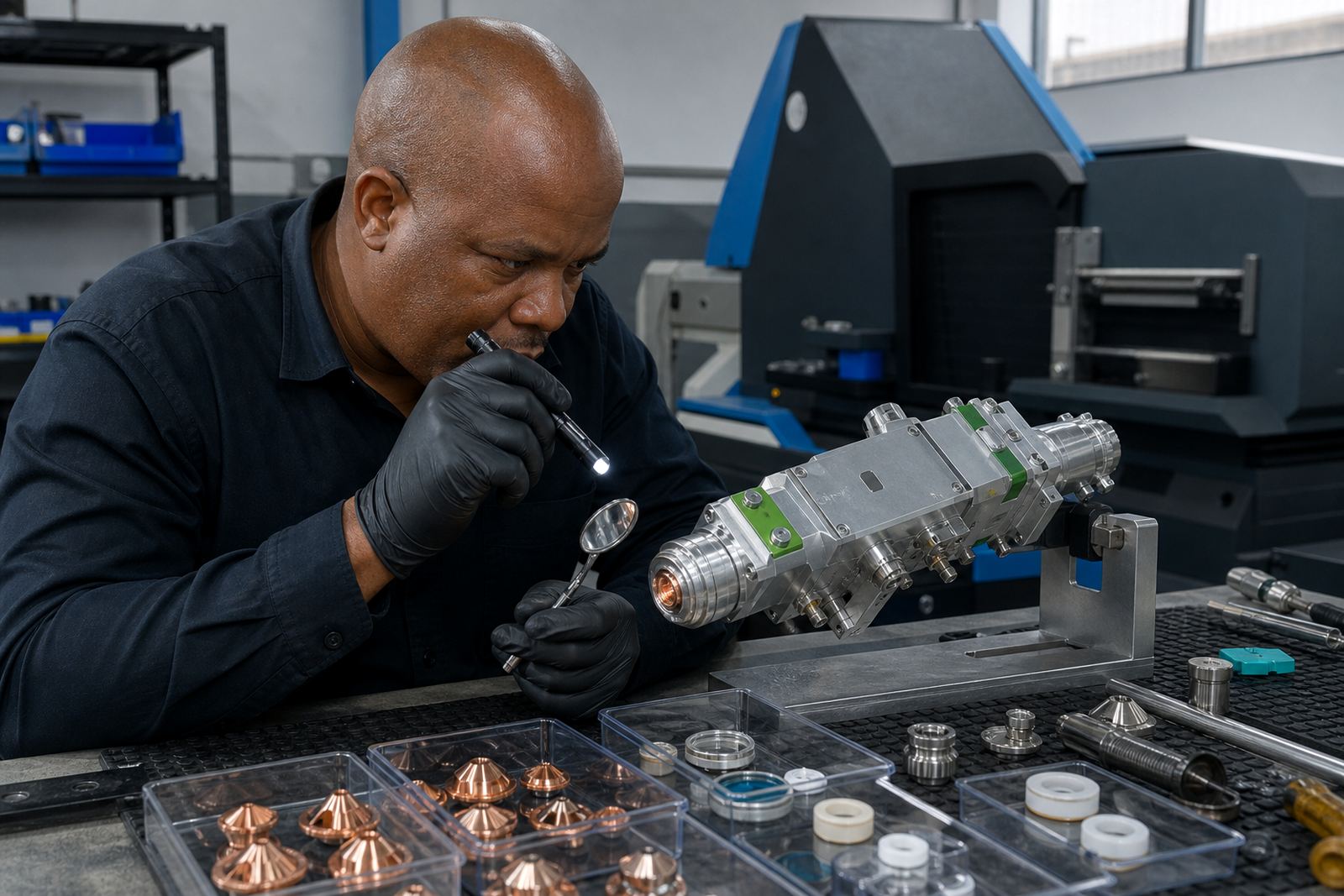
The process starts with a visual inspection under good light, then the head is opened carefully so loose particles do not move deeper into the optical path. We look at the window itself, the ring faces, the retaining parts and the condition of the nearby optics. If the old glass shows fracture lines or burnt edges, we treat the head as needing a fuller clean rather than a quick swap.
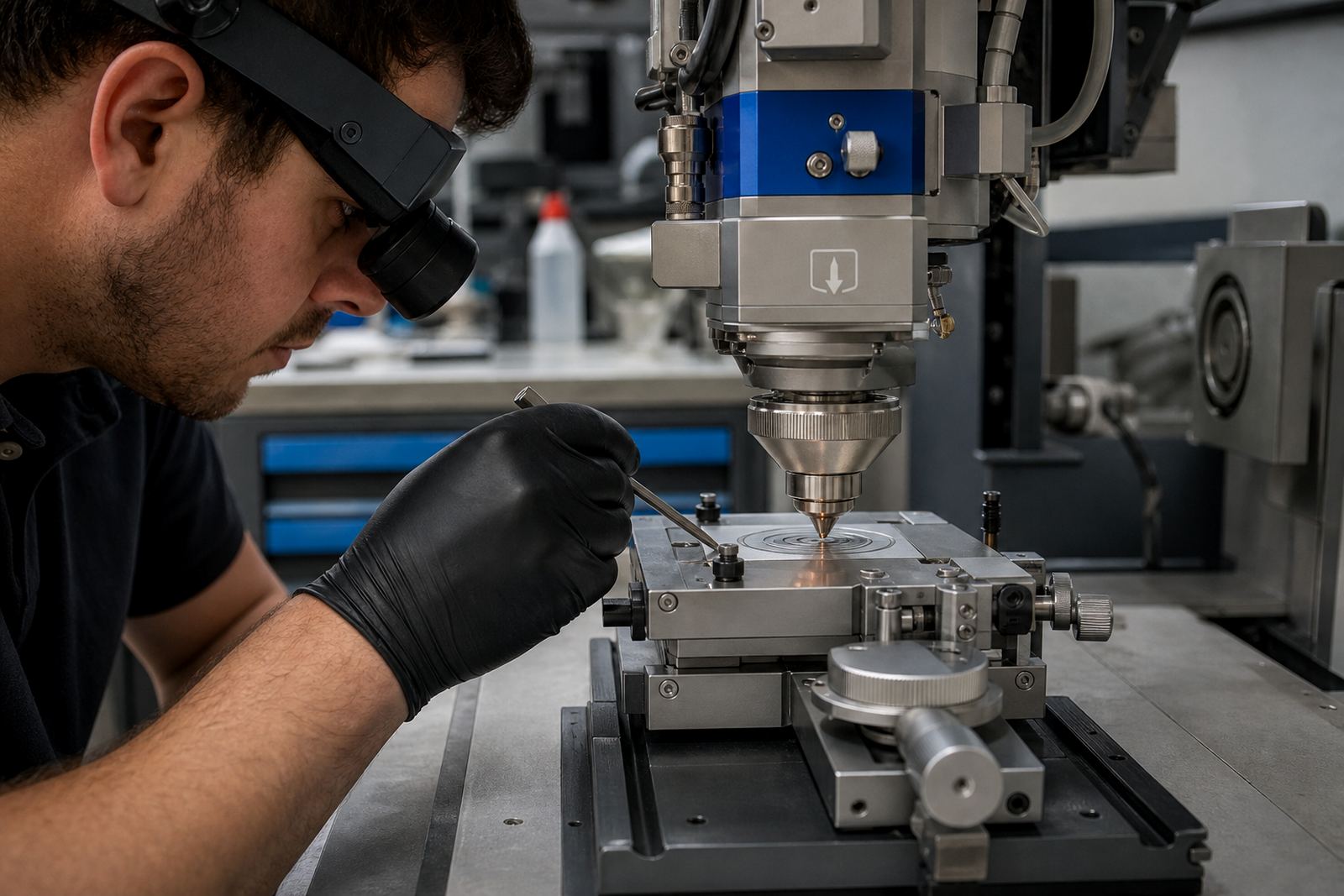
Once the window is replaced, we check the focus setting, nozzle centring and the condition of the gas path around the cut zone. That matters because a window change can expose other small issues that were hidden by contamination. If the machine has been cutting in damp coastal air or in a workshop with heavy dust, we take extra care with surface cleaning and sealing checks before the head is closed again.
- Initial inspection and fault finding
- Bench opening under controlled clean handling
- Window fitment and seating check
- Focus, centring and gas path review
- Final close-up test before release
Working tolerances and part details
Protective windows are handled as precision consumables, not rough service parts. The thickness, diameter and coating must match the head design and beam specification, otherwise cut quality and internal protection can suffer. We match the replacement to the cutting head type, beam size and optical layout so the part sits correctly in the stack.
For sheet-metal shops, the practical detail is not only the glass itself but also the cleanliness around it. A window that carries fingerprints, metal dust or oil film will shorten service life and can change how the beam behaves at the cut face. Where necessary we clean the surrounding lens area and inspect the ceramic ring and nozzle seat at the same time, because a dirty seat can undo a careful replacement.
- Correct diameter and thickness for the head type
- Clean edge condition and sound coating surface
- Compatibility with the beam path and retaining parts
- Attention to dust control during fitment
- Final inspection for seating, tint and surface clarity
Turnaround and pricing approach
Turnaround depends on the head condition, the parts needed and whether the work is carried out on the bench or on site. A straightforward window replacement is quicker than a damaged head that also needs seal work, lens cleaning or nozzle centring. We price on the actual scope, because a window change in a clean head is not the same job as a crash-damaged unit with extra wear inside the housing.
Pricing is shaped by the window type, the condition of the seals, the need for additional parts and the labour needed to open and close the head properly. For shops in Johannesburg, Pretoria, Rustenburg, the East Rand, Durban and Cape Town, transport and site access also matter when on-site work is needed. The aim is to keep the quote tied to what the head really needs, not padded with unrelated extras.
- Workshop replacement for heads brought to Spartan
- On-site service where machine access allows safe work
- Scope-based pricing for clean swaps and damaged heads
- Separate pricing where extra optics or seals are needed
Aftercare that keeps the next cut cleaner
After replacement, we explain the handling points that matter most around the window area. That includes keeping the nozzle face clean, avoiding finger contact on optical surfaces, checking for dust after abrasive cutting and watching for changes in cut sound or pierce behaviour. We also point out when a window may be taking more contamination than normal, which can indicate gas path drift, poor centring or a worn seal.
For busy sheet-metal shops, a short clean routine between shifts often saves the window from early clouding. Wiping the outside of the head is not enough if the internal faces are carrying fine residue, so we focus on proper handling and inspection. If the same head keeps marking windows too soon, the cause usually sits in the cut process, the nozzle condition or the sealing arrangement rather than the glass alone.
- Keep optical surfaces free of fingerprints and lint
- Check for unusual dust build-up around the nozzle end
- Watch for cut quality changes after replacement
- Inspect seals and ceramic ring condition during follow-up checks
Spartan base, national reach
Our workshop base is in Spartan, Kempton Park, with field support across South Africa for fibre laser cutting heads and related parts. That includes shop-floor work in Johannesburg and Pretoria, as well as site visits in Durban, Cape Town and Rustenburg where machine access and production pressure make on-site alignment more practical. The same service also covers East Rand workshops that need careful head handling without moving the machine unnecessarily.
Protective window replacement is often the small job that stops a larger fault from building. If the glass is already showing damage, the safest path is to replace it cleanly and check the rest of the head while it is open. That keeps the work practical, and it gives the cutting head a better chance of staying steady on the next run.
Key facts
| Service | Protective Window Replacement |
|---|---|
| Head types | Fibre laser cutting heads for sheet-metal cutting |
| Core parts | Protective windows, nozzles, focus lenses, ceramic rings |
| Work location | Spartan, Kempton Park workshop or on-site |
| Coverage | Heads reach our Spartan bench from Gauteng, Rustenburg and the East Rand, and parts go out by courier to Durban and Cape Town. |
| Related checks | Lens cleaning, nozzle centring, seal inspection, focus setting check, gas path inspection |