What a seal rebuild covers in a cutting head
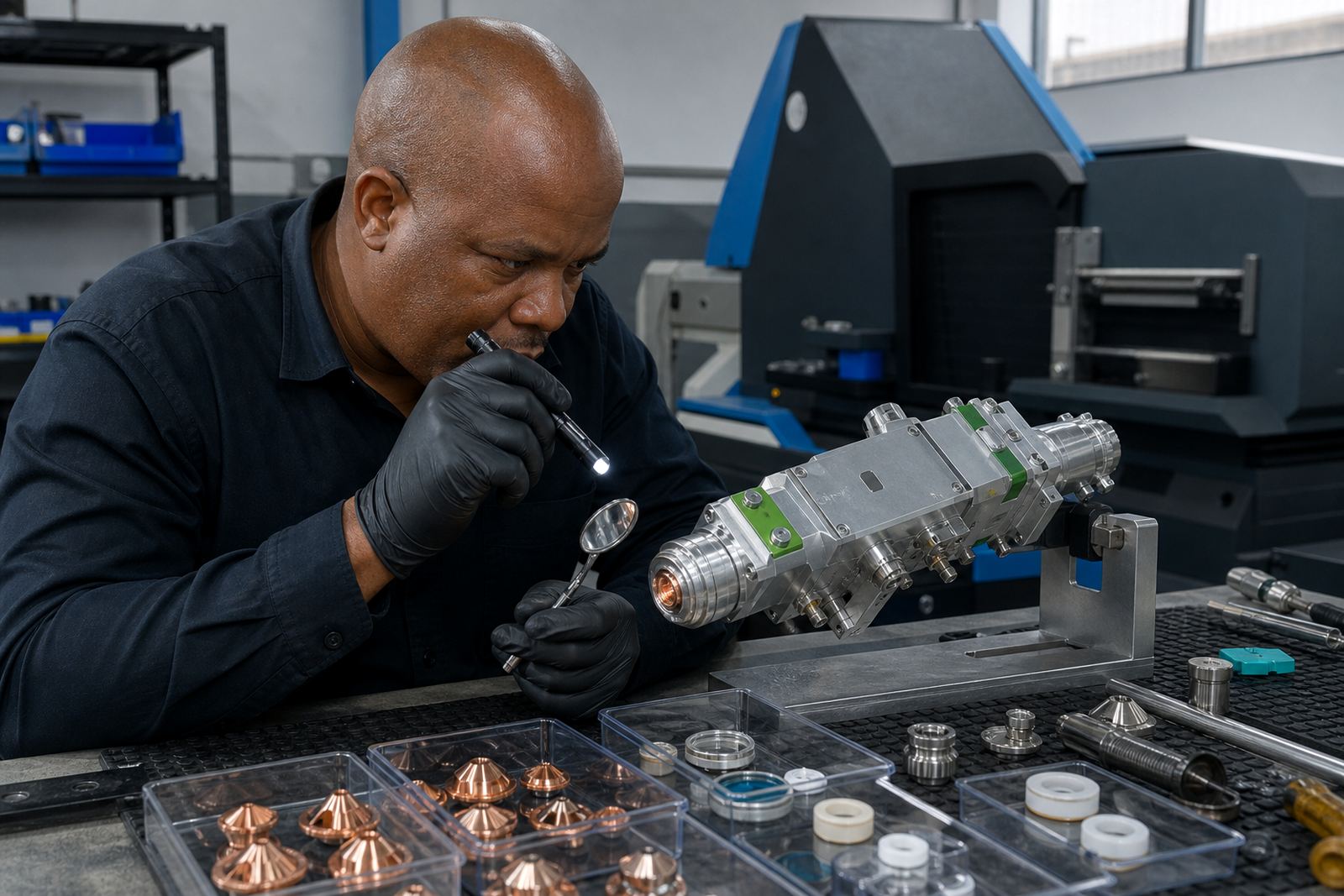
A head seal rebuild is a planned strip and renew job around the parts that keep dust, cutting gas and fine debris where they belong. We work on the interfaces that most often drift out of condition, including O-rings, sealing faces, retaining rings and close-fitting joints around the nozzle area, protective window seat and lens chamber. Where wear has started, we check for heat marks, scoring, flattened seals and fine leaks that can let contamination creep into the optics path.
The job is useful when a head has been struck, when cut quality has started to wander, or when a machine has been running with poor gas behaviour and unexplained window marks. It is also a sensible step after repeated nozzle crashes, sticky height control or a dirty gas path. During the rebuild we look at the whole sealing stack, not just the visibly damaged part.
- Seal renewal around exposed interfaces
- Leak-prone joint inspection and cleaning
- Seat checks for protective windows and lens compartments
- Gasket and ring condition review
- Light surface inspection for scratches, dents and debris tracks
Bench work, strip-down and the checks we carry out
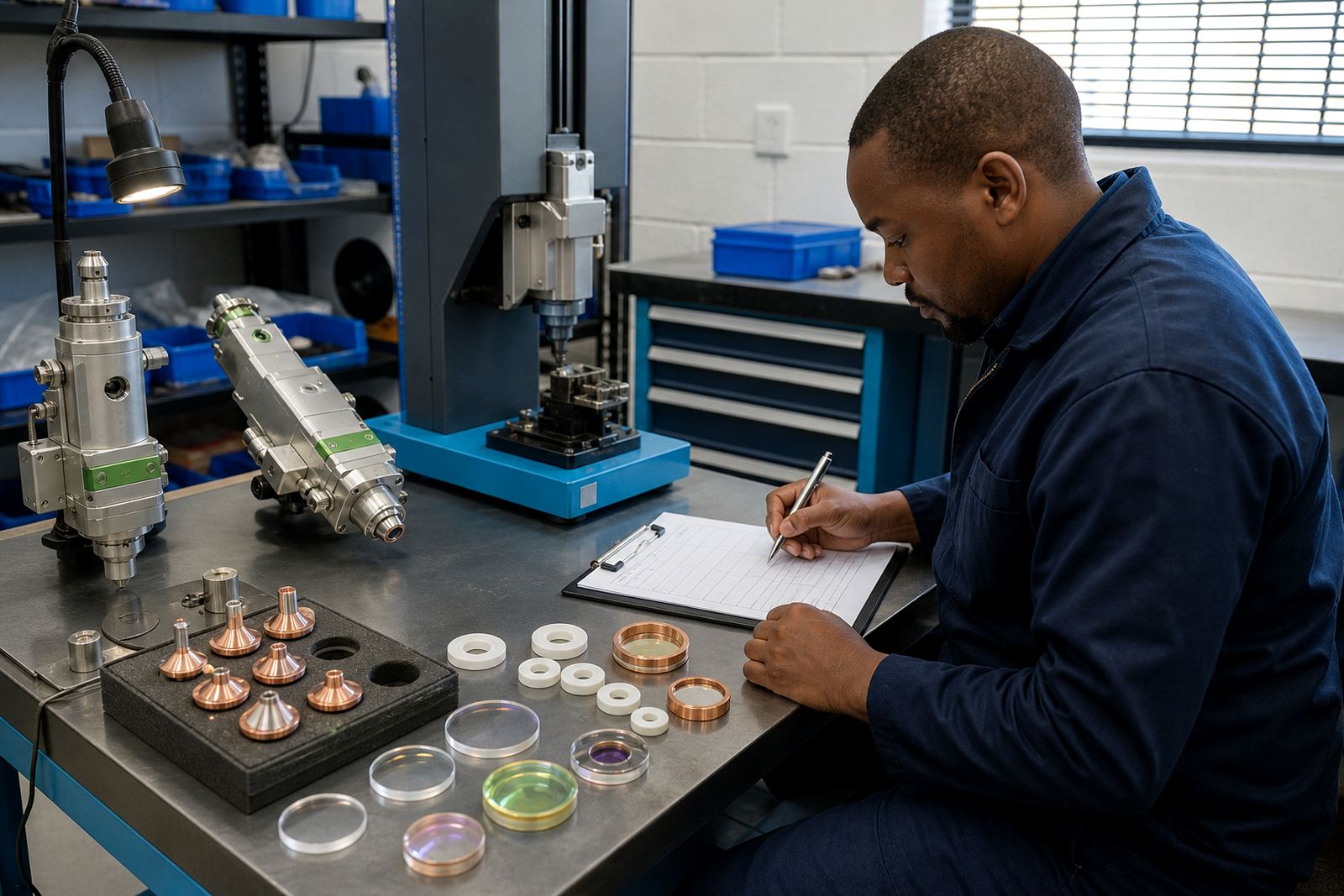
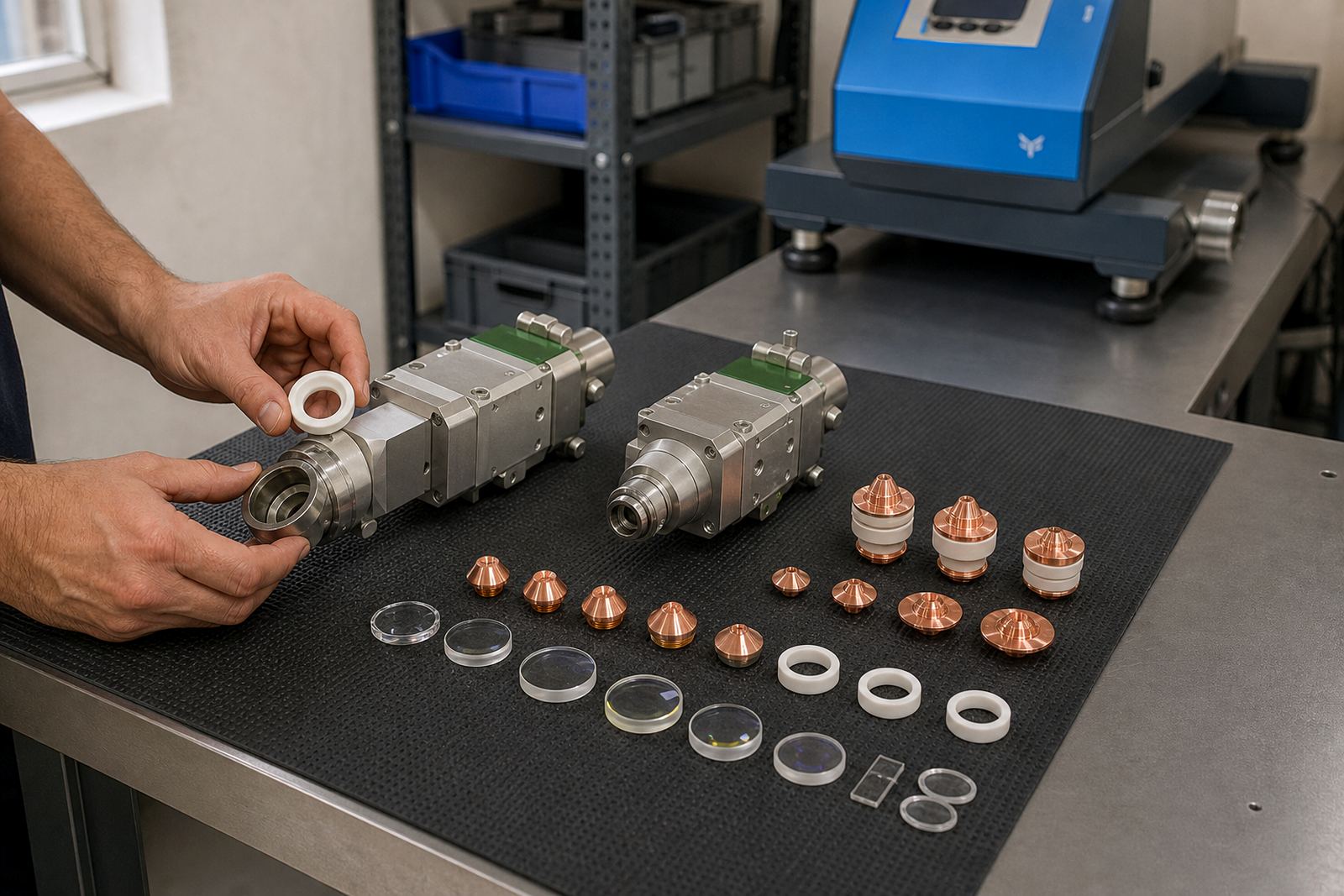
Most rebuilds start on the bench, where the head can be opened in a controlled way and inspected without shop-floor dust getting into the optics. We clean the contact faces, inspect the ceramic ring area, check the nozzle holder, and look for signs that the head has been running slightly off centre. If the sealing surfaces are sound, the rebuild stays focused on renewal and cleaning rather than unnecessary part replacement.
We also check the parts that affect cut stability. That includes the focus lens pocket, the collimator side of the optical path, the protective window seats and the gas path passages. A head can leak in more than one place, so the rebuild is done as a system check rather than a single seal swap.
- Strip-down with part-by-part inspection
- Cleaning of sealing faces and threaded joints
- Check for burrs, pitting and damaged shoulders
- Gas path inspection for dust build-up or blockage
- Verification of seating depth and alignment marks
How the rebuild is carried out on the bench or on site
When the head comes in to Spartan, Kempton Park, we can take it right through a full bench rebuild. That is usually the cleanest option because we can measure, clean and reassemble under stable conditions. For equipment that cannot leave the shop, we carry out on-site head alignment and a controlled rebuild of the accessible seals and interfaces, then check the set-up around the machine.
The process is practical. We remove the worn sealing parts, clean the housing, confirm that the nozzle stack sits square and that the protective window chamber closes properly. Where needed, we combine the rebuild with nozzle centring, focus setting check and capacitive sensor review so the head is not only sealed but also behaving properly under cutting load.
- Bench rebuild for full access and inspection
- On-site service where removal is not practical
- Nozzle centring after reassembly
- Focus setting check after seal renewal
- Capacitive height sensing review where the head design allows it
Typical lead points and what affects the price
Turnaround depends on how many parts need renewal, whether the head has crash damage, and whether the optics chamber has contamination that needs extra cleaning. A simple seal renewal on a clean head is quicker than a rebuild that also needs ceramic ring replacement, lens cleaning or corrective alignment after impact. If a head has hidden wear on sealing shoulders or damaged threads, the job needs more attention and a wider parts check.
Pricing is quoted to the condition of the head and the parts that need to be replaced. We do not push a flat figure where the actual condition matters more than the label on the service. For planning, it helps to bring the head, any matching spare parts and the machine details so the rebuild can be matched to the right optical arrangement and gas interface.
- Condition of the seals and seating faces
- Need for extra lens or window cleaning
- Crash damage or bent parts
- Extent of alignment work required
- We service the head on your premises or in our workshop
Aftercare that keeps the rebuilt head usable
After the rebuild, we set out the parts of the head that need a careful eye during the next few shifts. Fresh seals work best when the nozzle is kept clean, the protective window is checked for misting, and the gas path stays clear of grit and oil film. A clean head still needs sensible handling, especially in shops where fine dust, heat and repeated clamping cycles all work against the optics.
We also explain what to watch after the head goes back into service. That may include odd cutting sounds, smoke marks around the nozzle, unstable pierce behaviour or a change in edge finish that points to air leakage. If those signs appear, the rebuilt head should be rechecked before the problem spreads into the lens area.
- Ensure the nozzle face stays spotless and free of burrs
- Watch for misting on the protective window
- Check for air leaks around the head body
- Inspect the ceramic ring after rough handling
- Review cut edges if pierce quality changes
Spartan support for shops across South Africa
Operating from Spartan, Kempton Park, we support sheet-metal shops in Johannesburg, Pretoria, Rustenburg, the East Rand, Durban and Cape Town. Some heads come in for a complete rebuild, others need a targeted seal job after a crash or a change in cut quality. We keep the work grounded in the condition in front of us, not in guesswork or filler checks.
Our contact form is the route for service requests, part lists and machine details. If you can include the head model, the fault symptoms and whether the unit is running with a single or double layer nozzle setup, it helps us match the rebuild to the machine more accurately. On heads with sensitive optics or repeated contamination, we can also combine the seal rebuild with lens cleaning and protective window replacement in the same visit.
Key facts
| Service area | We cover Spartan, Kempton Park and on-site jobs across South Africa |
|---|---|
| Typical equipment | Fibre laser cutting heads on sheet-metal cutting machines |
| Core work | Seal renewal, leak check, cleaning and reassembly |
| Related checks | Nozzle centring, focus setting, gas path inspection, capacitive sensor check |
| Parts handled | Protective windows, lenses, ceramic rings, sealing interfaces |
| Access route | our contact form on our contact page |