What the capacitive sensor check covers
This service looks at the full sensing path, not only the sensor body. We inspect the copper and steel contact parts, ceramic ring condition, insulation, cable ends, plug fit, signal stability and the way the head reads the workpiece through the nozzle area. On fibre laser cutting heads, the signal must remain clean enough for the controller to keep the stand-off height under control.
A poor reading can show up as stuttering height movement, inconsistent pierce height, drag marks on corners or a head that hunts up and down on reflective sheet. Our check is built around sheet-metal work in South African shops, where dust, heat, fine spatter and worn consumables can all interfere with the sensing path.
- Contact parts and earth return inspection
- Ceramic ring and insulated section check
- Cable, plug and pin condition check
- Signal response test for height control faults
- Basic correlation with focus and nozzle position
How we test the sensing path on the bench
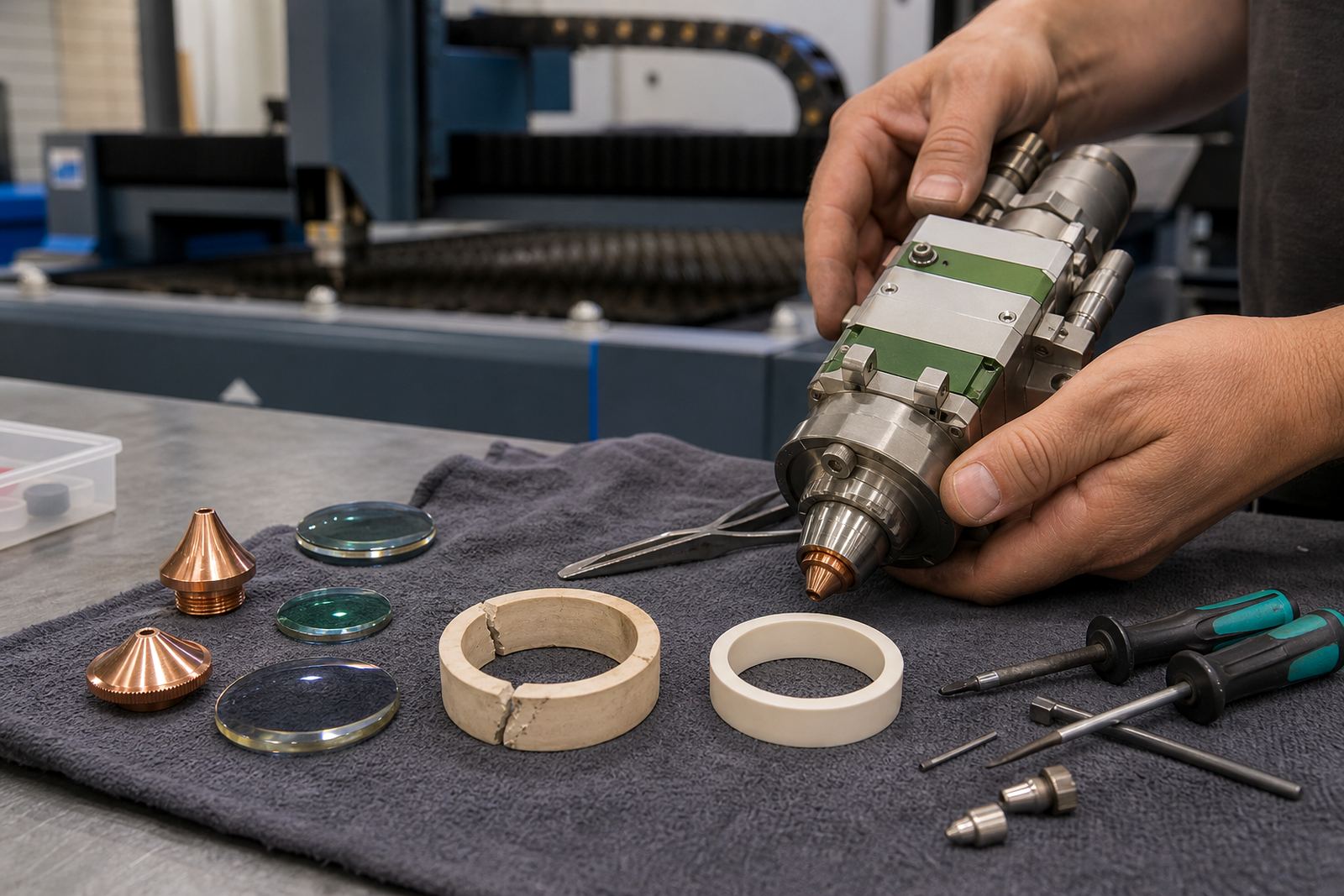
On the bench, we isolate the head and trace the sensor chain step by step. We check whether the sensing circuit is open, unstable or intermittently dropping out under light movement. The aim is to separate a true sensor fault from a dirty nozzle seat, damaged ceramic ring or a poor contact point in the head body.
We also look at the parts that affect repeatability. A capacitive system depends on clean surfaces and consistent spacing, so even a small film of residue can shift the reading. If the sensor path is drifting, we inspect the related focus area, protective window seat and nozzle alignment because those parts often show the first signs of a problem.
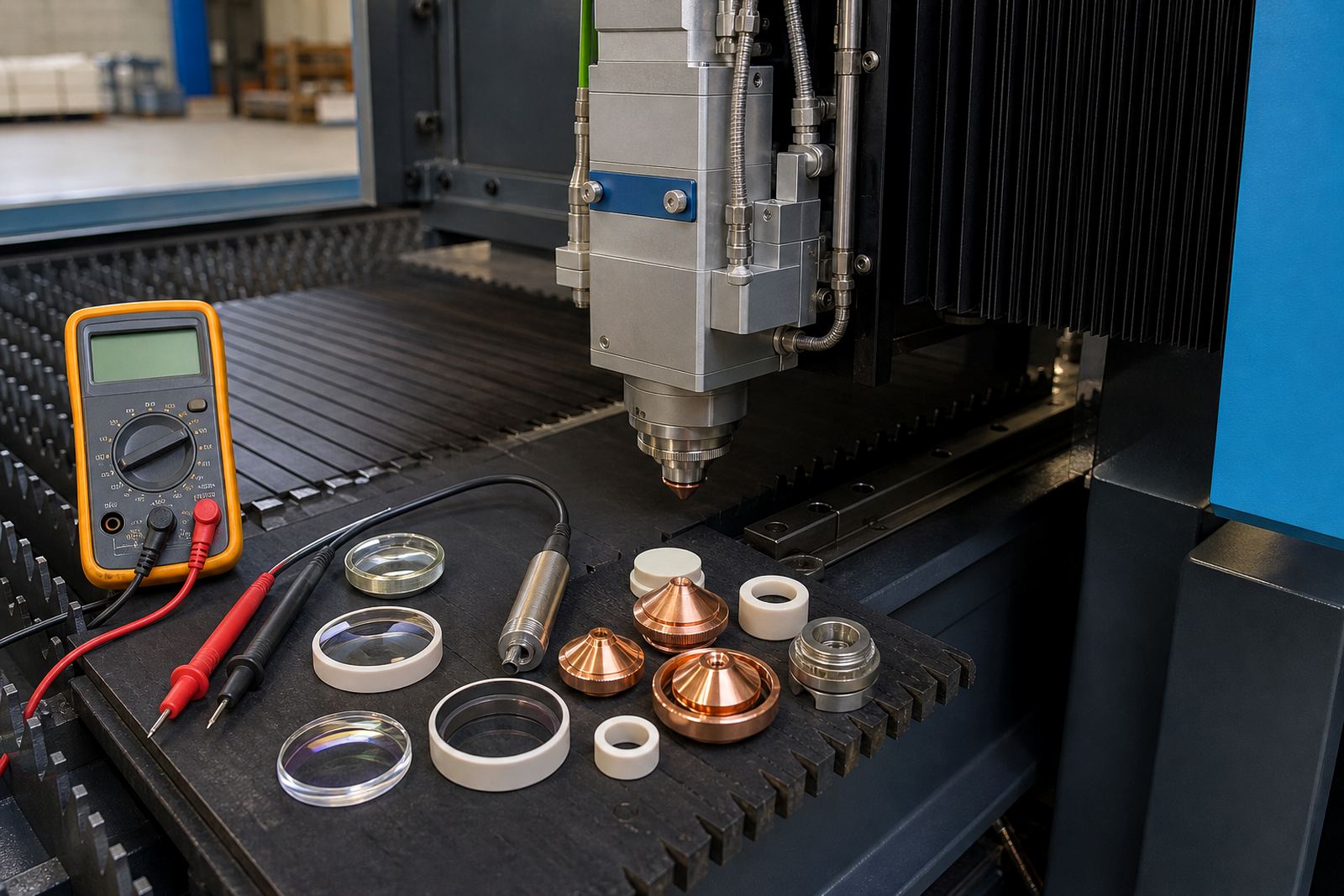
- Continuity and insulation checks on the sensing chain
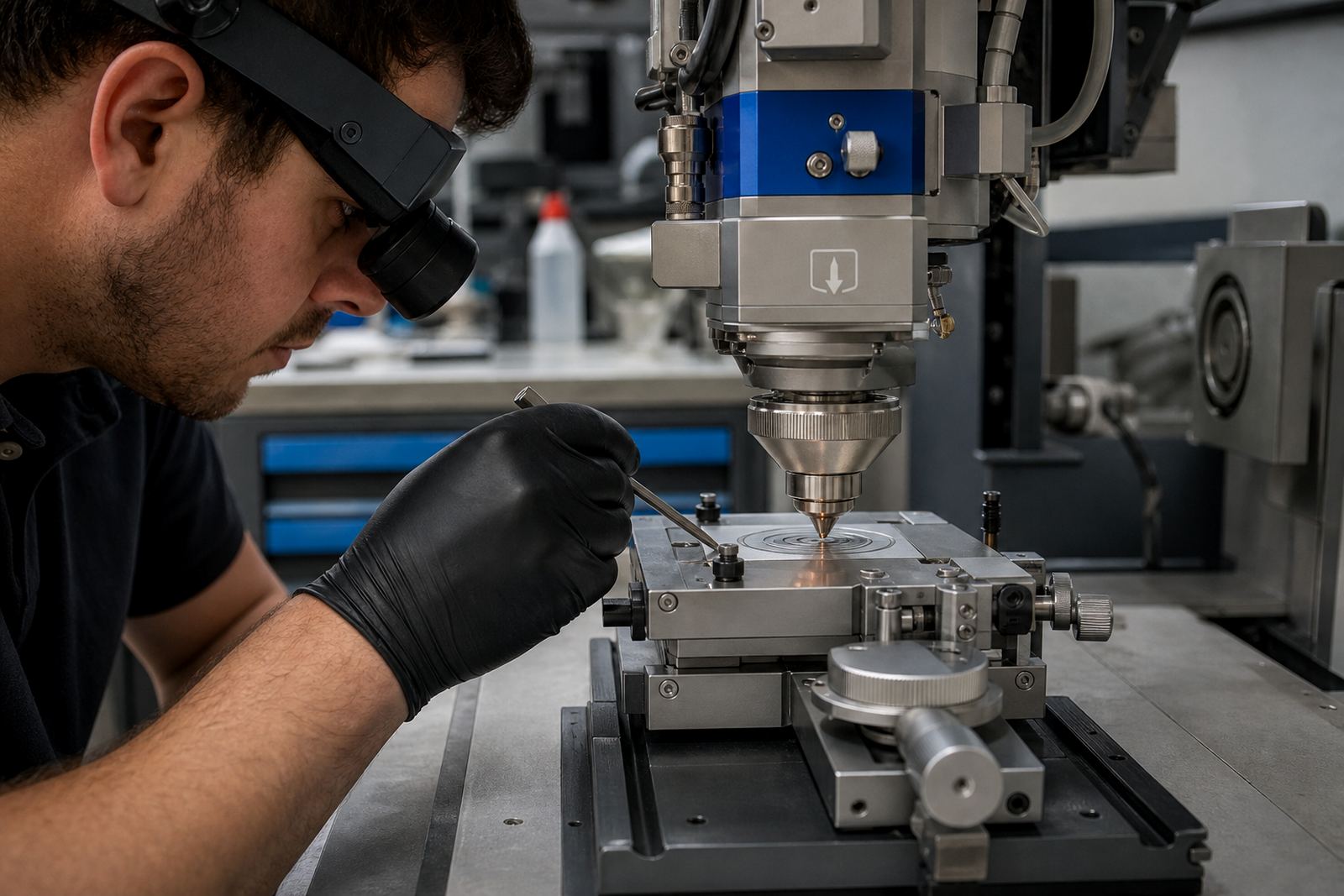
- Visual inspection under magnification where needed
- Seat and face checks for carbon, dust and splash
- Comparison of readings before and after cleaning
On-site checks for machines that need to stay in service
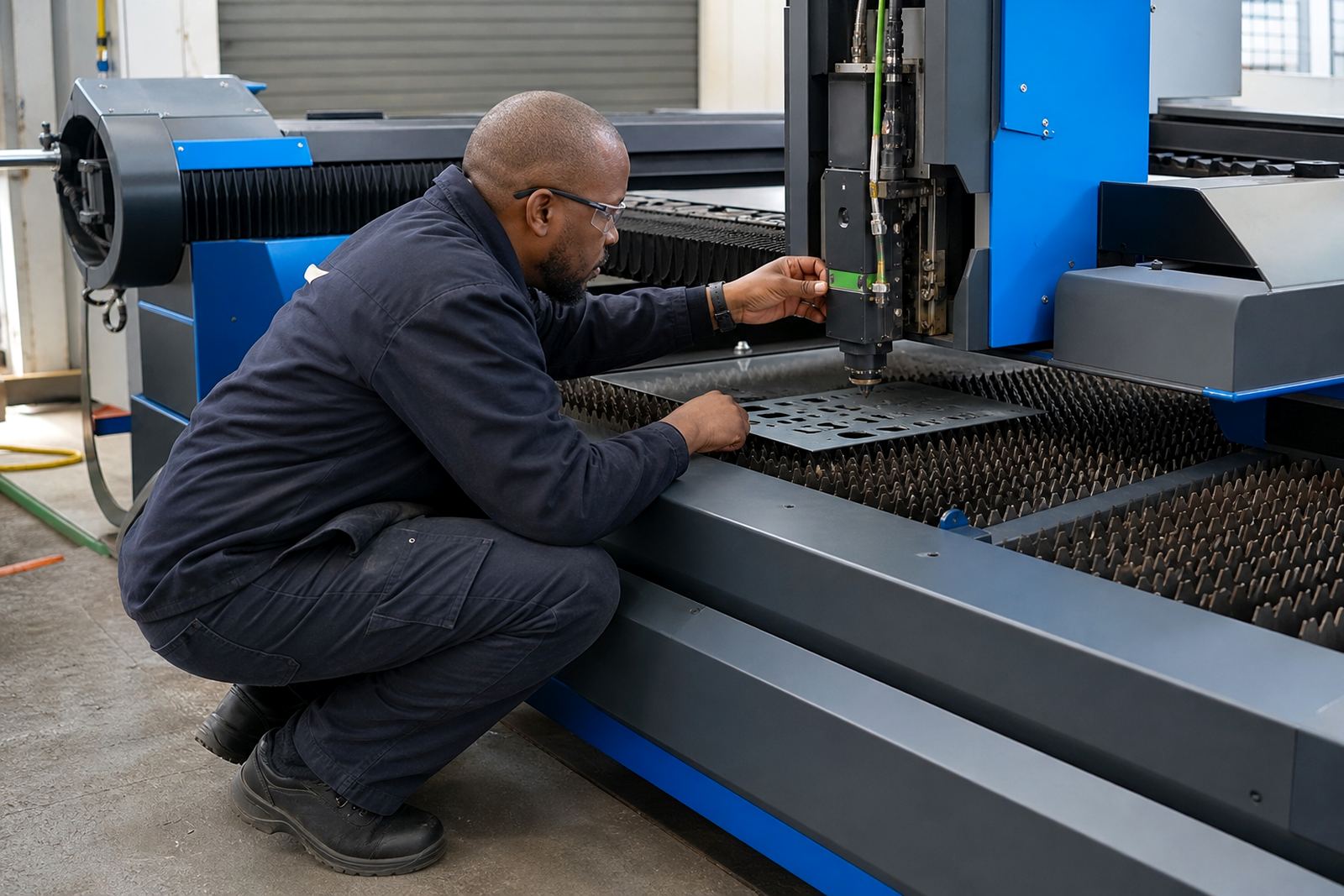
Some faults only show themselves once the head is mounted on the machine and cutting real material. In those cases we do the capacitive sensor check on site, with the machine set-up as it runs in the shop. That helps us see how the sensor behaves with the actual cable route, head position and gantry movement.
We work across Spartan, Kempton Park and the main industrial centres that call on us, including Johannesburg, Pretoria, Durban, Cape Town and Rustenburg. The on-site visit is useful where a head has been knocked, a new nozzle type is being used, or the machine has started to lose consistent height control after a change in consumables.
- Head movement and cable strain inspection
- Live sensing check during machine motion
- Basic fault isolation between head and control side
- Review of alignment marks and nozzle seat condition
Focus settings, nozzle fit and the parts around the sensor
Height control does not sit alone. The sensor reading is affected by focus position, nozzle condition, ceramic ring wear and the state of the protective window. If the focus is off, or the nozzle is damaged, the cut gap changes and the sensor can appear unstable even when the electronic side is fine. We check how those parts sit together so the head is not corrected in the wrong place.
Single layer and double layer nozzles can behave differently, especially on thicker sheet or where the cut gas is not clean. A worn nozzle bore, loose fit or burnt edge can disturb the sensing pattern. We also inspect the gas path and related seals where required, because leakage or residue can change the way the head reads the work face.
- Focus setting check where the fault points to stand-off drift
- Nozzle centring and seat condition review
- Protective window and ceramic ring inspection
- Gas path and head seal condition review
What is included in the service report
After the check, we note the fault pattern, the parts that are in spec and the items that need replacement or correction. The report is practical rather than padded. It shows whether the problem came from contamination, wear, poor seating, cable damage or a controller-side signal issue. That helps the shop decide whether the head needs cleaning, realignment, parts replacement or a fuller bench service.
Where the sensor parts are still usable, we will clean the contact faces and recheck the reading. Where wear is already beyond what a clean-up can solve, we flag the relevant part clearly. For busy sheet-metal teams, that avoids guesswork when a machine is cutting thin plate, mild steel or reflective stainless.
- Fault summary and visual findings
- Parts marked for cleaning, reset or replacement
- Check notes for the machine operator
- Any follow-up work itemised for approval
Turnaround, pricing approach and aftercare
Pricing is based on the job scope, whether the check is bench-based or done on site, and how many related parts must be inspected at the same time. A straight sensor check is priced differently from a fault hunt that includes nozzle seat work, lens cleaning or head alignment. We keep the scope practical so the shop knows what is being inspected and what is being left alone.
After the service, we explain the sensor condition, the parts that should stay under watch and the cleaning routine that helps the reading stay stable in day-to-day cutting. That usually includes keeping the nozzle face clean, checking for splash around the ceramic ring and watching for signs of cable strain after head movement or a crash. Where the machine uses fine sheet or heavy pierce cycles, those checks matter more than people expect.
- Bench service for heads removed from the machine
- On-site service for running production lines
- Pricing tied to fault type and scope
- Aftercare notes for operator use
Key facts
| Service type | Capacitive Sensor Check for fibre laser cutting heads |
|---|---|
| Focus area | Sensing path, contact parts and related height control faults |
| Coverage | We carry out bench servicing and on-site work throughout South Africa. |
| Typical related parts | Nozzle, ceramic ring, protective window, cable ends and seat faces |
| Machine fit | Sheet-metal fibre laser cutting heads with capacitive height sensing |
| Base | Spartan, Kempton Park |