What we inspect inside the gas path
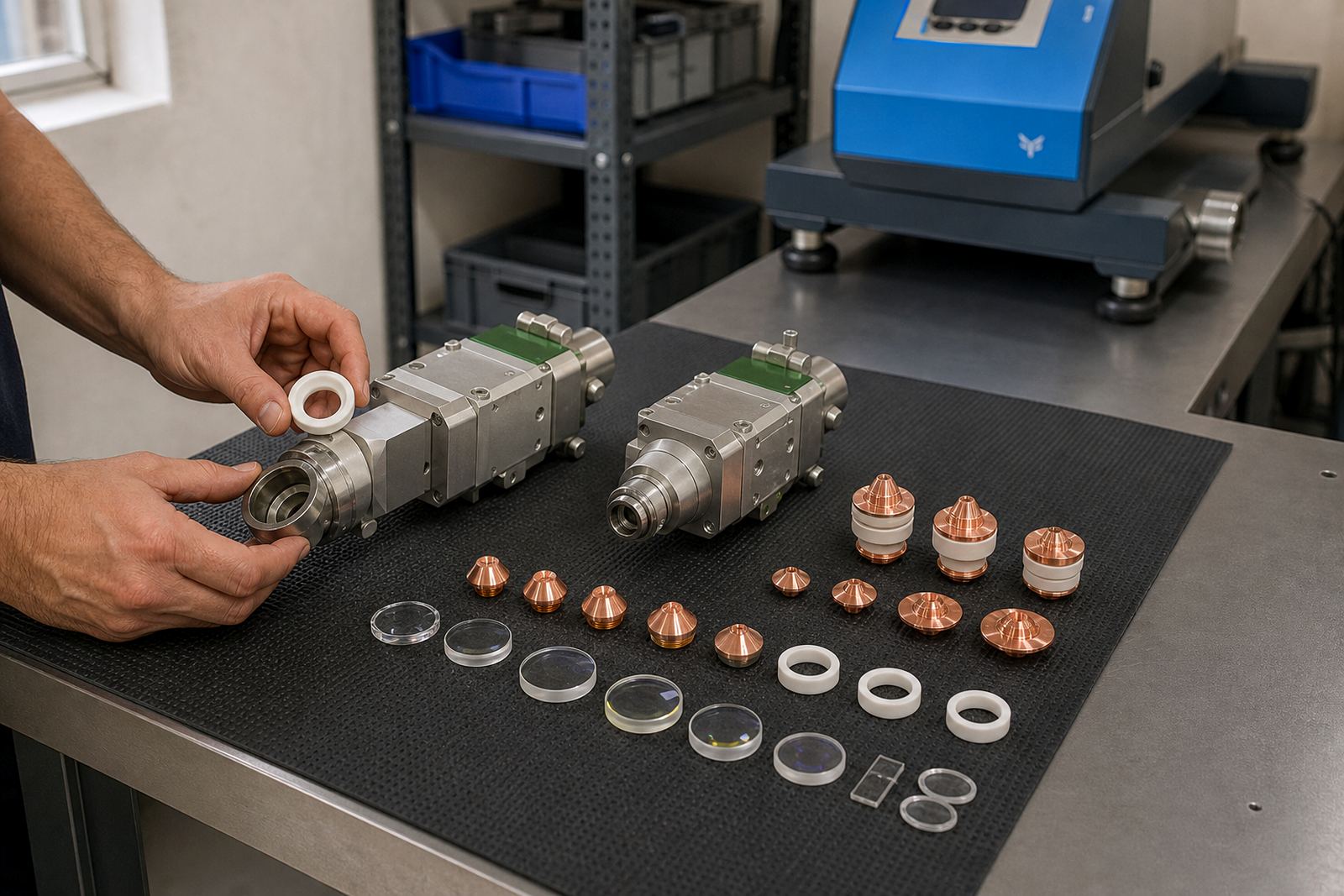
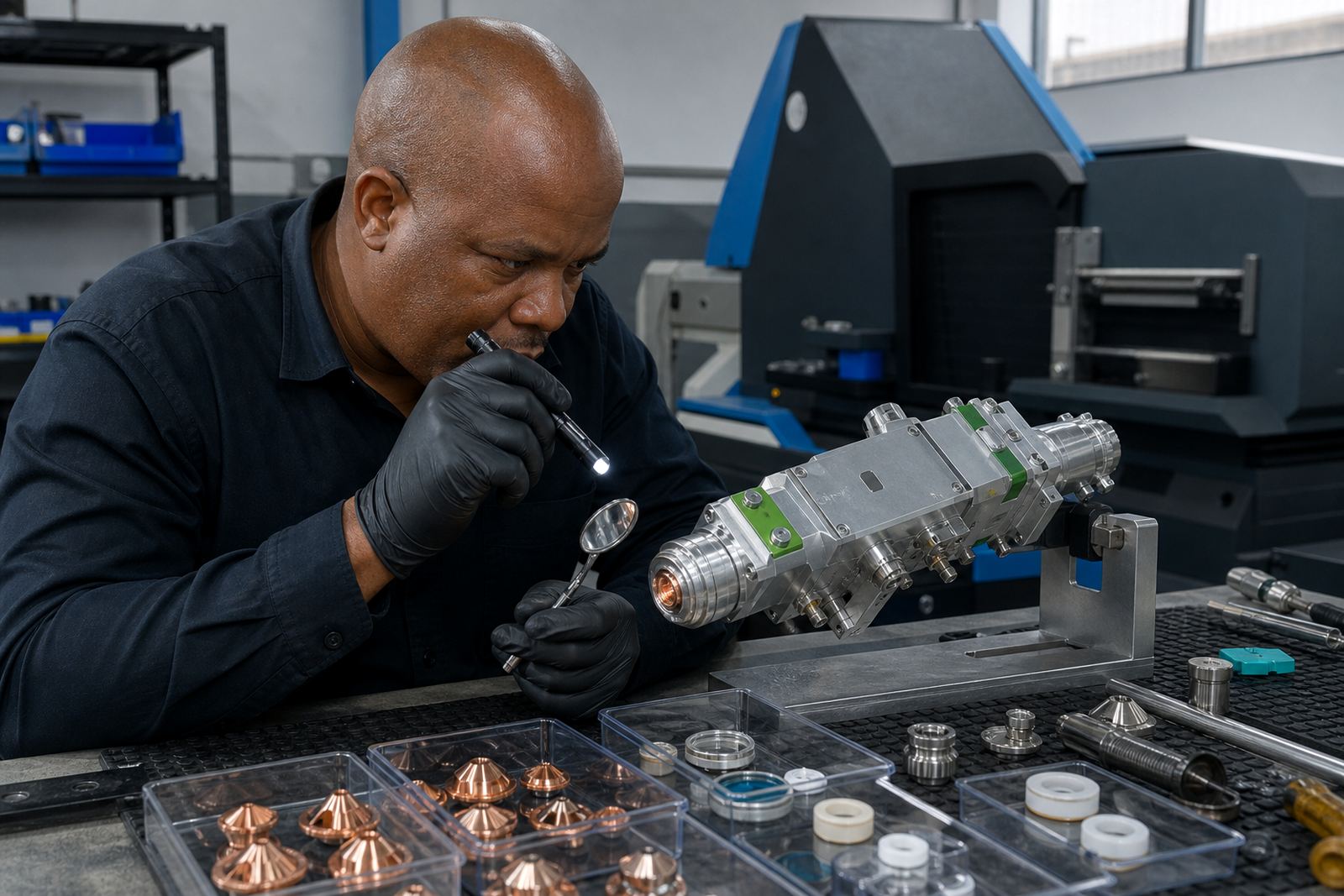
We inspect the nozzle seat, ceramic ring interface, sealing faces, internal passages and the parts that guide assist gas toward the cut zone. The aim is to find the small faults that often show up first as dross, flare-ups at the edge or a cut face that changes from one corner to the next.
The check covers fibre laser cutting heads used on sheet-metal jobs where oxygen, nitrogen or compressed air is part of the cut. We look for scoring, carbon build-up, damaged threads, poor seating at the nozzle cone and signs that gas is leaking before it reaches the workpiece in a controlled way.
- Nozzle seating and cone contact
- Seals, O-rings and mating faces
- Passages around the ceramic ring and head body
- Build-up from cutting fumes, dust and fine spatter
- Signs of impact, tilt or thread wear
How the inspection is carried out
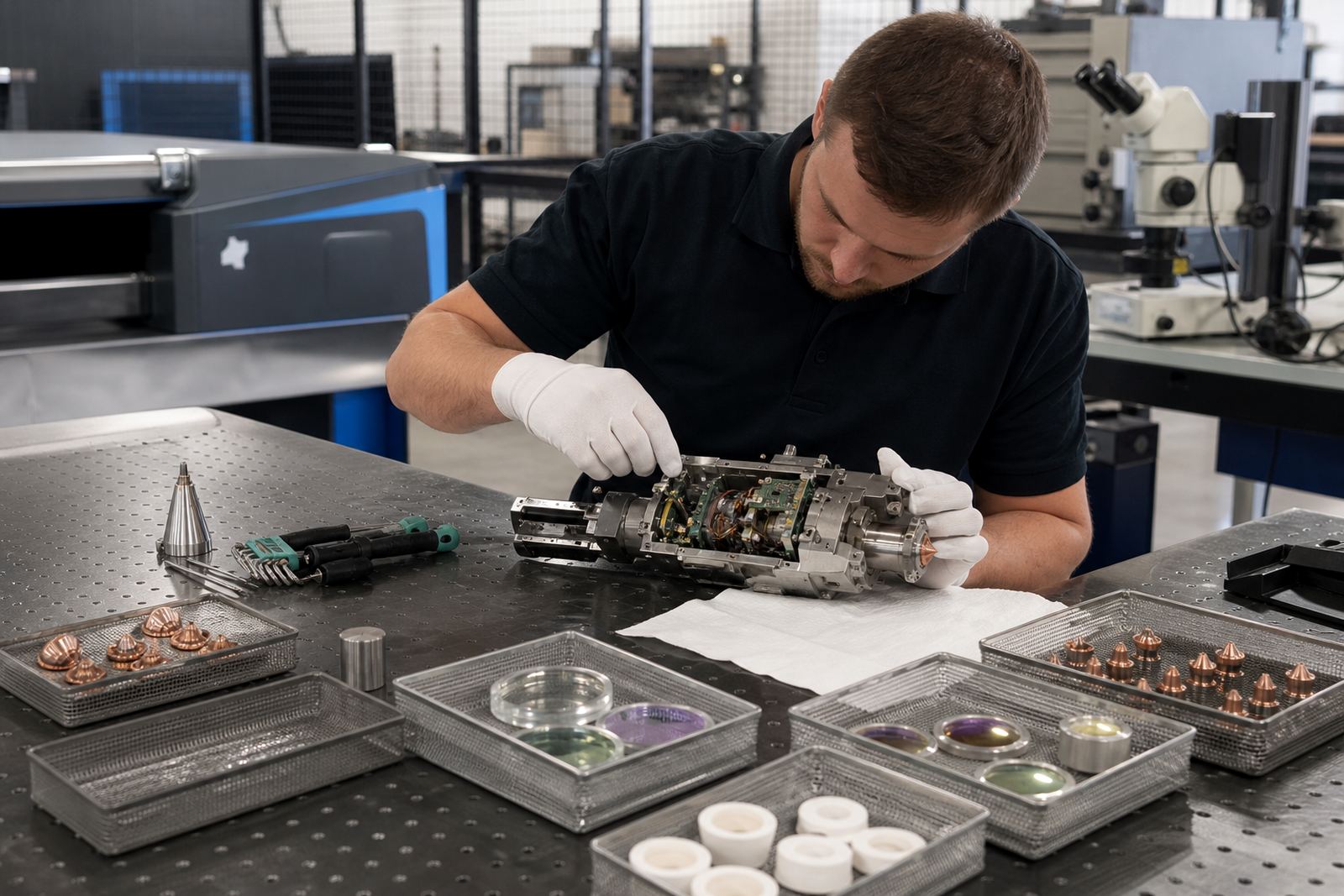
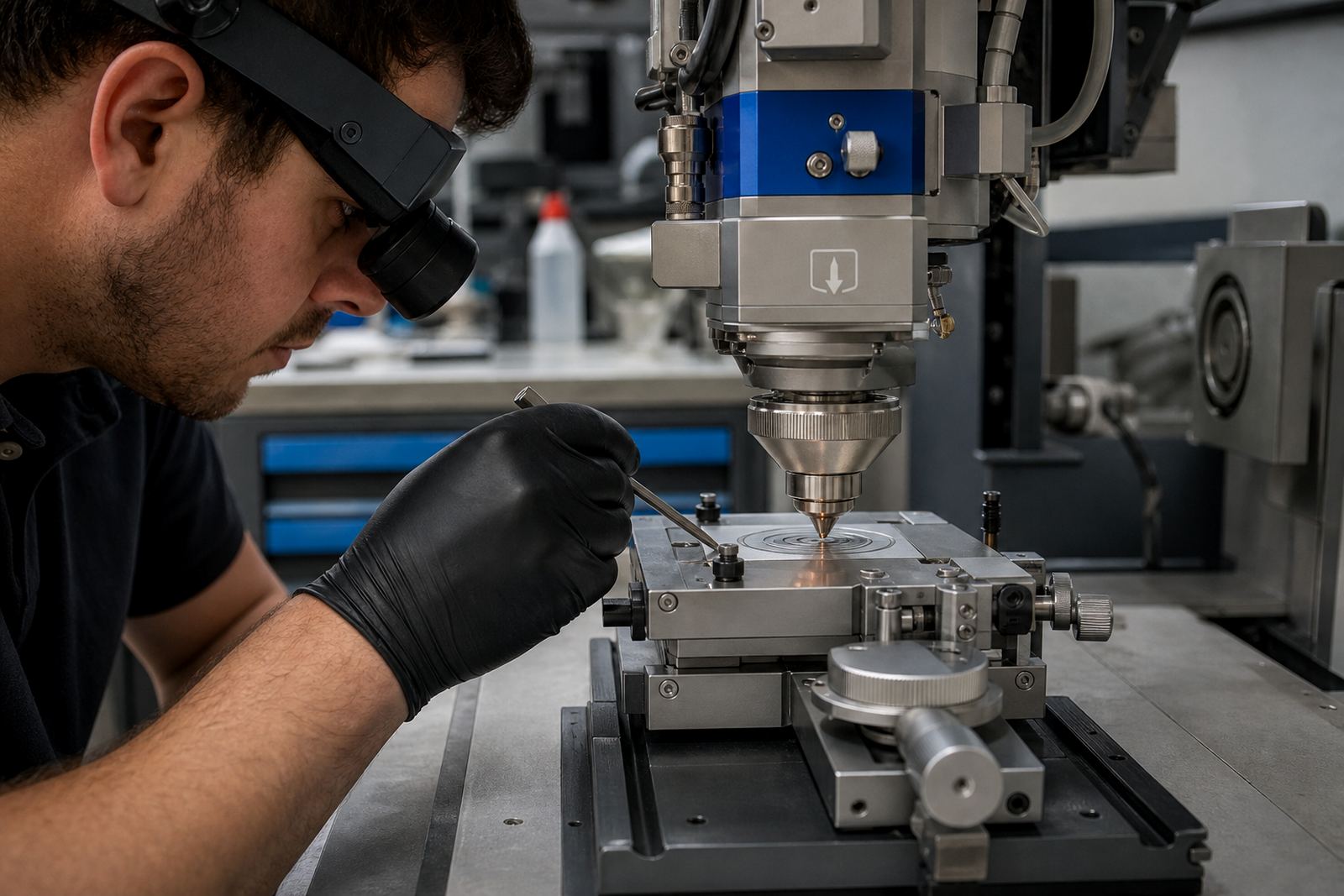
Each head is stripped only as far as needed for a proper check. We clean the visible gas path parts, inspect the nozzle holder, confirm that the nozzle sits true, then check for leaks and obstruction around the channels that carry assist gas through the head. Where the head uses capacitive height sensing, we also check that the sensing parts are clean and not affected by residue near the nozzle zone.
If the job needs a more detailed bench check, we remove the head for a controlled inspection at our Spartan bench service area. For plant work in Johannesburg, Pretoria, Rustenburg, the East Rand, Durban and Cape Town, our field technician can inspect the head on site and set the parts that influence gas flow and cut quality.
- Visual inspection of nozzle, seals and passages
- Cleaning of exposed contact areas
- Leak and seating check where the head design allows it
- Capacitive sensing area check if fitted
- Assessment of wear, crash marks and contamination
Signs the gas path needs attention
A poor gas path often shows up long before the head stops working. Cut edges can look rough, striations may deepen, and the nozzle can leave an uneven mark even when the program and sheet are correct. On stainless steel, small contamination issues can show as heat tint that is heavier than normal, while mild steel may show more burr and slag than the operator expects.
In many cases, the problem is not one major fault, but several small issues building up together. A nozzle that is slightly off-centre, a worn seal and a dirty passage can combine to disturb assist gas enough to spoil the cut. That is why a gas path inspection is useful after a crash, after a difficult cutting run, or when the machine starts needing more manual correction than usual.
What the service includes on the day
The service can be set up as a stand-alone inspection or folded into a broader head service. If the condition of the head allows it, we also handle related work such as nozzle centring, protective window replacement, lens cleaning, ceramic ring replacement and focus setting checks. The exact scope depends on the head model and on the wear found during the inspection.
For a practical job, the service often includes these steps:
- Initial condition check and fault note
- Nozzle and seal inspection under clean working conditions
- Passage cleaning where residue is present
- Review of seating surfaces and thread condition
- Reassembly and functional check
Where parts are too marked, a head seal rebuild or spare head preparation may be the better option. We will not push replacement where a clean and careful service is enough, but we also will not leave a worn seal in place if it is affecting the cut.
Pricing approach and turnaround on inspection work
Pricing depends on the head model, the depth of cleaning needed and whether the work happens on the bench or at your premises. A quick inspection is priced differently from a full strip, seal replacement and optical re-alignment. If the head has crash damage or hidden wear around the cutting path, the cost shifts with the parts and labour needed to restore proper operation.
For plants in Gauteng and on national call-outs, transport and access can also affect the final figure. We quote on the actual job scope, not on a one-line guess. That keeps the work tied to the real condition of the head and the passages inside it, rather than to a broad average that may not fit your machine.
Aftercare once the head is back in service
After the inspection, the main task is to keep the gas path clean and the seating faces free of dust, fine slag and oil. We will point out the parts that should be watched after cutting heavy plate, reflective sheet or material that throws more spatter into the nozzle area. If the head is used in a humid coastal shop, protection against corrosion around the seating surfaces matters as much as cleanliness.
We also discuss focus settings, nozzle choice and cleaning routines that suit the actual cutting mix in your shop. That matters because a clean gas path can still perform badly if the focus is off or if the nozzle style does not suit the cut duty. A few minutes spent on the right checks can save a lot of scrap at the machine table.
- Keep seating surfaces dry and free of oil film
- Handle nozzles with care to avoid cone damage
- Check cut quality after any crash or heavy spatter event
- Wipe exposed parts before dust sets into the passage
- Review focus and centring when the edge quality changes
Key facts
| Service type | Gas Path Inspection for fibre laser cutting heads |
|---|---|
| Work location | Spartan, Kempton Park bench service and on-site alignment |
| Coverage | Our Spartan bench takes heads from East Rand and Rustenburg shops, and parts go by courier to Durban and Cape Town. |
| Head systems | Fibre laser cutting heads with capacitive height sensing |
| Related checks | Nozzle seating, seals, passages, focus setting and cleaning condition |
| Typical related parts | Nozzles, focus lenses, collimator lenses, protective windows and ceramic rings |