What comes off the head on the bench
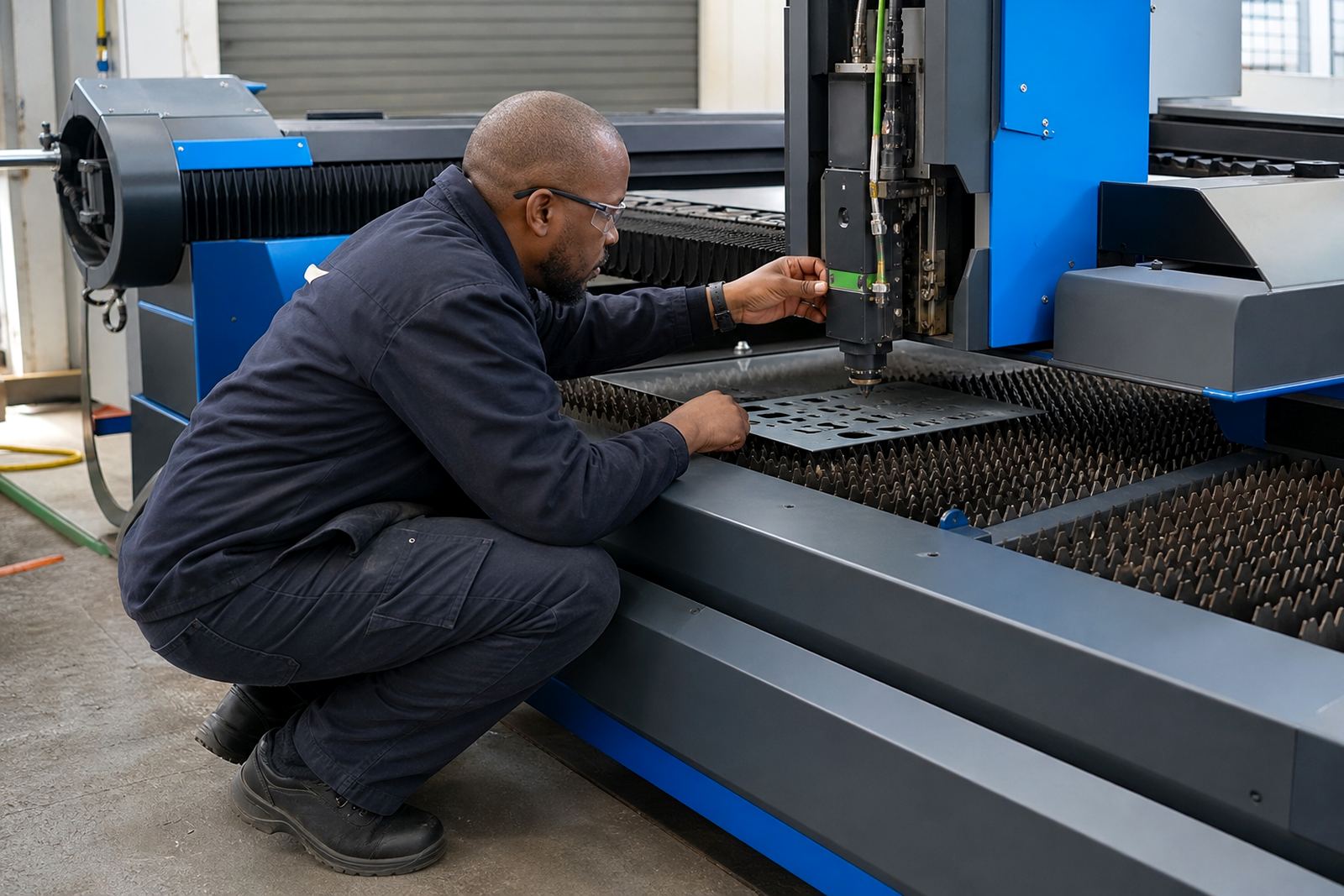
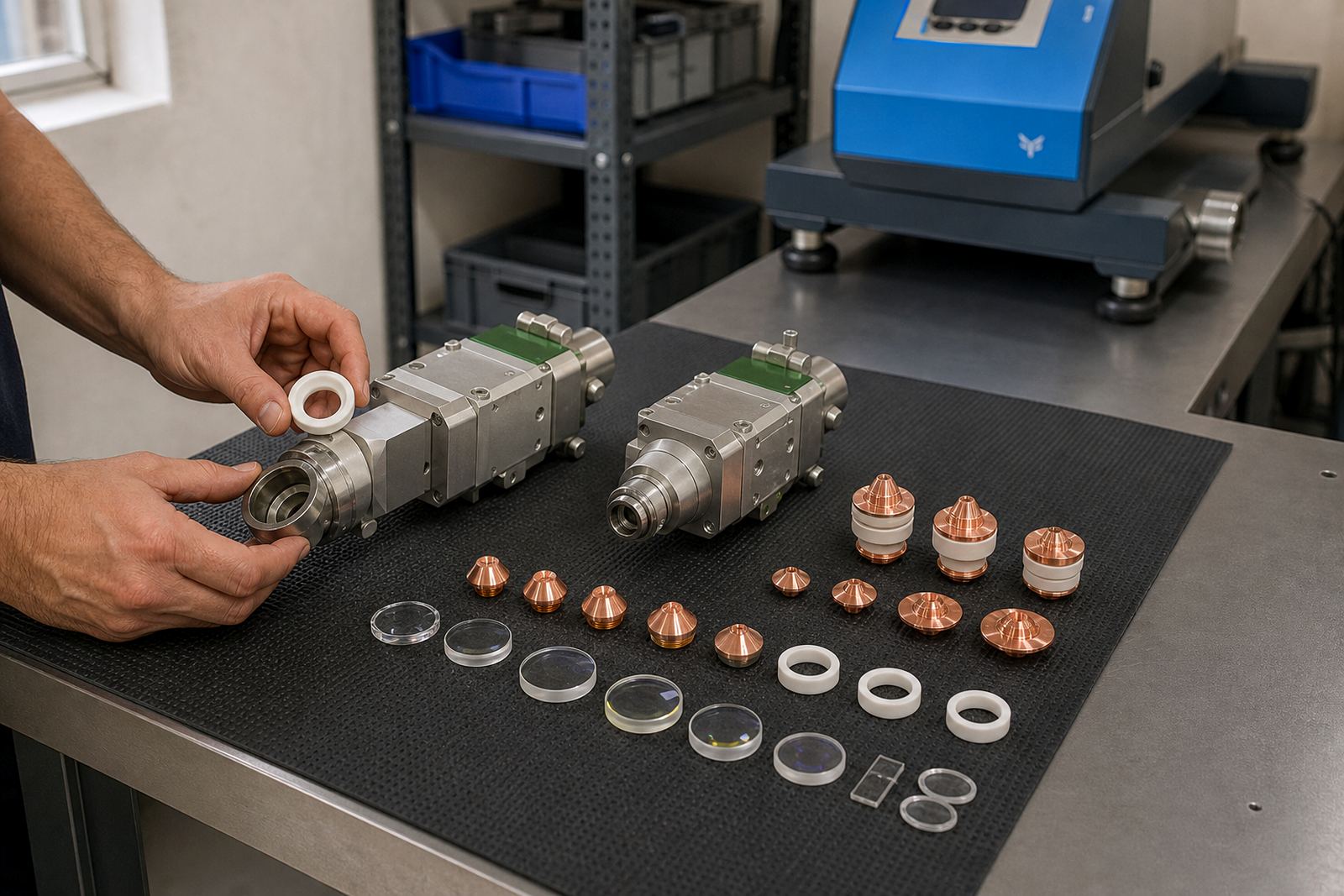
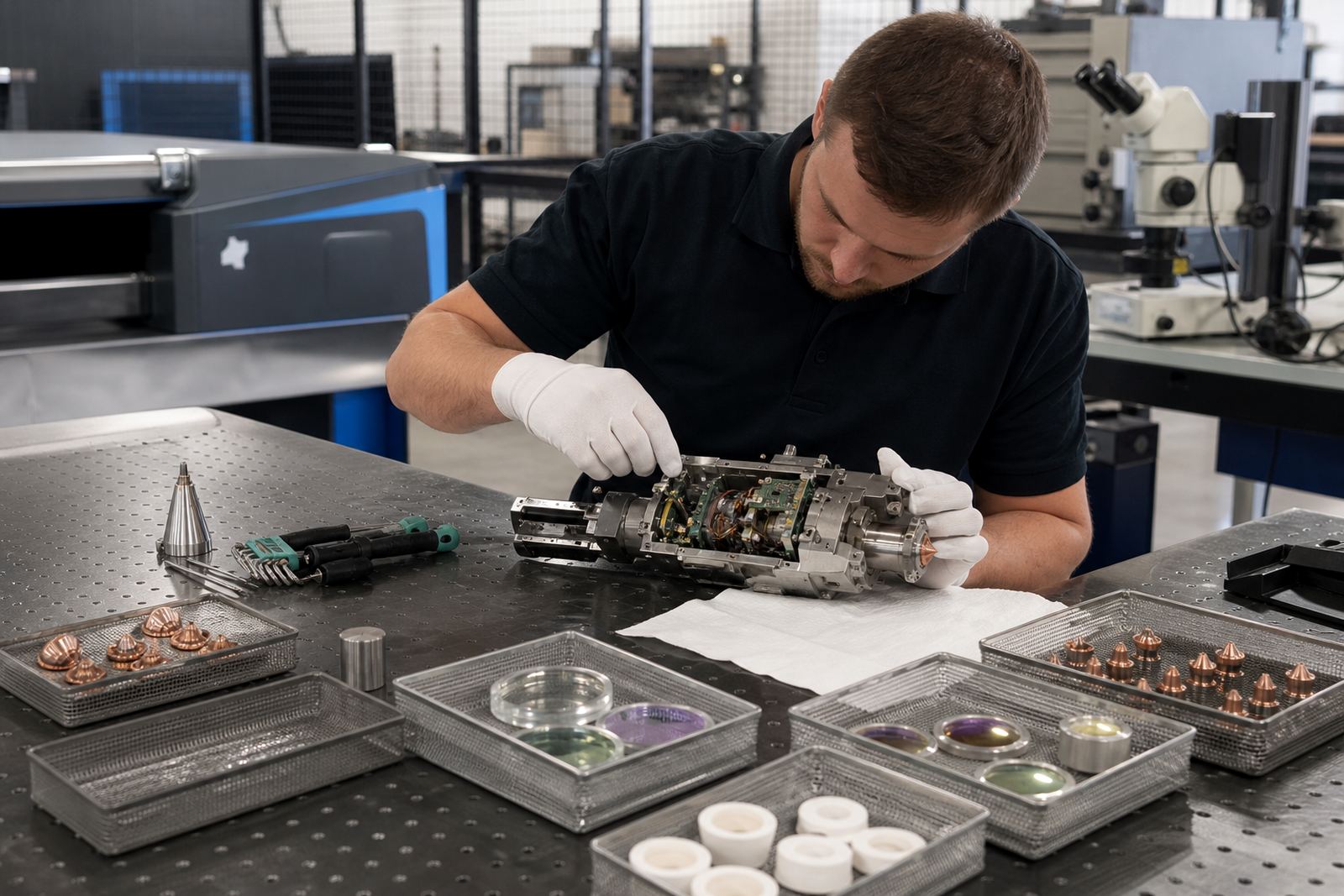
We open the head, remove the consumables and check the internal parts that affect cutting quality. That includes nozzles, focus and collimator lenses, protective windows, ceramic rings, sealing surfaces and the gas path inside the head body. Any dust, spatter marks or heat staining gets noted before the parts are cleaned and fitted back in the right order.
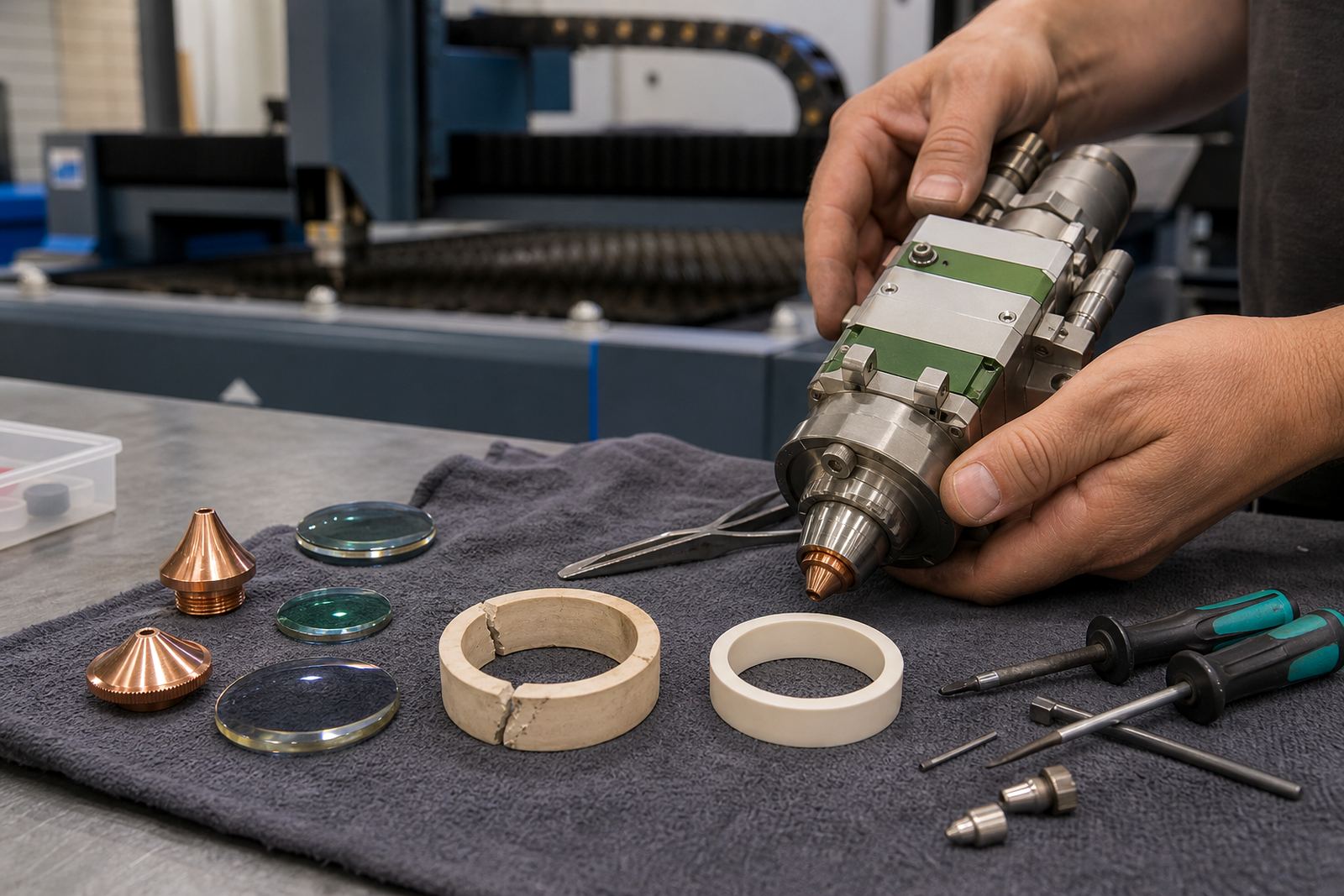
The bench gives a controlled space for work that is awkward on the machine. It lets us check the condition of the lens seats, inspect the ceramic ring for cracks or carbon tracking, and confirm that the nozzle sits straight with no wobble. Where the head has capacitive height sensing, we check the sensor face and the parts around it for contamination or damage that can upset stand-off control.
- Strip-down of the cutting head body and removable wear parts
- Cleaning of lens pockets, seals, nozzle seats and sensor surfaces
- Inspection for crash marks, scoring, heat damage and contamination
- Reassembly with the correct seating and alignment sequence
Bench steps that keep the head square
We start with identification and a visual check, then measure the condition of the parts that matter most. The head is opened carefully so seals, threads and optical surfaces are not marked during removal. We then clean the optic path, check the ceramic ring, inspect the focus area and confirm the nozzle bore is free of debris. If the focus setting has drifted, we record that and set it back to the agreed cutting setup.
The reassembly stage is just as important. Lenses are handled with care, the protective window is checked for clouding or pits, and the head is rebuilt with attention to torque, seating and concentricity. Once assembled, the unit is checked again for movement, leakage points and any sign of a poor gas seal.
- Initial condition check and part identification
- Optical cleaning of focus and collimator lenses
- Nozzle centring and seat inspection
- Focus setting check and head rebuild
- Final bench inspection before handover or dispatch
Parts, sizes and checks we work with
The service covers common fibre laser cutting head parts used on sheet-metal machines. We work with single layer nozzles and double layer nozzles, protective windows in the usual circular formats, focus lenses and collimator lenses matched to the head design, plus ceramic rings used to hold the consumable stack in place. Where the setup uses capacitive height sensing, we check the sensor face and surrounding components for contamination that can affect reading stability.
Head condition is judged on practical signs rather than guesswork. We look at lens clarity, seal integrity, nozzle edge condition, ceramic ring fit, thread wear and any evidence of poor cleaning routine. If the head has had a crash, the inspection includes runout signs, bent internal parts, damaged threads and scoring around the gas path. That gives the shop a clear picture of what is serviceable and what should be replaced.
- Single layer and double layer nozzles
- Protective windows and optical lenses
- Ceramic rings and sealing parts
- Capacitive height sensing components
- Focus setting and centring checks
How a bench service is carried through
A typical bench job starts when the head arrives at our Spartan, Kempton Park workshop or is removed from the machine at site and sent in for strip-down. After the first inspection, we separate the serviceable parts from the worn items and clean the full assembly. The optics are inspected under clean conditions, the gas path is checked for dirt or restriction, and the ceramic ring is replaced if it shows cracking or loss of fit.
Once the parts are back together, we verify that the nozzle sits correctly and that the lens stack is seated without tilt. If there are signs of head seal wear, we rebuild the seal set before the final check. For shops working with thicker sheet or mixed material grades, focus position and nozzle condition matter a great deal, so we keep those checks part of the standard process rather than as an afterthought.
Work can be done as a bench-only service or combined with on-site head alignment if the machine needs in-field checking after reinstallation. We also prepare spare heads for shops that want a changeover unit ready for use.
Turnaround, pricing and what changes the cost
Bench service pricing depends on the head type, the parts that need replacement, the amount of cleaning needed and whether the head has crash damage or sensor faults. A routine strip, clean and rebuild is priced differently from a head that needs lens replacement, seal work, ceramic parts and deeper inspection. Where extra time is needed for damaged threads, bent fittings or contamination inside the gas path, that is reflected in the service scope rather than hidden in a vague line item.
We quote from the condition of the head and the parts list, not from a generic guess. That gives sheet-metal shops a cleaner way to plan the job, especially when several heads need attention in one batch. For regular production floors, it also helps to separate light cleaning work from full rebuilds and crash recovery.
- Condition-based pricing on inspection and parts
- Separate scope for cleaning, rebuild and damage repair
- Useful for single heads or multiple units in a batch
- Suitable for planned workshop service or urgent repair work
Aftercare for the next cut batch
After the head leaves the bench, we share the points that matter at handover: fitted parts, any wear signs still visible, and the checks to watch when the head goes back into service. That may include lens cleanliness, nozzle condition, sensor face cleanliness and a reminder on cleaning routine for the optical path. If the machine starts showing unstable height control, poor pierce behaviour or rough edge quality, those are the first signs to inspect.
Our aim is not to clean the head once only. It is to leave the shop with a clearer unit, a known parts condition and a practical service record that helps the next inspection make sense. For sheet-metal workshops in Johannesburg, Pretoria, Rustenburg, the East Rand, Durban and Cape Town, that becomes important when output is tight and the machine must remain steady.
Customers contact us through the form on our contact page, and we manage bench service from Spartan, Kempton Park with dispatch support throughout South Africa.
Key facts
| Service scope | Strip, clean, inspect and reassemble fibre laser cutting heads on the bench |
|---|---|
| Parts covered | Nozzles, focus lenses, collimator lenses, protective windows and ceramic rings |
| Checks included | Capacitive sensing, focus setting, gas path and seal condition |
| Work location | Bench service in Spartan, Kempton Park |
| Coverage | Shops on the East Rand, in Pretoria and out in Rustenburg send heads to our Spartan bench, and Durban and Cape Town orders go by courier |
| Fitment notes | Suitable for common sheet-metal fibre laser cutting head assemblies |