

What the lens cleaning service covers
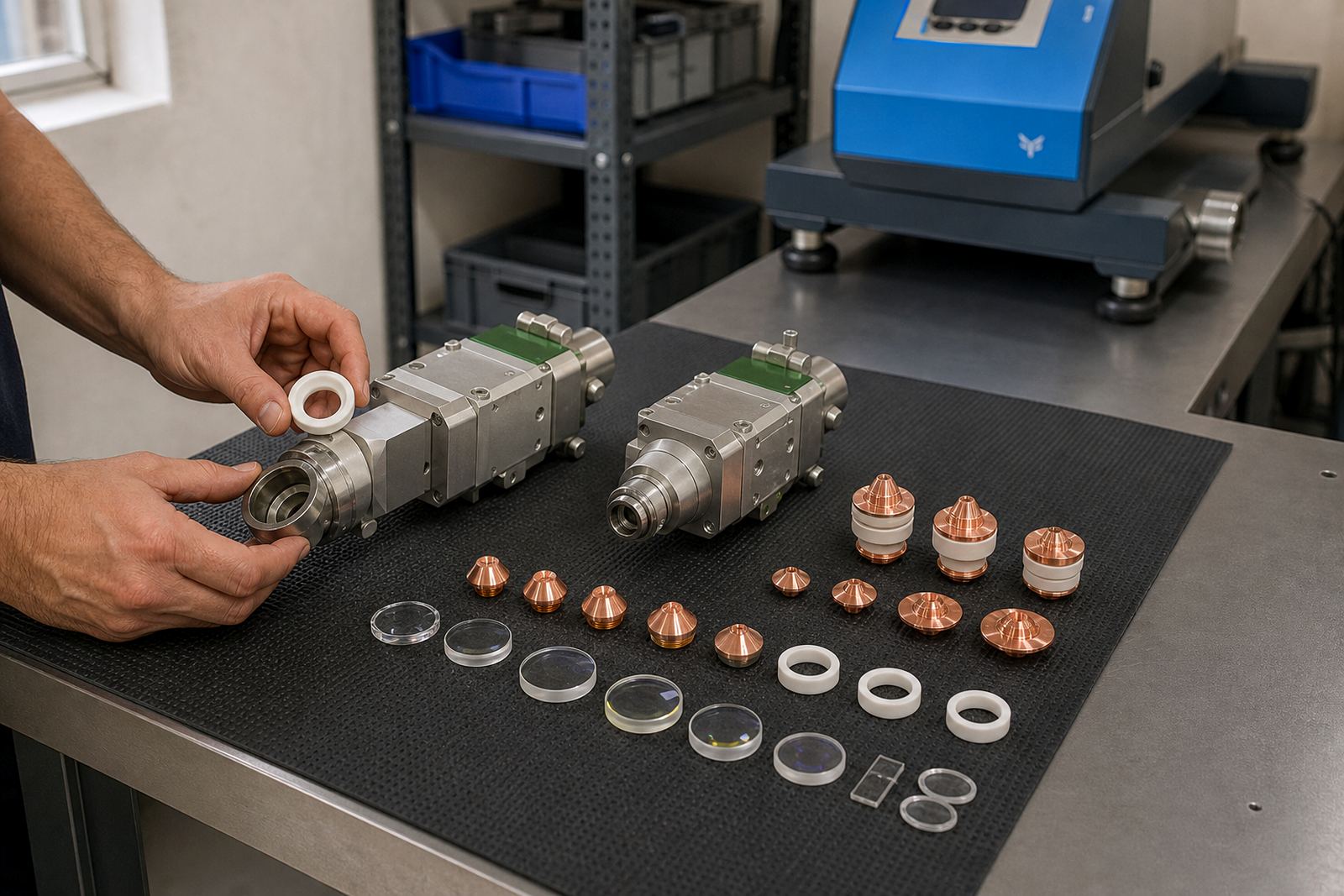
Lens cleaning is for focus lenses and collimator lenses that have picked up smoke film, dust, fine slag, oil mist or light spatter residue. The aim is to restore a clear optical surface without introducing scratches, edge chips or fibre marks. We inspect the lens first, then decide whether cleaning is suitable or whether the lens should be replaced.
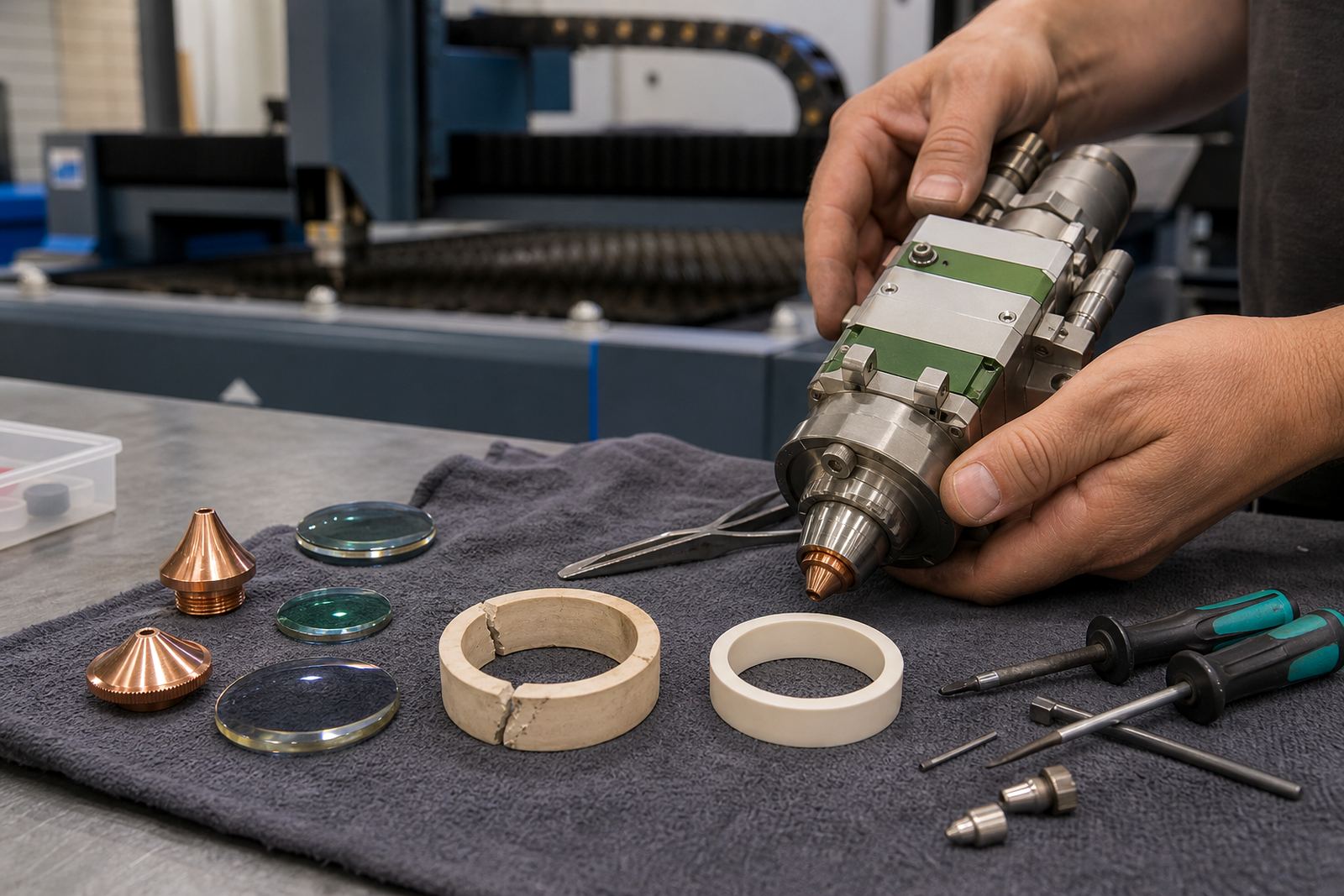
The service suits cutting heads used on mild steel, stainless steel and aluminium sheet. We also check the surrounding optical stack, ceramic ring condition, nozzle seating and the state of the protective window, because contamination often starts with an issue outside the lens itself. A dirty gas path or poor centring can put the same residue back onto the optic after the first test cut.
- Focus lens cleaning and surface inspection
- Collimator lens cleaning where access and condition allow
- Checking for burn marks, haze and pinning on the coating
- Review of nozzle height, seal fit and gas flow path
How we handle the optic on the bench
Bench work starts with safe stripping of the cutting head to expose the optical section. The lens is removed with clean handling tools, then examined under bright light and magnification for coating damage, residue rings and any trace of micro-etching. If the lens has been hit by heat or cross contamination, cleaning will not improve the surface, so we stop there and advise on the next step.
When cleaning is suitable, we use approved optical wipes, suitable cleaning fluid and a controlled technique that avoids dragging grit across the glass. Edges are handled carefully because a small chip can become a bigger fault once the head is back in service. The lens pocket, retaining ring and nearby seal surfaces are cleaned at the same time so fresh contamination does not settle straight back onto the optic.
- Controlled strip-down in a clean bench area
- Optic inspection before any wipe-down
- Cleaning of lens pocket, seals and retaining parts
- Reassembly with attention to seating and orientation
Site work for heads that cannot leave the machine
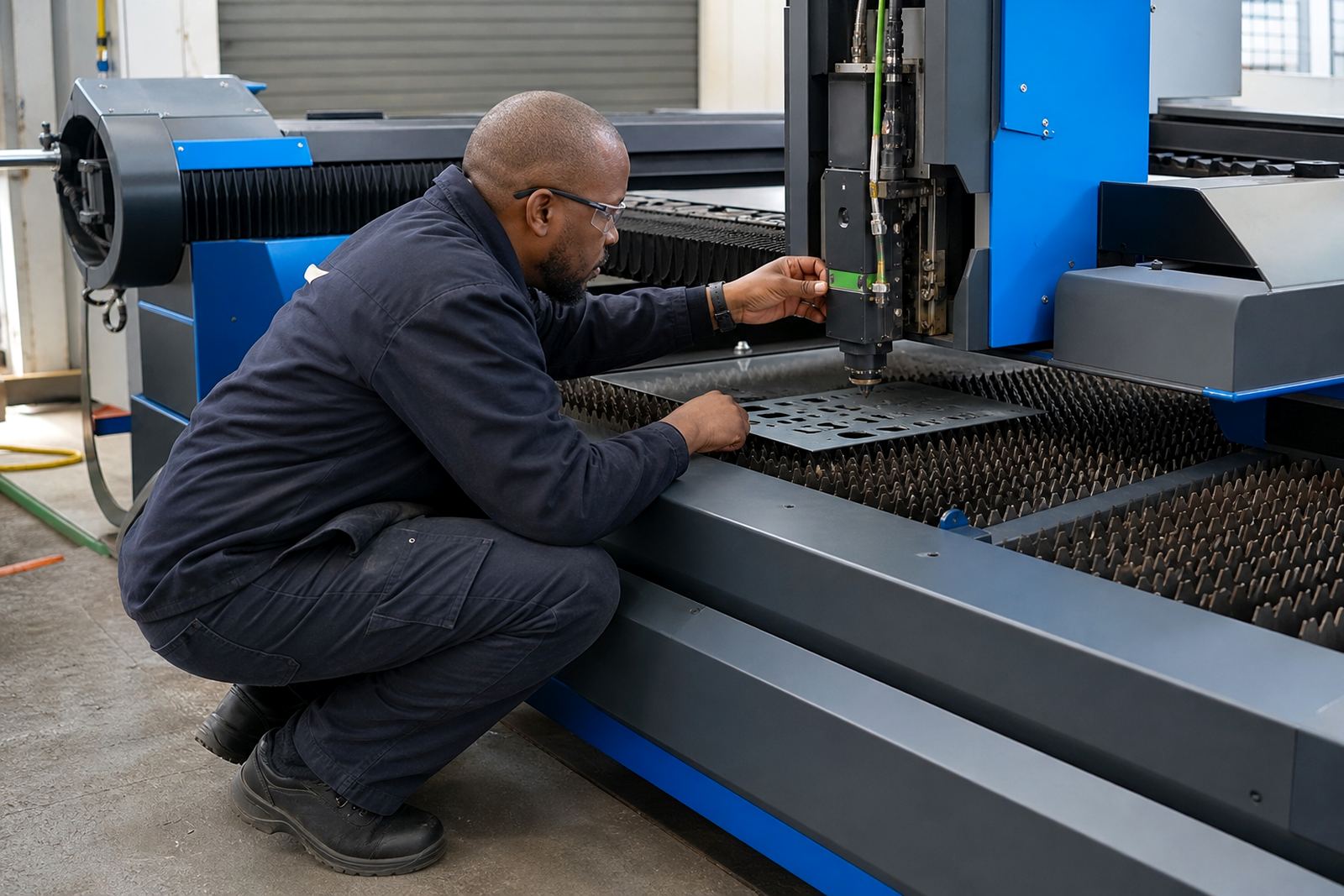
Some shops need on-site attention because the head is part of a busy cutting cell or the machine cannot be taken out of production for long. In those cases we attend to the cutting head at your premises and work through the cleaning and alignment checks in place. That includes confirming the lens condition, checking the protective window, and confirming that the head is sitting square to the machine axis.
On-site cleaning is more limited than bench work, but it still covers practical faults that cause poor cut edge quality, flare at pierce points and unstable beam focus. If we find deeper damage, we will not force the lens back into service. The head may need bench service, replacement optics or a broader inspection of the gas path and sensor alignment.
- Lens inspection at the machine
- Protective window check before opening the optical path
- Head alignment check after reassembly
- Cutting test review where the shop allows it
Cleaning steps that sit around the optics
Lenses do not fail in isolation. In many cases the real fault is a dirty nozzle, a worn ceramic ring, a leak around the seal or a focus setting that is drifting from the machine’s normal window. We therefore treat lens cleaning as part of a wider head check rather than a stand-alone wipe. That approach helps prevent repeat contamination and keeps the beam path stable.
We commonly review nozzle centring, capacitive height sensing response, protective window condition and the gas path inside the head. If the machine has been cutting with a rough pierce, heavy dross or unstable assist gas, the lens can show patterns that point to the root cause. Cleaning the optic without checking those parts would only hide the symptom for a short while.
- Nozzle centring and seating check
- Capacitive sensor response check
- Gas path inspection for dirt or leak points
- Focus setting review against the cut condition
Turnaround, pricing and what affects the cost
Lens cleaning is charged based on the head model, the state of the optic and whether the work is done on the bench or at your site. A simple clean on a lens that has only light contamination takes less handling than a lens that needs full strip-down, inspection and reassembly. If the coating is damaged, we do not price the job as a cleaning task because the answer is replacement, not polishing.
Our pricing approach is practical and tied to the actual work needed. Shops usually send the head details, machine type and a short fault description through our contact form, then we judge the likely scope before work begins. For planning purposes, it is also useful to note whether the head has had a crash, whether the protective window has failed, and whether the issue shows up on one material or across the full cutting range.
- Bench cleaning or site cleaning priced separately
- Condition of the lens affects the final scope
- Crash damage changes the service path
- Replacement optics are quoted where cleaning is not suitable
Aftercare after the lens is back in service
After the cleaning work, we explain what to watch for on the next cuts. That usually includes cut face haze, burr at the edge, flare on pierce, unstable focal response and repeated contamination patterns around the nozzle area. If those signs show up, the lens may be clean but the cause still sits in the head or the gas path.
We also explain how to handle the optic during normal shop work so new contamination does not build up too quickly. Keep the protective window in good condition, avoid rough handling during nozzle changes, and make sure the head is not exposed to unnecessary dust while the machine is being loaded or swept. If a follow-up inspection is required, we can look over the head again on the bench or on site, depending on the machine and fault pattern.
- Review of cut quality after the cleaning work
- Check for recurring residue around the head
- Protective window and nozzle condition to monitor
- Further head inspection where contamination returns
Key facts
| Service type | Focus and collimator lens cleaning for fibre laser cutting heads |
|---|---|
| Optics covered | Focus lenses and collimator lenses |
| Related checks | Protective window, nozzle centring, ceramic ring, capacitive sensor |
| Method | Bench service or on-site head work, depending on access |
| Coverage | Spartan, Kempton Park and across South Africa |
| Typical fault signs | Smoke film, dust, light spatter residue, haze and cut instability |