What a collision check looks for on the head
We strip the head down far enough to see where the impact travelled. A blunt crash can nick the nozzle seat, shift the centre line, bruise the ceramic ring, crack a protective window, or leave the focus lens slightly out of position. On fibre laser machines that run thin sheet and higher cutting speeds, even a small offset can throw the beam off-centre and leave dross, taper or erratic piercing.
Our inspection covers the cutting head body, nozzle holder, centring surfaces, lens seats, seal faces and the lower head parts that carry the nozzle stack. We also look at the gas path for soot, burrs and heat marks, because those signs tell a lot about the force of the strike.
- Nozzle seat damage and ovality
- Protective window marks, cracks or frosting
- Lens ring wear and contamination
- Ceramic ring chips, fractures and heat stress
- Signs of fibre back-reflection or head misalignment
Strip-down notes from the bench
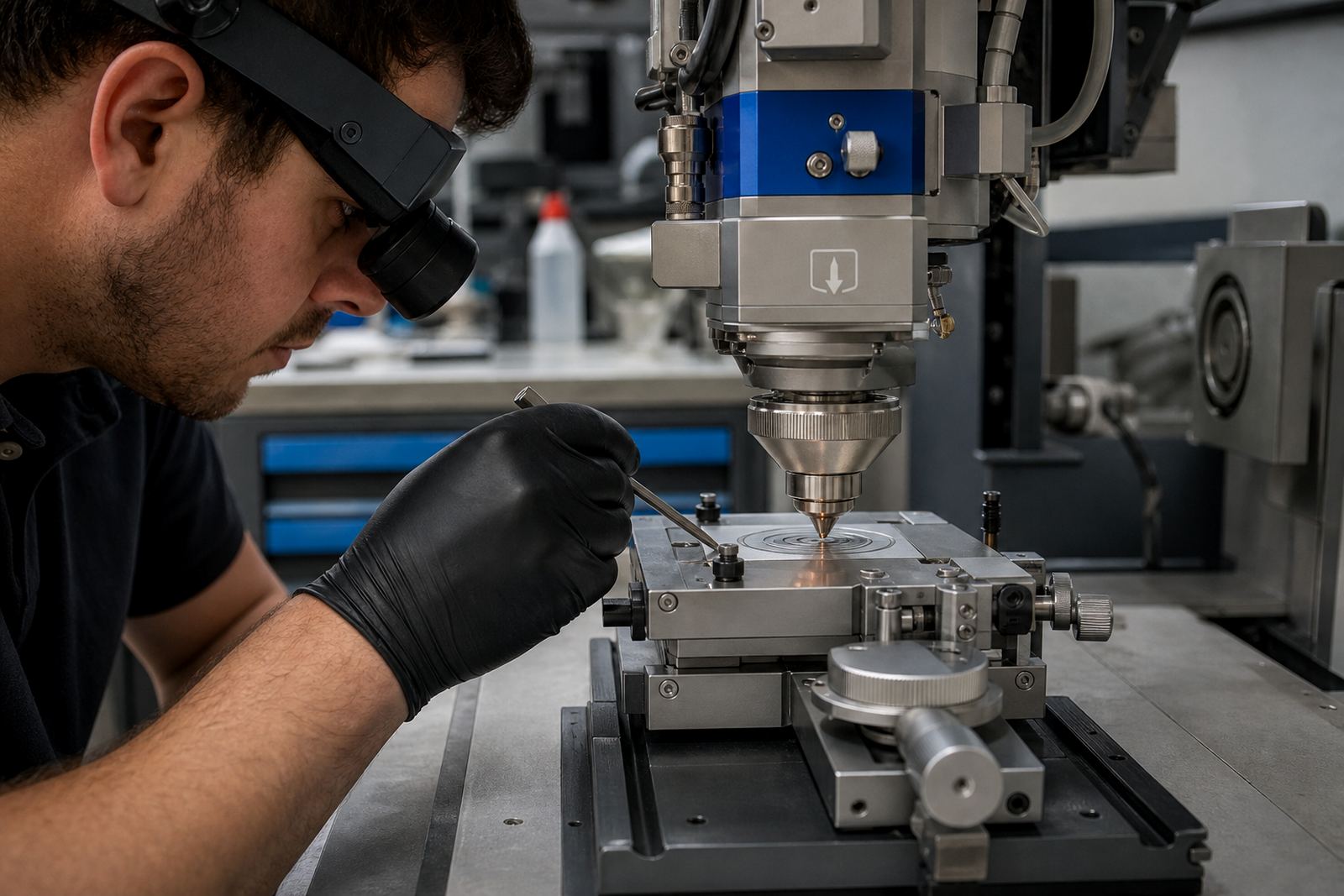
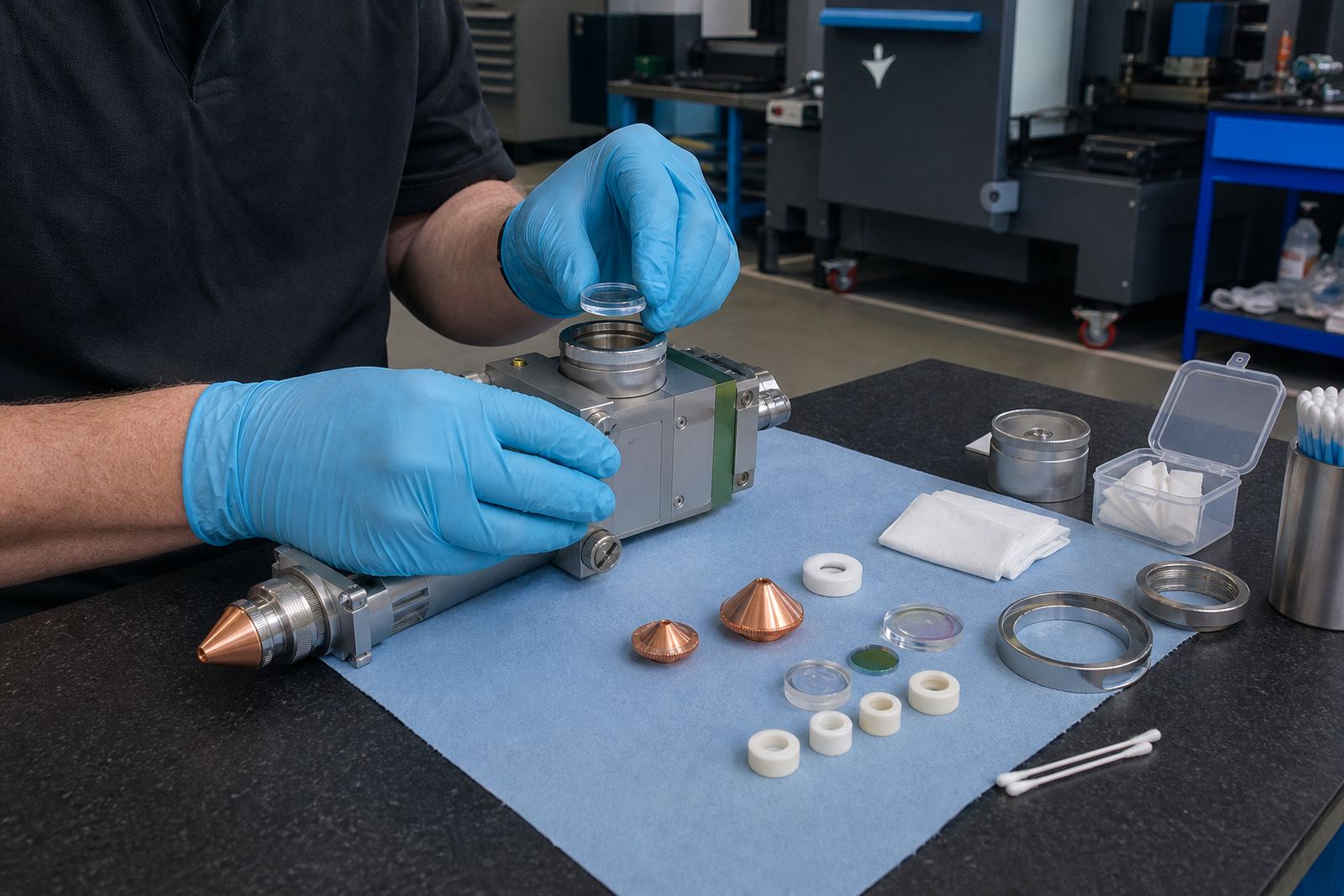
Most crash inspections start on the bench in Spartan, Kempton Park. We open the head carefully, photograph the damaged points and check whether the optics stack still sits square in its carriers. If the head has been forced during a pierce-up or the sheet lifted into the nozzle, the internal face of the head often shows a witness mark that needs closer checking.
For some jobs, the damage is limited to the nozzle and ceramic ring. Other heads need a deeper review, especially when the collision has pushed the head sideways or marked the focus assembly. We treat each unit on its own, because the same impact can leave different damage on different machine models.
- Visual damage check under strong bench lighting
- Optics housing and seal face inspection
- Gas channel and thread condition check
- Head body straightness and fitting face review
On-site assessment when the machine cannot wait
If the head cannot be removed easily, or the machine must stay in place, we can inspect and align the unit on site. That is useful when a shop in Johannesburg, Pretoria, Durban, Cape Town or Rustenburg needs the machine assessed without moving the whole assembly. On-site work is often the faster way to tell whether the crash stayed at the nozzle end or reached deeper into the head.
Field inspection is practical for sheet-metal shops that run mixed thicknesses and frequent piercings. We check the head position, sensor behaviour, nozzle centre, focus setting reference and the visible state of the lower head parts. If the damage is beyond alignment, we mark what must be swapped before the machine goes back into normal cutting work.
Replacement parts and setup details that matter
Crash damage often means more than one part needs attention. A bent nozzle can be obvious, but a scuffed window, loose ceramic ring or marked focus lens can still affect cut quality after the head looks fine from the outside. We work with the common parts used in fibre laser cutting heads, including single and double layer nozzles, focus lenses, collimator lenses and protective windows.
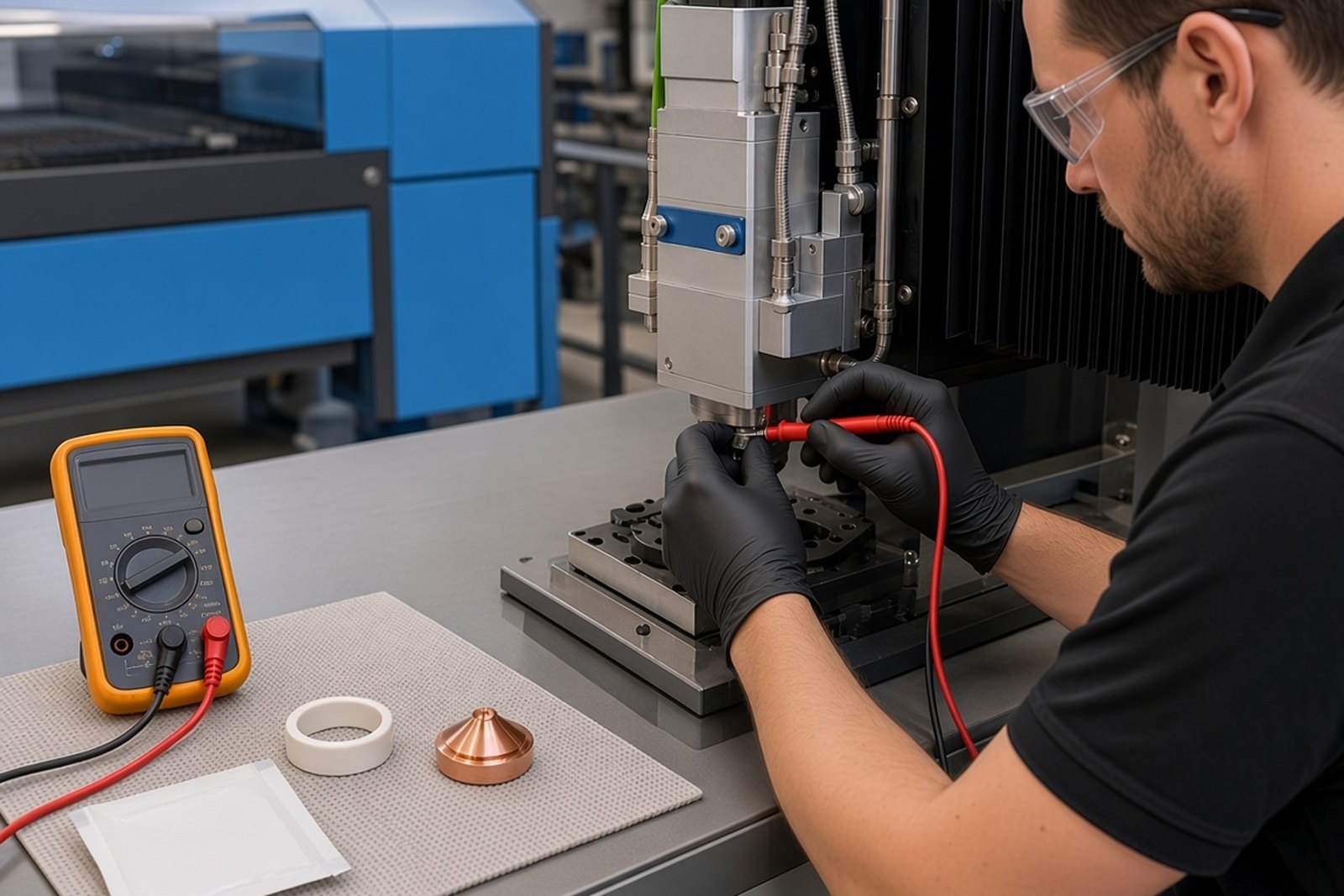
Where the head design uses capacitive height sensing, we also check the sensor tip, related spacing and the general cleanliness around the sensing area. Soot and spatter can confuse the signal and make the head behave poorly after an impact. Cleaning routines are included in the repair because a dirty optical path and a clean repair do not belong in the same job.
- Single and double layer nozzle fitment checks
- Focus lens and collimator lens seating review
- Protective window replacement if marked or cracked
- Capacitive sensor condition and spacing check
- Head seal and gas path cleaning after impact
How the inspection job moves from fault to verdict
We start with the fault description from the operator or maintenance team, then open the head and inspect the damage point by point. Next we test the fit of the nozzle and the state of the lower stack, then check whether the focus setting still tracks correctly. If the head has taken a hard knock, we record the wear pattern before any parts are changed, because that helps separate crash damage from ordinary contamination.
Once the damaged areas are identified, we note what can be cleaned, what needs alignment and what must be replaced. The result is a plain service note that tells the shop what the head needs before it can cut cleanly again. That usually helps when the machine has to go back into a busy cutting queue and the cause of the fault needs to be understood, not guessed.
Turnaround, pricing and what affects the job
Crash inspections are charged according to the work needed, not from a flat estimate. A light nozzle-end strike usually takes less work than a head that has marked the lens housing, damaged the ceramic ring and shifted the alignment. The final price depends on the head type, the extent of the damage, whether parts are reusable, and whether the job is done in the shop or on site.
Our service team handles small bench jobs and full field inspections across South Africa, with work routed through Spartan, Kempton Park. If the damage is limited, the job may stay at the bench for inspection, cleaning and part replacement. If the machine is tied up on the floor, on-site inspection and alignment can keep the assessment close to the problem machine.
Aftercare after a crash event
After the damaged parts are sorted, we check the head again under normal operating conditions so the nozzle centre, focus setting and gas path sit where they should. The shop should also watch for changes in kerf width, edge burn and piercing noise after the repair, because those are the first signs that the head still has a hidden issue. A clean head with the wrong setting can cut just as badly as a damaged one.
If the machine has had a hard crash, the operator should avoid pushing straight back into heavy production without a proper check. We keep the follow-up practical: inspect, clean, reset and prove the cut. That order matters when a fibre laser head has taken a hit and the goal is to get the machine working with fewer surprises.
Key facts
| Service area | Spartan, Kempton Park and major South African metros |
|---|---|
| Damage types | Nozzle strikes, pierce-up incidents, sheet collision marks, head knocks |
| Parts inspected | Head body, holder, nozzle, lenses, protective window, ceramic ring |
| Methods | Bench strip-down, on-site alignment, optical path review, gas path inspection |
| Related checks | Nozzle centring, focus setting, capacitive sensor, head seal |
| Typical outcome | Clean, realigned or repaired head with damaged parts identified |