What gets looked at before any claim is accepted
Warranty work starts with the condition of the part in hand, not only the fault on the machine. A nozzle with heat marks, a cracked ceramic ring, a scratched protective window or a lens with residue from oil or spatter can point to handling issues, poor sealing or a collision that happened before the part failed in service.
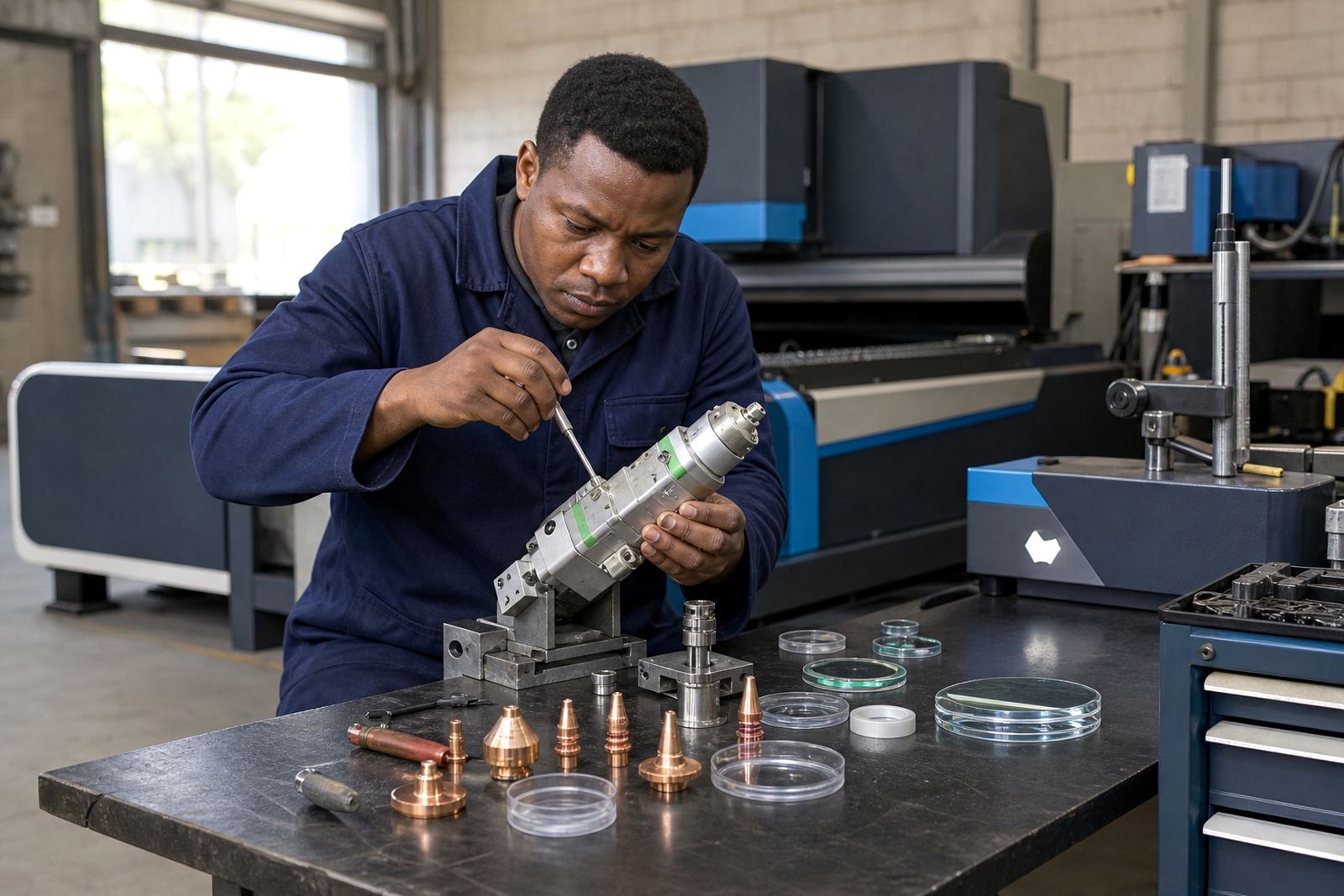
For cutting heads, the bench check normally covers physical damage, thread wear, seal condition, centring accuracy, lens seat condition and whether the head has signs of impact. If the unit was used with loose slugs, unstable gas flow or a misaligned stand-off, the failure pattern matters and so does the fitting condition.
Fitment must be clean, square and dry
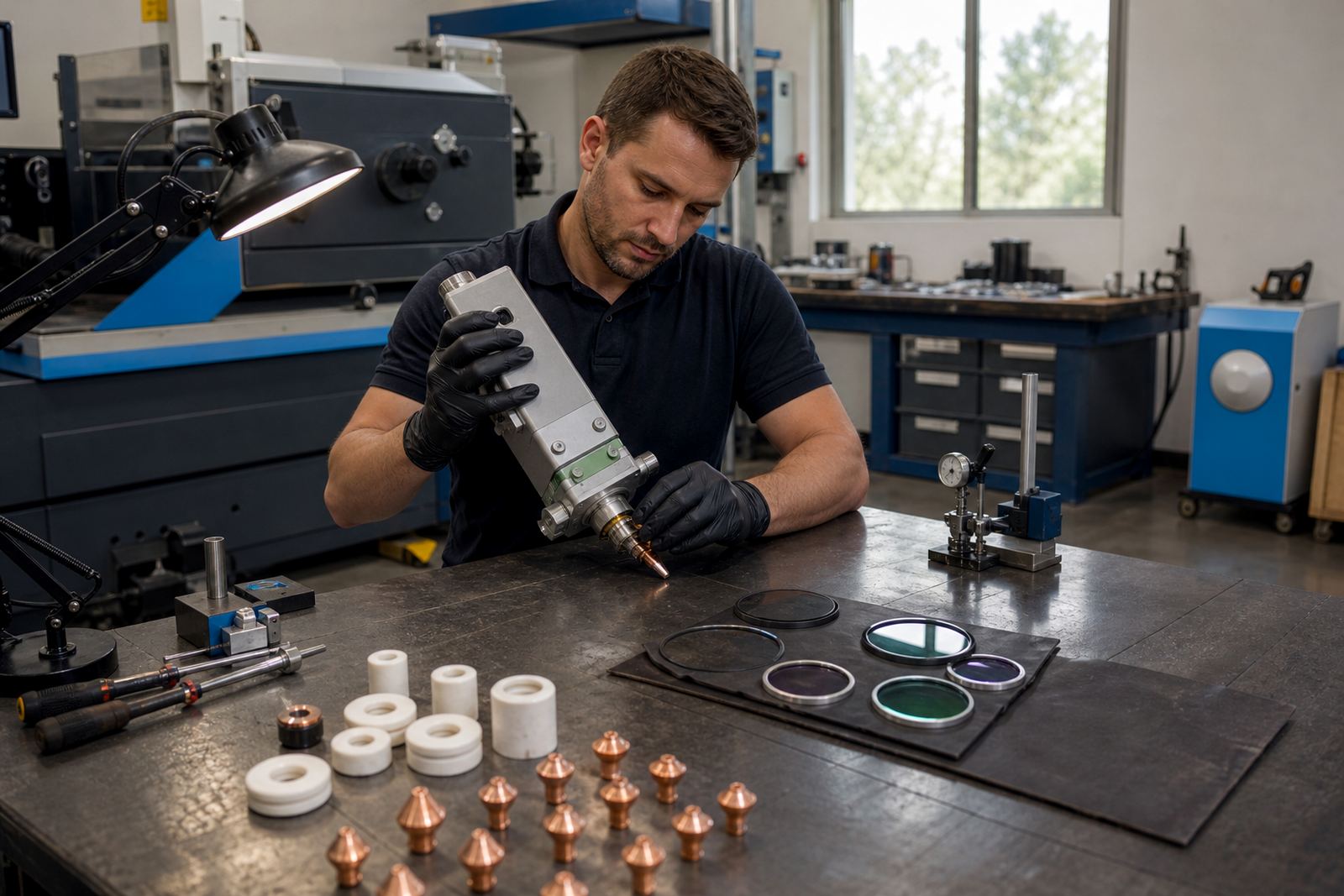
Most warranty disputes start with poor fitment. A nozzle that was over-tightened, a lens fitted with dust on the seat, or a protective window handled with bare fingers can fail before the machine has done much work. The same applies to focus and collimator lenses if the housing was opened in a dirty bay or the retaining ring was not seated evenly.
When a head is serviced on the bench or aligned on site, the fit must be checked in sequence. The optical stack should sit square, the ceramic ring must match the head design, and the nozzle face must be true to the cut path. If the head shows evidence of a crash, even a light one, the warranty position changes at once.
Exclusions that usually fall outside cover
Contaminated parts are the most common exclusion. Oil mist, coolant spray, dust from the sheet bay and fine metal particles can all mark a lens or protective window in a way that is not a materials fault. A nozzle blocked by spatter, or a ceramic ring cracked after repeated heating, is treated differently from a part that failed with normal use and clean handling.
Damage from collision, improper storage, rough transport, incorrect focus settings and neglected cleaning routines can also fall outside cover. If the head ran with poor capacitive height sensing or unstable stand-off, the resulting wear may show up as marking on the nozzle and lens stack rather than a single broken part.
What to send with a warranty note
When a part is returned for inspection, send the failed item with a short written note that says what happened, what material was being cut and whether the head was serviced, aligned or fitted with other new parts at the same time. That gives the bench team a cleaner path when checking the fault pattern.
It also helps to include the machine type, the nozzle style used, the lens position, the date of installation and any signs of arcing, spatter or gas instability. If the issue followed a crash or a clamp fault, say so plainly. Missing detail slows the inspection because the marks on the part have to tell the full story on their own.
How service checks support the warranty position
Bench Head Service, Nozzle Centring and Focus Setting Check are often part of a sound warranty record because they show the head was inspected rather than left to drift. A clean lens cleaning routine, fresh protective windows and a sound ceramic ring help separate normal wear from damage caused by contamination or a hard strike.
On-site Head Alignment is useful when the cut edge has changed, the pierce mark has opened up or the head keeps losing its cut position. In those cases the warranty note is stronger when the alignment history, gas path condition and capacitive sensor check are documented together. That record does not guarantee cover, but it does make the fault easier to read.
A practical check before anything is boxed up
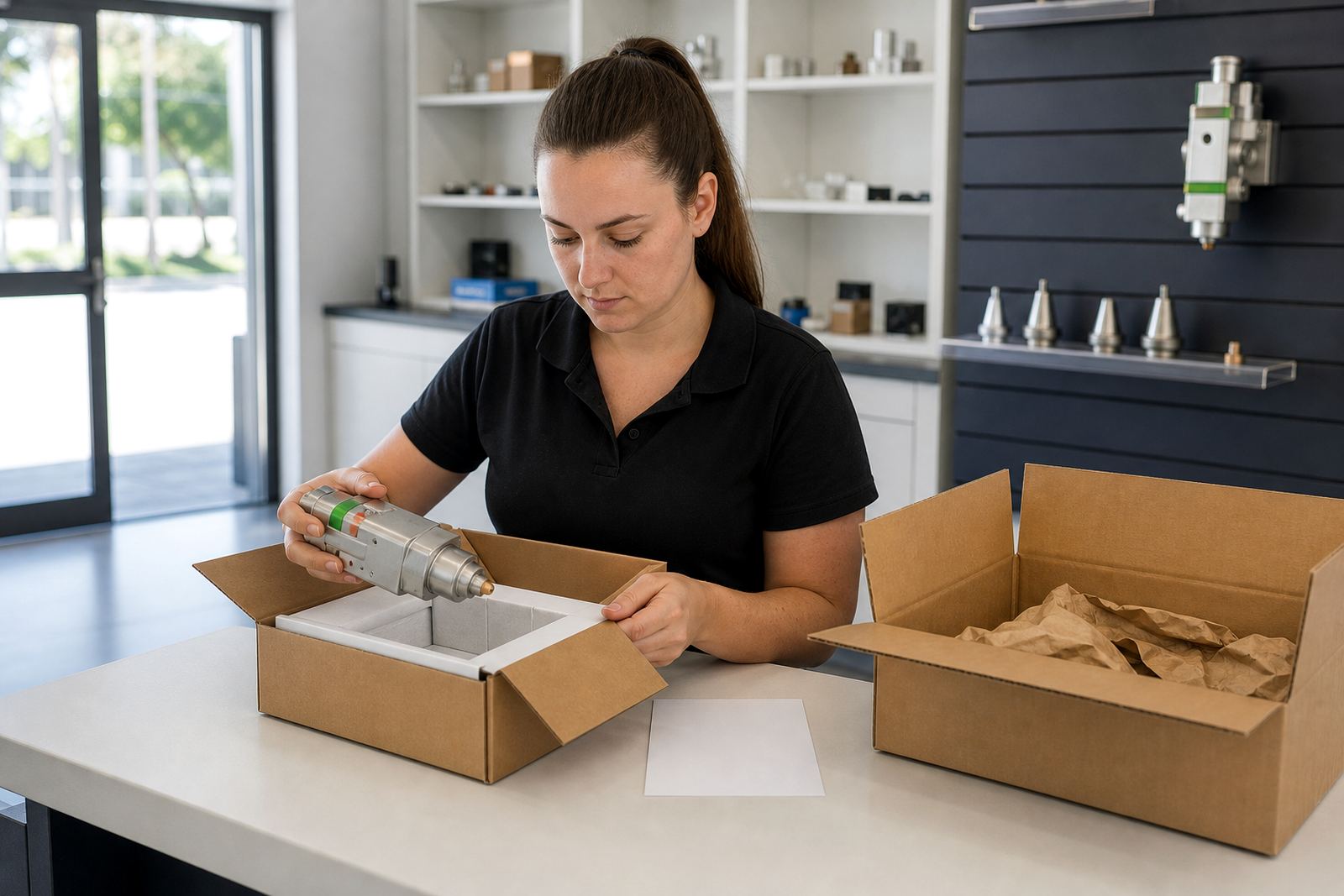
Before a part is sent in, wipe away loose dust and keep the failed item separate from good stock. Do not polish away the damage, because fresh marks can hide the original fault pattern. If a protective window is cracked, keep the fragments together. If a nozzle is burnt or ovalled, leave the face as found so the inspection can show how it failed.
For sheet-metal shops in Johannesburg, Pretoria, Rustenburg, the East Rand, Durban and Cape Town, the rule stays the same: handle cleanly first, write clear notes second, and do not mix damaged parts with parts that still check out. That is the best way to keep a warranty note readable and fair.