Start with the machine details that matter
The booking works best when you send the machine make and model, the cutting head type, the machine bed size, and the town where the work is needed. If the job is in Spartan, Kempton Park, that helps us set the right bench work or field visit, and if it is in Johannesburg, Pretoria, Durban, Cape Town or Rustenburg, mention whether the machine is in a factory, job shop or warehouse.
Add the sheet thickness range, the main material cut, and whether the fault appears on thin plate, heavier plate or both. A note on how the cut edge looks, whether there is dross, bevel or spatter, often points us to nozzle centring, focus position or a dirty optical path.
What to include when the head has stopped cutting cleanly
When a fibre laser head starts misbehaving, the pattern matters more than a general complaint. State if the problem showed up after a crash, a nozzle change, a lens swap, a protective window change, or after the machine was parked for a while.
- Alarm messages or fault codes from the machine display
- Whether the head loses height signal or hunts up and down
- Signs of smoke, dust or splash marks inside the head
- Any change in pierce quality, corner sharpness or edge colour
- Whether the issue affects one head or more than one station
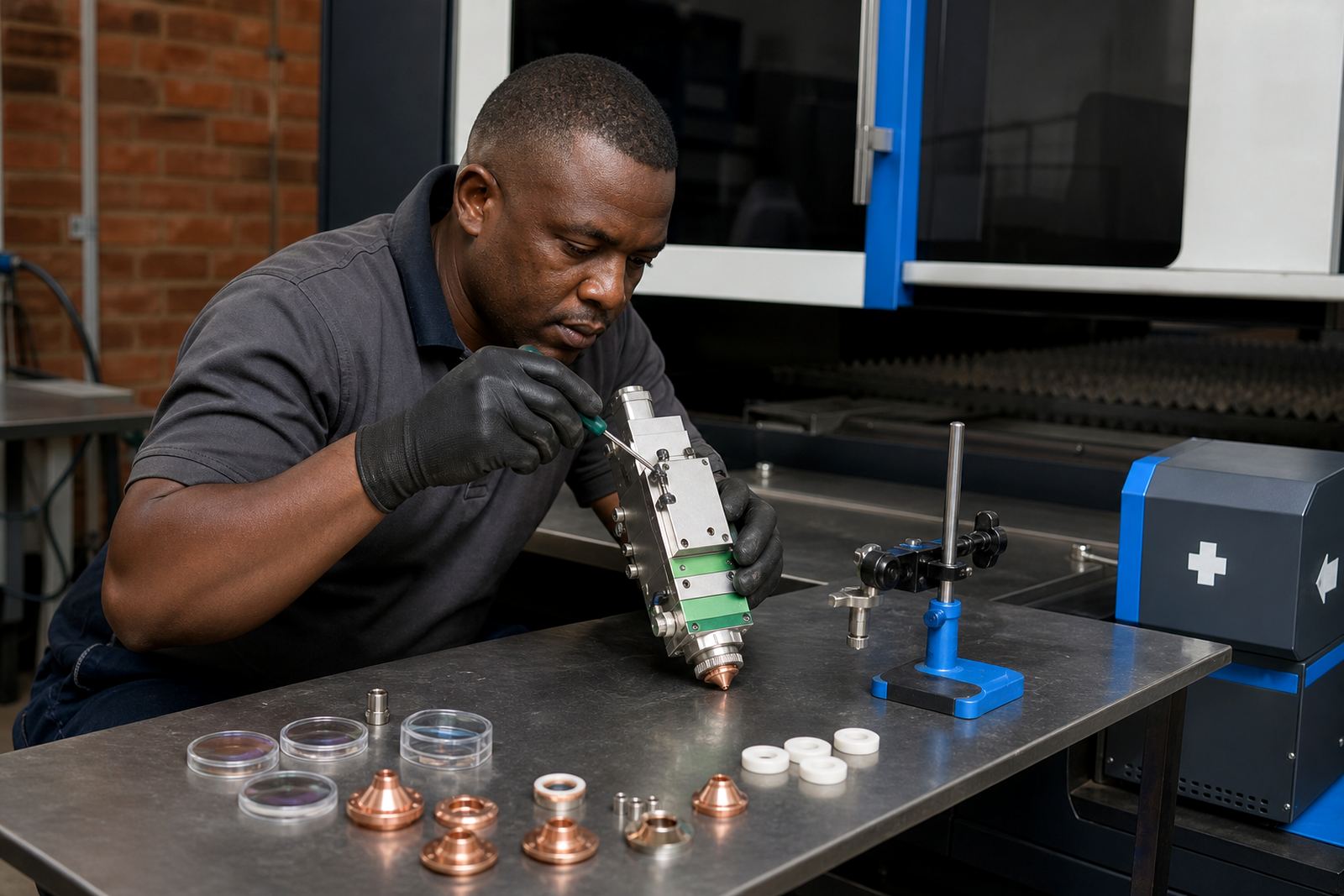
Those notes help with capacitive sensing checks, gas path inspection and a proper focus setting check instead of a guess.
Parts to list before a bench service
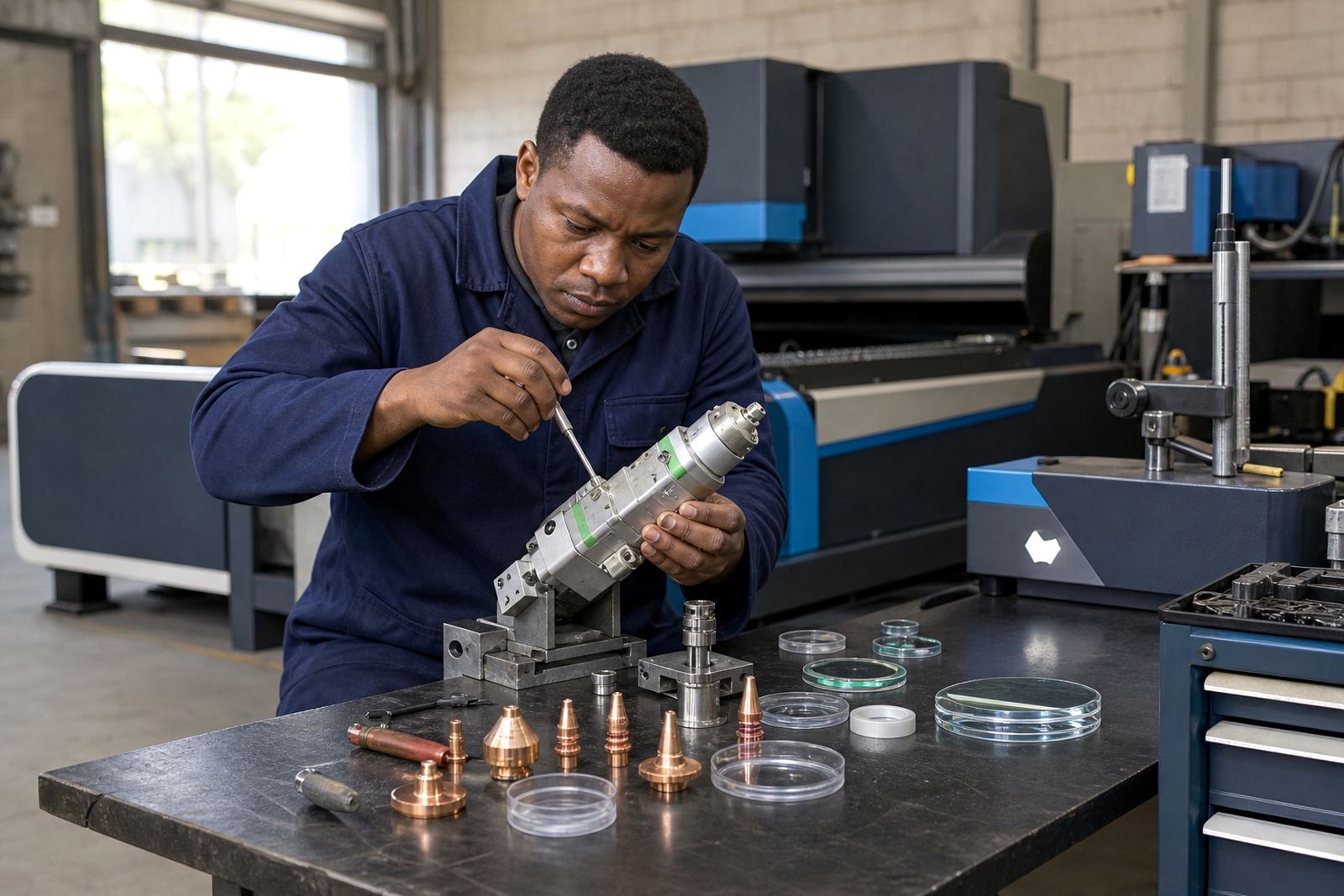
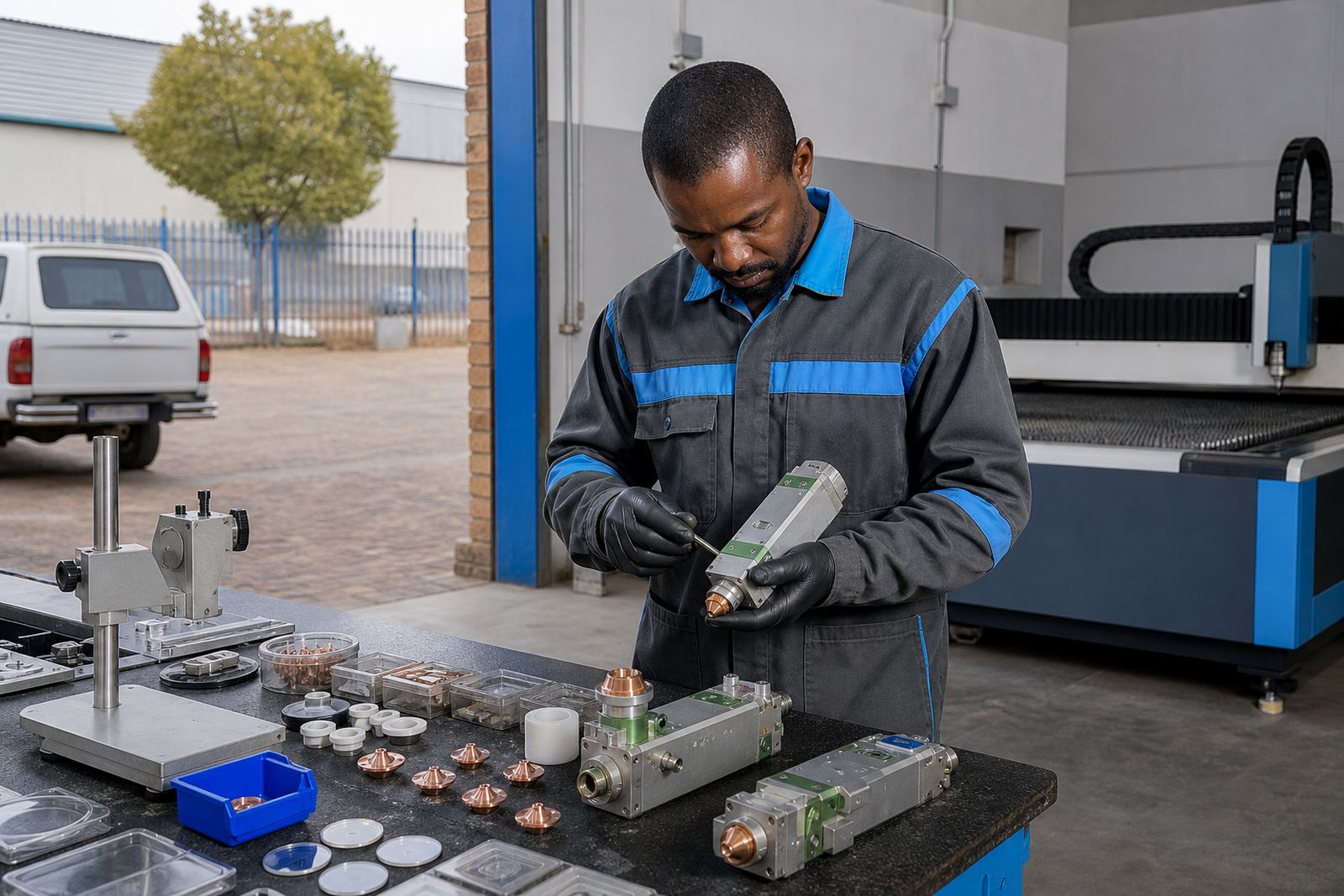
For bench servicing, tell us which parts are already fitted and which ones you want checked or replaced. That includes nozzles, single layer or double layer, focus lenses, collimator lenses, protective windows and ceramic rings. If the head has a seal issue or signs of crash damage, mention that too.
It also helps to say whether the consumables have been stored in a dry cabinet or left in the workshop air. In coastal towns, humidity can leave a fine film on optics and a light trace of corrosion on exposed rings or fittings if the parts have sat open for too long.
- Nozzle bore size and nozzle type in use
- Lens type fitted in the focus and collimator positions
- Protective window condition, clean or marked
- Ceramic ring condition, cracked or seated badly
- Any spare head parts already in your store
How on-site head alignment is prepared
For on-site head alignment, the machine needs to be ready for access around the cutting area and the operator should know which axis or nest shows the fault. Say whether the machine needs nozzle centring, focus adjustment, sensor checking or a full head alignment after a collision.
We also need to know if the gas supply is stable, because dirty or inconsistent assist gas can make the cut look like an optics fault. A short note on the material on the table, the nozzle used and the current focus setting saves time when the machine is tested at the side of the bed.
The booking note that saves a second visit
A good booking note is plain and specific. Write the serial number, the machine location, the fault, the parts required and whether bench servicing or on-site work is preferred. If the machine must stay in production, say which shifts are available for access and which sections of the shop are clear for work.
Useful details for the booking note include:
- Machine model and cutting head type
- Current fault and when it started
- Parts needed for the job
- Town, site name and access point
- Whether the job is bench service, alignment or inspection only
That lets the team prepare the right tools, gauges and replacement parts before the machine is opened.
When a protective window or lens needs attention
If the cut quality drops but the head still tracks correctly, the issue may sit in the optics rather than the mechanics. Tell us if the protective window shows haze, pinholes or splash marks, and if the focus lens or collimator lens has signs of dust, heat tint or fine scratching.
Cleaning routines matter, but they need to be done carefully with the correct wipes and handling method. A lens that has been touched with bare fingers, or a window that has been cleaned with the wrong cloth, can leave marks that show up in the cut within the first few passes.
After the booking is set up
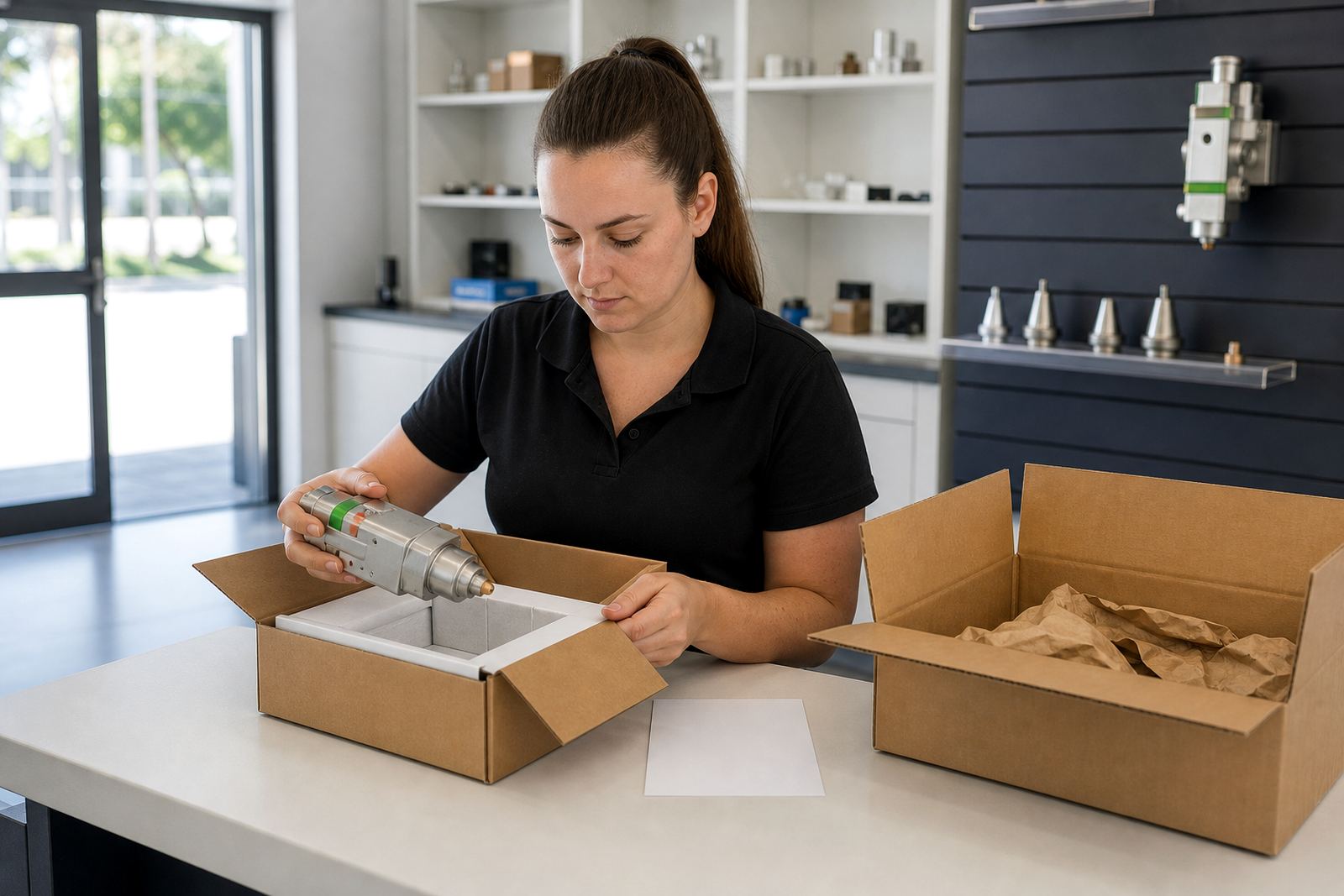
Once the booking is arranged, keep the machine notes together with the parts removed from the head. Put failed nozzles, used ceramic rings and marked windows in separate containers, not mixed with clean spares. That makes it easier to trace what failed, what was cleaned and what still needs checking on the next service.
If the machine is moving between Spartan and another site in Gauteng or further afield, note where the head was last aligned and which consumables were fitted at the time. Small records help with repeat faults, especially after crash damage, gas leaks or a change in focus setting.