How parcels leave Spartan, Kempton Park
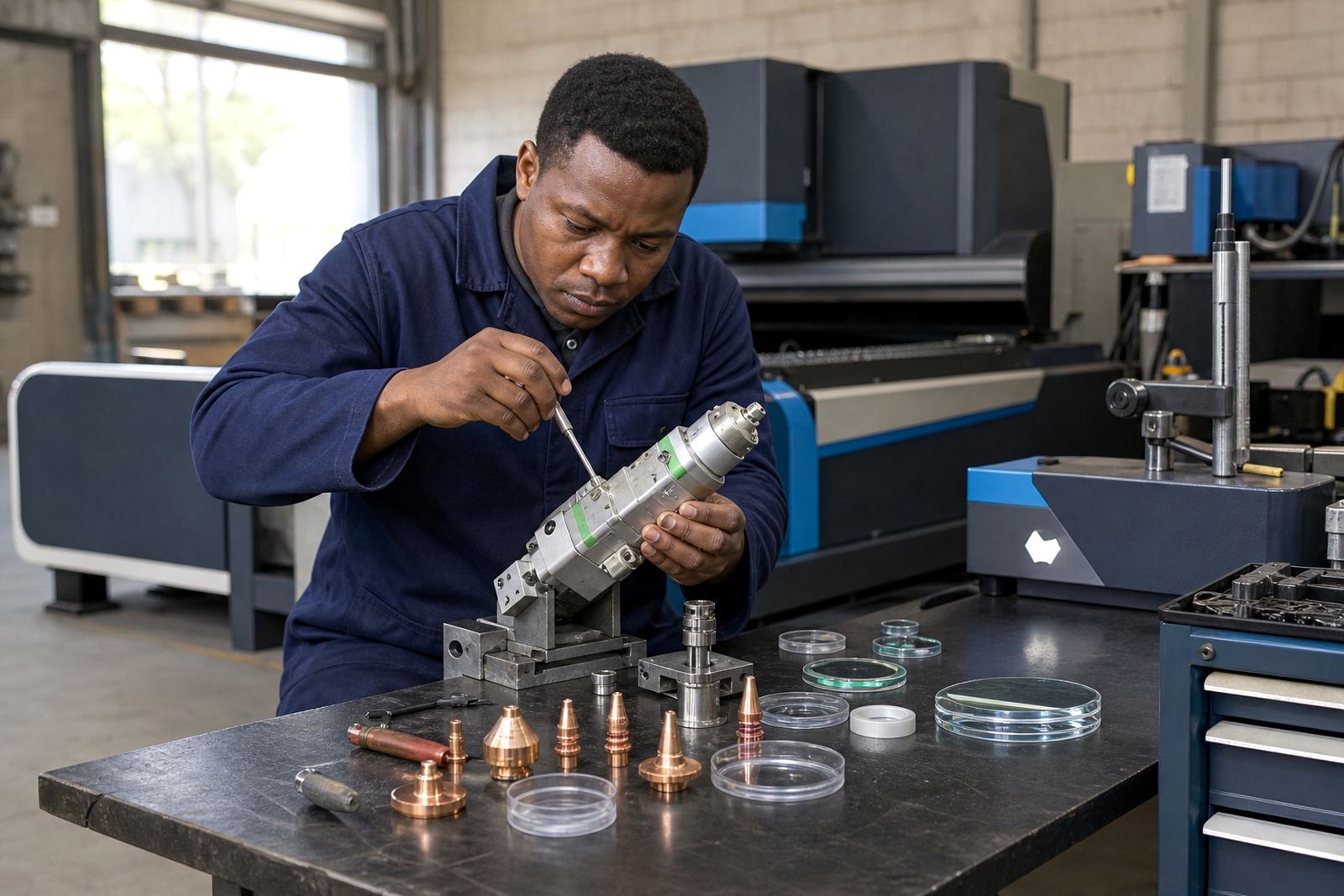
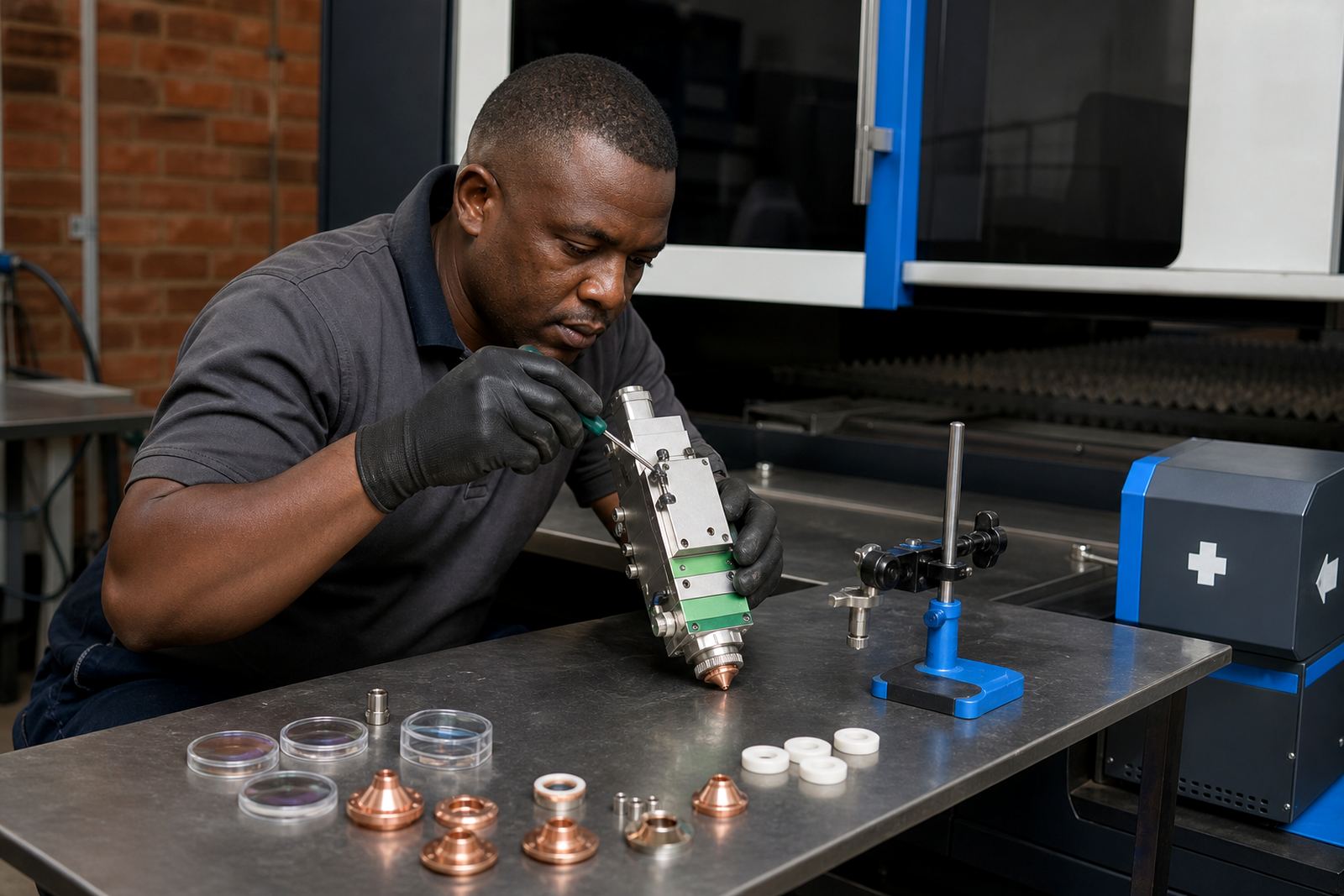
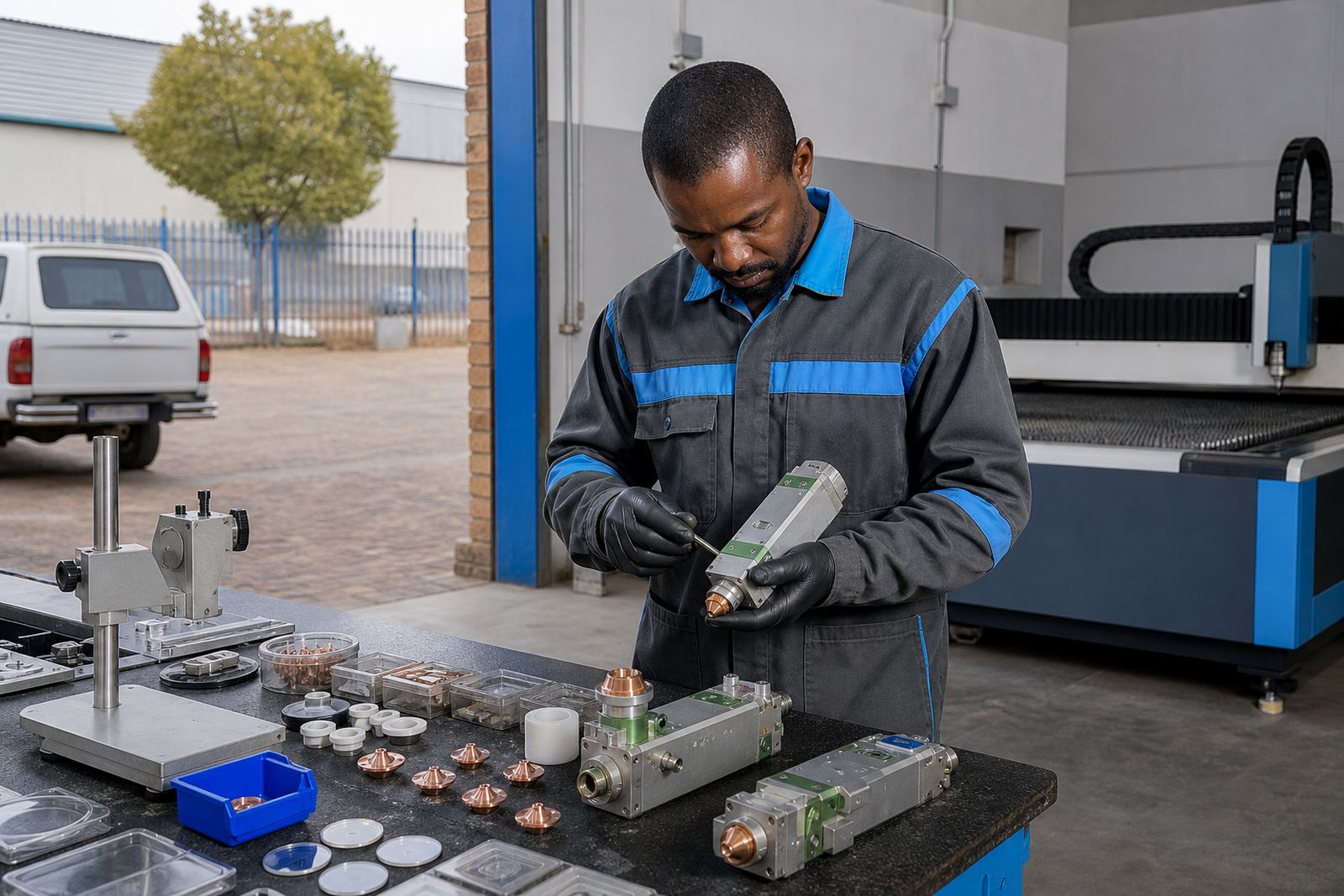
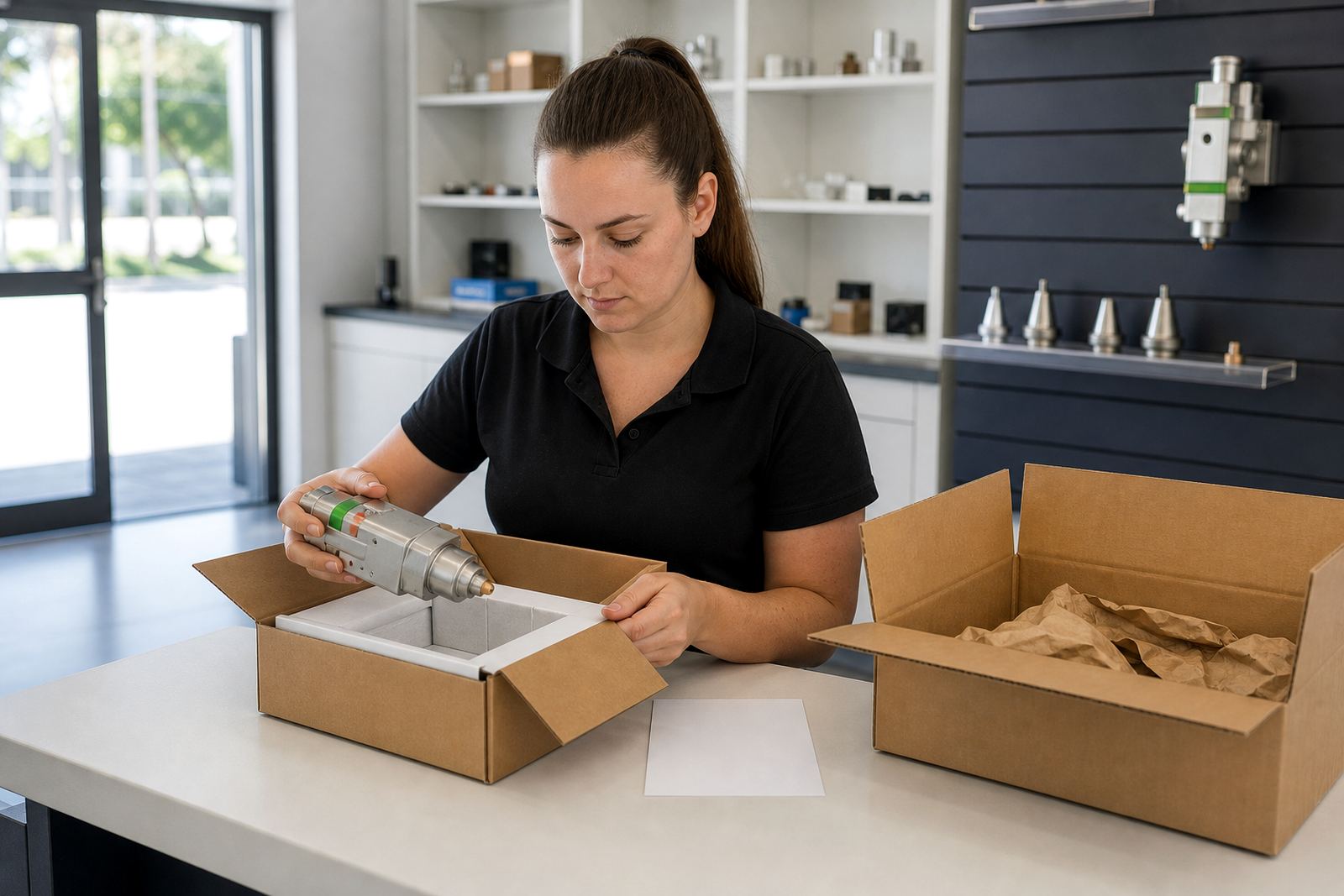
Parts leave from our Spartan, Kempton Park base in sealed packs suited to the item inside. Smaller consumables such as nozzles, ceramic rings, protective windows and lenses are packed to reduce handling marks, while larger items such as cutting heads or spare head assemblies are protected against shock and dust.
Where a head or delicate optical part is moving to Johannesburg, Pretoria, Durban, Cape Town, Rustenburg or another South African site, the package should stay dry and upright. Fibre laser parts do not like rough transit, loose tape or repeated opening, because dust on a lens or chip on a ceramic ring can affect the cut path.
Collections from the workshop side
Collections are often used for bench service work, spare head preparation and parts that a client wants to inspect before fitting. The person collecting should check the outer carton, then open it carefully and compare every item with the note on the parcel or collection sheet.
- Check that the nozzle style matches the machine setup, including single layer or double layer use.
- Confirm the lens diameter and focal length before the part goes into the head.
- Look for cracks, chips, scratches or contamination on any optical surface.
- Make sure ceramic rings and seals are the correct size and profile.
If a parcel leaves the counter with the wrong part inside, the problem is easiest to sort before the item is installed or the packaging is discarded.
What to inspect the moment a parcel arrives
Part checks on arrival should be done in clean light, not beside grit, swarf or grinding dust. A quick look is not enough for lenses, windows or nozzles, because a fine mark can hide until the first test cut shows a weak beam or poor edge quality.
- Compare the part number, size and description against the order note.
- Check for transit damage on boxes, tubes and inner wraps.
- Hold lenses and windows by the edge only, never across the optical face.
- Confirm the ceramic ring seats cleanly and does not wobble.
If the machine uses capacitive height sensing, make sure the matching sensor parts and head components are correct for that setup. A mismatch can upset focus setting checks and nozzle centring, even when the part looks fine in the packet.
Returns for incorrect items only
Returns are dealt with when the wrong item was supplied or when a part arrives damaged in transit. Keep the packaging, inner wrapping and any labels intact, because they help identify what moved through the courier chain and where the fault started.
Do not fit the part first and then send it back as new. Once a nozzle has been used, a window has been exposed to cutting vapour, or a lens has been installed in a head, the condition changes and the item may no longer be treated as unopened stock.
- Leave the part unused and in the original packing where possible.
- Keep the delivery note or collection note with the parcel.
- Show clear photos of the item and outer carton if damage is visible.
- Send back only the item that does not match the supplied note.
When a part has been fitted already
Some items cannot be returned once they have been fitted, cleaned after use or exposed to cutting residue. That applies especially to protective windows, lenses, nozzles and any seal set that has already been compressed inside the head.
For service items such as head alignment, focus setting checks, gas path inspection or head seal rebuilds, the condition of the machine on arrival matters as much as the part itself. Bent housings, burnt seals or crash damage can change what can be re-used and what must be replaced. A unit that has been stripped and reassembled at the machine without the correct sequence can also show up as a return issue later.
Cleaning, packing and sending a part back
If a return is approved, package the item so it can travel without rubbing against other metal parts. Optical pieces need soft wrap, no loose abrasive dust and no tape across the working face. Nozzles should be kept separate from ceramic rings, because a hard knock can chip the edge and alter the cut jet.
- Use a clean inner wrap for each part type.
- Keep lenses and protective windows in their holders or sleeves.
- Seal the outer carton firmly so nothing shifts inside.
- Mark the parcel clearly if it contains a delicate optical part.
For bench work or on-site head alignment across South Africa, the same basic rule applies: clean parts stay clean, and mixed hardware should not rattle around in the same box.