Built for flat sheet cutting that runs through the week
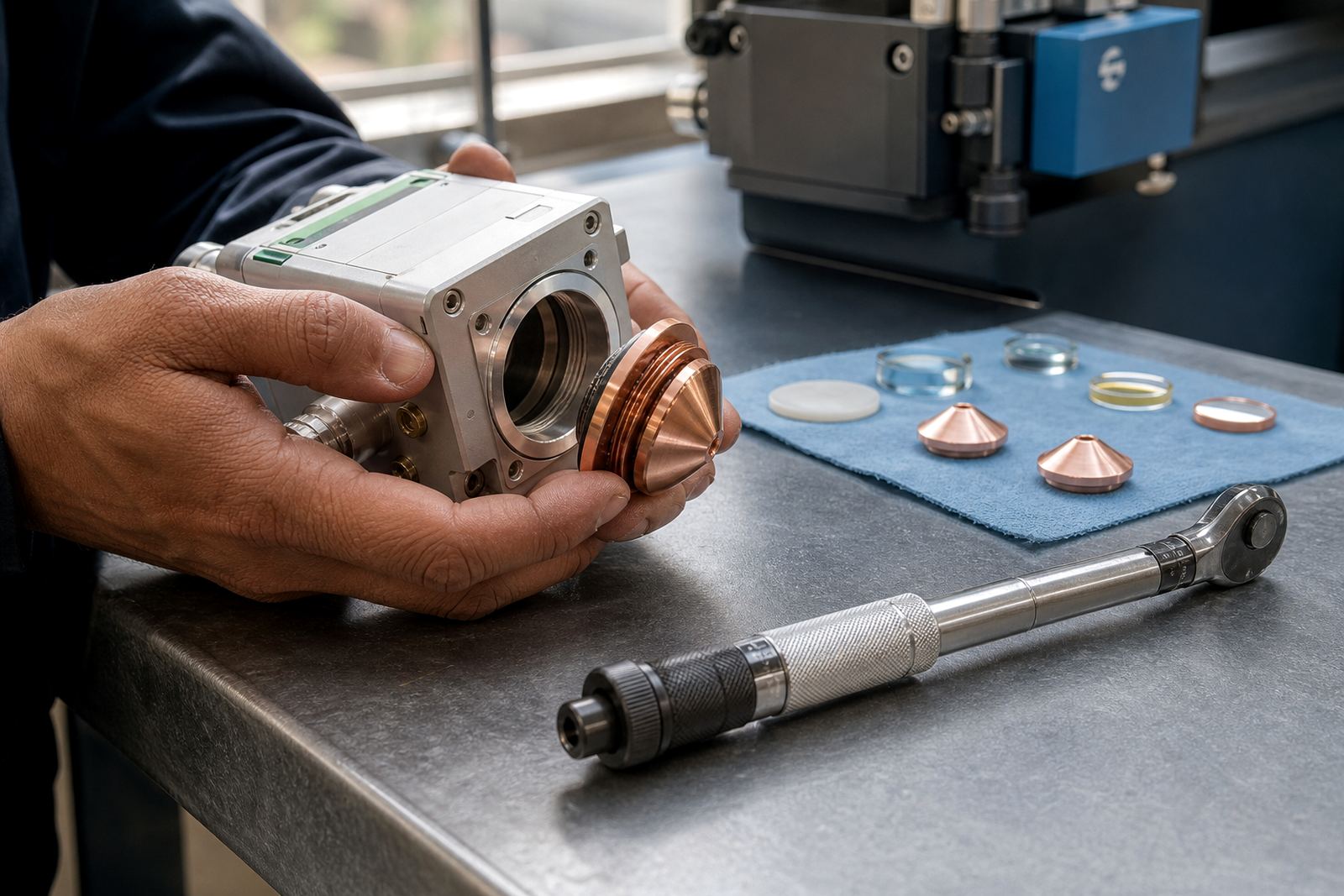
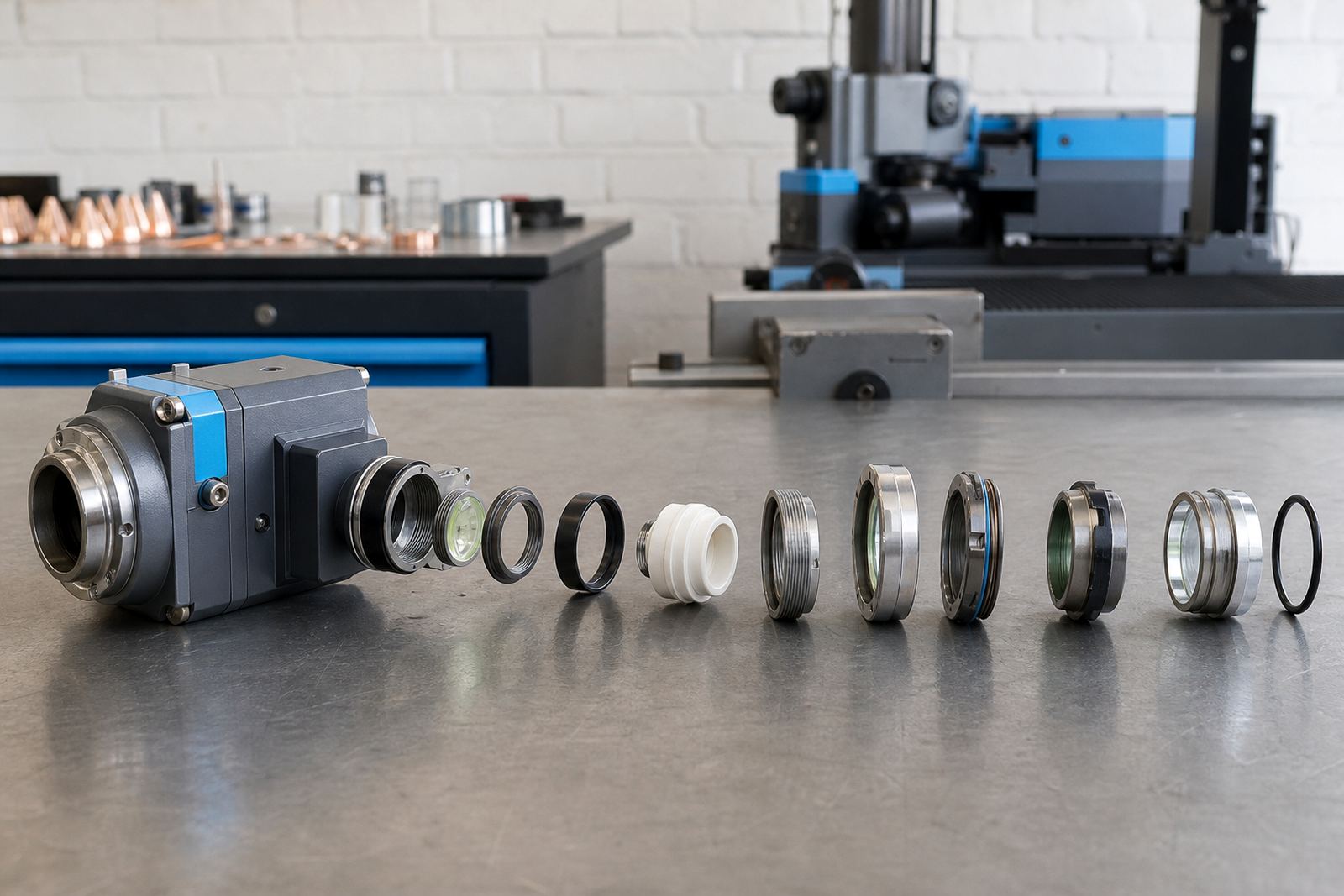
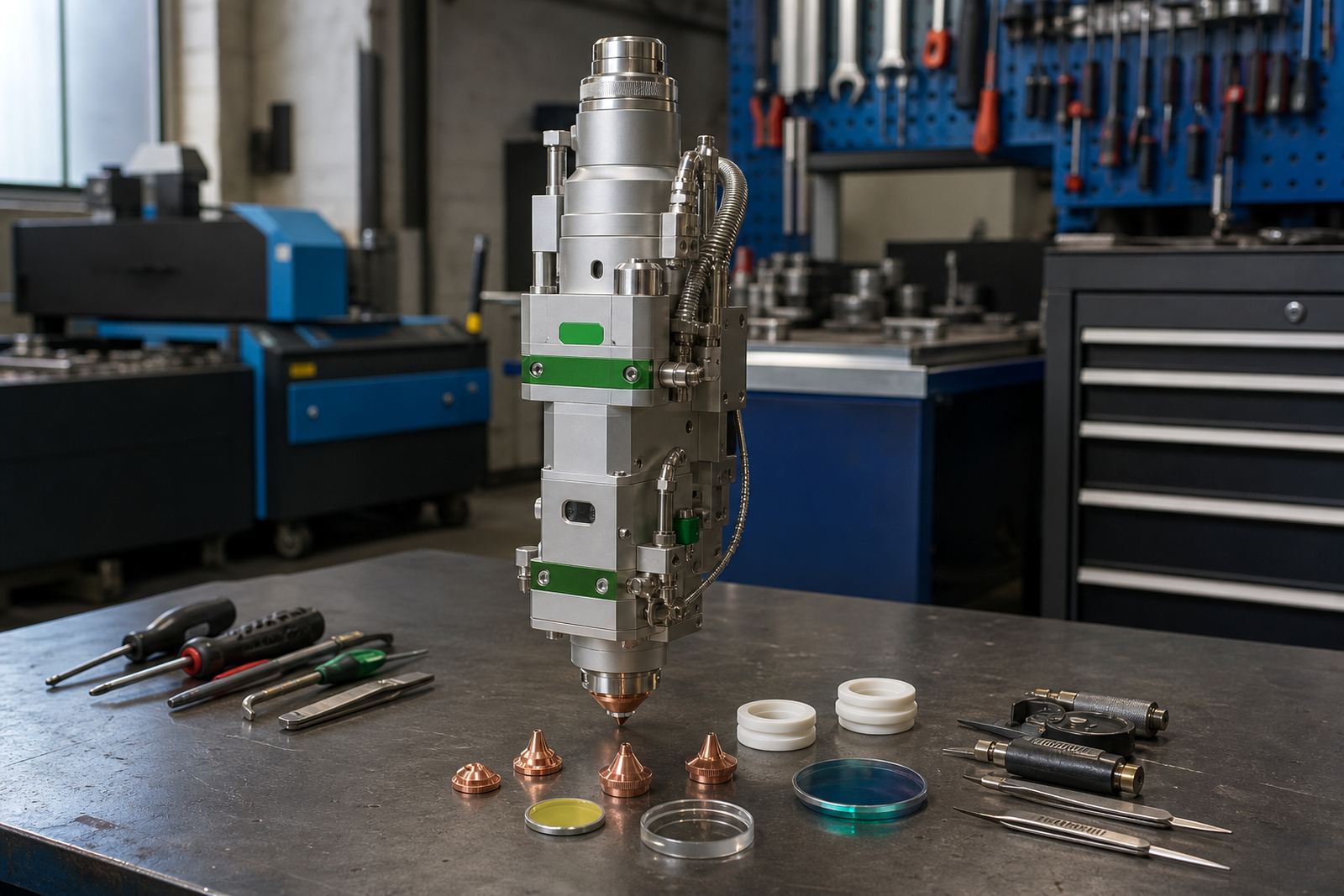
The standard cutting head is used on fibre laser machines where the job mix changes often, from mild steel and stainless steel to aluminium sheet. It brings the nozzle, focus optics, protective window and ceramic ring into one working unit, so the beam path stays controlled while the machine cuts clean profiles and internal features.
In normal production the head works with capacitive height sensing to keep the standoff stable over the sheet. That matters on warped plate, cut edges with scale, or sheet that has been handled a few times on the shop floor. The head needs correct focus setting, clean optics and a sound gas path if the cut edge must stay consistent from job to job.
- General-purpose head for flat sheet processing
- Works with common fibre laser cutting tables
- Supports capacitive height sensing for controlled cut height
- Accepts standard nozzle, lens and window service parts
Options that matter on the shop floor
On this type of head the practical choices are usually the nozzle style, lens focal length, protective window size and the body mounting that matches the machine. A single layer nozzle is often used for simpler cutting conditions, while a double layer nozzle helps with gas flow control where edge quality and piercing consistency matter more.
Focus and collimator lenses have to suit the machine power and the cutting envelope. A shorter focus can help on thinner sheet, while a different focal length can give a wider working range on mixed production. Protective windows are there to keep spatter and dust out of the optics section, and ceramic rings provide the contact face that holds the head position true against the height control.
- Single layer or double layer nozzle options
- Focus lens and collimator lens matched to the head body
- Protective windows in the correct diameter and thickness
- Ceramic ring matched to the sensor and thread pattern
Where it fits into real production
This head suits sheet-metal shops that cut parts for enclosures, brackets, machine panels, duct pieces and service components. It is also a practical choice where the machine sees short runs, different materials and frequent tool changes. The head is not only about cutting speed, it is about keeping the setup stable enough that operators do not have to fight the same fault across the shift.
In Johannesburg, Pretoria, Durban, Cape Town and Rustenburg, we often see heads that need nozzle centring, lens cleaning or a capacitive sensor check after dust build-up or a light crash. Coastal humidity can leave a film on the window if cleaning is neglected, and fine metal dust can creep into the gas path where it affects piercing and edge finish.
- Suitable for machine shops and jobbing cutters
- Used on repetitive production and mixed batch work
- Helpful where nozzle wear and window contamination are common
- Can be prepared as a spare head for busy cutting lines
Fitting and alignment on the bench or on site
When a standard cutting head is fitted, the beam path must be set straight and the head must sit true to the machine axis. That includes the nozzle centring, lens stack seating, ceramic ring condition and a check that the focus movement is clean across its travel. If the head is mounted badly, the machine can still move but the cut edge will show the fault.
Our bench service covers cleaning, inspection and head preparation before it goes back onto the machine. On site work is used where the machine cannot easily be lifted out of production. In both cases the aim is the same: correct alignment, steady height sensing and a gas path that lets the head do its job without chasing faults through the day.
- Nozzle centring and focus setting check
- Lens cleaning and protective window replacement
- Ceramic ring replacement and head seal rebuild
- Crash damage inspection and spare head preparation
Care that keeps the cut edge cleaner
The head needs regular cleaning routines, not rough handling. Protective windows should be checked for pitting, haze and spatter marks, while nozzles need inspection for burrs and oval wear. If the ceramic ring is chipped or the contact face is dirty, the height signal can wander and the cut starts to show it.
Focus settings should be checked after a nozzle change, a lens service or any crash event. Gas path inspection is worth doing when pierce quality drops, because a small restriction can change how the assist gas reaches the melt pool. Keep the lens faces clean, keep dust out of the body and do not ignore a nozzle that no longer centres properly. A small fault there can waste a lot of sheet.
- Inspect nozzle wear and centring regularly
- Replace scratched or cloudy protective windows
- Keep lenses clean and seated correctly
- Check sensor height, focus and gas flow after impact
What to confirm before ordering this head
To match the correct standard cutting head, confirm the machine model, the mounting pattern, the power rating, the nozzle thread, the lens focal length and the protective window size. If the machine uses a particular sensor arrangement or head body length, that also needs to be matched before parts are fitted. The wrong combination can look close enough in the crate, then refuse to line up once it reaches the machine.
It helps to note the material thickness range, the assist gas used, and whether the job is mostly thin sheet or mixed production. We also need to know whether you are replacing a worn head, setting up a spare, or dealing with damage after a collision. Those details shape the service choice as much as the part number does.
- Machine model and mounting pattern
- Laser power range and lens focal length
- Nozzle type, thread and window dimensions
- Material thickness, gas type and head condition
Key facts
| Product type | General-purpose fibre laser cutting head for flat sheet |
|---|---|
| Use range | Sheet-metal cutting, daily production and spare head setup |
| Nozzle options | Single layer and double layer |
| Optics | Focus lens, collimator lens and protective window |
| Sensing | Capacitive height sensing support |
| Service options | Bench head service, on-site head alignment and spare parts fitting |