

Where a 125 mm focus lens earns its place
A 125 mm focus lens is used in fibre laser cutting heads where the process needs a longer focal length than the short-cut options many shops keep in stock. It is common on jobs that ask for a wider focal spot, a more forgiving standoff window, or a setup that handles thicker mild steel, stainless steel or aluminium with less sensitivity to small height shifts.
In a sheet-metal shop, that longer focal choice can help when the nozzle height, gas balance and cutting programme are already set for production, but the lens must still hold a stable beam path. The lens sits in the head with the rest of the optical stack, so the condition of the protective window, ceramic ring, nozzle and seal surfaces all matter just as much as the glass itself.
Our 125 mm focus lenses are supplied for fibre laser cutting heads used on flat sheet work, with the optical face and diameter matched to the head layout. The lens has to stay clean, seated square and protected from contamination, because a small mark or chip can affect edge quality and pierce behaviour on the next run.
Lens build, sizes and optical choices
We work with 125 mm focus lenses in the sizes and mounting styles used by common fibre laser cutting heads in local sheet-metal production. The exact fit depends on the lens diameter, the carrier arrangement, the clear aperture and the head body the lens must sit in. In practice, the wrong diameter or thickness can throw the beam off centre and disturb the focus position at the nozzle.
- Focal length: 125 mm
- Use case: longer focal setup for fibre laser cutting heads
- Optical material: coated laser lens for beam transmission and heat handling
- Fitment: matched to the head design, lens seat and carrier style
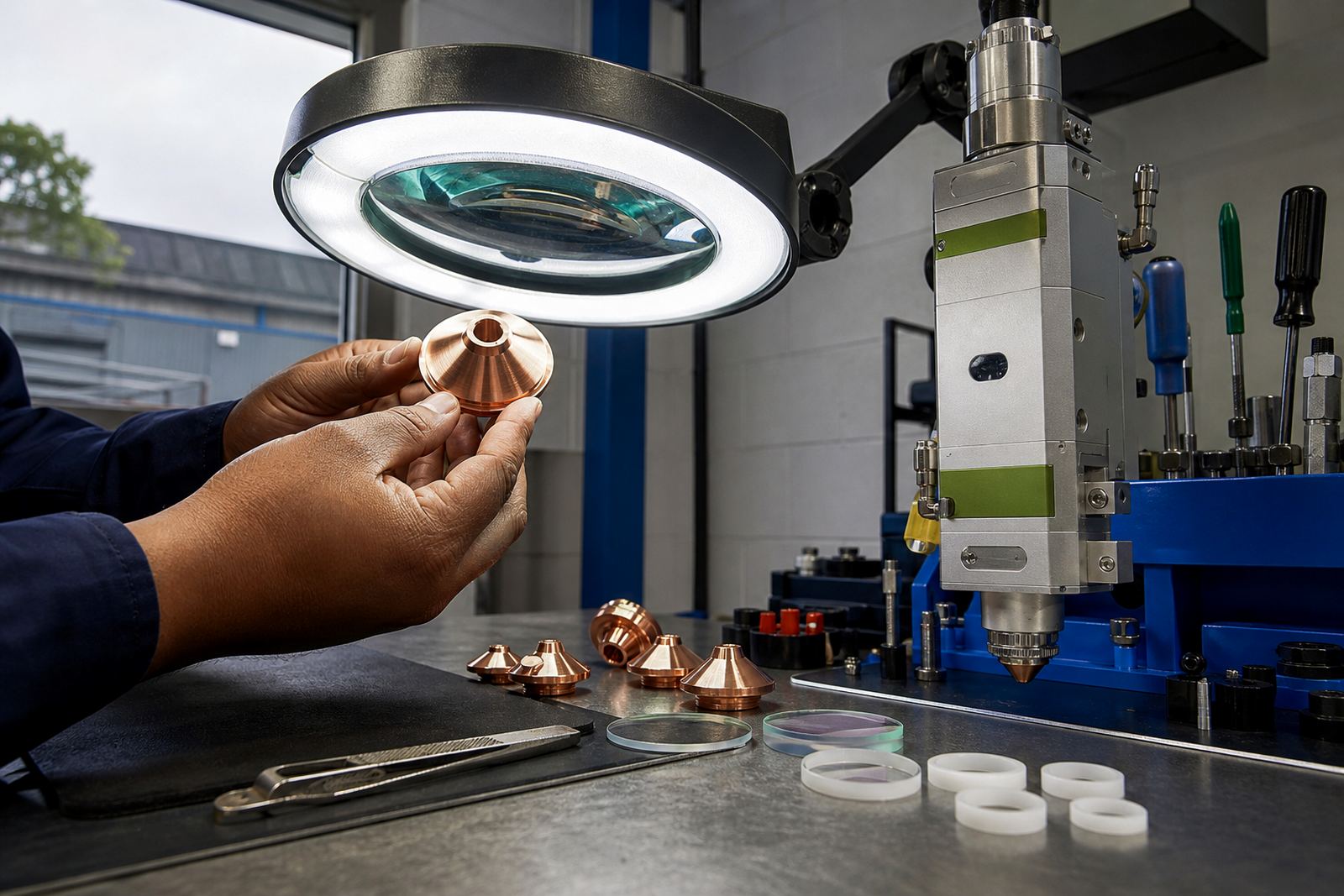
- Related parts: protective window, nozzle, ceramic ring, head seal and focus cartridge
For a proper match, the lens needs to be checked against the head model, the lens housing dimensions and the machine programme setup. If the lens is being fitted with new consumables, it is worth looking at the nozzle centring and the condition of the ceramic ring at the same time, because both can show wear that changes cutting consistency.
How this focal length suits real cutting work
A 125 mm focal option is often selected where the shop wants a practical balance between cutting speed, edge control and tolerance for small process changes. On thicker plate, or on sheet where the machine runs a wide mix of thicknesses in one shift, the longer focus can help the beam stay usable across a wider working range. It is not a cure for poor gas settings or a tired head, but it gives the operator a dependable optical starting point.
In production, the lens works alongside capacitive height sensing and the programmed focus setting. If the head rides too high, the nozzle standoff changes and the beam delivery can shift. If the focus is off, the cut face may show dross, taper or rougher pierce marks. That is why a 125 mm lens is usually specified with the rest of the cutting stack in mind, not on its own.
In many shops in Johannesburg, Pretoria, Durban, Cape Town and Rustenburg, the same lens type may run on different shifts, but with different gas choices, cutting speeds and sheet grades. The lens itself stays the same, but the setup around it must be checked carefully when the work changes.
We fit and check the head before it returns to service.
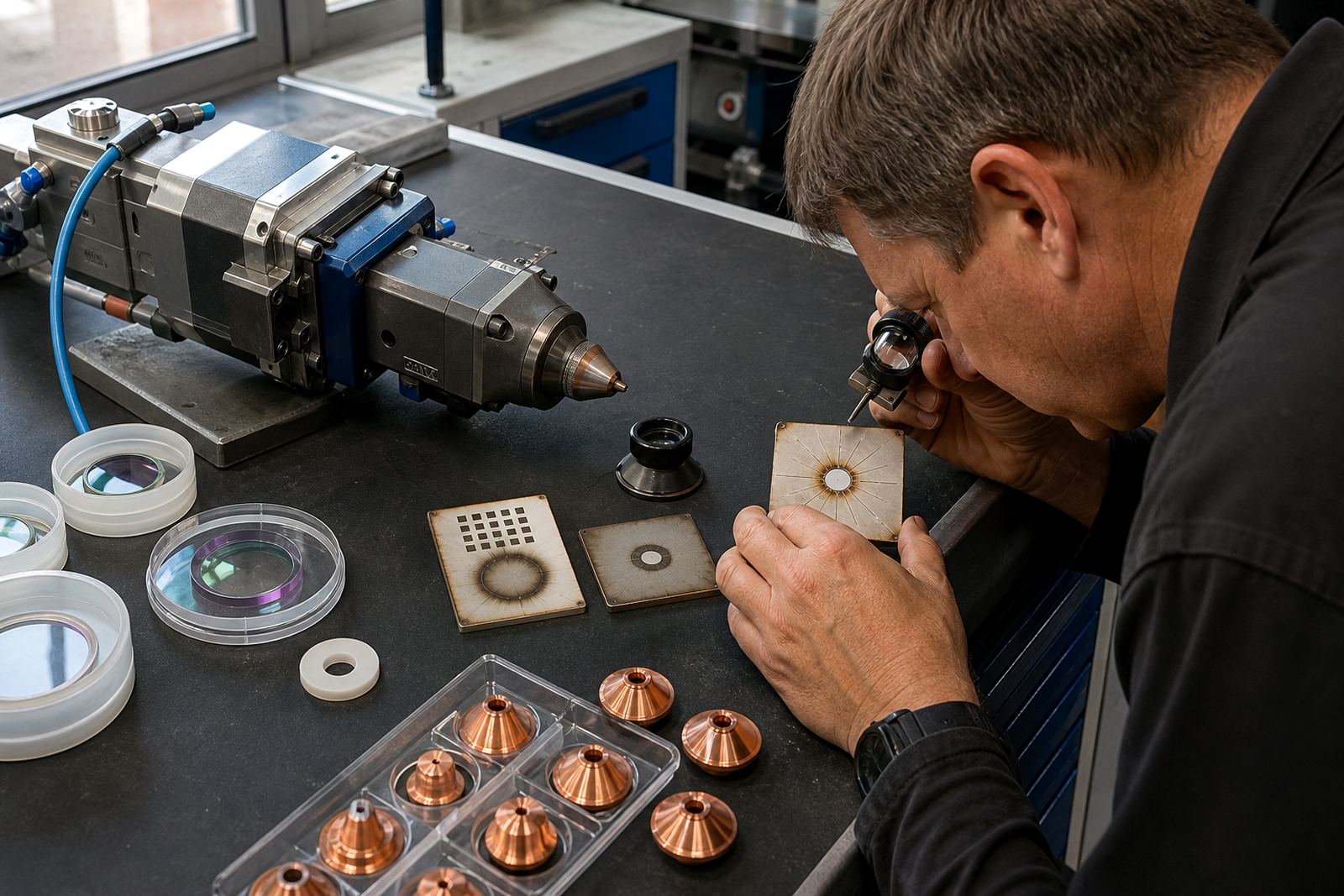
When a 125 mm focus lens is fitted into a fibre laser cutting head, the housing has to be clean and dry, the seat must be free of dust, and the lens edges should be handled without touching the coated faces. A dirty recess or a nicked seal can trap fine particles and lead to early lens marking. That is where a bench check is useful, because it lets us look at the optical stack under controlled conditions before the head is put back on the machine.
- Confirm the lens diameter and thickness
- Check the coating direction and seating face
- Inspect the protective window above the lens
- Verify nozzle centring and ceramic ring condition
- Check the focus position against the cutting programme
If the head has had a crash, the lens should not simply be swapped and sent out. The collimator lens, focus lens, ceramic ring and seal path all need a look, since a bent carrier or disturbed mount can shift the beam path without being obvious at first glance.
Care, cleaning and day to day handling
Lens care is mostly about clean handling and a steady routine. Keep the protective window in place, avoid fingerprints on the lens face, and use the correct solvent and lint free materials when cleaning optical parts. A rough wipe can scratch the coating, and once that happens the lens may run hot or scatter the beam in the head.
In a busy shop, it helps to treat the focus lens as part of a set rather than an isolated spare. Cleaning routines should include the nozzle, the ceramic ring face, the window holder and the nearby gas path so that soot and metal dust do not build up around the optics. If the cutting head starts losing pierce quality or the edge finish changes for no clear reason, a lens check is usually part of the first inspection.
We also look at focus setting check work and lens cleaning as part of bench service or site alignment, because a clean lens still needs the right beam position and a true head. The part can be perfect on the bench and still underperform if the height sensing or head alignment is off on the machine.
What to confirm when ordering a 125 mm lens
Before a 125 mm focus lens is released, the details below should be confirmed so the fit and optical path match the cutting head in use. That saves the shop from fitting a lens that looks right but sits wrong in the carrier or does not match the beam diameter.
- Head make and model, or clear photos of the lens housing
- Lens diameter, thickness and mounting style
- Whether the lens is for focus or collimator position
- Machine material range and typical sheet thickness
- Condition of the ceramic ring, nozzle and protective window
- Whether the head is being fitted after bench service or on-site alignment
If you are matching a new lens to an existing cutting head, include the current focus setting, the nozzle type in use and any signs of crash damage. Those details help us check whether the lens sits in a clean optical path or whether the head needs more work before the part is installed.
Key facts
| Product | 125 mm focus lens for fibre laser cutting heads |
|---|---|
| Focal length | 125 mm |
| Typical use | Longer focal option for sheet-metal cutting setups |
| Compatibility | Fibre laser cutting heads with matched lens seat and carrier |
| Related consumables | Protective windows, nozzles, ceramic rings, seals |
| Service support | Bench service, nozzle centring, focus setting check and on-site head alignment |