Beam conditioning where the head begins to work
The collimator lens assembly collects the incoming fibre beam and turns it into a controlled, parallel path before the focus lens does the final work. In a cutting head, that job affects spot shape, cut consistency and how well the machine holds its focus setting on thin or thicker material. If the assembly is off-centre or marked by heat, the operator often sees rougher edges, unstable piercing or a cut that changes as the sheet moves across the bed.
We supply collimator lens assemblies for fibre laser cutting heads used on sheet-metal lines in Gauteng, Rustenburg, the East Rand, Durban and Cape Town workshops. The assembly is part of a matched optical stack, so the lens diameter, mount style, focal grouping and protective spacing all matter. A clean head can still cut poorly if the collimation is wrong or the seating faces are not true.
- Upper optical path component for beam conditioning
- Used with focus lenses, nozzles and protective windows
- Important for cut quality, pierce stability and head consistency
- Works inside the cutting head, not as a loose standalone optic
Sizes, mounts and matching points to check
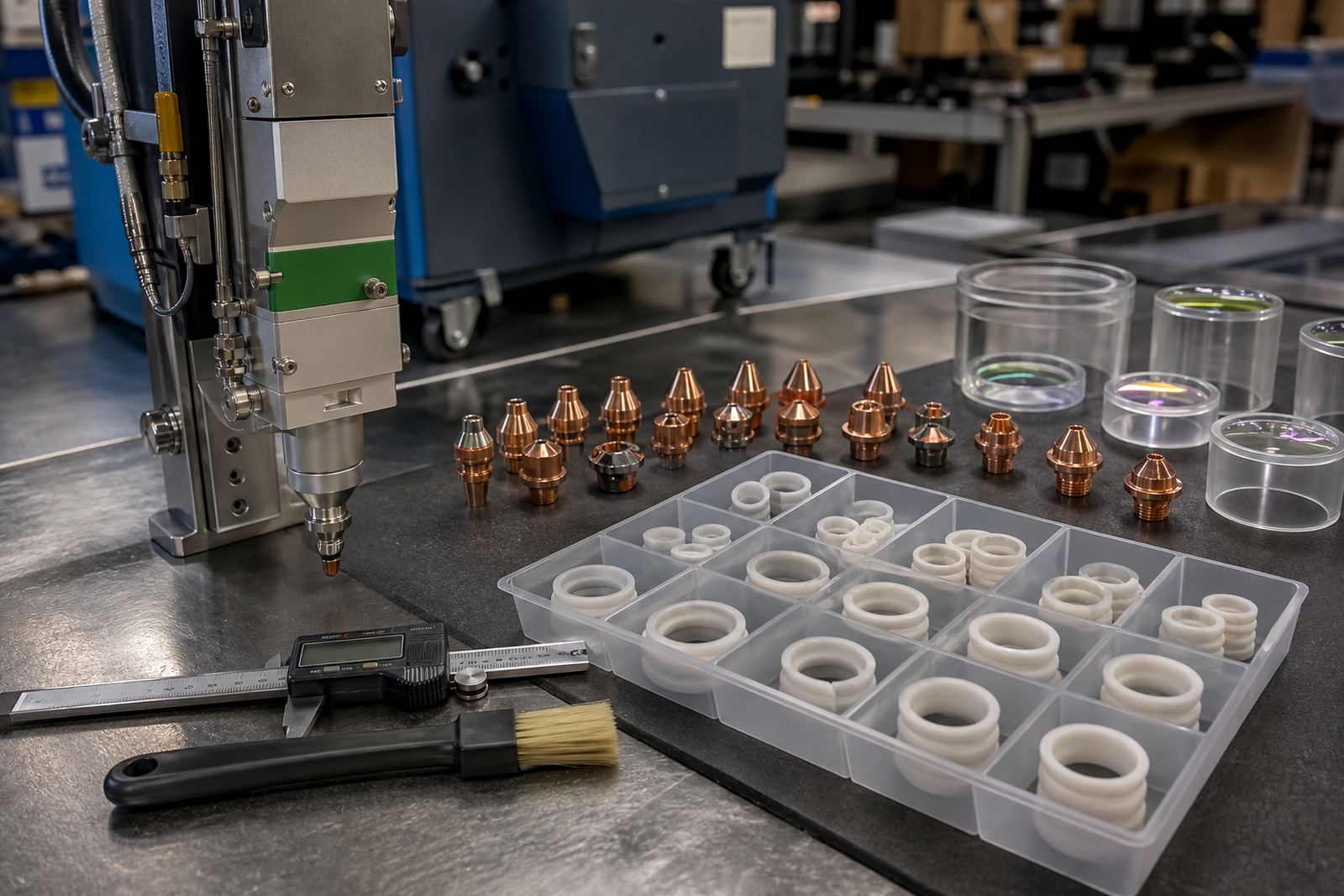
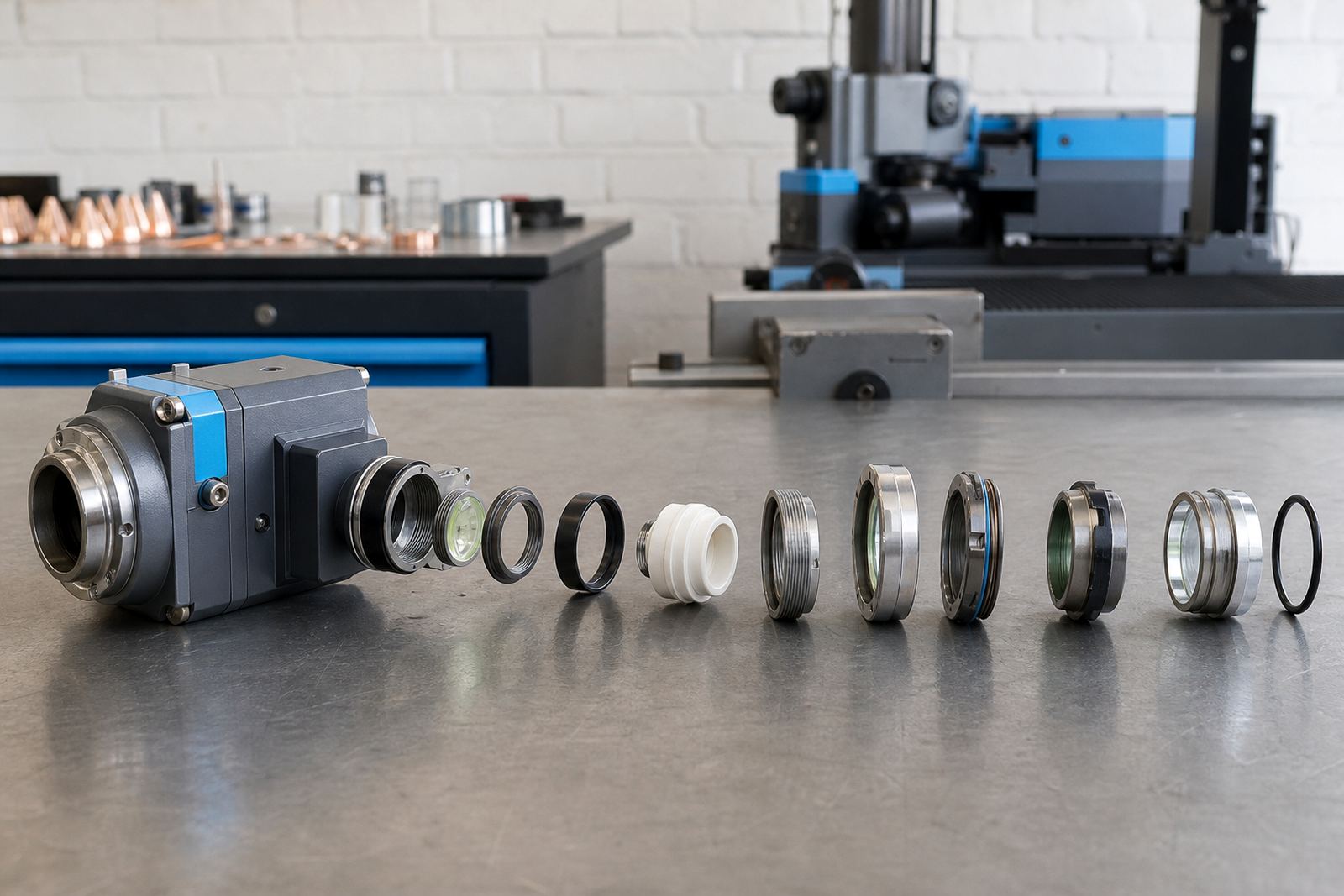
Collimator lens assemblies come in different diameters, focal groupings and housing styles. The exact body shape has to match the cutting head, because a small difference in retaining ring depth or seat width can upset the optical centre. Some heads use a direct-fit cartridge style, while others use a lens held in a separate carrier with rings, seals and a fixed spacing stack.
When the head is prepared for bench service or on-site alignment, the lens assembly must line up with the nozzle centre, ceramic ring and focus axis. If the machine runs high duty cycles or cuts in a dusty bay, the sealing surfaces and retaining edges should be checked at the same time. Humidity near the coast in Durban and salty air in Cape Town can leave a light film on exposed surfaces when cleaning is not done regularly.
- Lens diameter and edge thickness
- Housing or cartridge format
- Focal grouping for the beam conditioner
- Seal faces, retaining rings and spacer stack
- Head model and optical path depth
Where this assembly suits the shop floor
This part suits fibre laser cutting heads on sheet-metal machines doing general fabrication, ducting, signage, cabinet work and structural plate cutting. It is used where the machine is expected to hold a stable beam shape over repeated runs and where the operator needs a reliable upper optic for day-to-day production. If the focus drifts or the cut starts to taper, the collimator assembly is one of the first items worth checking.
It also suits repair work after a head crash, a bad pierce or contamination from spatter and dust. In many shops, the upper optics are inspected together with the protective window, ceramic ring and nozzle face so that the source of the fault is not masked by a clean outer part. That is especially useful on machines that run mixed sheet thicknesses in one shift.
- General fabrication shops
- Sheet-metal cutting rooms
- Crash recovery and optical rebuild work
- Machines with recurring focus or centring faults
Fitting, alignment and service work around the head
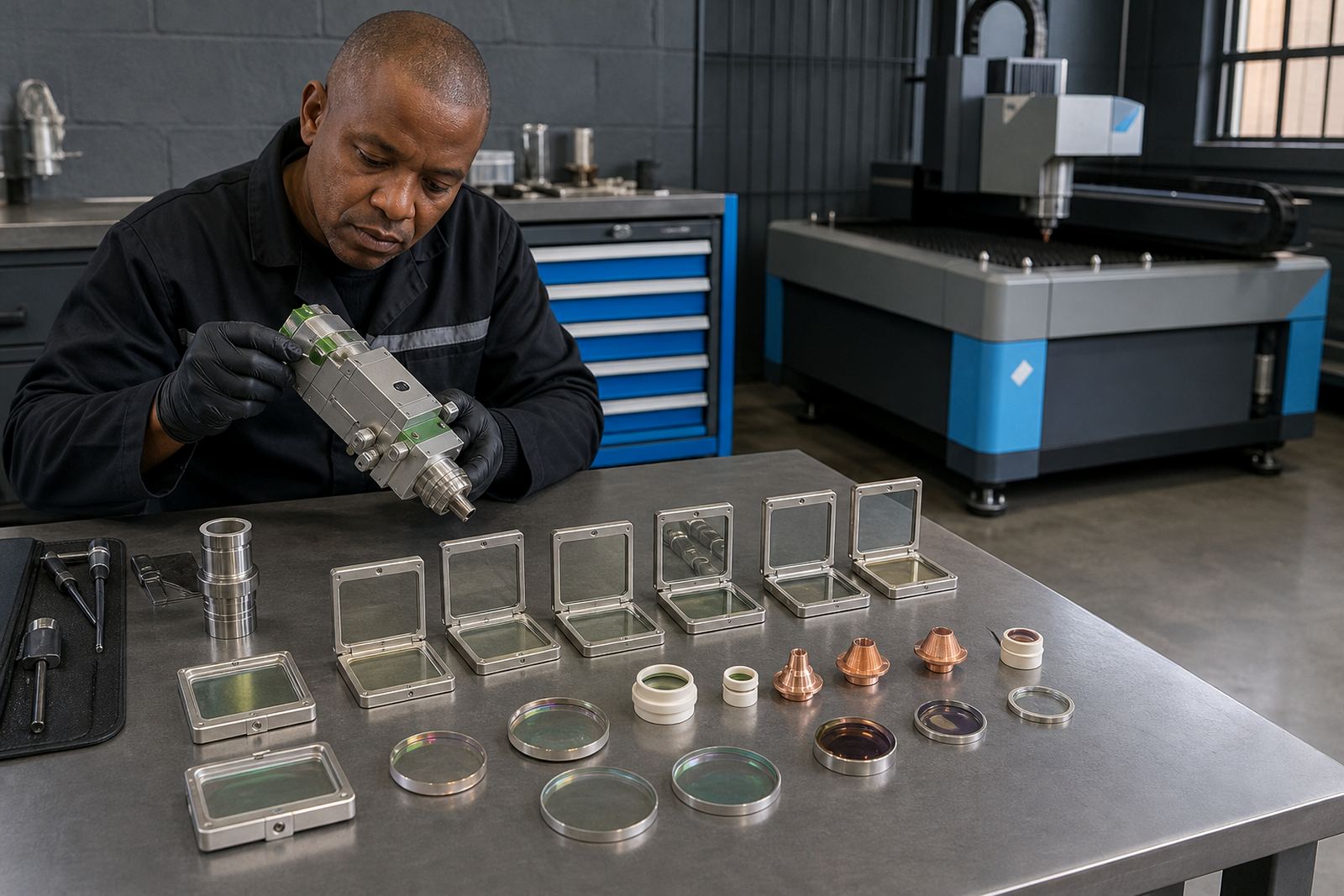
Fitting a collimator lens assembly is not a rough swap. The head has to be opened in a clean area, the seat checked for marks, and the lens handled with care so the coated faces stay free of fingerprints and dust. After installation, the optical centre must be checked against the nozzle path and the focus movement tested through the head travel. If the seat is tilted or the retaining ring is uneven, the beam can move off-line even when the lens itself is sound.
Our bench service and on-site head alignment work covers the kind of checks that keep the optical path honest. That includes focus setting check, capacitive sensor check, nozzle centring, gas path inspection and head seal rebuild where required. A weak seal, poor sensor read or loose ring can show up as unstable kerf width long before the lens looks damaged.
- Clean bench handling with proper optic protection
- Centre check against the nozzle and ceramic ring
- Focus travel test after refit
- Alignment checks for heads serviced on site
Cleaning routine and wear signs
Upper optics stay in better shape when the head is opened only in a clean space and the windows are handled with lint-free materials. If the collimator lens shows haze, heat tint or tiny pit marks, it is usually telling you the head has had contamination, back reflection or repeated thermal stress. Cleaning should be gentle and controlled, not rushed with anything that can scratch the coated face.
In practice, the cleaning routine often sits alongside nozzle changes and protective window replacement. If a machine is cutting close to the edge of its settings or piercing thick plate, the optics need closer watching because minor contamination can become a cut fault quickly. Shops that handle stainless or mild steel daily often spot a change in spark pattern before they see the mark on the lens.
- Use lint-free cleaning materials
- Avoid touching coated surfaces
- Check for haze, pits and heat tint
- Inspect seals and seating after cleaning
Details to send when ordering the assembly
To match the right collimator lens assembly, the head model, lens diameter and housing style have to be confirmed. It also helps to know if the part is meant for a standard swap, a crash repair or full spare-head setup. The more exact the details, the easier it is to match the upper optics to the cutting head that is already on the machine.
For shops across South Africa, the useful details usually sit on the existing head body or in the service notes from the last repair. If the machine has been running with a drifting focus, mention the fault pattern and whether the nozzle centring, ceramic ring or protective window has already been replaced. That gives the order a proper starting point and avoids guessing in the optical stack.
- Cutting head model and lens housing style
- Lens diameter and spacing requirement
- Machine type and material range
- Fault history, if the part is for repair work
- Related items needed: nozzle, window, ceramic ring or seal parts
Key facts
| Product | Collimator lens assembly for fibre laser cutting heads |
|---|---|
| Function | Upper optical path beam conditioning |
| Typical use | Sheet-metal cutting heads on fibre laser machines |
| Fitment | Head-specific housing, diameter and seating match required |
| Service context | Bench head service and on-site head alignment |
| Coverage | Spartan, Kempton Park and major South African industrial centres |