Built for steady nozzle seating on fibre laser heads
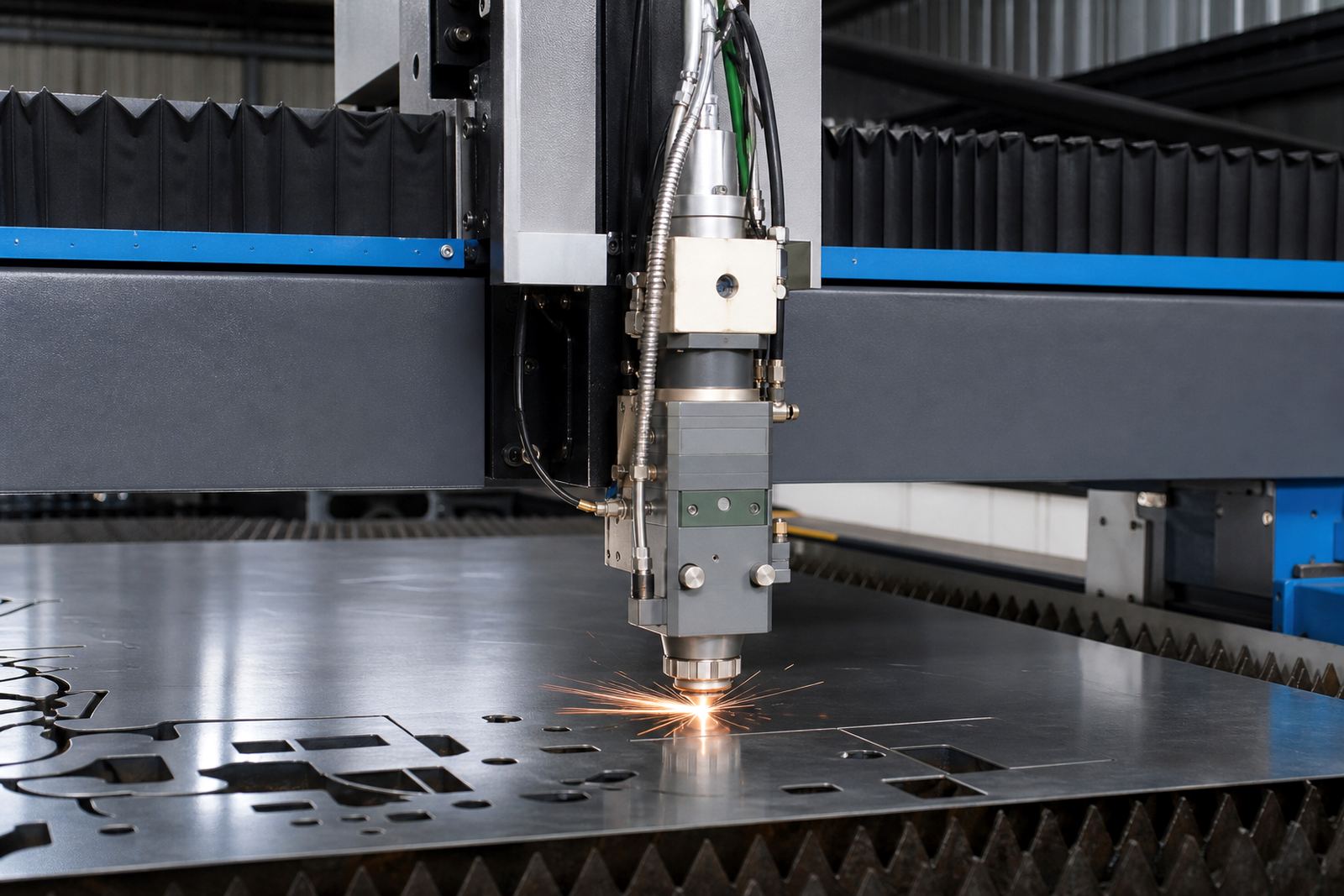
The nozzle holder assembly sits between the cutting head body and the nozzle itself, holding the nozzle in position while preserving the gas path that feeds assist gas through the tip. On fibre laser cutting machines, that seating has to stay true under heat, vibration and repeated nozzle changes, otherwise the stream wanders and the cut face shows it. A sound holder keeps the nozzle shoulder flat, the thread clean and the centre line where it should be.
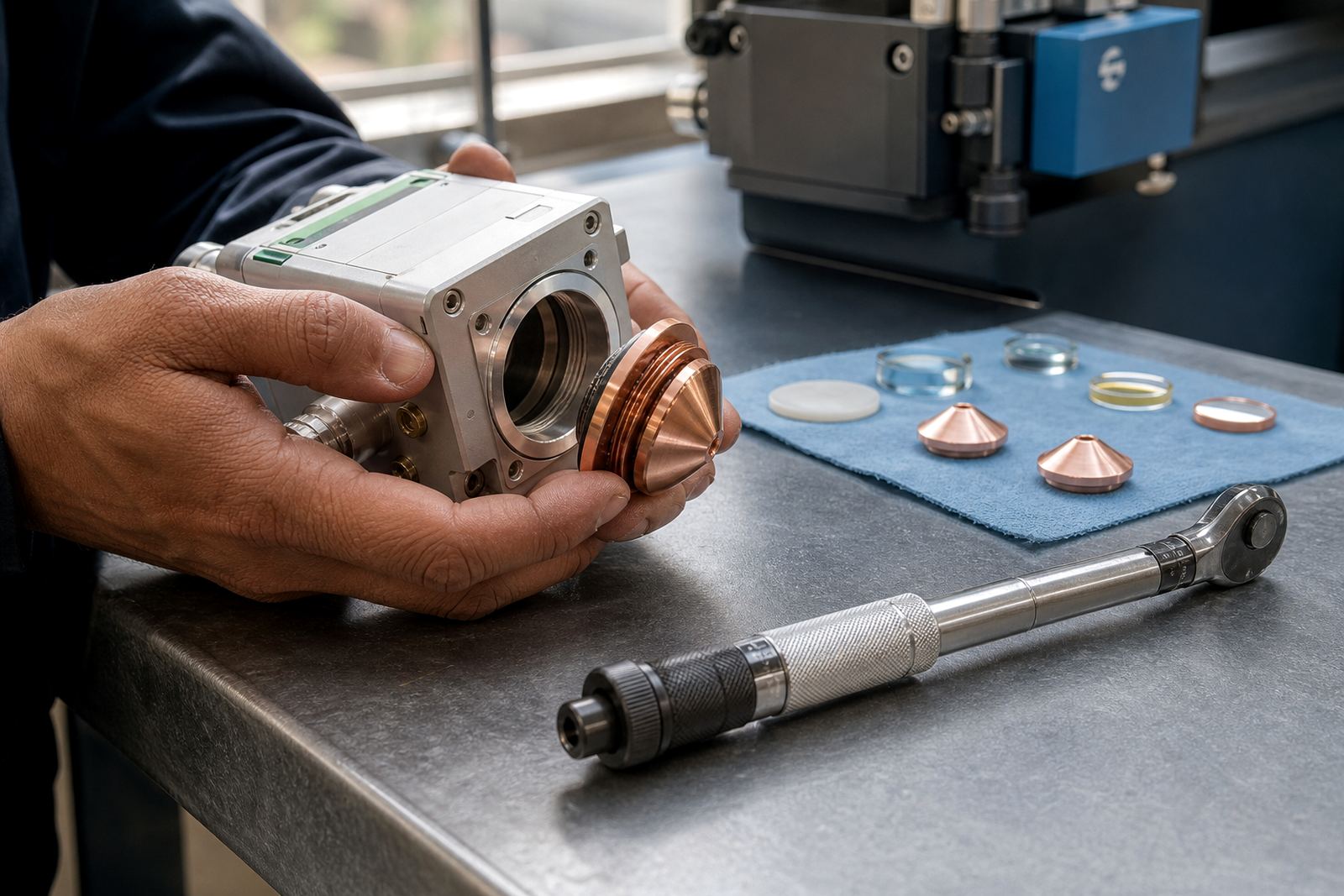
In practical terms, the holder must match the head thread, the nozzle style and the stack of parts around the ceramic ring and protective window. If any one of those pieces sits out of square, the machine can still cut, but the edge finish and piercing consistency usually slip. That is where a proper replacement holder, fitted with care, earns its place on the bench.
Sizes and build options used on shop floors
Nozzle holders are selected by the cutting head series, the nozzle interface and the internal gas route. Some assemblies suit single layer nozzles, while others are cut for double layer nozzles used on different thicknesses and gas settings. The thread pitch, sealing shoulder and body depth all matter, because even a small mismatch changes how the nozzle sits and how the assist gas leaves the tip.
- Holder body matched to the cutting head interface
- Single layer or double layer nozzle compatibility
- Thread size and pitch to suit the nozzle type
- Seating face that supports consistent centring
- Gas passage geometry for stable flow
We see these parts used on light gauge sheet through to heavier plate work, where the machine may switch between stainless steel, mild steel and aluminium. In humid coastal conditions, a holder with a tired seat or dirt in the thread can start giving uneven results sooner than expected, especially where the machine runs long shifts and the head gets swapped often.
Where a nozzle holder suits the job
This part is used anywhere a fibre laser head needs repeatable nozzle placement and a clean gas path. It suits fabrication shops, panel shops, contract cutting rooms and maintenance teams running mixed-material batches across Gauteng, KwaZulu-Natal, the Western Cape and the North West. If the machine spends its day moving between thin sheet and thicker plate, the holder helps keep the nozzle aligned after each change.
It is also relevant where operators do regular nozzle centring, focus setting checks and protective window replacement. A holder that is worn, scored or full of residue can upset the whole front end of the head. That is why a nozzle holder is usually considered together with the ceramic ring, nozzle tip condition and the cleanliness of the cutting chamber around the head.
- Sheet-metal cutting shops with frequent nozzle changes
- Jobs that need stable piercing and repeatable edge finish
- Heads that also receive bench service or on-site alignment
- Machines running varied thicknesses and gas pressures
Fitting notes from the bench and on site
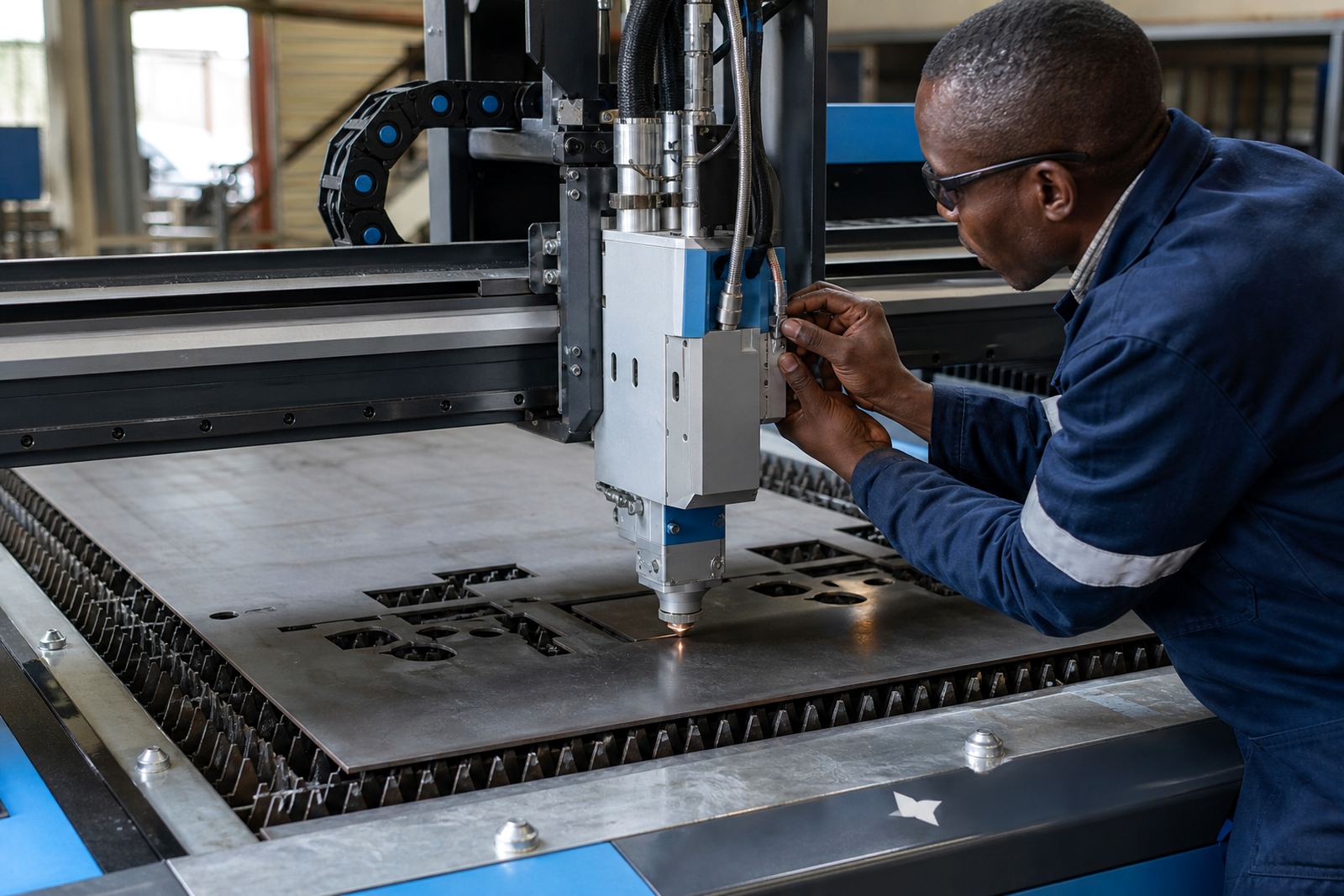
Fitting the holder is a precision task, not a loose hand-tighten and hope job. The thread must be clean, the seating face free of burrs, and the nozzle checked for damage before it goes in. If the head uses capacitive height sensing, the front end has to stay in good shape so the sensing remains steady and the nozzle does not present at an angle. On some heads, a slight contamination ring on the thread is enough to throw the nozzle out of true.
When we service a head on the bench or align it on site, the holder is inspected with the rest of the front-end parts. That includes the nozzle seat, ceramic ring, focus area and the condition of the gas path. If the holder is fitted after a crash damage inspection, the surrounding parts need checking as well, because a bent nozzle seat usually travels with other small errors that only show up under cutting load.
- Clean the thread and seating shoulder before assembly
- Check for nicks, heat marks or oval wear
- Confirm the nozzle seats squarely without rocking
- Verify the gas path after fitting
- Inspect the front end again after the first test cut
Care that keeps the front end honest
The nozzle holder does not like metal dust, spatter residue or rough handling on the bench. Wipe the holder during nozzle changes, keep the thread free of grit and avoid cross-threading when the head is open. If the machine is cutting in a busy workshop, a quick cleaning routine around the nozzle area and protective window helps stop residue building up where it should not. Small dirt build-ups can shift the nozzle by a fraction, and that is enough to affect the gas stream.
We also recommend looking at the holder when the shop notices drift in cut quality, a rougher pierce, or a nozzle that needs repeated adjustment. Sometimes the issue sits in the nozzle itself, sometimes in the ceramic ring, and sometimes in the holder seat. A careful check usually saves guesswork later. In coastal areas, light corrosion or sticky dust can make a serviceable part behave badly, so dry storage and clean handling matter more than people think.
Details to confirm before you order
To match the right nozzle holder, the machine owner or technician needs the cutting head model, nozzle type and the thread or seat form on the current assembly. It also helps to note whether the head uses single layer or double layer nozzles, and whether the front end has been modified during earlier repairs. A photo of the old part is often useful when the seat has wear marks or the markings are no longer legible.
For support from Spartan, Kempton Park, we work with sheet-metal shops that need parts, bench service and head alignment without guesswork. If the front end has seen a crash, or the gas path has started to lose stability, the nozzle holder should be checked together with the ceramic ring, lens stack and sensor area. That way the replacement is matched to the real condition of the head, not just the obvious symptom.
- Cutting head type and model reference
- Nozzle style, single layer or double layer
- Thread size and seat profile
- Current symptom, wear or crash damage
- Whether the head needs bench service or on-site alignment
Key facts
| Product type | Nozzle holder assembly for fibre laser cutting heads |
|---|---|
| Main function | Supports accurate nozzle seating and gas path stability |
| Compatibility | Head-specific fit for matched nozzle and seat geometry |
| Nozzle style | Single layer and double layer nozzle options |
| Related parts | Ceramic ring, protective window, nozzle, front-end seals |
| Service support | Bench Head Service, Nozzle Centring, On-site Head Alignment |