Where a smaller orifice earns its keep
Small bore nozzles are chosen for thinner sheet, fine detail, tight nesting and parts that need a cleaner edge with less dross at the bottom. In laser sheet-metal work, the smaller opening keeps the assist gas stream more focused so the cut behaves better on delicate profiles, small pierces and short internal shapes.
They are often used on mild steel, stainless steel and aluminium when the job needs a narrow kerf and stable piercing. The right nozzle size still depends on power level, sheet thickness, gas type and how the head is set, because the nozzle works with focus position, centring and clean optics as one system.
Sizes, styles and the details that matter
Small bore nozzles are normally supplied with one of two common gas channel arrangements, single layer and double layer. Single layer nozzles are used where the gas flow path is kept simple and direct. Double layer nozzles are used where the head setup calls for a different flow pattern and more controlled jet behaviour around the cut zone.
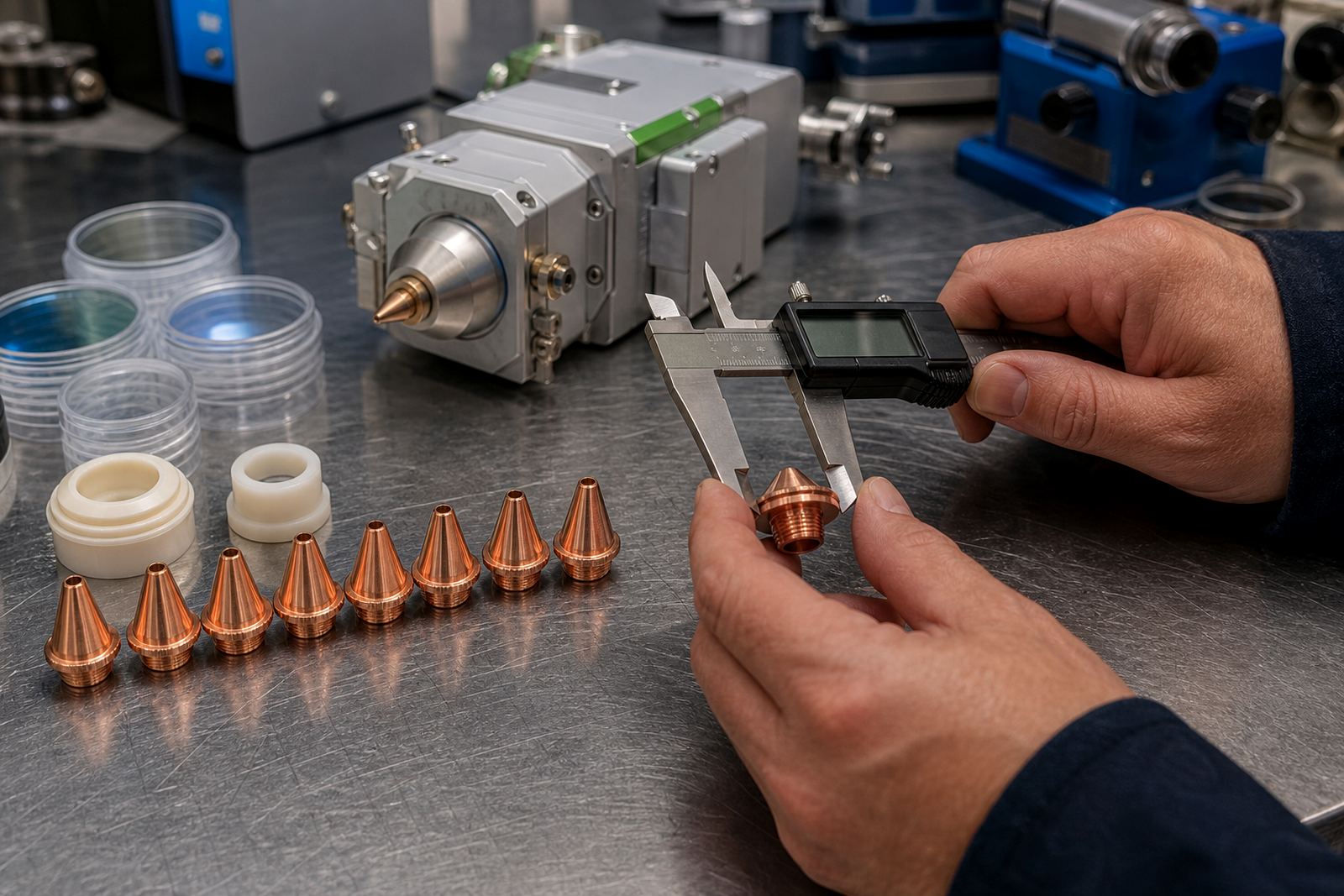
Typical small bore sizes include 0.8 mm, 1.0 mm, 1.2 mm and 1.5 mm, with the exact choice tied to material thickness and the cutting programme. Thread fit, body length, seat shape and tip profile all need to match the cutting head properly, otherwise centring drifts and the gas cone no longer meets the beam axis cleanly.
- Orifice size for the thickness range
- Single layer or double layer body
- Thread and seat match for the head
- Material and finish for cleaner gas flow
- Set-up for the correct focus position
Cutting jobs that suit this nozzle range
Small bore nozzles suit sheet-metal shops that run light gauge production, small components and finishing passes where edge quality matters more than speed alone. They are often used on cabinet parts, brackets, covers, vents, detail cut-outs and work with many short corners. The nozzle helps maintain a neat kerf when the machine is running with a tightly controlled standoff and the gas stream is kept clean.
They also help when the head is being set up for finer pierce behaviour on thin stock. If the nozzle is oversized for the job, assist gas spreads too widely and the cut can lose sharpness. If it is too small, the cut can become unstable and more sensitive to dirt, heat build-up and misalignment.
Fitting, centring and head setup on the bench
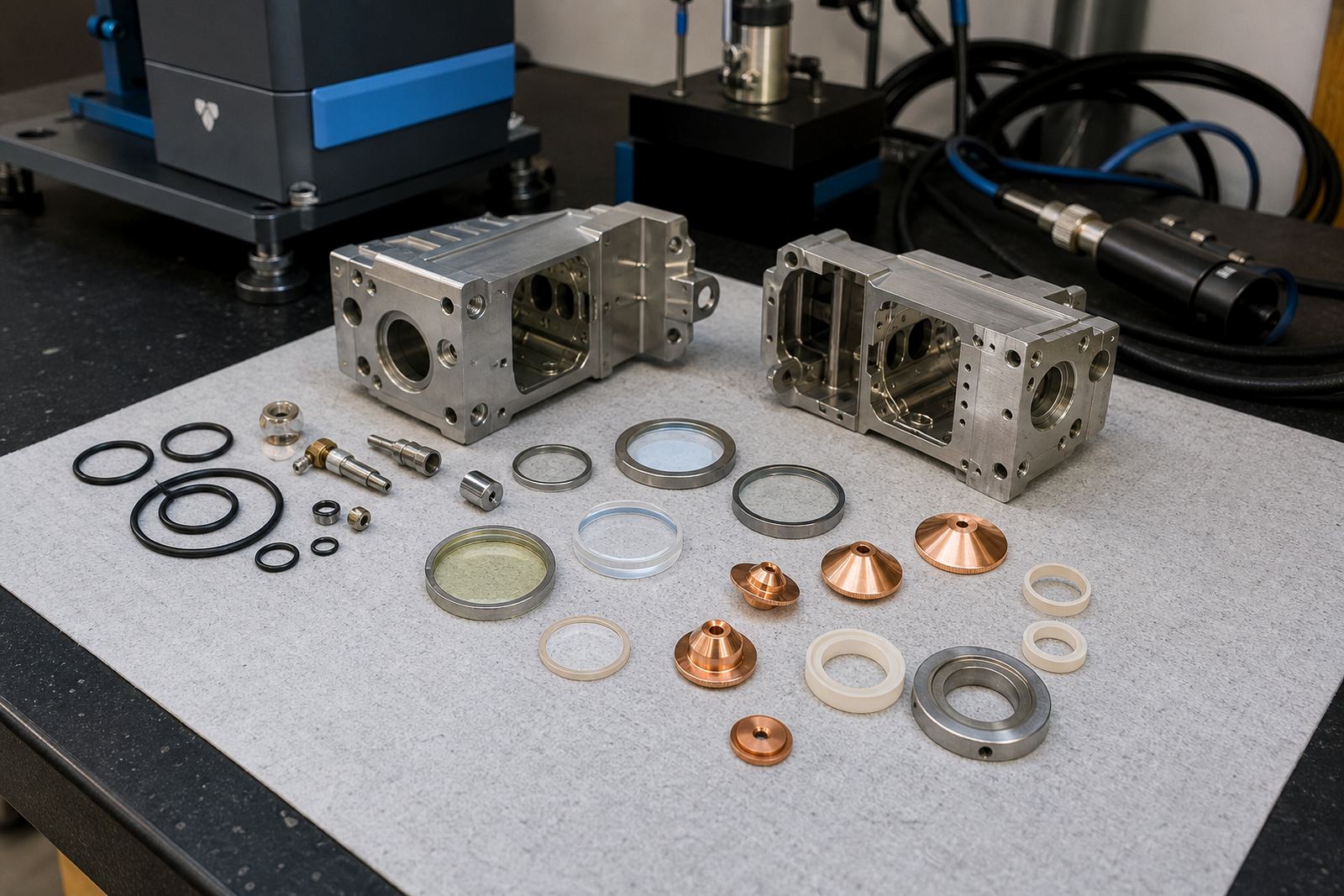
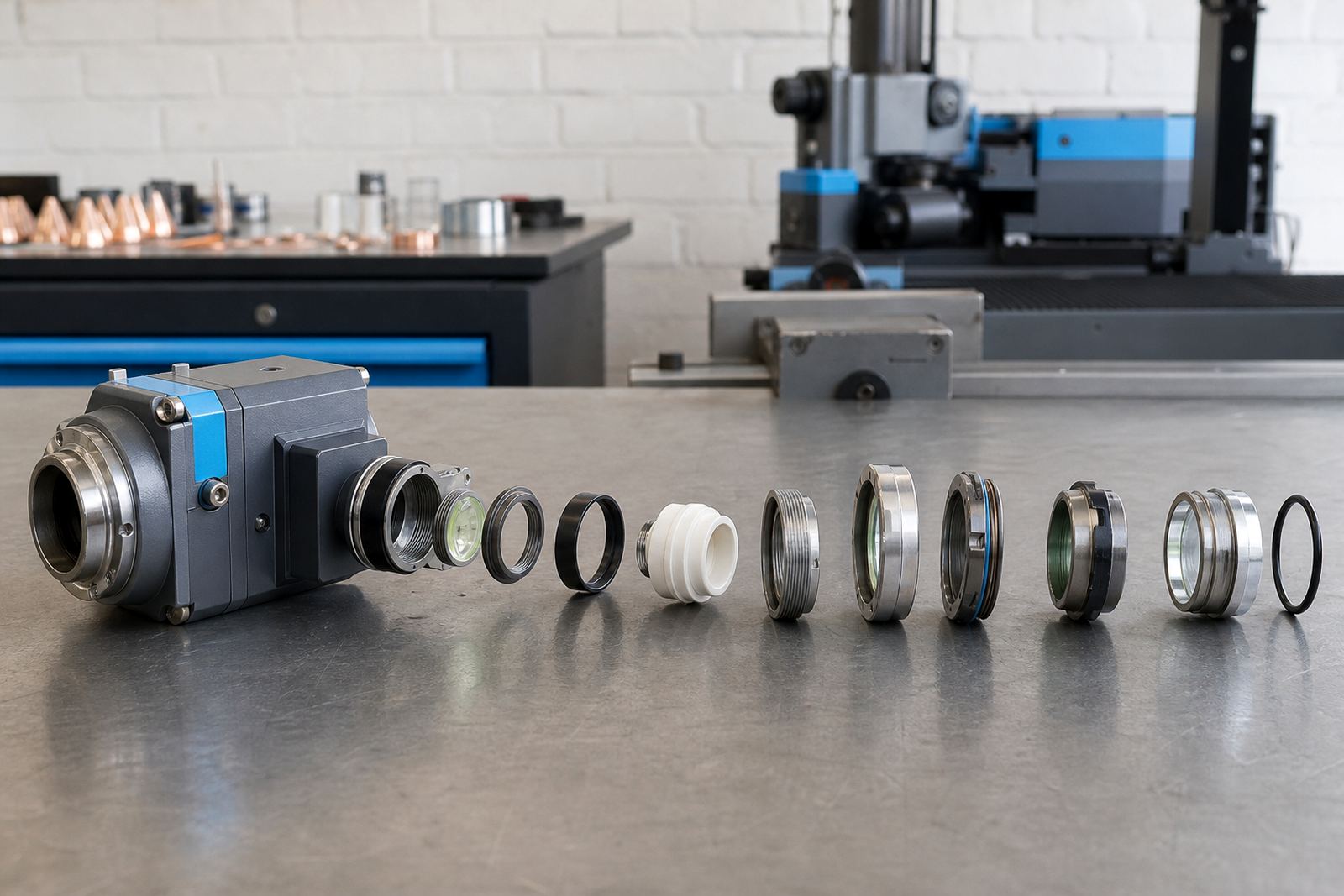
A small bore nozzle has to sit squarely in the head, with the tip clean and the seat free of grit. Bench fitting usually includes nozzle centring, focus setting check, protective window inspection and a look at the ceramic ring, because all of these parts affect how the beam and gas leave the head.
On site, head alignment needs careful handling if the machine has a crash history or if cut quality has changed after a lens change. The nozzle must be checked against the beam path, not just screwed in by feel. A good fit gives stable pierce marks, cleaner edge finish and fewer random dross streaks on thin sheet.
- Clean the seat before fitting
- Check nozzle tip damage under light
- Confirm centring before production
- Verify focus position after replacement
- Inspect the ceramic ring for cracks or burn marks
Care, cleaning and wear signs
Small bore nozzles wear faster than large open tips because the orifice is tighter and any contamination shows up sooner. Fine metal dust, spatter and heat tint can disturb the gas flow, so cleaning needs a light hand and the right tools. A nozzle that has been dropped, nicked or scratched at the tip should not stay in service for fine work.
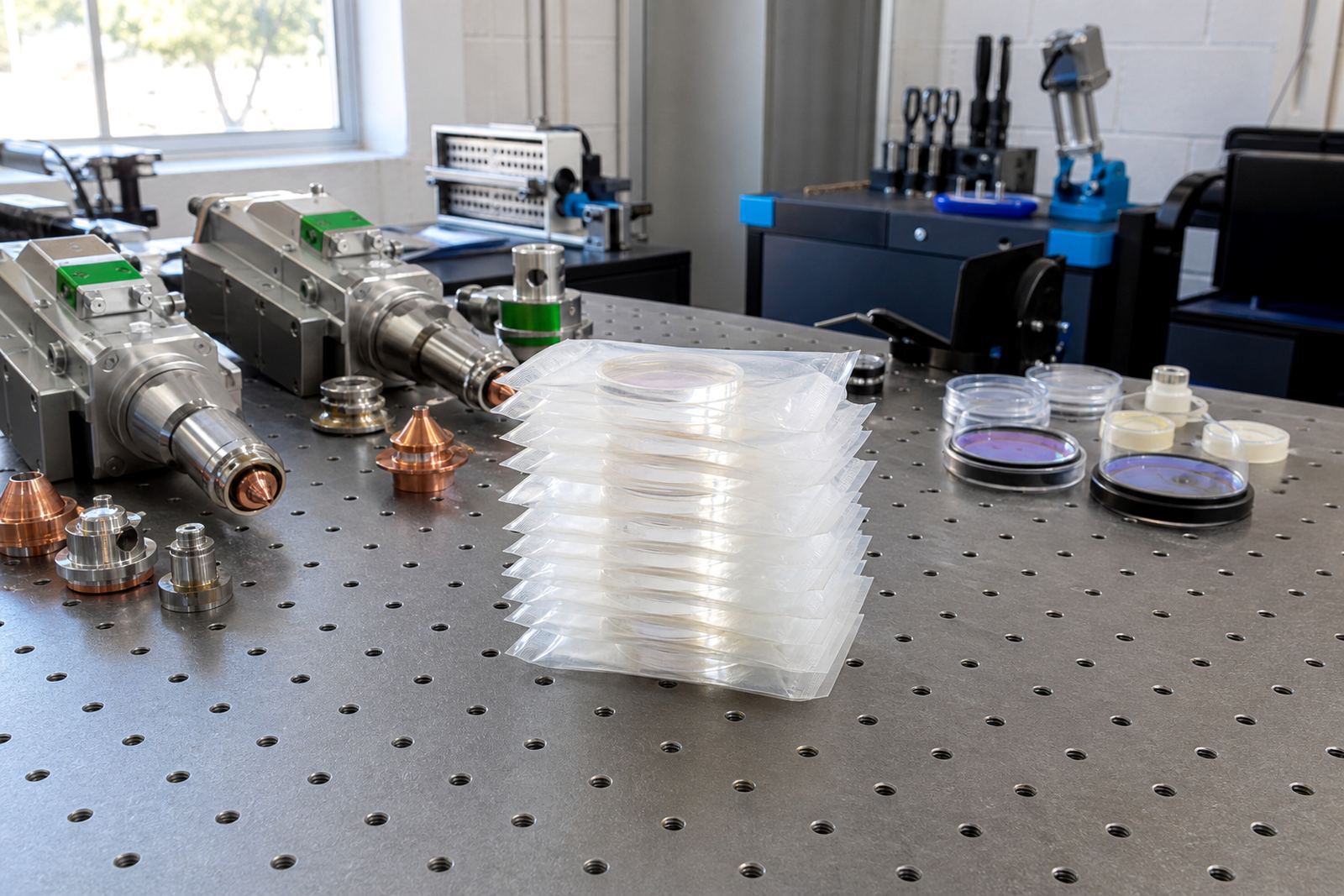
Look for uneven edge finish, extra burr, irregular pierce marks or a cut that starts to lean on one side. Those signs can point to a blocked nozzle, poor centring, a damaged lens or a dirty protective window. In coastal air and dusty shop conditions, careful storage matters as much as fitting. Keep spare nozzles sealed and dry, not loose in a drawer where the tips bang together.
What to confirm when ordering for a fibre laser head
Correct ordering starts with the head type and the nozzle seat, then the rest of the fit follows from there. The bore size alone is not enough. The body must match the machine head, the gas arrangement must suit the process, and the application must be clear enough for the right tip to be selected.
For sheet-metal shops in Spartan, Kempton Park and across South Africa, the usual checks are practical and direct. Confirm the cutting head model, thread type, single or double layer nozzle style, bore size, material being cut, usual thickness range and whether the job is focused on finer kerf control or general cutting. If the head has been serviced recently, it is worth confirming lens condition, ceramic ring fit and the nozzle centring setting at the same time.
- Cutting head model and nozzle seat type
- Single layer or double layer requirement
- Orifice size in millimetres
- Material type and thickness range
- Assist gas used on the job
- Orders may be for replacement, setup or spare stock.
Key facts
| Orifice sizes | 0.8 mm, 1.0 mm, 1.2 mm, 1.5 mm, plus similar small bore sizes |
|---|---|
| Nozzle styles | Single layer and double layer |
| Common use | Fine kerf cutting on lighter sheet and detailed profiles |
| Materials cut | Mild steel, stainless steel and aluminium |
| Fitment checks | Centring, focus setting, seat cleanliness and head compatibility |
| Service support | Bench head service, on-site head alignment and nozzle centring |