
What the upper window does inside the head body
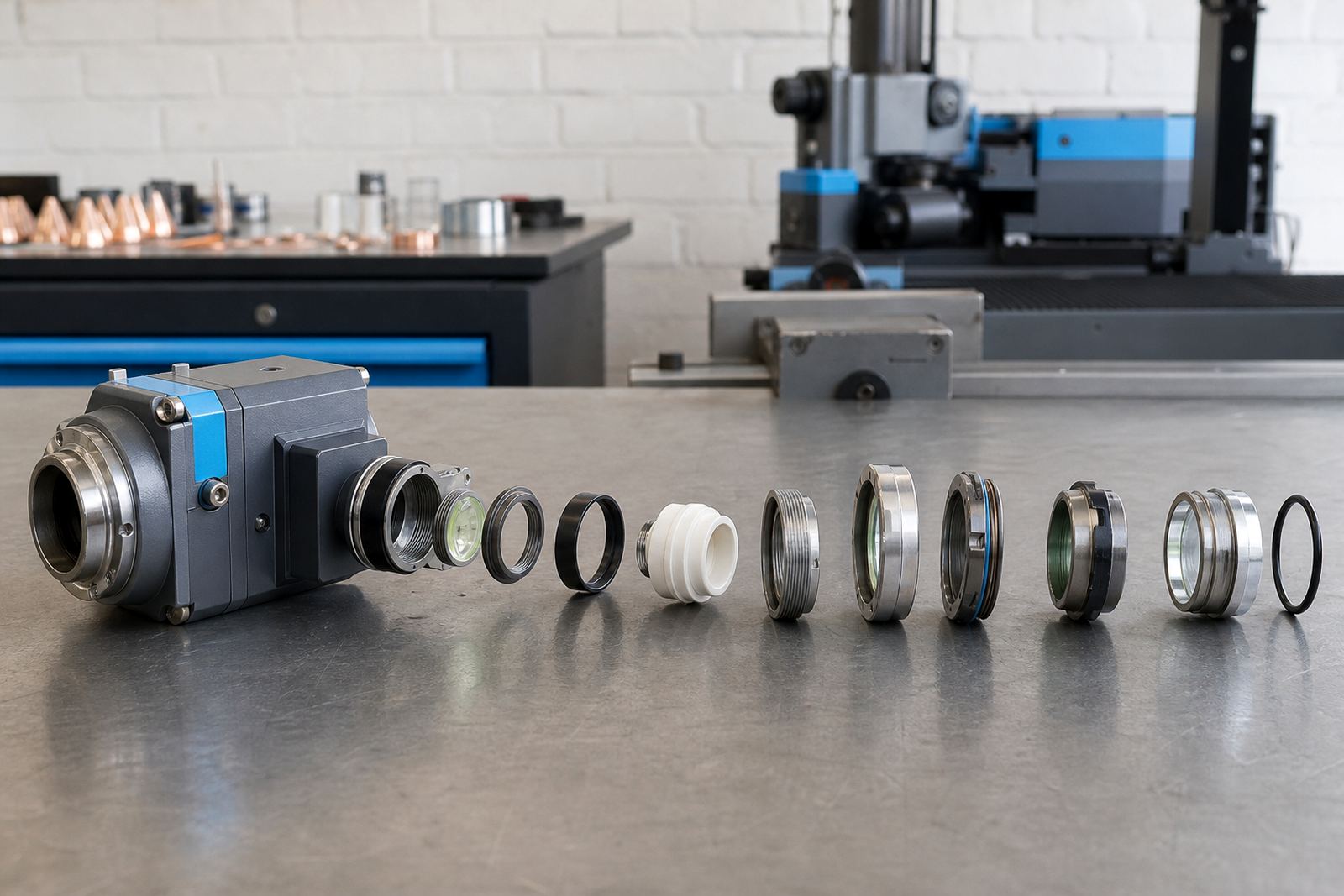
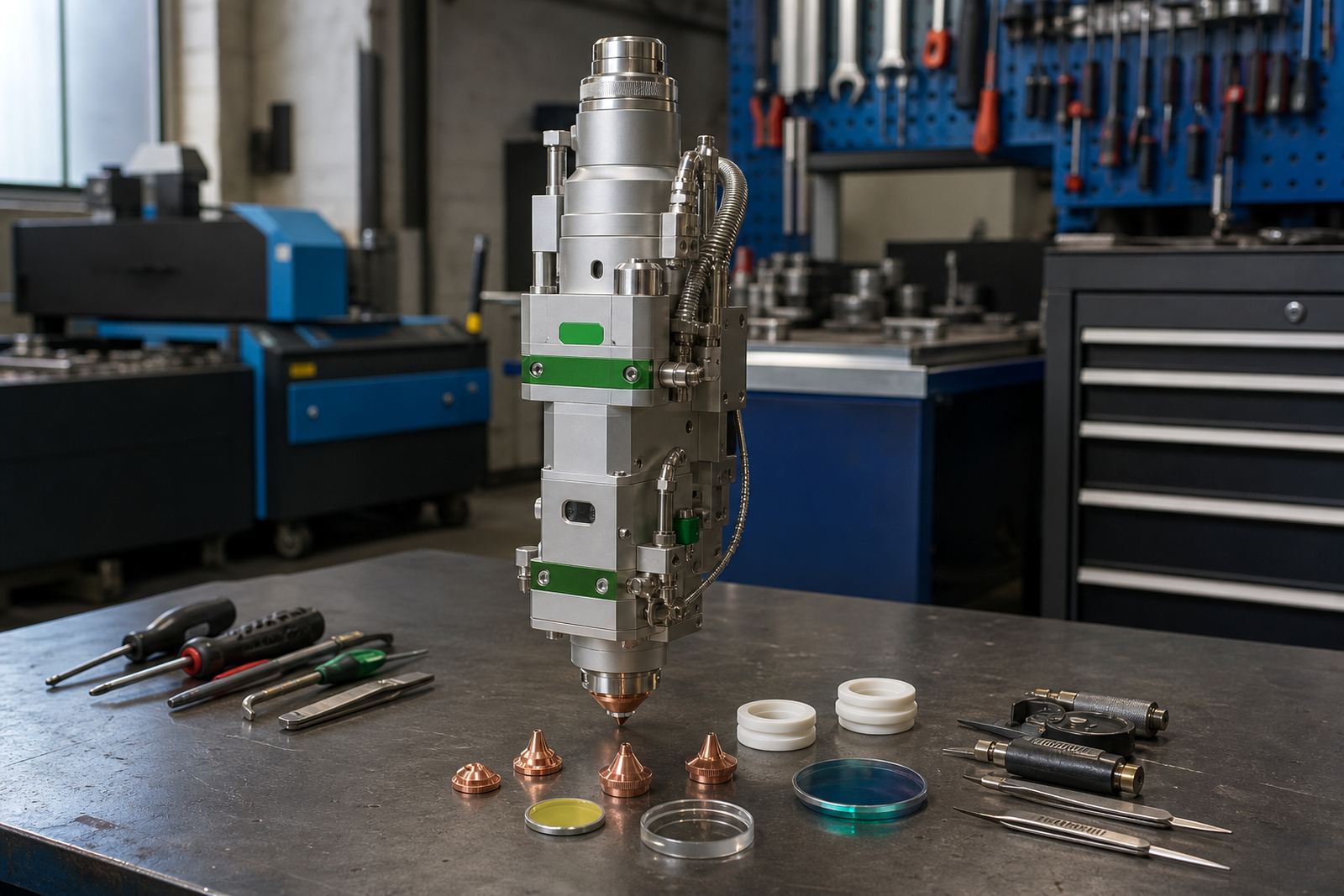
An upper protective window is a flat optical window fitted inside the fibre laser cutting head to separate the cleaner upper section from the cutting chamber below. Its job is to take the first hit from airborne dust, fumes and micro-particles that move back up the head during cutting, especially on mild steel, stainless steel and galvanised sheet.
In practical terms, it sits ahead of the focus lens and other upstream optics, so contamination has less chance of marking the lens surfaces or disturbing the beam path. When the window stays clean and seated correctly, the head is easier to keep in set condition and the cut edge is less likely to drift after a dirty run.
- Protects upstream optics from contamination entering the head body
- Helps preserve beam transmission through the optical stack
- Useful where fine dust, slag and smoke build up around the nozzle area
Sizes, coatings and matching the head design
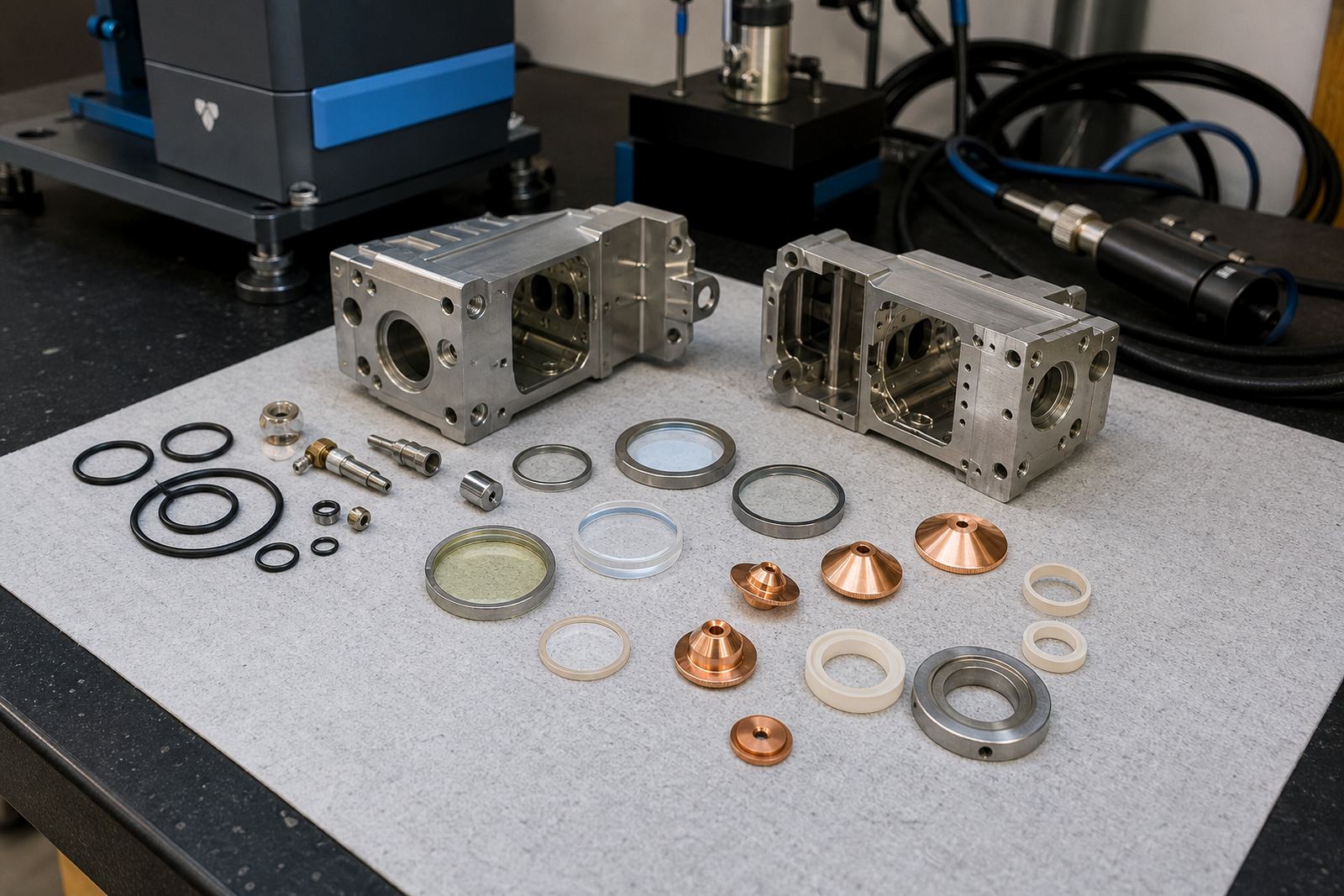
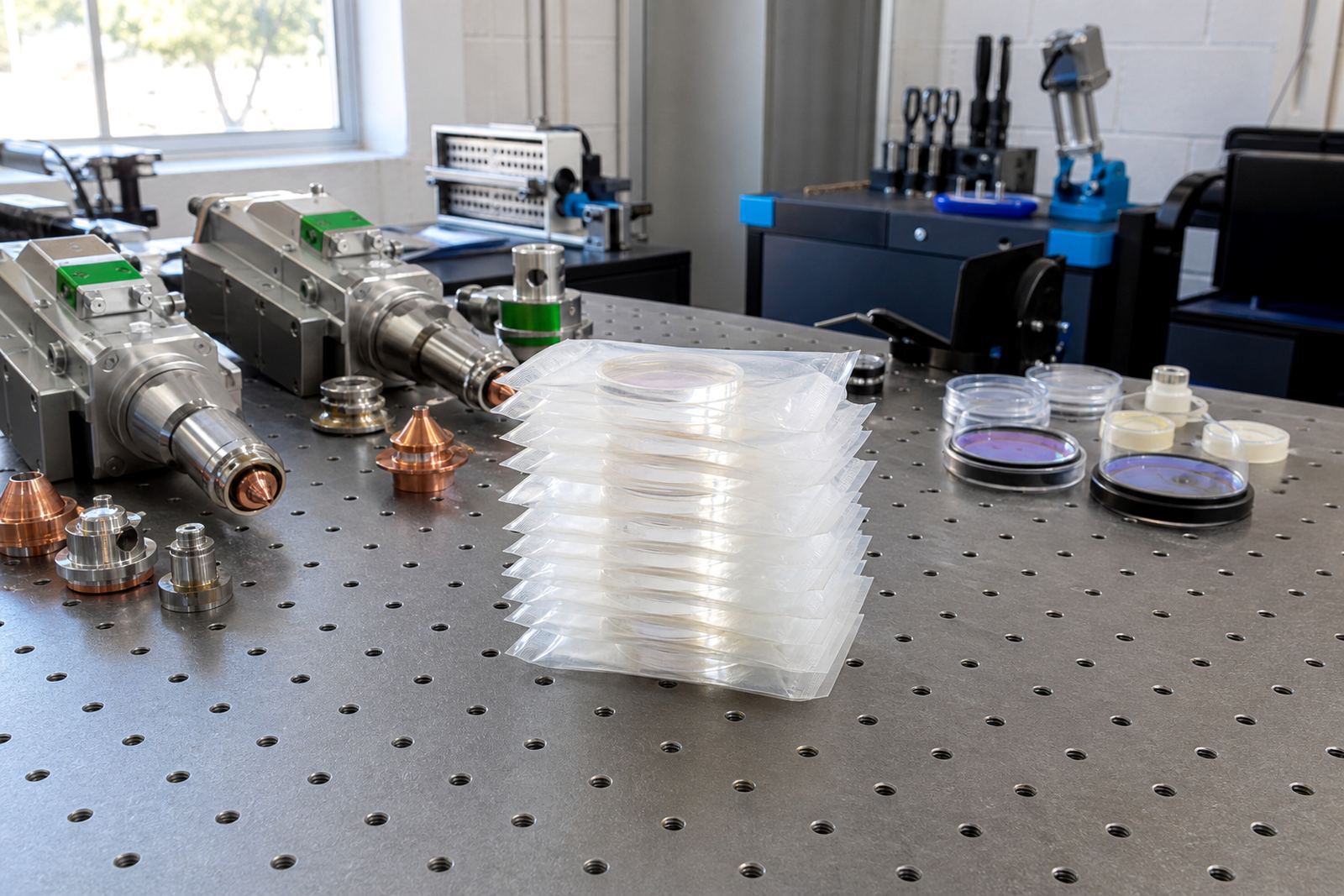
Upper protective windows are made in different diameters, thicknesses and coatings, and the correct choice depends on the cutting head design and the laser wavelength in use. Common options include circular windows with anti-reflective coatings suited to fibre laser systems, with edge chamfers and polished faces to reduce stress points and surface scatter.
Thickness matters more than many people expect. A window that is too thin can chip more easily during handling, while one that is too thick may change the optical spacing in the head. The fitting diameter, clear aperture and coating side all need to match the head specification, especially where the head uses capacitive height sensing and a tight focus assembly.
- Typical optical formats are round, flat and coated for fibre wavelengths
- Diameter and thickness must match the head body and clamping ring
- Coating side and orientation need to be checked before fitting
Where the window suits real cutting work
These windows suit sheet-metal shops running flat sheet, nested parts and repeated production cycles where the head sees constant exposure to smoke and fine debris. They are commonly used on heads set up for cutting mild steel, stainless steel, aluminium and coated sheet, where the optical path can pick up contamination if the gas stream, nozzle centring or stand-off setting slips.
They also suit shops that keep spare heads ready for crash recovery or bench service. In those cases, the upper window is part of a broader maintenance stack that may include nozzle centring, focus setting check, lens cleaning and ceramic ring replacement. Durban humidity, coastal dust and workshop handling can all shorten the clean interval, so the window becomes a normal consumable rather than a rare spare.
- Useful on production heads that run long shifts and dense nesting
- Fits shops doing bench service and field alignment work
- Helps in coastal and inland conditions where airborne contamination varies
Fitting, seating and what the head needs around it
Fitting an upper protective window calls for a clean bench, lint-free handling and a properly seated retainer or clamp. The window must sit flat, without twist, dust or fingerprints on the coating. Even a small particle trapped at the edge can create a stress point or leave a mark once the head heats and cools during cutting.
The head should be inspected at the same time for seal condition, lens pocket cleanliness and any sign of crash damage. If the optical stack is out of line, the new window can be affected just as quickly as the old one. A careful fit normally sits alongside gas path inspection, focus setting check and a look at the ceramic ring, because those parts influence how much contamination reaches the window in the first place.
- Handle only with clean gloves or optical tools
- Seat the window evenly in the holder or retainer
- Check the seal, pocket and clamp for dirt or wear
Care, cleaning and replacement habits that save optics
Upper protective windows need gentle cleaning only, using proper optical swabs, approved cleaning fluid and a light touch. Dry wiping can drag grit across the coating and leave permanent haze. If the surface shows pitting, clouding or a heat mark, cleaning will not restore it and replacement is usually the better route.
Good housekeeping around the head helps the window stay usable for longer. Keep the nozzle clean, check the gas jet for burrs, and make sure the head is not running with a tired seal or cracked ceramic ring. A window that keeps fogging or turning smoky is often telling you the head needs more than a simple wipe, especially after a hard cut or collision.
- Use lint-free tools and optical cleaner only
- Replace windows with marks, haze or edge chips
- Keep the nozzle, seal and ceramic ring in order
Details to confirm before ordering a replacement
The right upper protective window is selected by head model, optical diameter, thickness, coating type and the laser wavelength. You also need to check whether the window is for the upper optical position or another part of the head stack, because the dimensions can look similar but fit differently. When the window sits in a head with focus control and capacitive height sensing, the seating depth matters as much as the glass size.
Before ordering, have these details ready so the part matches the head in service and the bench setup stays on spec. This avoids wasted fitting time and keeps the optical path consistent when the head returns to cutting thin sheet or heavier plate. A careful check also helps when the machine is shared across more than one shift and the head has seen mixed materials.
- Head model and optical layout
- Window diameter and thickness
- Coating type and wavelength compatibility
- Upper or lower optical position
- Clamping style and seating depth
- Signs of wear, haze or crash damage on the current window
Key facts
| Product | Upper guard window for fibre laser cutting heads |
|---|---|
| Optical use | Protects upstream optics from contamination |
| Common format | Round flat window with coated faces |
| Material | Optical glass |
| Selection factors | Diameter, thickness, coating, wavelength and seating depth |
| Typical support work | Bench service, cleaning, inspection and head alignment |