What a single layer nozzle does on the cut
A single layer nozzle is a one-piece nozzle with one internal gas path and one outlet bore. In fibre laser cutting heads, that bore shapes the assist gas into a tight stream so the melt is pushed out of the kerf instead of hanging on the edge. For mild steel, many shops use single layer nozzles when they want a steady cut path and predictable edge quality on straight production work.
The nozzle sits at the business end of the cutting head, close to the sheet, so the bore shape and concentricity matter. A worn or damaged nozzle can leave dross, rough edge lines or erratic pierce marks. On thin sheet the difference is easy to see, especially when the head runs close to the plate and the gas flow has to stay clean and centred.
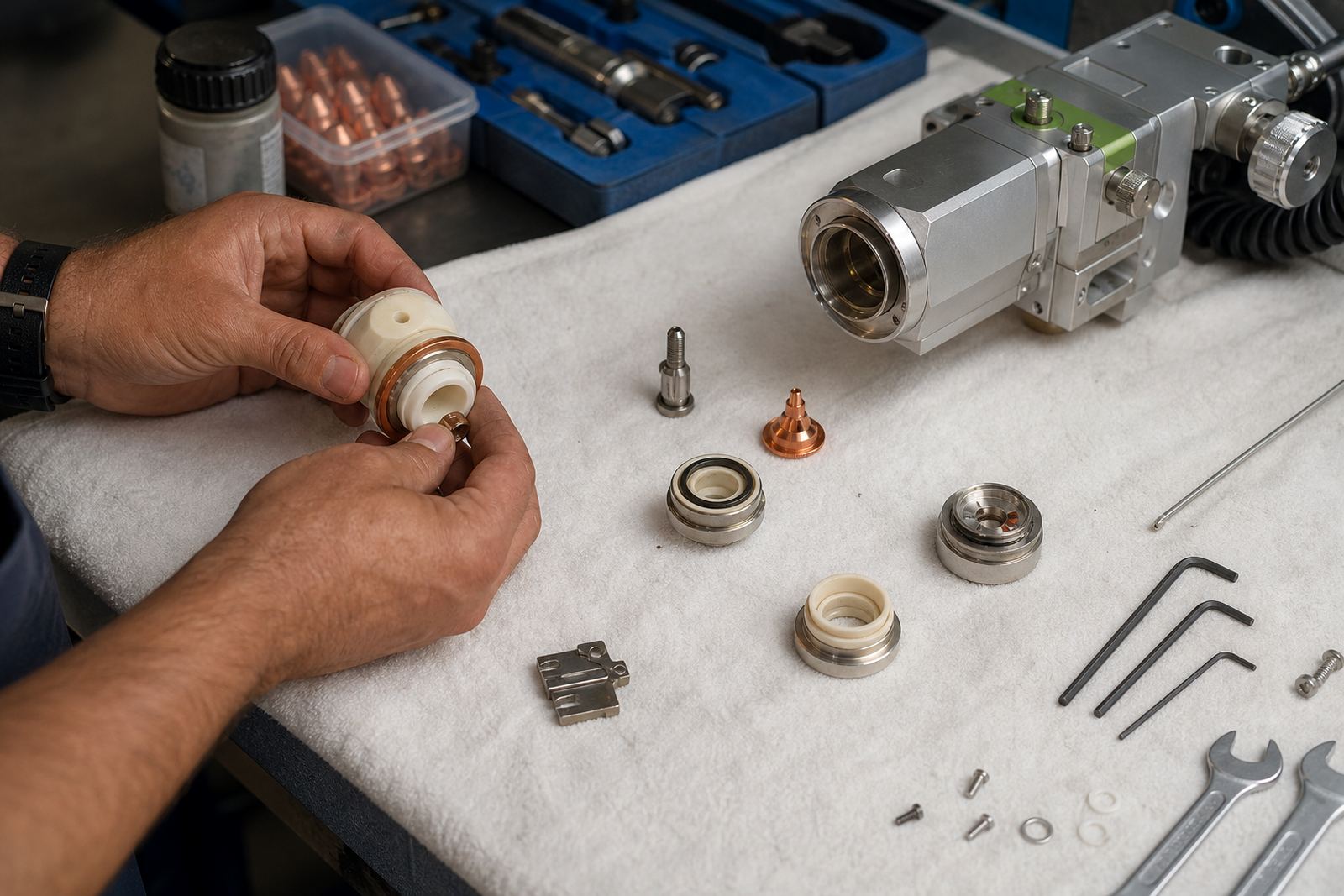
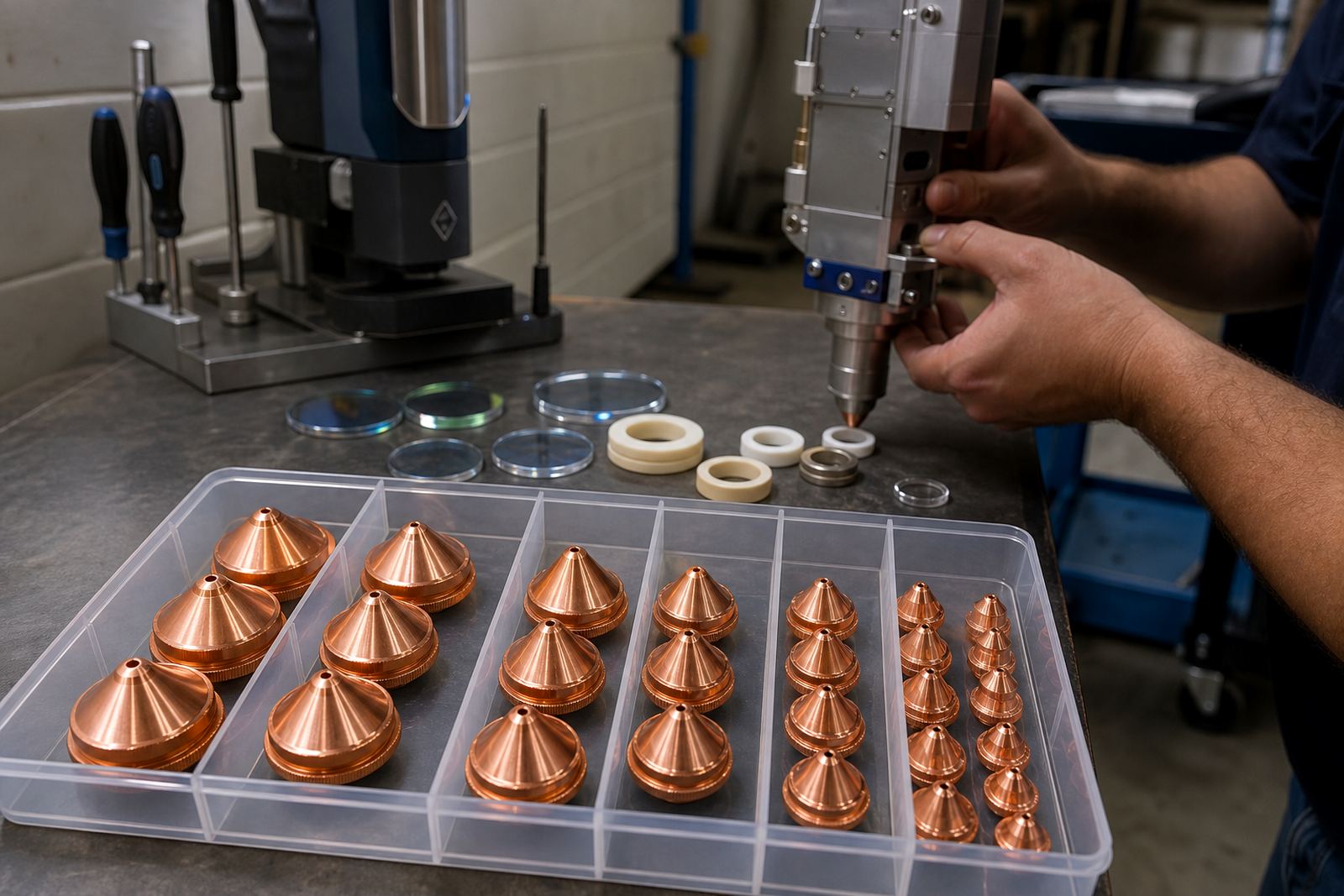
We supply single layer nozzles as part of the consumable set used with fibre laser cutting heads, together with related parts such as focus and collimator lenses, protective windows and ceramic rings. When the nozzle matches the material, gas pressure and standoff correctly, the cut stays more consistent across a long run.
Sizes, bore options and cut conditions
Single layer nozzles are usually selected by bore size, thread or mount style, and the diameter of the bore is matched to the thickness and cutting gas. Smaller bores are used where the gas stream must stay tight, while larger bores can suit heavier plate and higher flow. Mild steel work often calls for a different nozzle choice than stainless or aluminium, because the assist gas and cutting behaviour are not the same.
- Bore sizes commonly used on fibre laser heads: 0.8 mm, 1.0 mm, 1.2 mm, 1.5 mm and 2.0 mm
- Material options: copper-based nozzle bodies and other precision-machined conductive alloys
- Thread and fit style: supplied to match the cutting head interface and ceramic ring arrangement
- Use cases: thin gauge sheet, general fabrication parts, mild steel production cutting and detailed profile work
- Assist gas: oxygen or nitrogen, depending on the cut plan and edge finish required
In practice the nozzle choice must suit the focus setting, gas pressure and stand-off distance. A nozzle with the wrong bore or poor centre line can disturb the jet and spoil the edge, even if the rest of the cutting setup is correct. That is why the shop often keeps several bore sizes in stock for different jobs.
Where single layer nozzles suit the job
Single layer nozzles are a practical fit for sheet-metal shops doing regular mild steel work, general fabrication and profile cutting where the gas stream needs to stay focused. They are also used where the machine is set up for repeat production and the operator wants a simple consumable with a clear wear pattern.
They suit material cutting where the head height, lens condition and nozzle centring are kept in line with the machine settings. On clean mild steel plate, a well-matched single layer nozzle helps hold edge quality and reduces the chances of flare-up at the pierce point. Shops in Spartan, Kempton Park, Johannesburg, Pretoria, Durban, Cape Town and Rustenburg often carry a small spread of nozzle bores because one size does not cover every thickness.
Single layer nozzles are less forgiving when the head has been knocked, the ceramic ring is cracked, or the protective window is marked. In those cases the nozzle may be fine on paper, but the cut still drifts. The nozzle works as part of a chain, so the head condition matters as much as the consumable itself.
Fitting the nozzle into the cutting head
Fitting is not only a matter of screwing the nozzle into place. The contact face must seat properly, the centre line must be checked, and the tip must sit cleanly under the head body without side play. If the nozzle is off-centre, the gas jet can strike the kerf unevenly and the cut edge may lean or roughen.
Our bench service work includes nozzle centring, focus setting checks, protective window replacement, lens cleaning and ceramic ring replacement where the head condition calls for it. On site alignment is used when the machine needs the head checked on the production floor, especially after a crash, a tip strike or signs of poor pierce quality. For a nozzle fit to hold, the full gas path has to be kept clean and the sealing surfaces need care.
- Check that the nozzle seats flat against the head interface
- Verify the bore is clear of spatter, dust and oil residue
- Match the nozzle to the cutting gas and plate thickness
- Confirm the focus point and stand-off used on the job sheet
- Inspect the ceramic ring and seal area before final fitment
Care that keeps the cut edge honest
Single layer nozzles need careful handling because the bore can be damaged by a light knock or by dirty storage. Keep them in a clean tray, not loose in a toolbox where the tip can chip. Before use, check for soot, copper splash or oval wear around the outlet. Even a small mark can alter the gas stream and leave a hard-to-read cut line.
Cleaning should be gentle. Use lint-free cloths and suitable non-abrasive methods for the nozzle body and mating face. Avoid rough tools that open the bore or bruise the tip. If the shop runs long batches, it helps to inspect the nozzle between jobs, especially after heavy piercing or material with surface scale. A steady routine with lens cleaning and protective window checks also reduces the chance of nozzle trouble being blamed on the wrong part.
When a nozzle wears out, replace it. A tired nozzle often costs more in scrap, rework and edge cleanup than the consumable itself. For machine rooms near the coast, where humidity can creep into drawers and storage boxes, dry storage matters as much as the cut settings.
Details to confirm before ordering the nozzle
To match the right single layer nozzle, we need the cutting head model, the bore size, the material being cut and the assist gas used on the job. The mount style and thread pattern must also match the head, otherwise the nozzle will not seat correctly. If the head has been serviced recently, it helps to note whether the ceramic ring, protective window or focus lens were also changed.
- Cutting head model and nozzle interface type
- Required bore size for the material thickness
- Assist gas used on the machine
- State the material grade you work with, for example mild steel, stainless steel or aluminium.
- Whether the head has had crash damage or recent alignment work
- Any signs of poor centring, flare marks or dross on the last run
We keep the wording practical because the fit has to be exact. A single layer nozzle that is near the mark is not good enough on a fibre laser head, especially where production is tight and the edge finish matters. Our contact form can be used to send the head details, the bore size needed and the machine condition, so the right consumable can be matched to the job.
Key facts
| Product type | Single layer nozzle for fibre laser cutting heads |
|---|---|
| Common bore sizes | 0.8 mm, 1.0 mm, 1.2 mm, 1.5 mm, 2.0 mm |
| Typical use | Mild steel and general sheet-metal cutting |
| Assist gas | Oxygen or nitrogen, depending on the cut |
| Fitment | Head-specific thread and seating arrangement |
| Related service | Nozzle centring, focus setting check and head alignment |