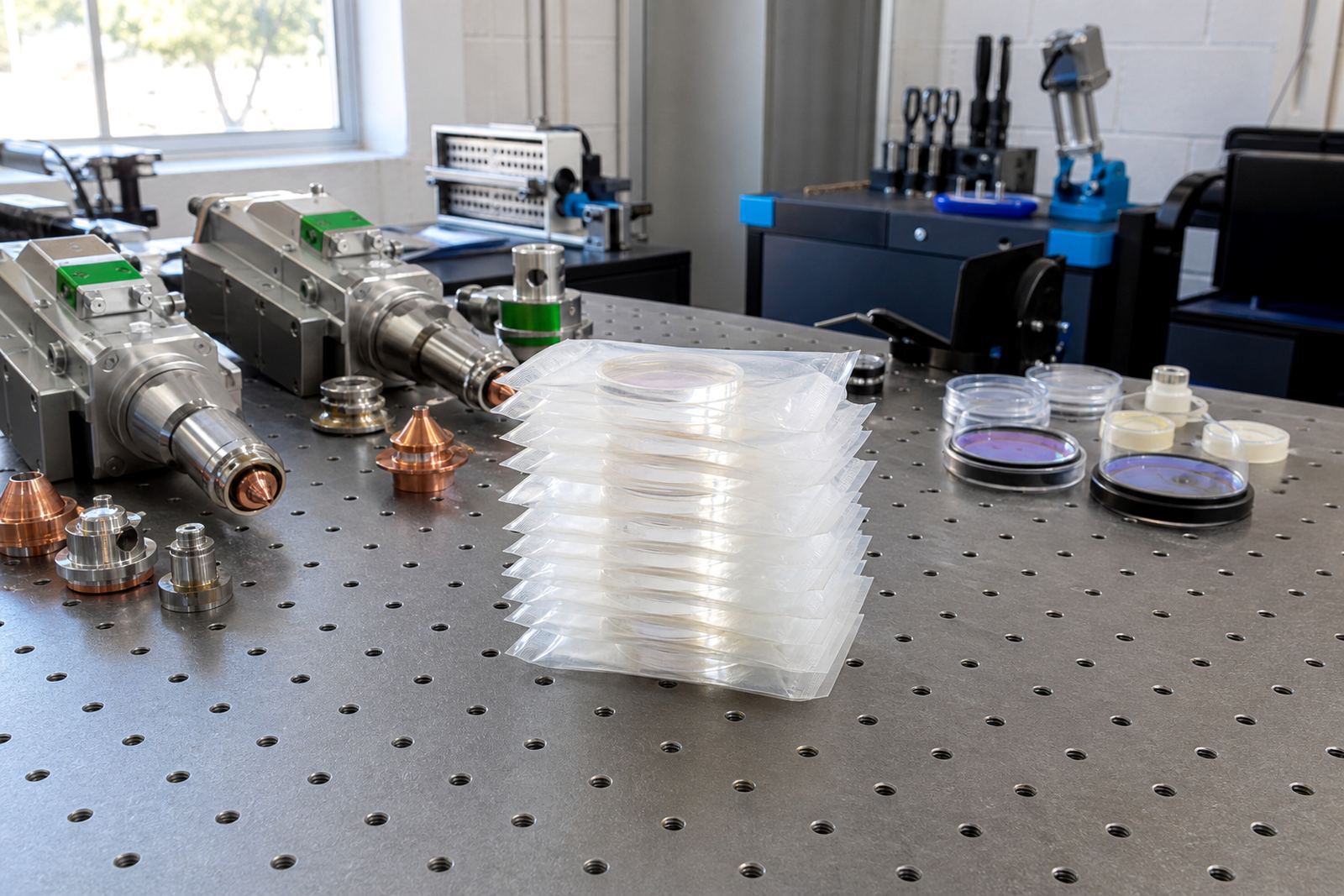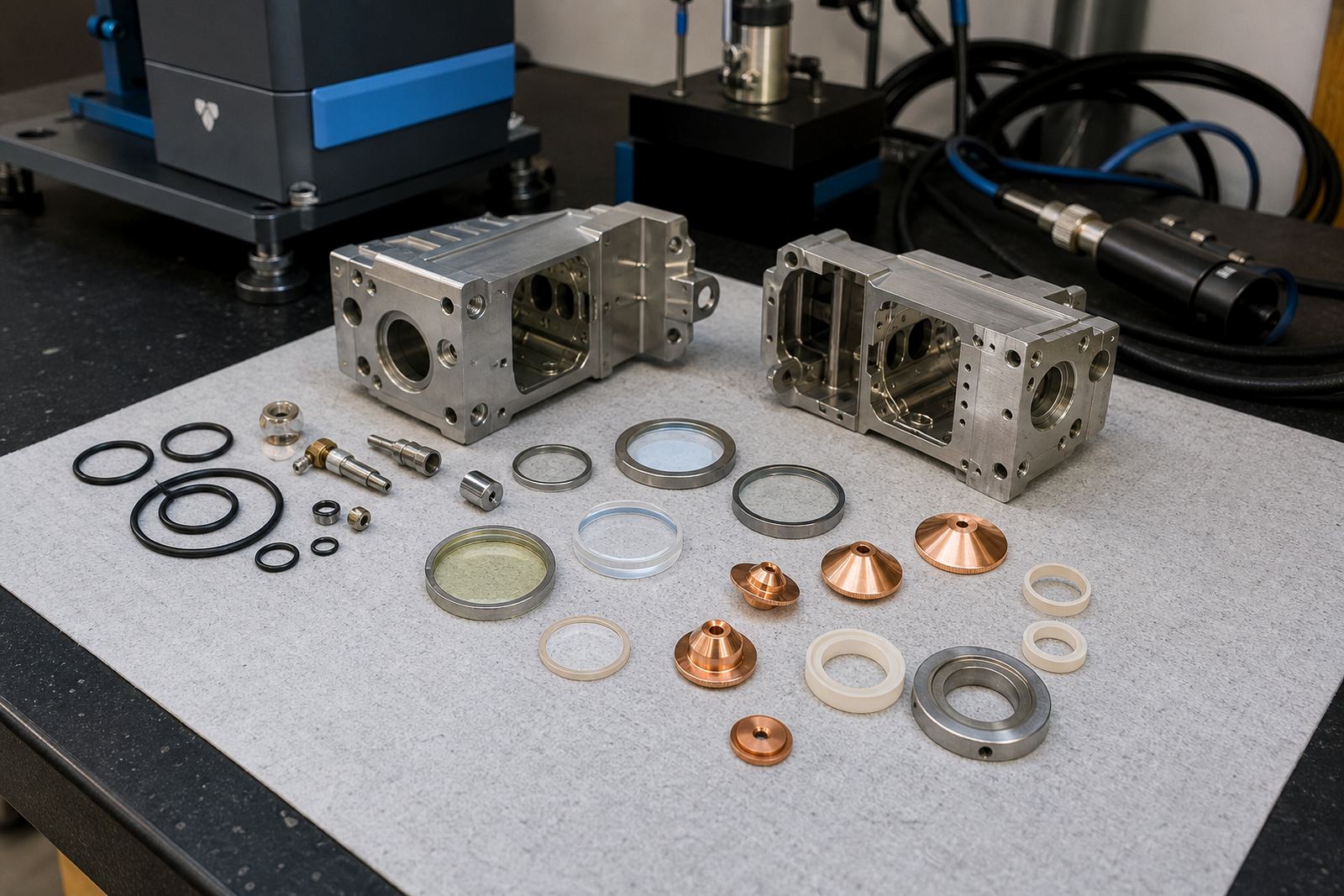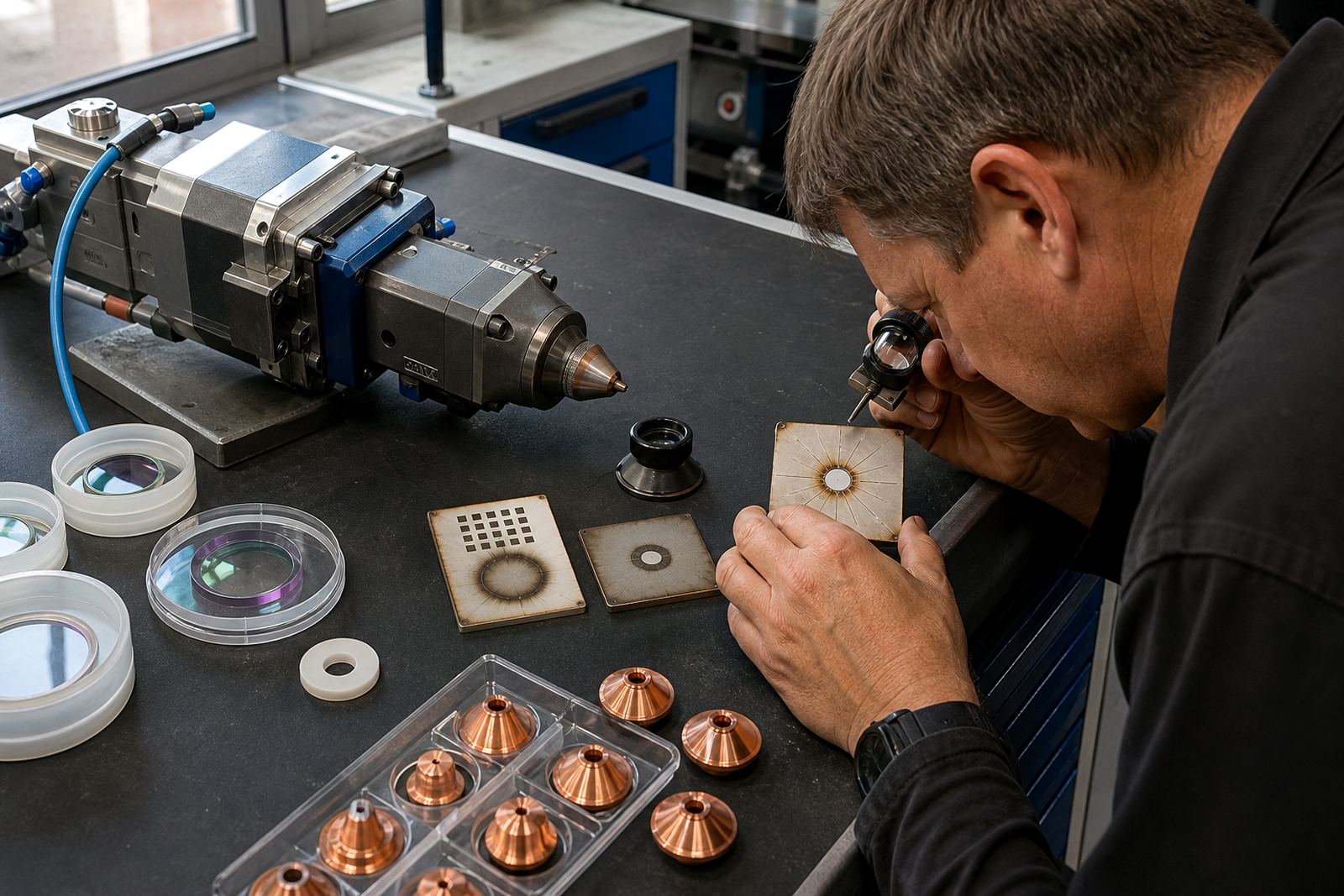

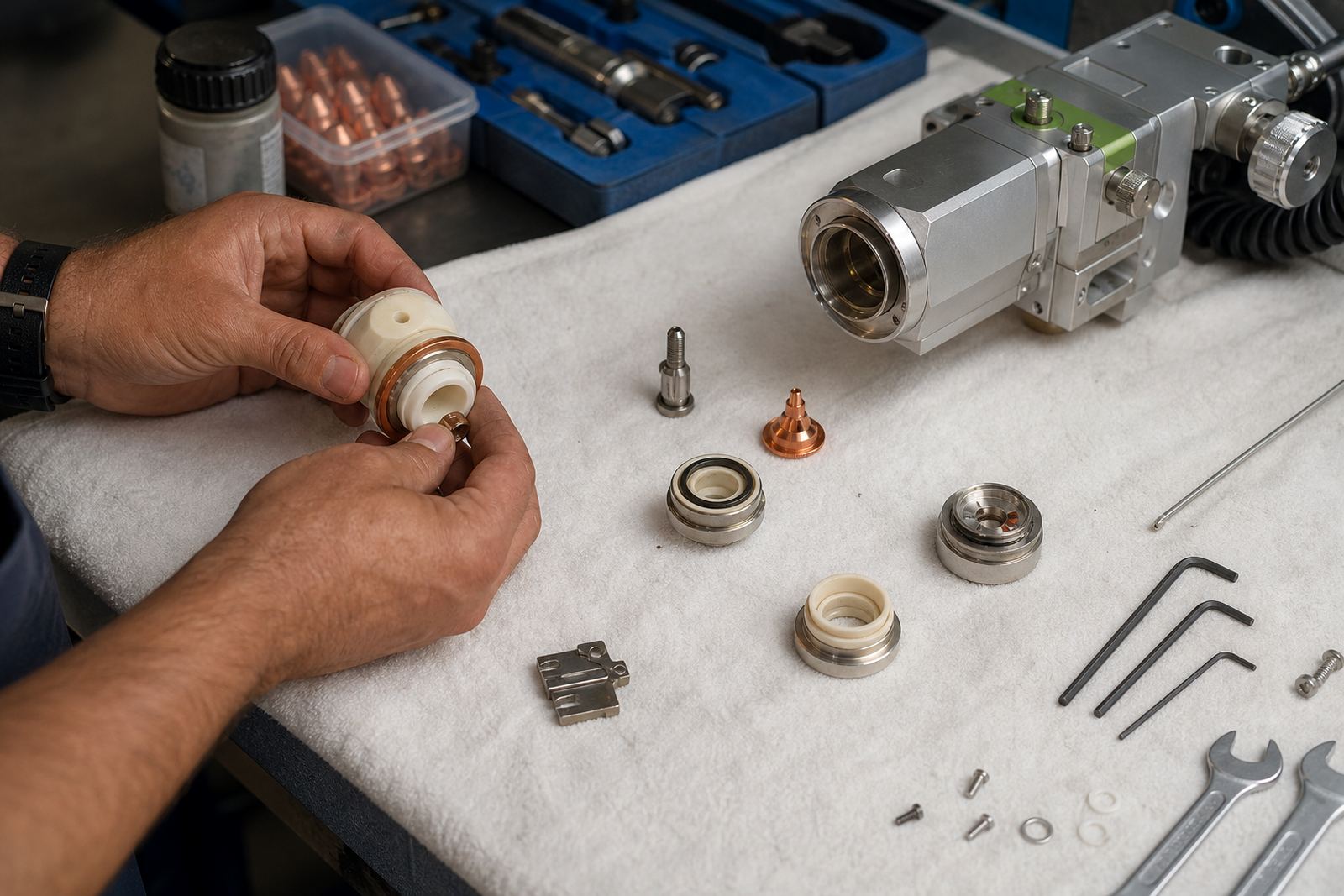
The ceramic seat that keeps the nozzle path steady
The ceramic holder is the retaining assembly that sits between the nozzle section and the rest of the cutting head. Its job is part mechanical, part electrical. It holds the nozzle in position, keeps the contact path consistent for capacitive sensing, and helps preserve the spacing that the controller depends on when tracking sheet height.
In fibre laser heads used on mild steel, stainless steel and aluminium sheet, the holder must stay square under repeated heat cycles and vibration. If the ceramic body chips, tracks carbon, or the metal insert loosens, the nozzle can sit off-centre and the height signal can wander. That shows up as rough edge quality, poor pierce behaviour, or a head that feels difficult to tune properly.
Raytool ceramic holders are used as service parts for cutting heads that need a replacement seat, a rebuild after a crash, or a fresh assembly during bench work. The part is not just a ring or spacer. It is a functional component in the sensing chain, so the fit, face condition and contact surfaces all matter.
Common sizes and fitment choices on the bench
Different cutting heads use different ceramic holder forms, depending on the nozzle system and the sensor layout. The correct version is matched by physical dimensions and the way the contact ring interfaces with the head body and nozzle assembly. In practice, the workshop checks the outer diameter, inner diameter, overall height, mounting face and the style of electrical contact before fitment.
- Holder body diameter and height to suit the head model
- Nozzle seat profile for single layer or double layer nozzles
- Contact style for capacitive height sensing continuity
- Thread, clip or retained-fit style, depending on the head design
- Face finish that supports stable seating after cleaning and alignment
Some heads use a compact ceramic ring with a separate metal contact insert. Others use a more integrated carrier with a defined nozzle bore and a wider support face. When a cutting head has had repeated nozzle changes, the holder bore can wear or pick up scoring, so a part that looked acceptable at first glance may still allow movement during cutting.
Where this part earns its keep in real cutting work
Ceramic holders are common in production shops that cut plate and sheet on a daily cycle, especially where piercing, frequent height changes and long cutting shifts put the head under constant movement. They suit laser lines that work on flat sheet, nested parts and repeat jobs where the nozzle must remain centred from one sheet to the next.
They are also worth attention after a head collision. Even a light knock can crack the ceramic, shift the insert or disturb the sensing path without leaving an obvious external mark. That is why bench inspection normally checks the holder alongside the nozzle, protective window and ceramic ring area, not in isolation.
- Our laser cutting service processes mild steel, stainless steel and aluminium sheet metal.
- Heads that use capacitive height sensing for stand-off control
- Jobs with frequent nozzle swaps or long shift use
- Heads that have had crash damage, misfires or unstable pierces
- Workshop rebuilds that include nozzle centring and focus checks
Fitting notes that matter for alignment and sensing
Fitment is more than pushing the part into place. The ceramic holder must seat cleanly, sit concentric to the nozzle bore, and make the right electrical contact where the head design depends on it. If the surface is dirty, the holder can sit proud or lean slightly, which disturbs the standoff reading and changes how the head behaves during piercing and cutting.
During installation, the technician usually checks the nozzle face, the protective window condition, the ceramic ring, and the contact surfaces around the holder. Focus setting can then be checked against the cutting programme, because a sound holder helps only when the rest of the optical path is also in order. A sloppy fit or a cracked ceramic body can make a good focus setting look wrong on the sheet.
- Clean all seating faces before assembly
- Check for chips, hairline cracks and carbon tracking
- Confirm nozzle centring after the holder is installed
- Verify sensor continuity and stable height response
- Inspect for heat marks after repeated piercing near the same zone
Care, cleaning and service life on busy shop floors
Routine care is straightforward but important. Keep the holder free of dust, fine spatter and oxide powder. Use a clean, dry method suited to optics and cutting head parts, then check that no residue remains on the contact area or inside the nozzle seat. Harsh scraping can damage the ceramic surface and leave a path for tracking.
When a head is cleaned on the bench, the holder should be handled with care so the edges do not chip. If the shop operates in a coastal area such as Durban or Cape Town, extra care makes sense because humidity and fine airborne dirt can build up inside the assembly faster than many teams expect. On inland sites, dust from grinding and handling still works its way into the head.
Replace the holder if the ceramic is cracked, if the nozzle does not seat firmly, or if the sensing signal becomes erratic after the rest of the head has been checked. A small fault here can waste time across many cuts, so it is usually handled as part of the wider service process rather than left in place.
What to confirm when placing an order
Matching the right ceramic holder starts with the head itself. The model family, mounting style and nozzle format all matter, and the part must suit the way the machine controls height and focus. If the head has been rebuilt before, the current assembly may differ from the original, so visual checking is worth doing before a part is selected.
Please confirm these details with the order:
- Cutting head model and version
- Nozzle format, single layer or double layer
- Outer and inner dimensions of the holder
- Overall height and seat depth
- Contact style for capacitive sensing
- Any crash damage, wear marks or prior repairs
- Whether the part is for bench service or on-site fitment
For shops in Spartan, Kempton Park and across Johannesburg, Pretoria, Rustenburg, the East Rand, Durban and Cape Town, the practical aim remains the same: fit the right ceramic holder into a clean, centred head so the nozzle seats correctly and the sensor line stays stable.
Key facts
| Product type | Ceramic retaining assembly for fibre laser cutting heads |
|---|---|
| Function | Nozzle mounting and capacitive height sensing continuity |
| Compatibility | Specified by cutting head model, nozzle format and seat dimensions |
| Material | High-strength ceramic with contact insert, depending on head design |
| Typical use | Bench replacement, crash repair and head rebuild work |
| Service context | Suitable for sheet-metal cutting heads used on production and repair lines |