What the lower window does inside the cutting head
The lower protective window forms a barrier between the cutting process and the more sensitive optics in the head. It is the sacrificial layer that takes heat haze, airborne dust, oil mist and small splash marks before they reach the deeper lens stack. On sheet-metal machines this part matters because a clean beam path gives steadier pierce quality and fewer marks building up inside the head.
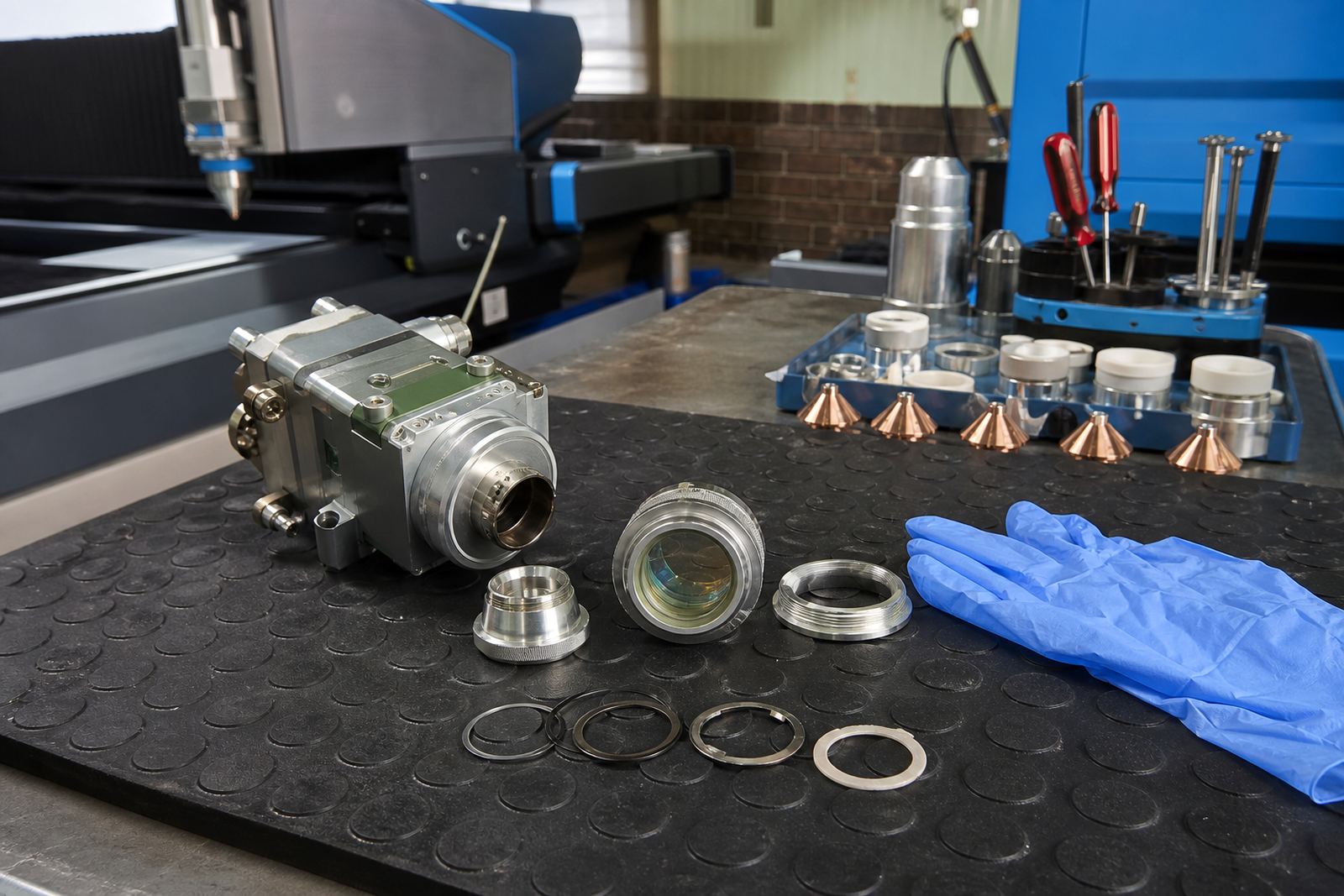
In normal use, the lower window is fitted near the nozzle end of the head and works with the focus lens, collimator lens and ceramic ring assembly. It is not a decorative spare. It sits in a tight optical stack, so the glass type, diameter and thickness need to suit the head body and the beam size that passes through it.
Sizes and window options that match the head body
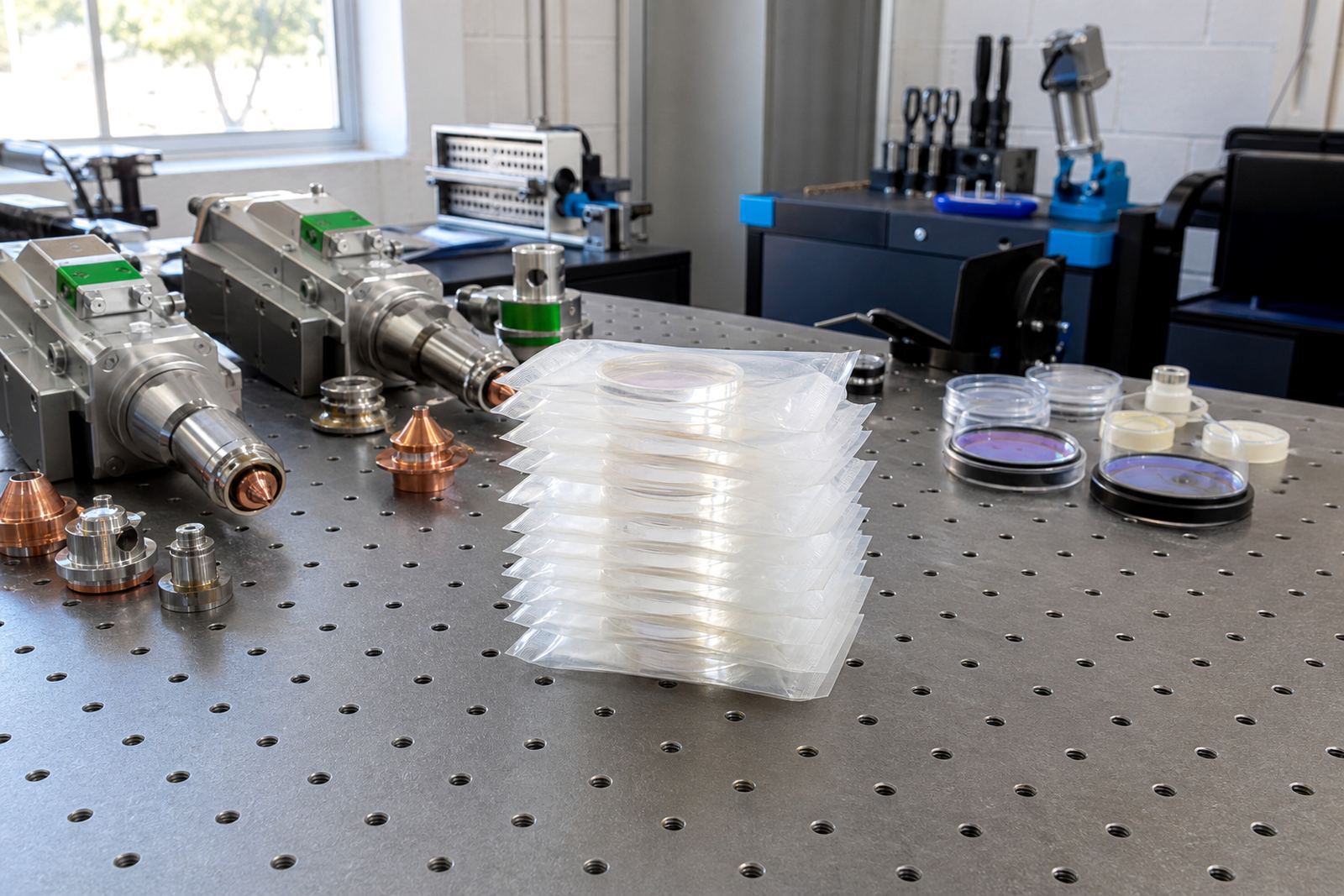
Lower protective windows are usually chosen by outer diameter, inner clear aperture, thickness and edge finish. The wrong size can cause clipping, edge heating or an unstable seat in the retainer. In a cutting shop the common request is for the exact window that fits the head model and the lens cassette, not a near match.
- Round window discs for standard fibre cutting heads
- Clear aperture matched to beam diameter and lens stack
- Different thickness options for light duty or heavier spatter exposure
- Coated glass options for better transmission and easier inspection
- Edge-finished windows that seat properly in the holder and seal ring
Where cutting runs include mild steel, stainless steel or aluminium, the lower window choice often depends on the process smoke and the amount of back-spatter at the nozzle face. Coastal humidity can also leave a film on the glass faster, especially in Durban and other humid areas.
Where these windows fit best on real cutting jobs
Lower protective windows suit laser shops that cut plate and sheet through the day and need the lower optics kept clean between services. They are useful on production lines with frequent nozzle changes, on jobs where the nozzle sits close to the sheet, and on heads that see occasional collision marks from warped plate or lifted scrap.
For mixed work, the window is usually treated as part of the consumable set with nozzles, ceramic rings and cleaning cloths. Shops in Johannesburg, Pretoria, the East Rand, Durban, Cape Town and Rustenburg often keep spare windows on hand because dirty or scratched glass can show up first as rough edges, poor pierce starts or unstable sensing near the sheet.
- Sheet-metal shops with repeated pierce cycles
- Heads used on fine sheet, heavy plate or mixed material runs
- Machines that need clean optics after vapour-heavy cutting
- Setups where lens cleaning is done on a strict service schedule
Fitting notes for a clean seat and safer optics
A lower protective window should be fitted with clean hands, clean tools and a clear view of the seat. Any fibre, grit or finger oil on the glass or retaining ring can create a hot spot as soon as the beam passes through. The seat, seal area and retaining parts must be checked before the new window goes in.
On the bench or on site, head service usually includes removing the old window, checking the ceramic ring, checking for seal damage and confirming that the lens stack remains aligned. If the machine uses capacitive height sensing, the head face and nozzle zone also need a clean look over so the sensing path stays stable and the cut height remains consistent.
- Confirm the correct window diameter and thickness before fitting
- Inspect the retaining ring and seal surfaces for scoring or soot
- Keep the window face free of lint, dust and grease
- Check focus position after fitting if the head was opened
Care, cleaning and replacement signs
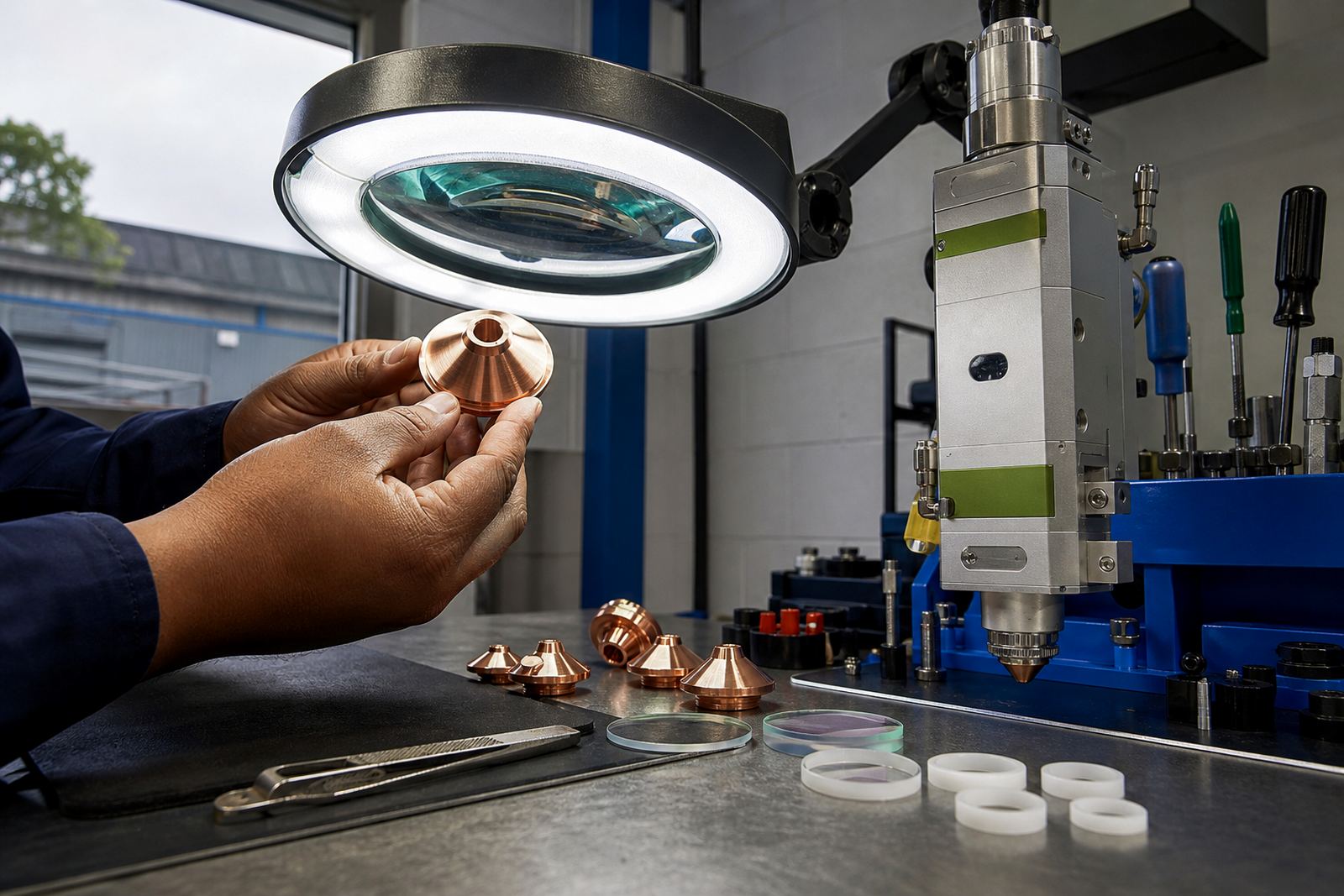
Lower protective windows are meant to be inspected often, not ignored until the cut goes soft. A mild haze, pin prick mark or faint line can turn into beam scatter and heat soak that affects the cut face. Once the glass has a permanent mark or clouding, cleaning may no longer restore it properly.
Use proper lens tissue or approved cleaning swabs, and keep the wiping motion light. Harsh rubbing can leave scratches that show under the beam. If the window shows repeated spotting, the nozzle may be too close, the gas path may be dirty, or the focus setting may need checking. That is often where the fault lies.
- Check for smoke film after long runs or piercing on thick material
- Replace the window if it has pits, cracks or etched patches
- Clean only with suitable optics fluid and lint-free material
- Review nozzle centring if spatter keeps landing on the glass
Details to confirm when placing an order
Before ordering a lower protective window, the head model, beam path size and window dimensions must all line up. If the glass is the wrong grade or thickness, the holder may not clamp it correctly and the optical path can shift. The exact seat shape matters too, especially where the head design uses a specific retainer and ceramic ring layout.
For a proper match, it helps to confirm the machine make, cutting head type, window diameter, thickness, coating requirement and whether the part is for the upper or lower position in the head. If the unit has had crash damage or a gas leak around the head seal, that should be noted as well because the window may not be the only worn part.