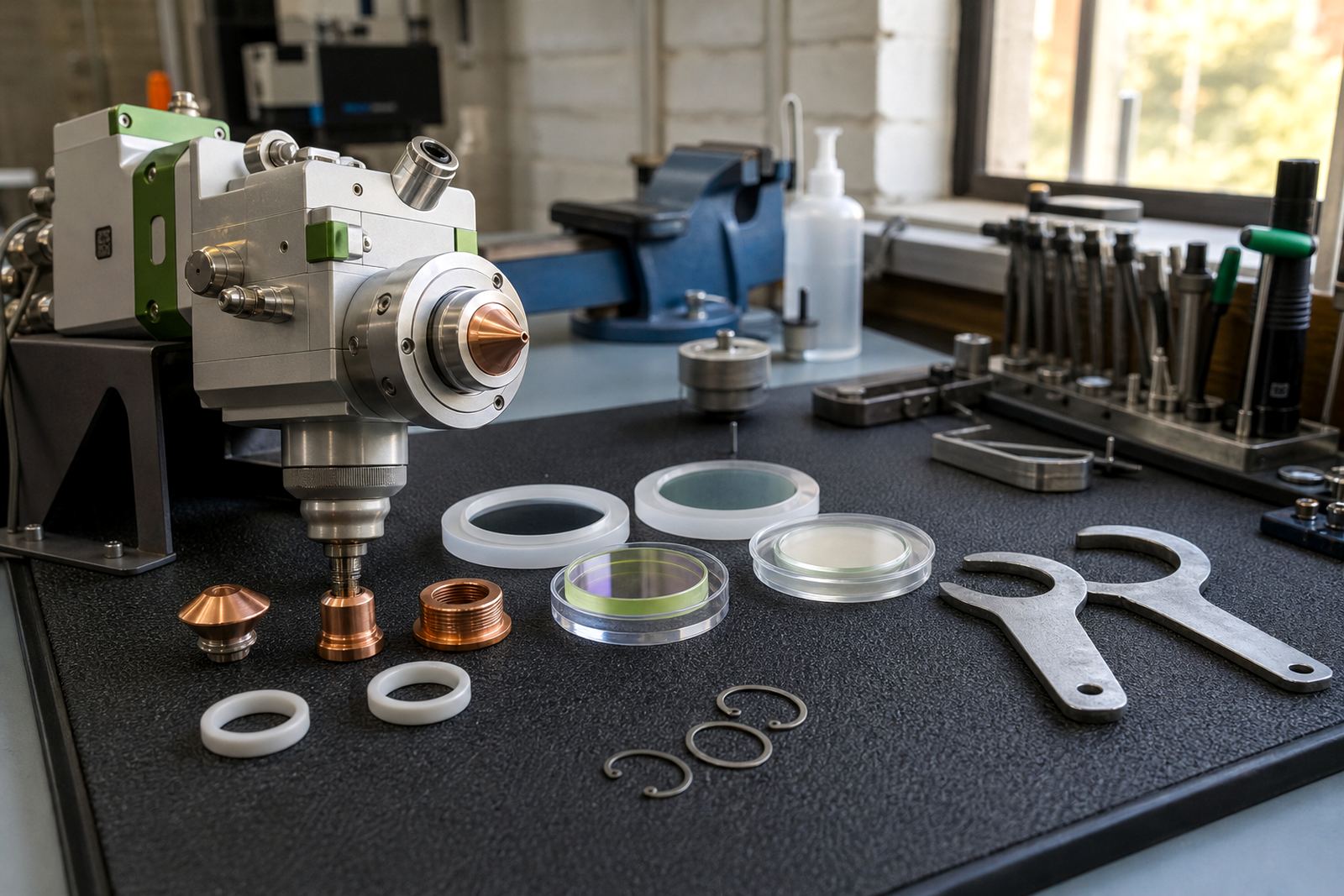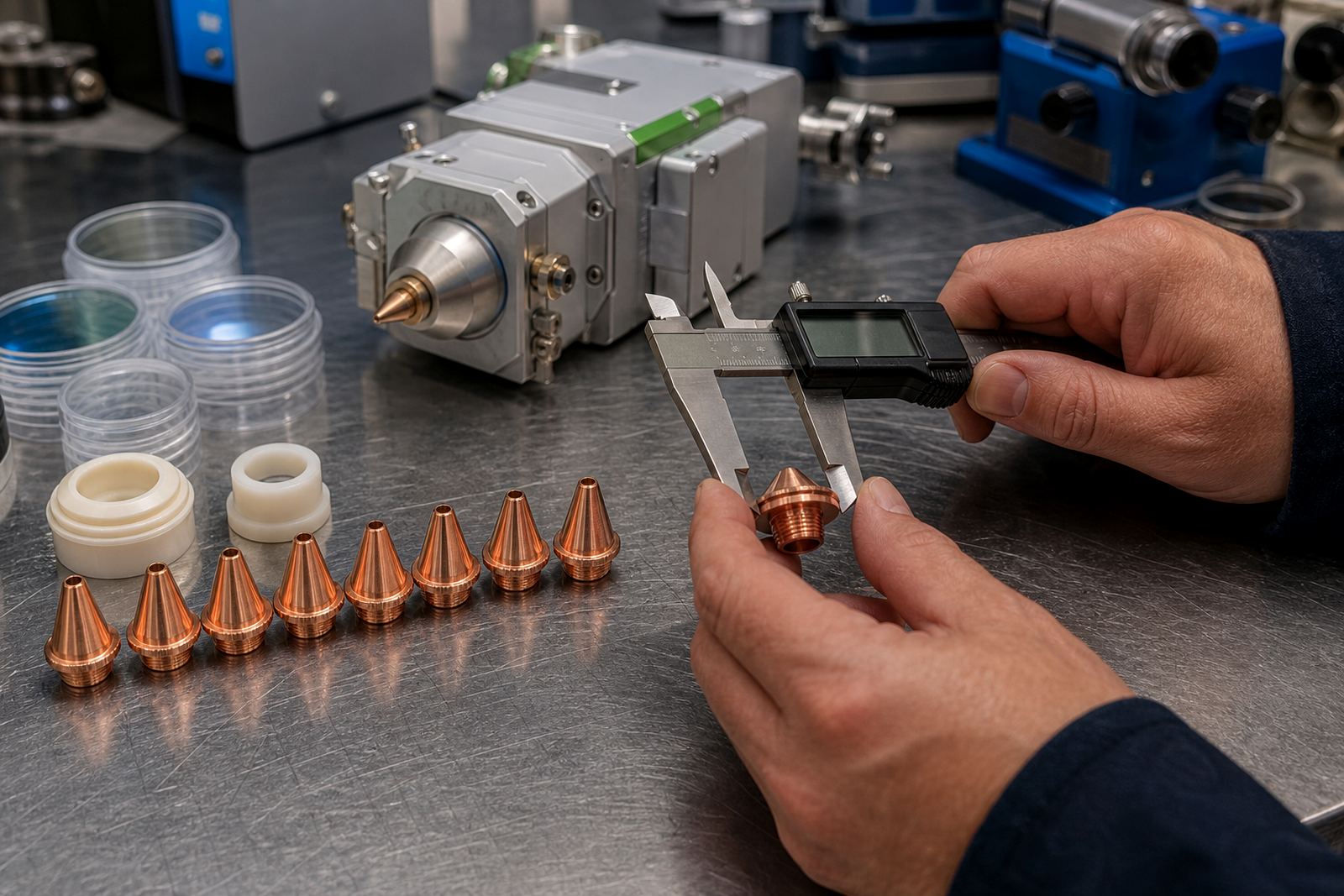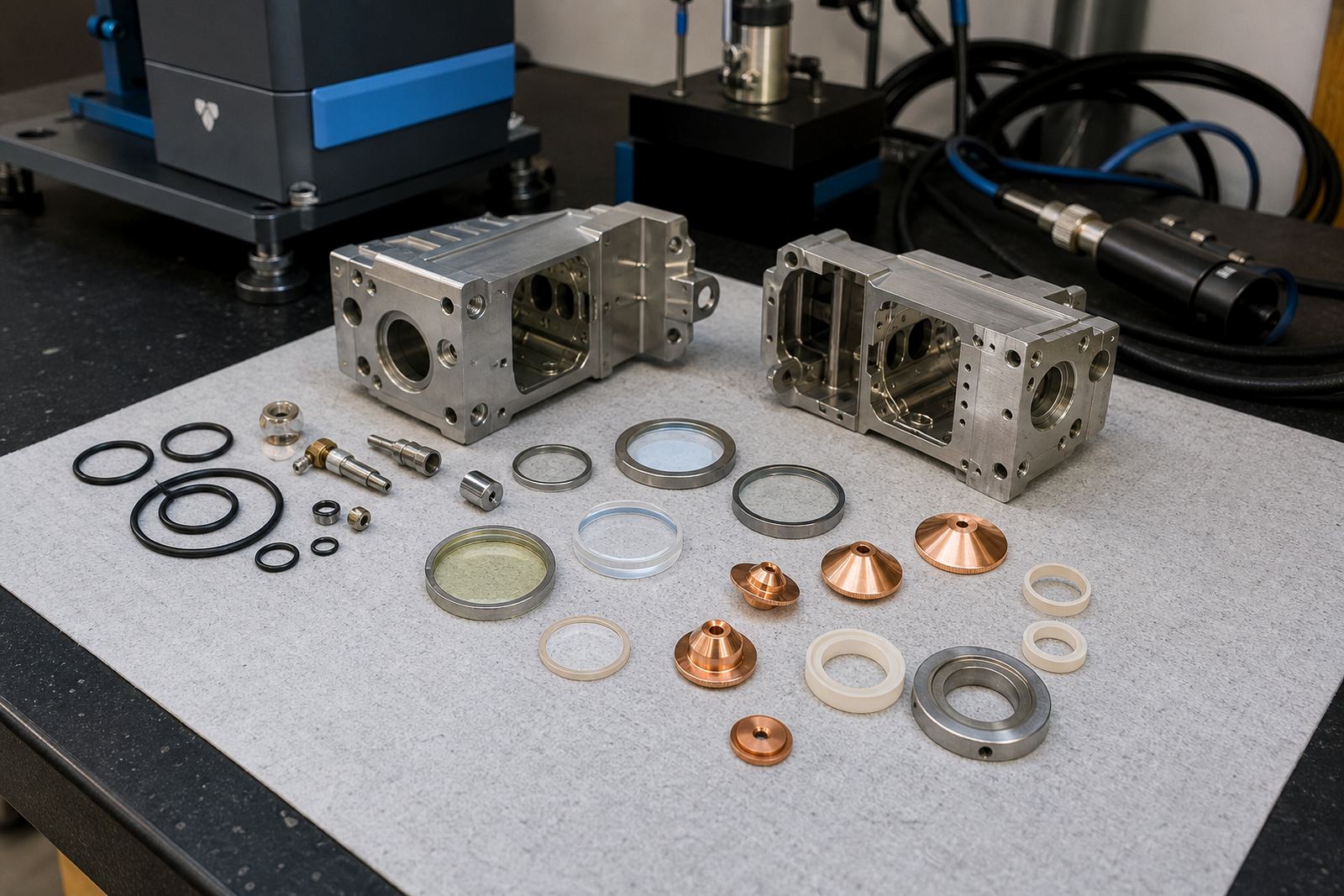


What a double layer nozzle does at the cut face
A double layer nozzle is built with two gas paths at the exit point, so the assist gas arrives in a steadier cone around the kerf. In practice that helps with molten metal control, helps reduce dross on the underside, and gives the cutting head a cleaner gas profile when the job calls for finer edge control. The top and lower sections work together to keep the jet centred and to protect the cut zone from stray turbulence.
On fibre laser systems, the nozzle sits very close to the workpiece and any wear shows up quickly in the cut. A double layer design is often preferred on stainless steel, mild steel and aluminium where edge finish, piercing behaviour and repeatable gas flow matter more than a quick, rough trim. If the nozzle bore is out, the assist gas can hit the kerf unevenly and the cut starts to wander or leave heavy spatter.
- Used with fibre laser cutting heads on sheet-metal machines
- Supports more controlled shielding gas delivery at the nozzle tip
- Common on quality focused cutting work and tighter edge control jobs
- Works alongside focus setting, centring and clean lens conditions
Sizes, bores and thread details that must match
Double layer nozzles are selected by nozzle diameter, thread style, overall height and the cut condition you are chasing. Smaller bores are used for thin sheet and fine detail work, while larger bores give the gas more room for thicker plate and higher flow settings. The wrong bore can leave a rough edge, blow-back around the pierce, or a kerf that is wider than it should be.
We supply nozzle options for common fibre laser head formats used in the sheet-metal trade. The key detail is matching the nozzle to the cutting head body, the ceramic ring seat, and the gas delivery arrangement inside the head. A nozzle that threads in but does not sit true can still upset beam and gas alignment, so the match has to be exact, not close enough.
- Common bore ranges: 0.8 mm, 1.0 mm, 1.2 mm, 1.5 mm and 2.0 mm
- Common materials: copper alloy, with copper plated or polished finishes where specified
- Common thread and seat details vary by cutting head type
- Single layer and double layer nozzles are not interchangeable without checking the head setup
Where double layer nozzles fit best on real jobs
This nozzle style is a good fit where gas shielding behaviour affects the end result. Stainless steel work often benefits from a more stable gas stream at the cut face, while mild steel jobs can need the same control when the shop wants less oxide build-up and tidier edges. Aluminium, with its bright reflective surface and fast heat movement, also needs careful nozzle selection and clean gas delivery.
In busy sheet-metal shops, a double layer nozzle is often kept for jobs that need tighter consistency over a long run. It suits cabinets, guards, brackets, machine covers, and parts that will be folded or welded later, where a ragged edge becomes another problem down the line. On some cuts the nozzle choice is as important as the lens set and focus position, because the gas pattern and beam exit must work together.
- Stainless steel parts where edge quality matters
- Mild steel jobs needing better underside control
- Aluminium cutting with stable gas delivery
- Production work where nozzle wear has to stay under control
Fitting, centring and head setup
Fitment is not just about screwing the nozzle into place. The nozzle face must be square, the tip must be clean, and the gas path has to align with the beam path through the focus lens and protective window. If the centring is off, the cut can taper or throw sparks in one direction, and the nozzle starts to wear unevenly. That is why nozzle centring is usually checked together with focus setting and the condition of the ceramic ring.
On the bench or on site, the head should be checked for thread damage, seal wear, carbon tracking and debris in the gas channels. A damaged ceramic ring can upset electrical insulation and gas positioning, while a dirty window can make the cut unstable even when the nozzle itself is new. It is worth checking the complete front end as one working section, not as separate bits that never affect each other.
- Check the nozzle seat, thread and cone before fitting
- Align the beam and gas path with the head centreline
- Inspect the ceramic ring for cracks, heat marks or contamination
- Confirm the protective window is clean and seated properly
Care, cleaning and wear signs to watch
Double layer nozzles need regular cleaning because spatter, smoke residue and fine metallic dust all build up on the tip. Use clean lint free cloths and approved cleaning fluid, then inspect the bore under good light. If the exit hole has a burr, a dent or an uneven lip, the gas stream will not behave the same way on the next job. A nozzle that has been overheated can also lose shape around the tip and that usually shows in the cut before it looks obvious to the eye.
Shop teams should look for repeated dross, pierce marks that flare to one side, sudden changes in edge colour, and unstable sparks at the kerf. Those signs often point to nozzle wear, but they can also point to focus drift, a dirty lens, gas path issues or poor head alignment. The nozzle is only one part of the system and the good result depends on the full front end working cleanly.
- Keep the bore and outer tip free of residue
- Replace nozzles with burrs, dents or heat damage
- Match nozzle wear checks with lens and window checks
- Watch for uneven dross, taper and unstable pierce behaviour
Ordering details that let us match the correct nozzle
When you order double layer nozzles, the useful details are the cutting head type, nozzle bore, thread style, material being cut, and whether the job is aimed at fine finish or faster production. If you are matching an existing machine, a clear sample nozzle or a photo with measurements saves time later in the process. It also helps to know the assist gas used, the usual sheet thickness range and whether the head runs with a particular ceramic ring or nozzle holder.
For shops in Spartan, Kempton Park and across Johannesburg, Pretoria, Durban, Cape Town and Rustenburg, the same core checks still apply. Head model, nozzle height, material thickness and the sort of edge you need all matter. A nozzle that works well on 1 mm stainless can be the wrong choice on 8 mm mild steel, even if the thread looks the same. The details below are the ones that prevent crossed orders and wasted setup time.
- Cutting head model and nozzle seat type
- Nozzle bore size and single or double layer style
- Material being cut and normal thickness range
- Assist gas used and the finish expected on the edge
Spare nozzles for production shifts and field work
In a sheet-metal shop, nozzle wear does not wait for a good moment. Keep spares for the sizes you use most, especially if the machine runs mixed material through the week or handles urgent repair work. A small stock of the correct double layer nozzles can save a lot of stop-start checking when the cut begins to show unstable gas behaviour.
Where a head has taken a knock, the nozzle should be checked with the rest of the front assembly before the machine goes back into a run. That includes the ceramic ring, focus setting, protective window and gas path. A clean, properly centred nozzle gives the cutting head a fair chance to do its job and keeps the cut closer to spec without chasing problems one by one.
- Keep the most used bores on hand for fast changeovers
- Inspect after crashes or heavy spatter events
- Check together with lens, window and ring condition
- Store clean, dry nozzles in sealed packaging where possible
Key facts
| Product type | Double layer nozzle for fibre laser cutting heads |
|---|---|
| Common bore sizes | 0.8 mm, 1.0 mm, 1.2 mm, 1.5 mm, 2.0 mm |
| Use case | Gas shielding control and edge quality on sheet-metal cutting |
| Typical materials | Copper alloy nozzle bodies with polished or plated finishes |
| Matching items | Ceramic ring, protective window, focus lens and head seat |
| Service support | Bench servicing and on-site head alignment available |