What this assembly does in the cutting head
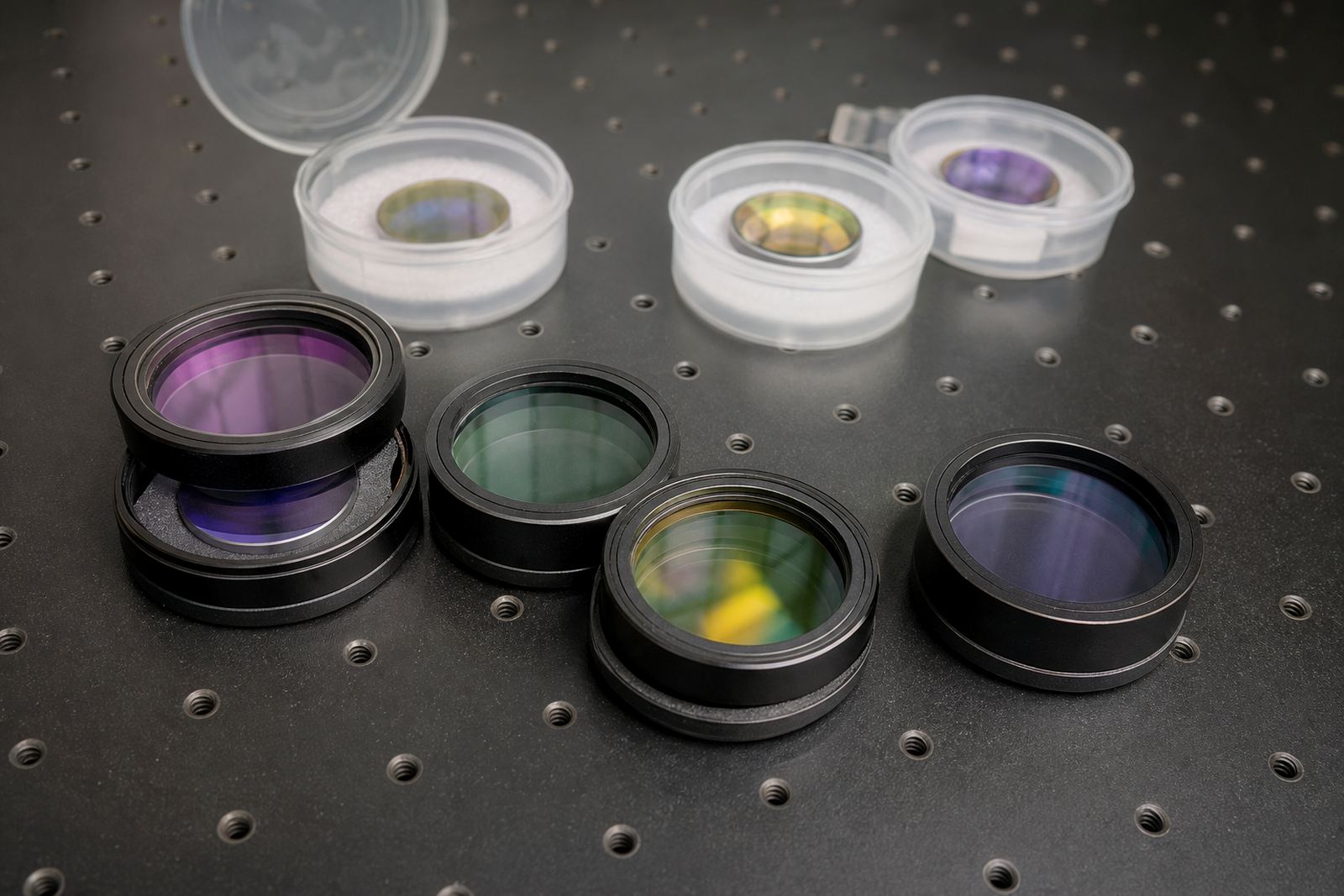
The focus lens assembly carries the lens group that brings the laser beam into the right condition before it reaches the workpiece. In practical shop terms, it helps keep the spot size stable, supports edge quality and gives the operator a usable focus window for mild steel, stainless steel and aluminium cutting. When the assembly is worn, contaminated or badly seated, the head can drift off focus and the cut face starts showing rough edges, dross or a wider heat affected zone.
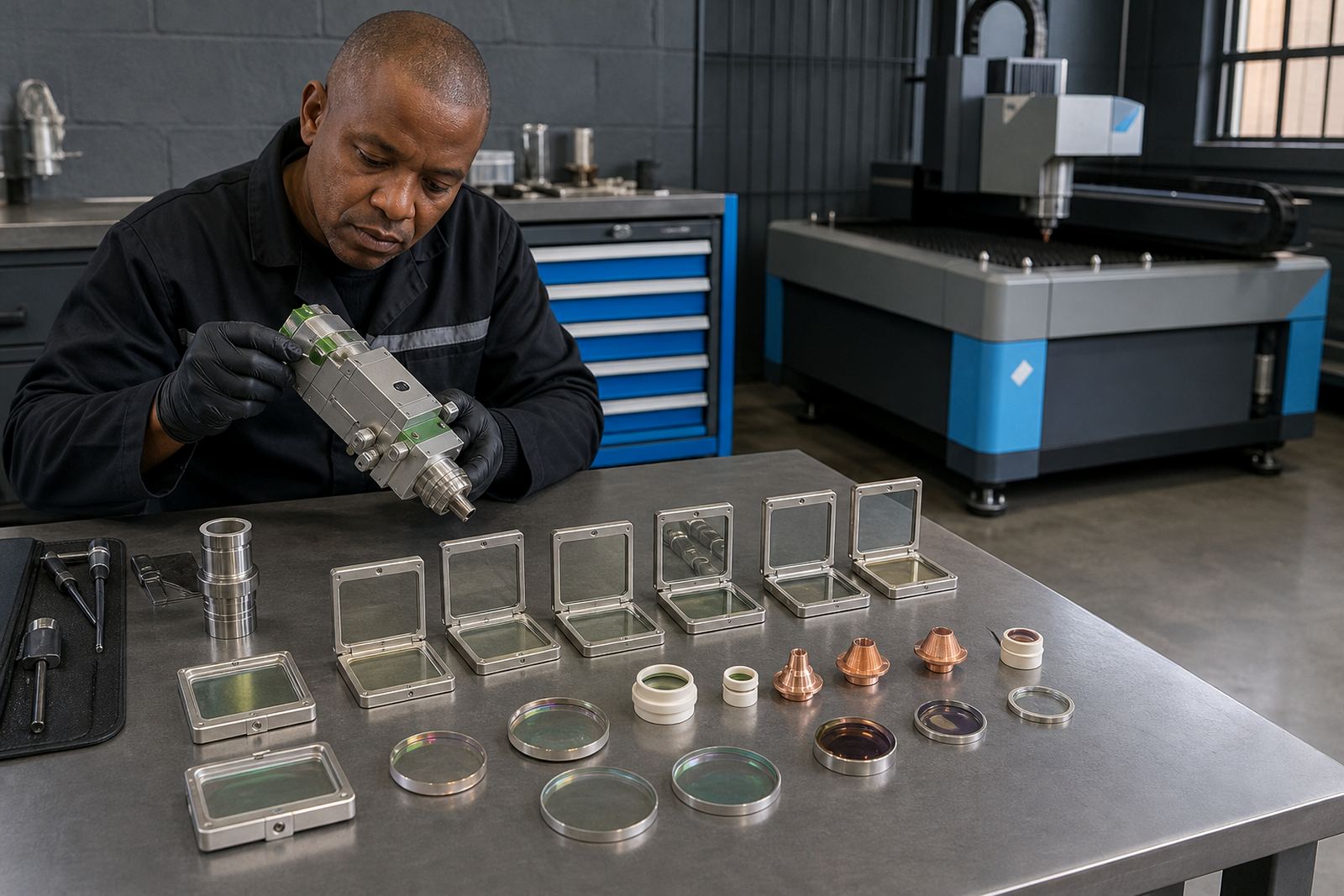
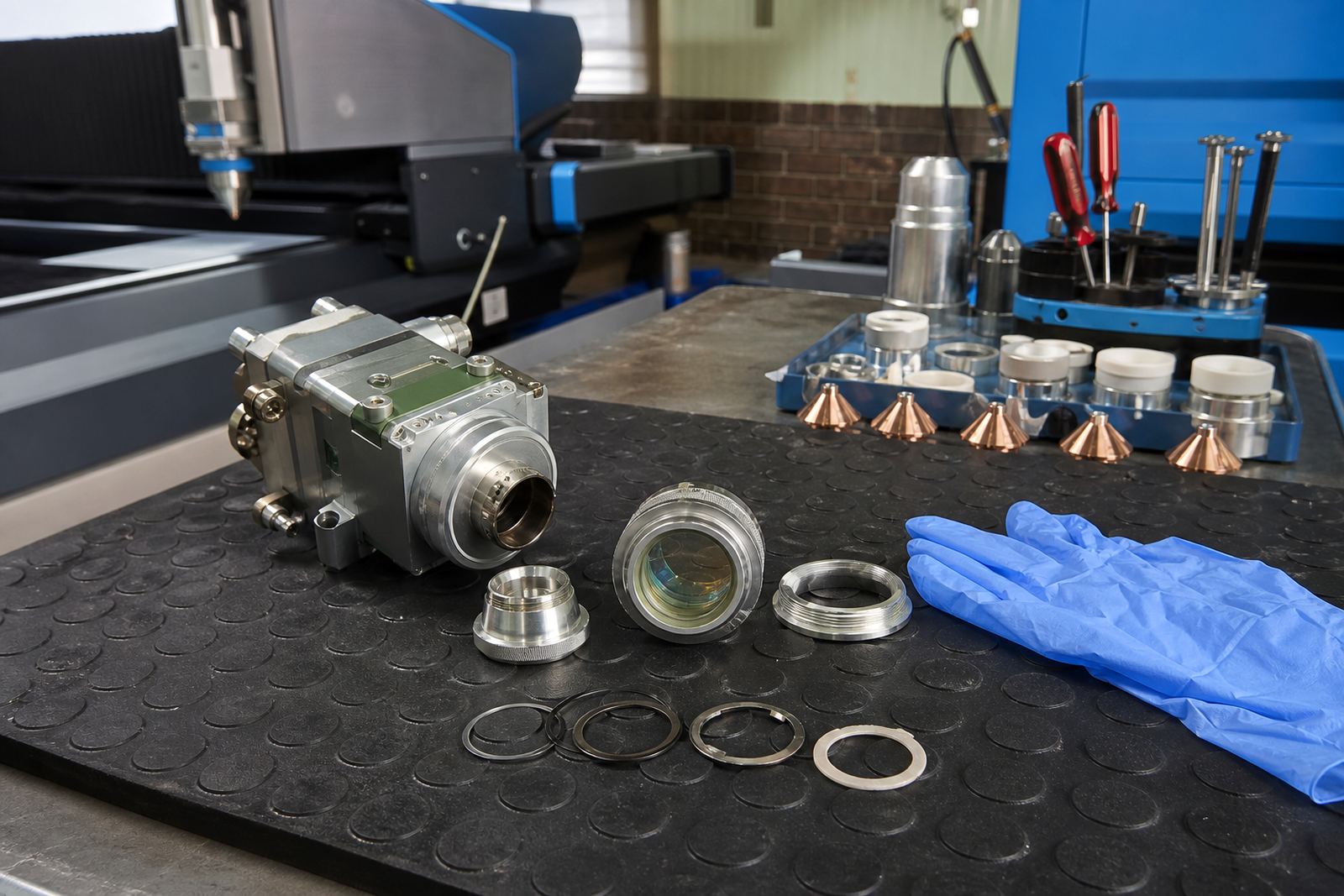
On many fibre laser cutting heads the focus stage sits below the collimator lens and above the nozzle and ceramic ring. That makes the assembly part of the optical chain rather than a loose spare. A correct fit matters because the lens position, spacing and seal surfaces all influence how the beam travels through the head. In the workshop, technicians usually inspect the body, retainer, O-rings and lens seats together, not as separate pieces.
Sizes, lens types and fit checks
Focus lens assemblies are selected by the cutting head design and the focal length required by the job. Common lens sizes in this trade are built around 150 mm, 200 mm and 250 mm focal lengths, though the exact option must match the head body and optical layout. The assembly may be supplied as a complete carrier with the lens installed, or as the body and seating components used during a rebuild.
Lens material and coating also matter. The lens must suit fibre laser wavelength use, normally with a coated optical surface designed for high power beam passage and low reflection loss. Shops working on thinner sheet often prefer a tighter focus spot, while heavier plate work may need a different focal arrangement. A badly matched lens assembly can force the operator to chase settings on the control screen and the cut quality still stays uneven.
- Typical focal length options: 150 mm, 200 mm, 250 mm.
- Built for fibre laser wavelength use in cutting heads.
- Can be supplied as a complete assembly or service replacement parts.
- Fit depends on head model, lens diameter and seating depth.
Where it suits our workshop and on site
This part suits sheet-metal shops that cut mild steel, stainless steel, galvanised sheet and aluminium, especially where the machine runs long shifts and the head sees repeated pierces. In Johannesburg, Pretoria, Rustenburg, the East Rand, Durban and Cape Town, we keep seeing the same thing: dust, heat, reflection marks and small crash knocks all cut lens life short when cleaning is skipped. Coastal humidity can add its own problems when a head sits open during changeover or storage.
The assembly is also used where the machine is expected to hold tight pierce behaviour and consistent edge finish on nested jobs. If the focus lens carrier is out of position, the head may still cut, but the operator loses control over the fine detail that makes a good sheet part fit neatly downstream. For that reason the assembly is often checked together with capacitive height sensing, nozzle centring and the ceramic ring during service work.
- Fits sheet-metal production, jobbing shops and contract cutting rooms.
- Useful where pierce consistency and edge finish matter.
- Common on heads running mixed thickness plate and sheet.
- Often inspected with sensor, nozzle and gas path checks.
Fitting points that protect the optics
Correct fitting starts with a clean bench, lint-free wipes and the right handling of the lens surfaces. The assembly should sit square in its seat, with the retaining parts tightened to the correct level and the sealing surfaces checked for marks or burrs. Any grain of dust, metal swarf or cleaning fibre left inside the head can show up as a burn mark on the lens after the first run.
On site alignment work, the technician normally checks beam centring, focus position and the nozzle relation at the same time. If the head has been bumped, the lens assembly may be fine but the optical axis has moved, which means the lower stage must be aligned to the actual beam path rather than just swapped in and hoped for. Where the machine uses a capacitive sensor, the gap reading should be checked after reassembly because the focus setting and stand-off height interact.
- Handle the lens by the edges, not the optical face.
- Check seats, seals and retaining surfaces before assembly.
- Verify beam centring after fitting, especially after a crash.
- Recheck nozzle height and capacitive sensing after rebuild.
Care, cleaning and wear signs
The lower optical stage needs regular cleaning, but only with the right method. A dry cloth or rough wipe can scratch a coated surface and leave the lens unusable for fine cutting. Good shop practice is to inspect the assembly under clean light, clear off residue with suitable optical cleaning materials and replace any seal that has gone hard or flattened. If the ceramic ring shows heat marks or the nozzle has carbon build-up, the lens area often deserves a proper check too.
Wear signs usually show up as unstable cut edges, more spatter on the nozzle, a wider kerf or visible haze on the lens. In some cases the issue is not the glass itself but a seal leak, misalignment or contamination in the head body. A unit that has been run with poor cleaning routines may still look acceptable from the outside yet behave badly when the beam is running at full cutting power.
- Use optical cleaning materials made for coated lenses.
- Replace flattened seals and heat-stained supporting parts.
- Watch for haze, edge roughness and unstable kerf width.
- Check the nozzle and ceramic ring when contamination repeats.
What to confirm before ordering
Ordering a focus lens assembly for a fibre laser cutting head works best when the head details are clear. The model of the head body, the focal length, lens diameter and the mounting style all need to match. It also helps to confirm if you need a complete assembly, only the lens, or a rebuild kit with seals and holding parts. If the machine has had a crash or a bad cut cycle, photos of the head front and the seating surfaces can prevent a poor match.
For spare stock, many shops keep one complete assembly ready for urgent changeover and another set of seals, nozzles and windows beside it. That keeps the optical stage easier to manage during heavy production runs. For offices and shops in Spartan, Kempton Park and other parts of South Africa, the easiest option is our contact form, where you can send the head details and machine information in one message.
- Confirm head model and mounting style.
- Confirm focal length and lens diameter.
- State whether you need complete assembly or parts only.
- Add photos if the head has crash damage or worn seats.
- Include the machine type and the cutting material range.
Key facts
| Product | Focus Lens Assembly |
|---|---|
| Use | Lower optical stage for beam shaping in fibre laser cutting heads |
| Common focal lengths | 150 mm, 200 mm, 250 mm |
| Lens material | Coated optical glass for fibre laser wavelength use |
| Typical fit | Complete head assembly or service replacement parts |
| Related checks | Nozzle centring, focus setting, capacitive sensing, lens cleaning |