
A tighter head for cramped machine envelopes
This compact cutting head is built for fibre laser sheet-metal work where the head body, cable bundle and mounting area all have to fit into a smaller moving envelope. The reduced bulk helps on gantry systems, nested sheet work and machines where clearance around the Z axis is limited by guards, crash protection or a dense cable chain layout.
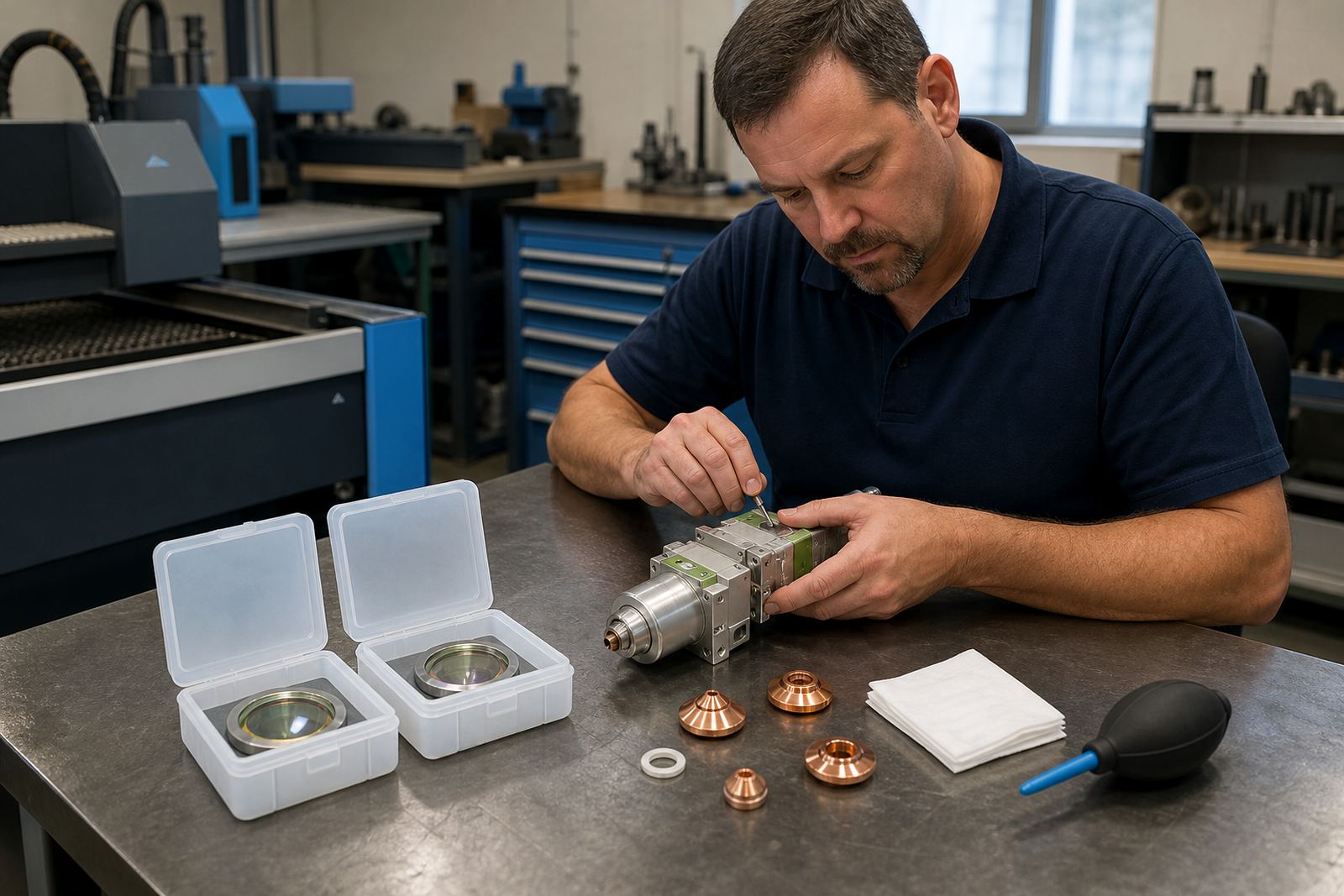
In practice, the head still carries the same working parts expected in laser cutting service: a collimator lens to shape the incoming beam, a focus lens to set the spot, a protective window to shield the optics, ceramic ring support at the nozzle base, and capacitive height sensing for steady stand-off over steel, stainless and aluminium sheet. The compact format just makes that package easier to place on machines with tighter weight limits and less room for hose and cable movement.
- Compact body for smaller machine envelopes
- Suitable for fibre laser sheet cutting heads on moving gantries
- Works with nozzle, lens and protective window service sets
- Common on machines where cable routing must stay short and clean
Sizes, lens options and working range
Compact heads are usually matched to the machine power level, cutting duty and the range of sheet thickness being processed. The choice of focus lens determines the spot size and depth of field, while the collimator lens must suit the beam coming from the laser source. On the ground that means the lens pair has to match the machine specification, not just the bore diameter or outside size of the head.
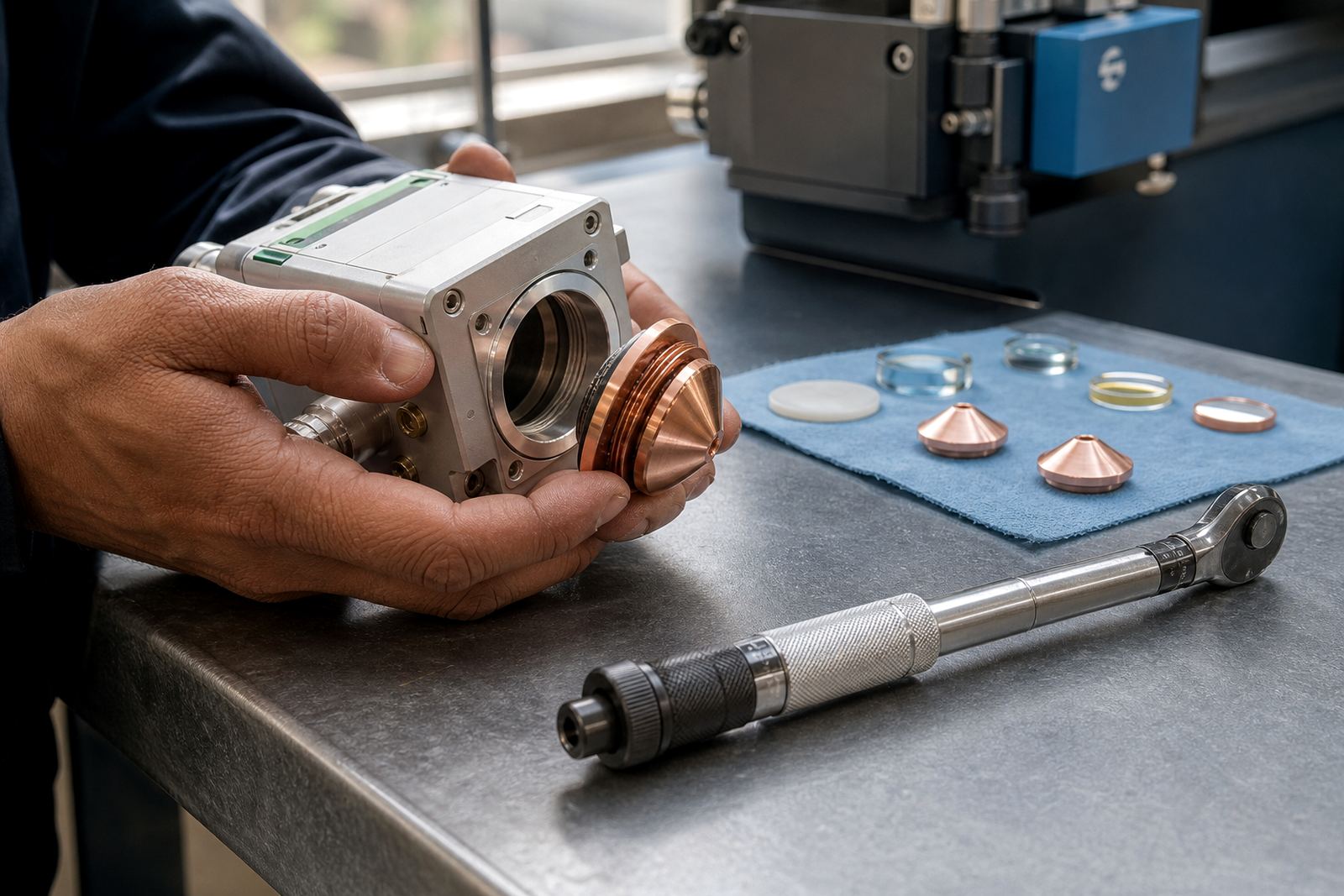
For sheet-metal shops, the common working set-up is a single layer or double layer nozzle, a protective window matched to the beam path, and a ceramic ring that keeps the nozzle seated accurately. Where the cutting programme uses piercing, fine detail work or thicker plate edges, the focus setting and nozzle height become more sensitive and the compact head still needs correct centring to hold cut quality.
- Matched focus and collimator lenses for the beam power in use
- Single layer and double layer nozzle options
- Protective windows selected for the beam wavelength and power class
- Ceramic ring size matched to the head seat and nozzle holder
Where the compact head earns its place
This type of head suits enclosure layouts where the machine maker has kept the bridge narrow, the Z axis short or the cable chain crowded. It is a practical fit for smaller laser tables, retrofit machines with limited upper clearance, and production lines where the head has to move quickly over repeated short cuts without carrying unnecessary mass.
It also suits shops that cut a mix of mild steel, stainless steel and aluminium sheet, especially where the operator needs easier nozzle access for regular checks. Coastal humidity in Durban or Cape Town can add more attention to lens storage and protective window condition, while inland shops in Johannesburg, Pretoria, Rustenburg and the East Rand often see more dust and abrasive fines around the cutting bay.
- Small and mid-size fibre laser cutting machines
- Retrofit jobs where head weight matters
- Production with frequent short moves and high part counts
- Workshops that need easier access for nozzle cleaning and lens checks
Fitting, alignment and the bench work behind it
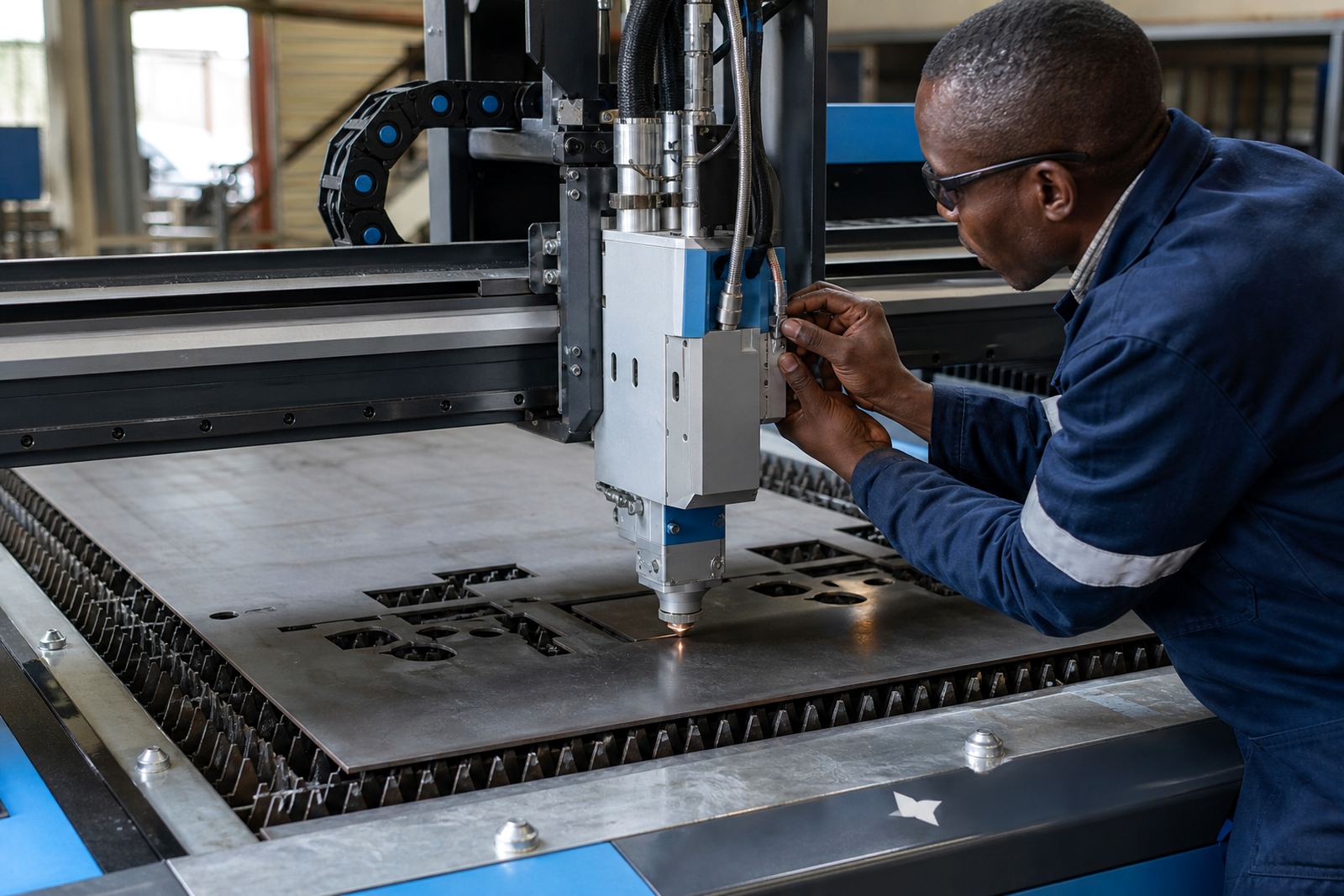
Correct fitting starts with the machine mounting face, head height reference, air and assist gas routing, and the cable run to the sensor and focus drive. The compact unit still needs precise centring to the beam path, steady capacitive height sensing and a clean nozzle seat. If the nozzle is not square or the ceramic ring is chipped, the cut edge can show dross, taper or a wandering pierce point.
Our bench service team handles head service work before installation, and our field alignment technician can set the head in place on site when the machine is already in production. The job may include nozzle centring, focus setting check, gas path inspection, head seal rebuild, protective window replacement and crash damage inspection where the head has taken a knock. A good installation also leaves enough room for the operator to remove the nozzle, check the lens stack and clean the window without fighting the cable bundle.
- Beam centring and nozzle concentricity check
- Capacitive sensor check and stand-off calibration
- Gas path inspection for cutting gas flow and leaks
- Head seal rebuild after contamination or impact
Keeping the optics clean and the cut edge steady
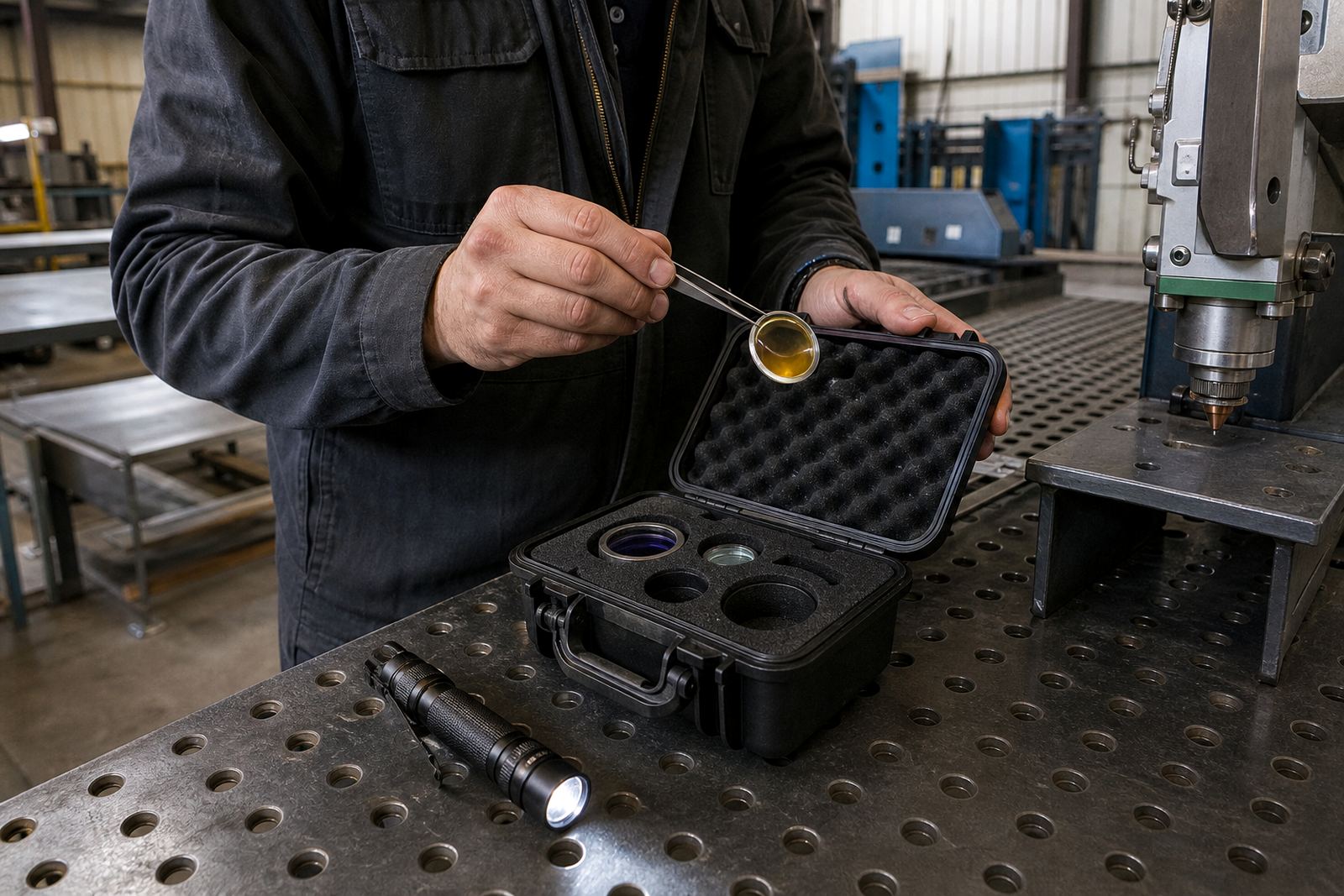
A compact cutting head still depends on the same care routine as any fibre laser head. The protective window should be checked for haze, spatter marks and tiny pitting, because even a small mark can scatter the beam and spoil the kerf. Focus lenses need careful handling with lint-free cleaning methods, and the nozzle bore must stay free of spatter build-up so the gas jet remains straight.
The ceramic ring is another part that often gets overlooked. When it chips or shifts, the head can lose nozzle height consistency and the cut edge starts to vary from sheet to sheet. Operators should also watch the focus setting when changing thickness, material type or cutting programme, because a setting that works on 1.6 mm stainless will not always suit 6 mm mild steel. In a busy shop, a short cleaning routine at shift change saves a lot of wasted edge finishing later.
- Check the protective window for marks and heat haze
- Clean the nozzle bore and seat without scratching the tip
- Inspect the ceramic ring for chips, carbon and looseness
- Verify focus setting after material or thickness changes
Details to confirm before you order
When ordering a compact head, the useful details are the machine model, the source power, the beam connector style, the mounting pattern, the nozzle thread or seat type, and the lens specification already in use. If the machine uses a certain cable length or a tight chain radius, that matters too. The same applies to the cutting gas arrangement, because the head must match the gas ports and the way the assist gas is delivered into the cutting zone.
It also helps to note whether the shop needs a bare head, a spare head preparation, or a service exchange for an existing unit. For sheet-metal shops in Johannesburg, Pretoria, Durban, Cape Town, Rustenburg and across the East Rand, that detail set keeps the fitting side practical and avoids last-minute changes at the machine. Our contact form is the usual way to send these details, and our team can then match the head, nozzle set, and optics to the job.
- Machine model and laser source power
- Mounting face, connector style and cable length
- Nozzle type, lens specification and protective window size
- Whether the order is for a new head, spare unit or service replacement
Key facts
| Head type | Compact fibre laser cutting head |
|---|---|
| Typical use | Sheet-metal cutting on space-limited machines |
| Optics | Collimator lens, focus lens, protective window |
| Nozzles | Single layer and double layer options |
| Height control | Capacitive sensing for stand-off control |
| Service support | Bench head service and on-site head alignment |