Manual focus head built for day-to-day cutting control
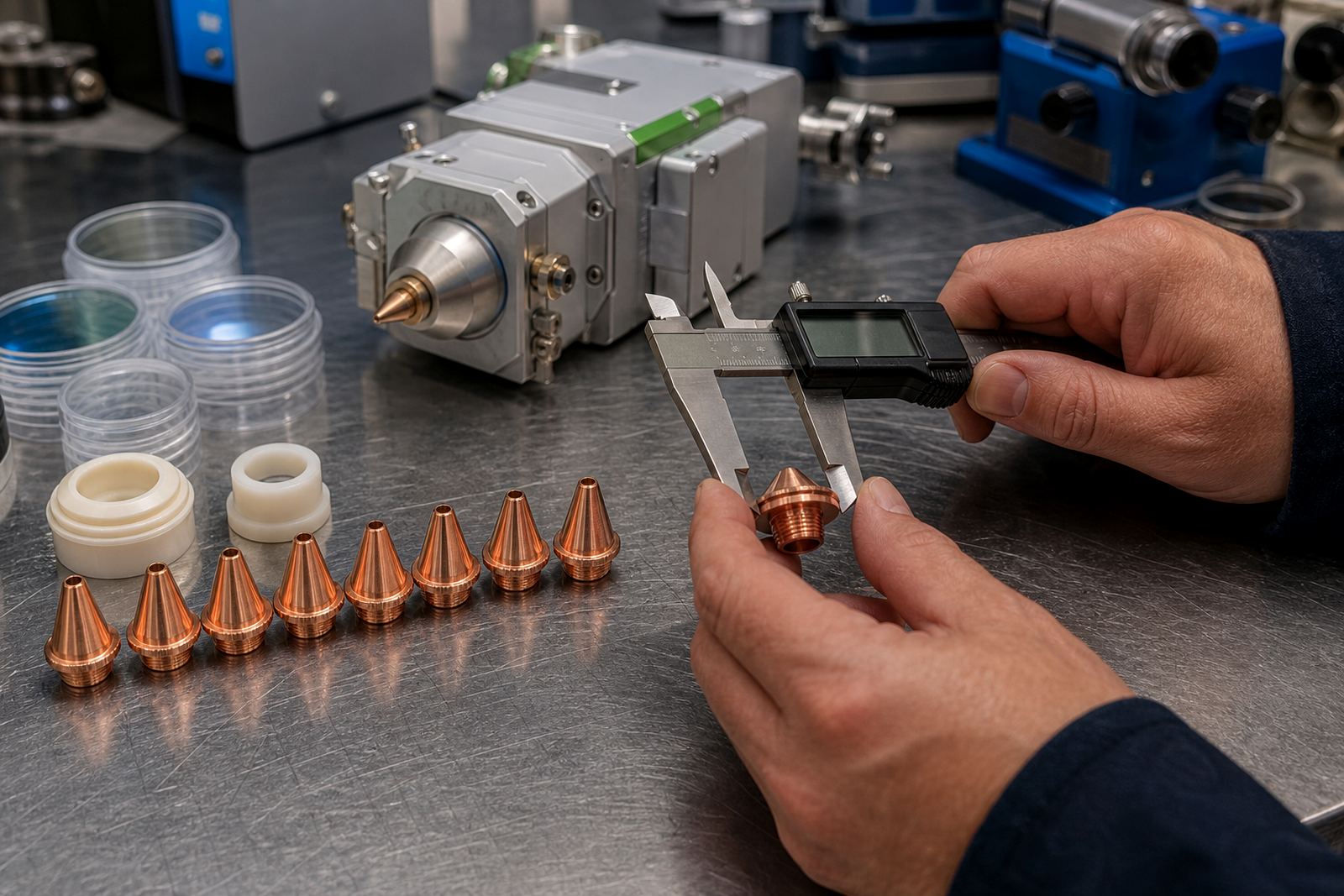
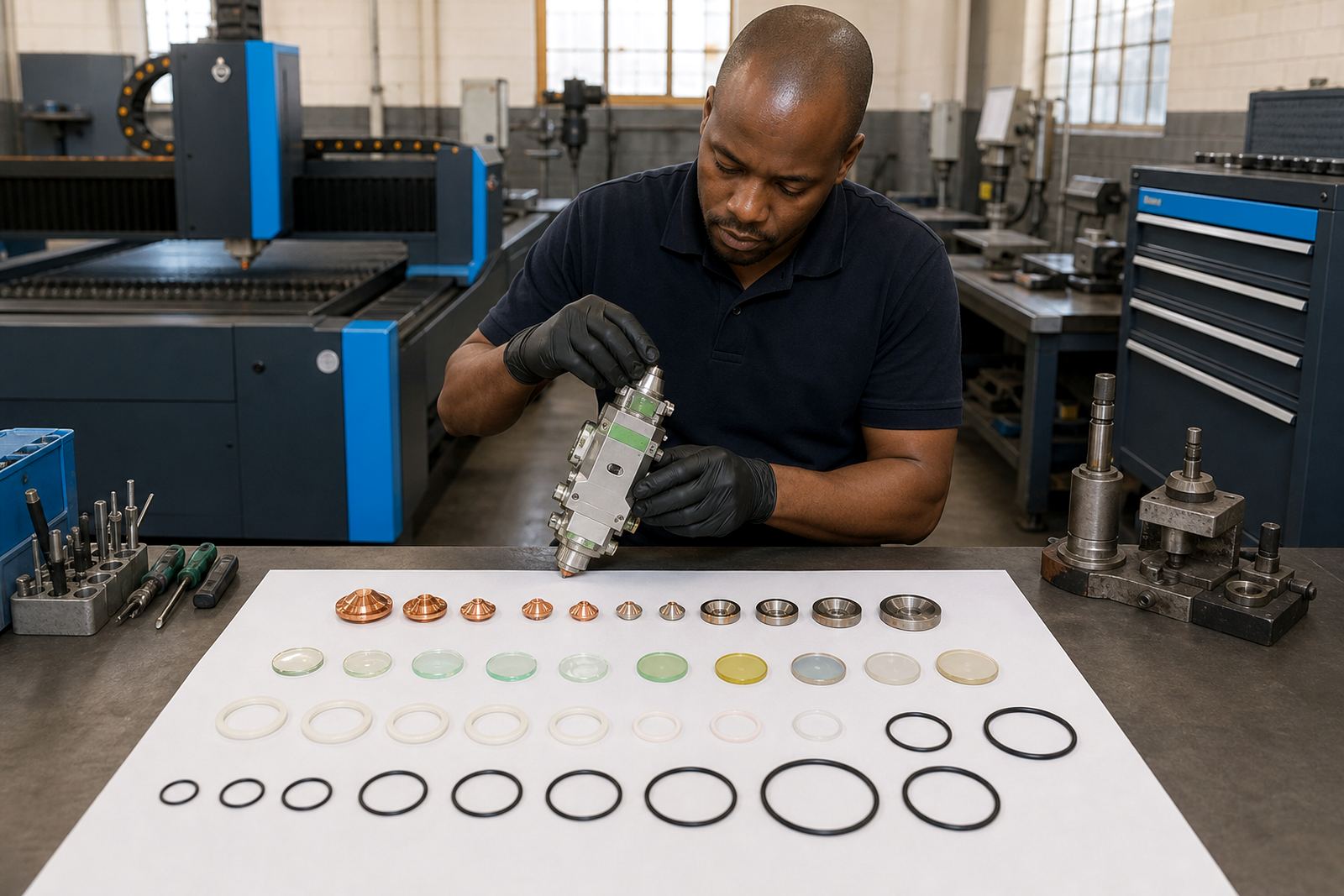
The manual focus head is a fibre laser cutting head with hand-set focal position, used on flat sheet and plate cutting where the operator wants direct control over the cut point. It supports stable beam delivery through the head body, focus lens and collimator lens, with a protective window in the optical path and a ceramic ring at the nozzle end for insulation and seat control.
On a real cutting floor, this style suits machines that run different materials through the week, from mild steel to stainless steel and aluminium. The focus position is adjusted by the operator during setup, then checked against cut edge quality, pierce performance and nozzle condition. When the setting is right, the head gives a steady cut face, cleaner pierce starts and less chasing after the job has started.
- Manual focus adjustment for direct setup control
- Accepts fibre laser cutting nozzles in single and double layer form
- Works with focus lens and collimator lens assemblies matched to the machine
- Uses a protective window to shield the internal optics from spatter and dust
Sizes, optical parts and nozzle choices that matter
This head is supplied with options that depend on the machine interface, lens stack and cutting duty. The body can be matched to different mounting styles, while the internal lens group is selected for the laser wavelength, beam diameter and focal length needed by the machine. In practical terms, the right setup is the one that matches the machine head mount, the cutting thickness range and the gas conditions used on site.
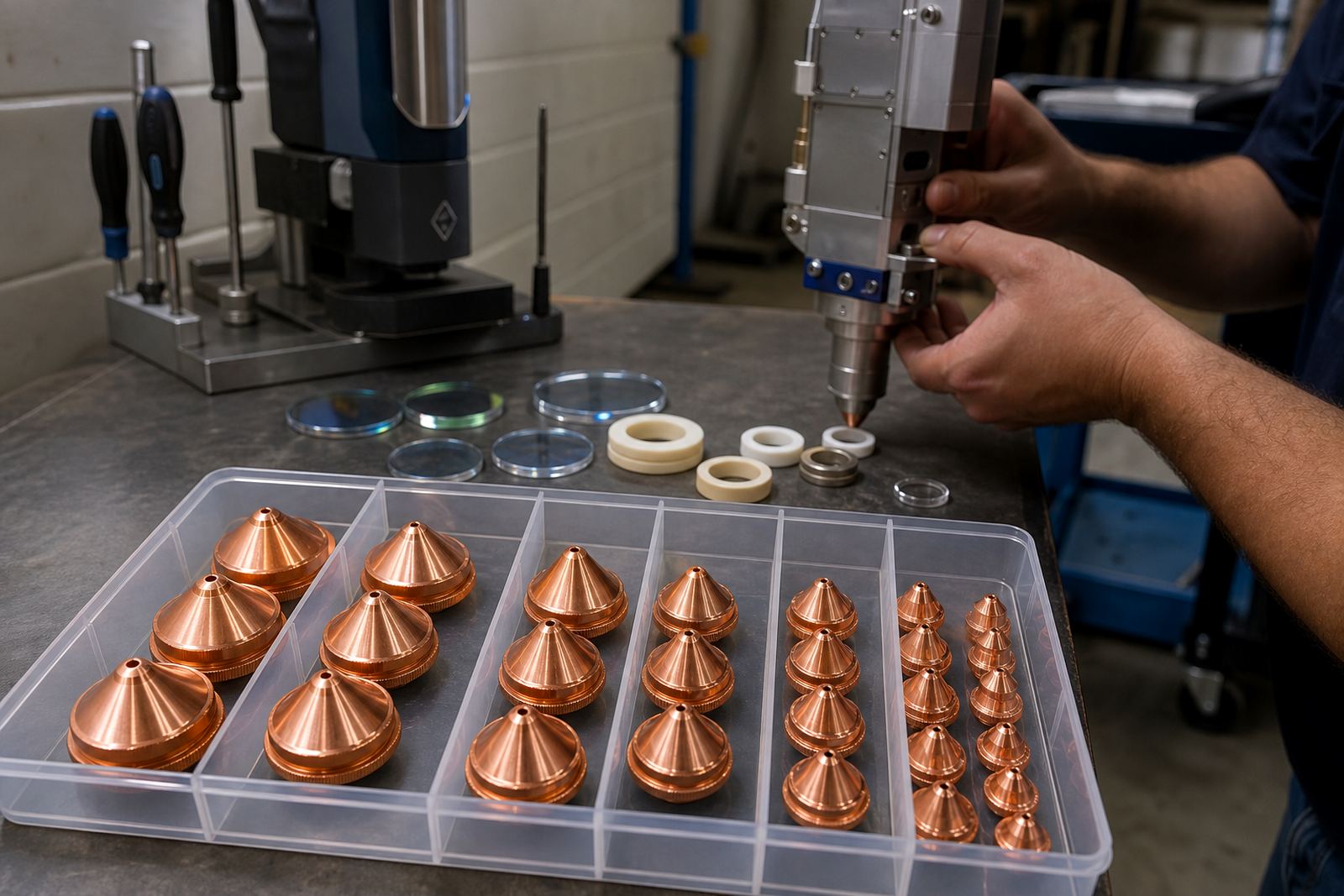
Nozzles are usually selected by bore size, thread fit and layer type. Single layer nozzles suit a narrower gas stream, while double layer nozzles help with gas control and longer wear in some cutting conditions. Focus lenses and collimator lenses are chosen as a pair, and the protective window rating must suit the laser power and the dust level around the machine. Ceramic rings need to match the head body and nozzle seat, otherwise centring becomes awkward and the cut path drifts.
- Compatible nozzle bores for fine, medium and larger kerf settings
- Lens options chosen to suit focal length and beam diameter
- Protective windows available in matched diameter and thickness
- Ceramic ring fit must match the head housing and centring cone
Where the manual focus head fits into real production
This head suits sheet-metal shops that cut batches with mixed thicknesses, where the operator wants to set focus by hand and keep the cut quality under control. It is often used on flat-bed fibre laser machines in fabrication shops, sign-making production, enclosure work, ducting, agricultural parts and general jobbing work across Johannesburg, Pretoria, Durban, Cape Town and Rustenburg.
It is useful where a team needs a clear setup routine. The operator can check the nozzle centre, verify the focus setting, inspect the protective window and confirm the gas path before the job starts. That is a good fit for shops that service different material grades, or jobs where edge dross and taper need to be kept in check through careful setup rather than software driven focus changes.
- Suited to mixed-thickness production runs
- Useful for jobbing shops with frequent material changes
- Works where nozzle centring is checked by hand
- Fits production that relies on consistent maintenance routines
Fitting, bench service and head alignment on site
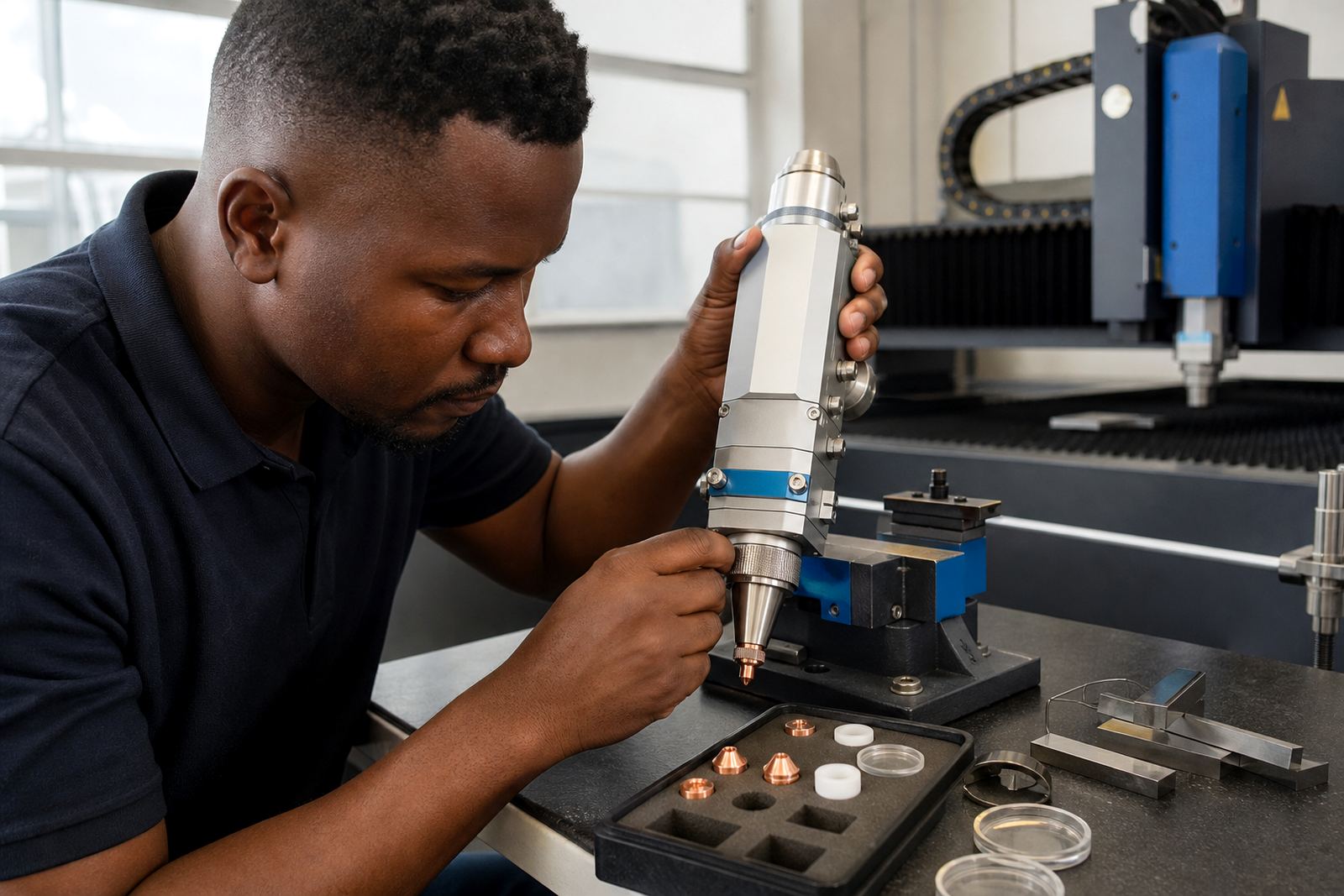
We supply the head for bench fitting, replacement work and spare-head preparation, with head servicing available in our Spartan, Kempton Park shop and on site across South Africa. Fitting a manual focus head means checking the mechanical mount, optical stack, nozzle seat, sensor position and gas path before the machine goes back into service. If the head body has been through a crash, the alignment and seal faces need inspection before lenses and windows are installed.
Where the machine is already in production, on-site head alignment helps set the beam path, nozzle centre and focus position against the actual cutting table. Capacitive height sensing must be checked with the head in its correct working position, because the sensing point affects pierce height and cut height. If the head sits off centre or the sensor reading drifts, cut quality drops fast, especially on thinner sheet and reflective materials.
- Bench service for head stripping, cleaning and rebuild work
- On-site alignment for beam centre, nozzle centre and focus check
- Capacitive sensor check where the head uses automatic height control
- Crash damage inspection before optics and seals are refitted
Cleaning routines and wear points that need attention
Manual focus heads rely on clean optics and a sound seal path. Dust, spatter and metal fines build up around the nozzle seat and ceramic ring, then the problem shows first as rough edges, unstable piercing or a cut that starts clean and then slips. Protective windows should be checked for marks, fogging and pit damage, while the focus lens and collimator lens need careful cleaning with proper handling methods.
The cleaning routine should follow a fixed sequence: isolate the head, remove the nozzle, inspect the ceramic ring, check the protective window, then clean the lens surfaces only with suitable optical materials. Gas path inspection is part of the same job, because a blocked or dirty gas route changes the cut face and can leave burnt edges. A good routine keeps the head usable for longer and gives the operator clearer signs when a part is past serviceable condition.
- Inspect the protective window for spatter marks and haze
- Check nozzle wear, centring and thread condition
- Clean lens surfaces with care and correct optical wipes
- Look for ring damage, seal wear and gas path blockage
Details to confirm before ordering the head
To match the correct manual focus head, the machine details must be checked carefully. The important points are the laser source type, mounting style, focal length, lens diameter, protective window size, nozzle thread and ceramic ring seat. If the head is replacing an older unit, the existing body code and optical stack give a useful reference, but the actual machine setup still needs checking against the cutting application.
For a clean fit, confirm the working material range, the gas used for cutting, the expected nozzle sizes and whether the machine uses a standard capacitive sensor layout. It also helps to note whether the head is needed as a spare, a full replacement or a rebuild candidate. That information lets our team prepare the right parts and match the head to the machine without guesswork.
- Machine make and head mount pattern
- Laser source type and optical wavelength requirements
- Focal length, lens diameter and protective window size
- Nozzle thread type, ceramic ring fit and sensor arrangement
Technical points for shop floor planning
The manual focus head is used with fibre laser cutting systems that need direct focal adjustment and regular optical care. It is a working part of the cut path, so the details matter: lens alignment, nozzle centring, sensor height, gas flow and seal condition all affect the result. In a busy shop, the value of this head is in predictable setup and easy maintenance, especially where the same machine must move between jobs with different thicknesses and edge requirements.
Raytool in Spartan, Kempton Park supplies the head, the matching nozzles, focus and collimator lenses, protective windows and ceramic rings, with bench servicing and on-site alignment support for shops across South Africa. The parts side and the service side are kept close together, which helps when a head needs a practical bench check, a spare assembly, or a field alignment after a crash or a poor cut cycle.
- Manual focus control for steady setup by the operator
- Works with fibre laser cutting systems used on sheet and plate
- Bench and site support available for alignment and service
- Parts matched for cleaning, wear and replacement schedules
Key facts
| Product type | Manual focus fibre laser cutting head |
|---|---|
| Focus control | Hand-set focus adjustment for setup and cut tuning |
| Compatible parts | Single and double layer nozzles, focus lens, collimator lens, protective window, ceramic ring |
| Typical use | Flat sheet and plate cutting on fibre laser machines |
| Service options | Bench head service, nozzle centring, focus setting check and on-site head alignment |
| Supply area | Spartan, Kempton Park with coverage across Johannesburg, Pretoria, Durban, Cape Town, Rustenburg and the East Rand |