Seal parts that keep the cutting head tight
A head seal kit is used during a cutting head rebuild when the body, lens chamber and air path need new sealing parts. The kit helps keep assist gas, cutting dust and fine metal particles where they belong, instead of letting them creep into the optical section or across the sensor area.
In day-to-day cutting, worn seals often show up as unstable focus behaviour, dirty optics, stray contamination inside the head and a machine that needs more frequent cleaning. A proper rebuild looks at the full sealing stack, not just one ring, because a tired gasket in one section can disturb the rest of the head.
These kits are used on fibre laser cutting heads found on sheet-metal machines handling mild steel, stainless steel and aluminium. The work usually sits alongside nozzle centring, focus setting checks and protective window replacement, especially when the head has taken a knock or has been running in a dusty bay.
What is normally inside the kit
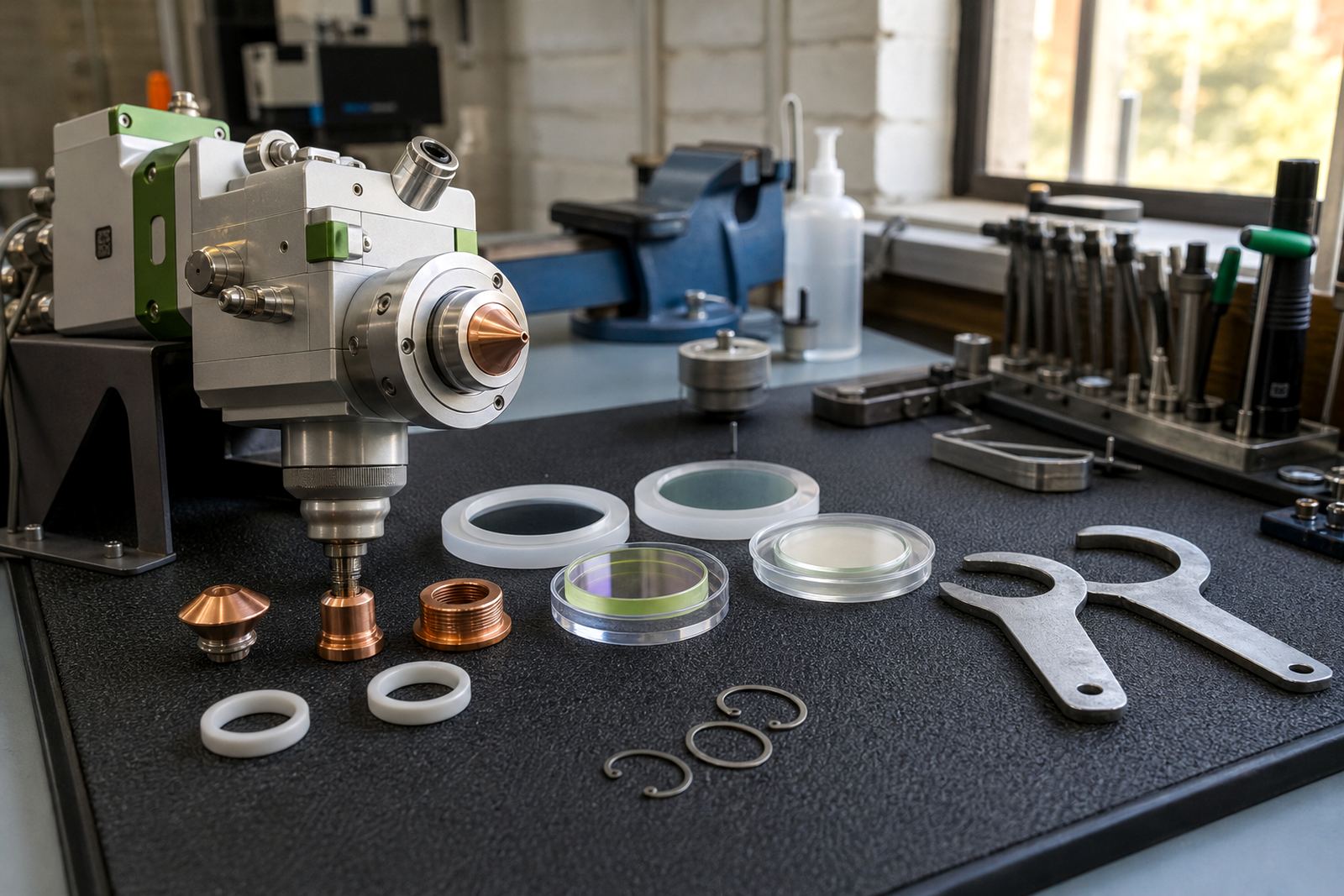
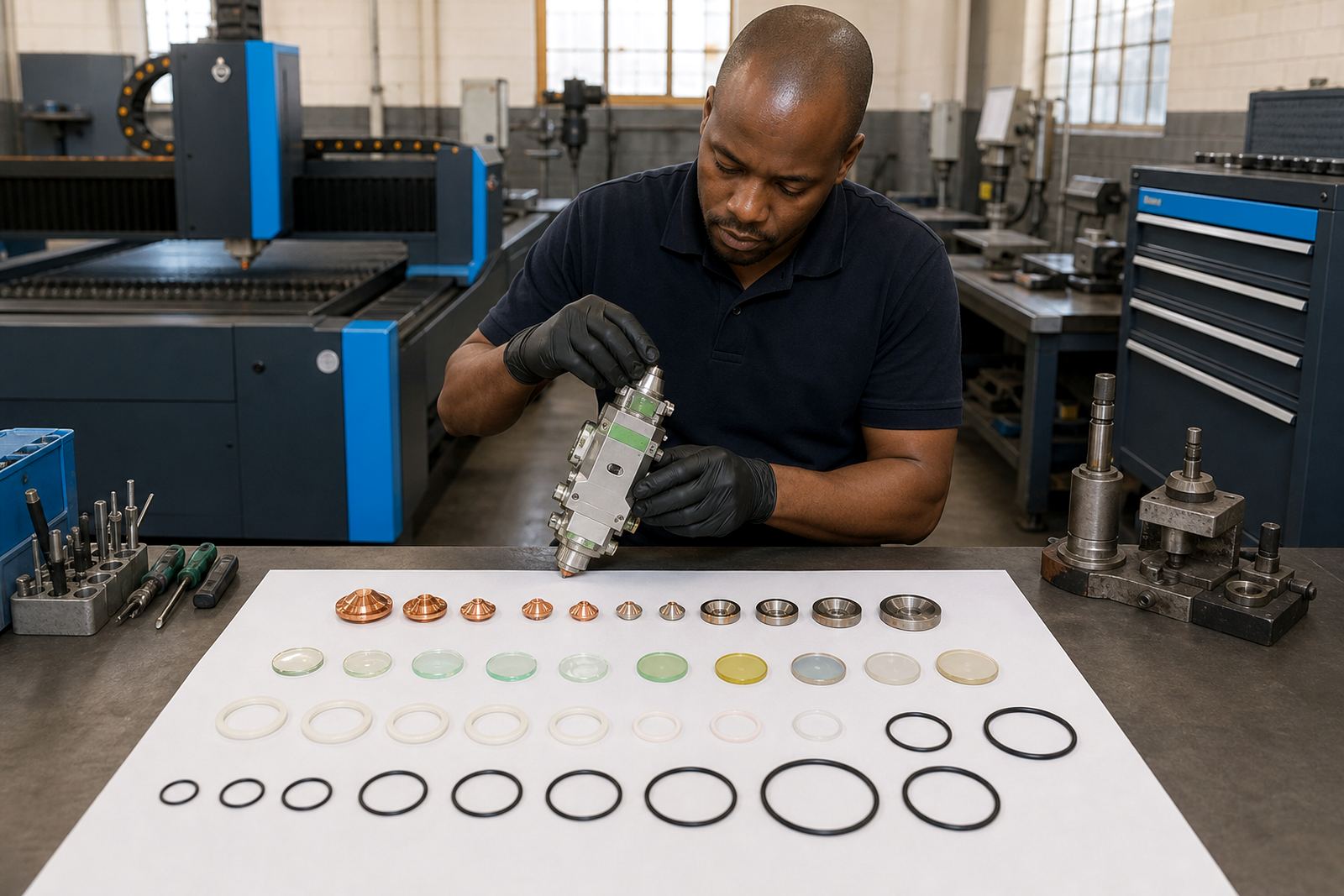
The exact contents depend on the cutting head model and the wear pattern, but a rebuild kit commonly includes sealing rings, O-rings, flat seals, dust seals and related small parts for the head body and optical chamber. Some kits are arranged for the lens section, some for the lower nozzle section, and others cover the full air-seal route through the head.
- Body seals for the upper and lower head sections
- Optical chamber seals around the lens carrier area
- Nozzle-side seals that support gas containment
- Dust control rings for reducing contamination ingress
- Small wear parts used during a standard rebuild
For a rebuild that has been badly affected by impact or contamination, the technician may also inspect the ceramic ring, focus tube condition, protective window seats and the seat faces where the seals clamp down. If those surfaces are marked, a kit alone will not solve the problem and the mating parts need proper cleaning or replacement too.
Where a rebuild kit fits into shop work
Head seal kits suit workshops that cut plate every day and need the head to stay clean through long production runs. They are also useful after crash damage, after a protective window failure, or when the machine starts showing signs of gas leakage around the nozzle section.
Typical jobs that lead to a seal rebuild include nozzle centring correction, focus drift checks, lens cleaning, capacitive sensor checks and gas path inspection. If the head is serviced on the bench, the strip down is usually easier because the technician can inspect the internal seat faces, check the threads and clean the lens cavities with proper care.
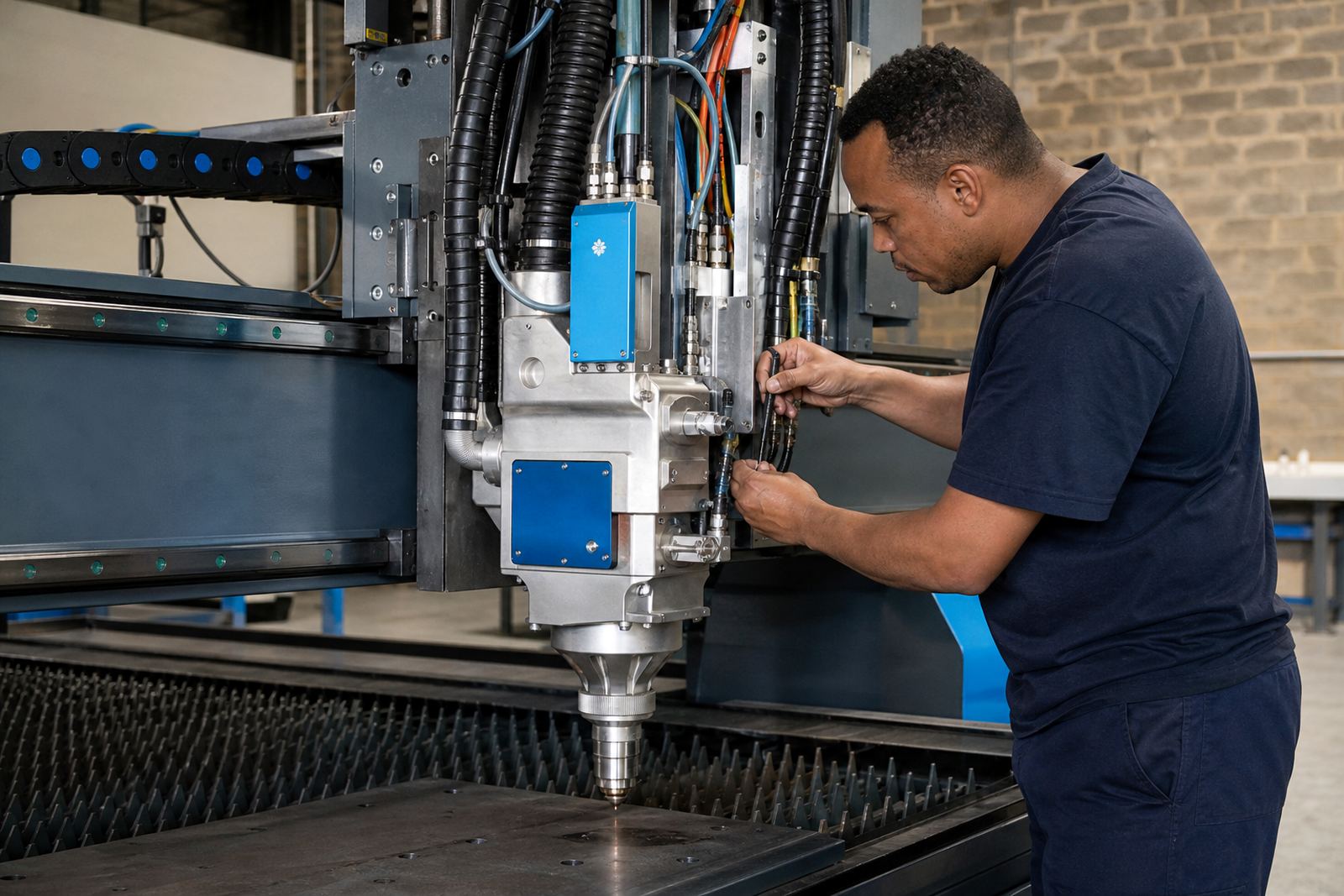
On-site fitting works well when the machine cannot be lifted out for long. The technician still needs access to the head assembly, the fibre connection area and the lower cutting section. For a clean rebuild, the machine should be isolated and the optics handled with lint-free discipline, because one small fibre of cloth can travel into the wrong place and cause trouble later.
Fitting notes that matter on a laser head
Fitting a seal kit is not just a parts swap. The old seals must be removed without scratching the grooves, and the seating faces need to be clean, dry and free of burrs before anything goes back together. Where the head uses a ceramic ring or nozzle carrier, the mating face has to be checked for chips and heat marks first.
After fitting, the head normally needs a fresh check on focus settings, nozzle centring and the gas path. That is because the rebuilt seal stack can change the way the head closes and how the optics sit in relation to the nozzle body. If the machine uses capacitive height sensing, the sensor area and reference surfaces should also be checked while the head is open.
- Confirm the cutting head model and internal layout first
- Match the kit to the lens and nozzle arrangement
- Inspect the ceramic ring and seat faces for damage
- Recheck focus position after the rebuild
- Test for leakage and contamination control before production use
Some heads use tighter seal profiles than others, and a small size difference can matter. A rebuild done with the wrong ring thickness or the wrong profile may leave the head looking assembled but still leaking under cutting pressure.
Care after the rebuild
Once the kit is fitted, the head should stay cleaner if the operator keeps the lens chamber and nozzle area free of dust, slag and metal fines. Routine care is simple in theory but easy to skip in a busy shop. Keep the outside of the head clean, watch for heat discolouration, and avoid forcing the nozzle or ceramic ring when refitting consumables.
Protective windows need regular inspection because a tired seal setup often allows contamination to reach the optics. If the window shows speckling, clouding or edge marking, the sealing path should be checked again rather than simply changing the glass and moving on. That sort of pattern usually tells you something upstream is not right.
In coastal workshops, humidity can also encourage grime and residue to cling to surfaces, so the head should be opened and cleaned with proper care and suitable lint-free materials. A careful cleaning routine extends the life of the seals and reduces the chance of repeated contamination around the focus lens and nozzle seat.
What to confirm when placing the order
To match the correct head seal kit, the workshop normally needs the cutting head model, the serial or internal type reference if available, and details of the current build inside the head. That includes the lens arrangement, nozzle type, and whether the body uses a standard ceramic ring or a different carrier style.
- Cutting head model and configuration
- Upper and lower seal layout
- Lens chamber size and seat style
- Nozzle and ceramic ring arrangement
- Any signs of leak paths, crash damage or heat damage
- Whether the rebuild is for bench service or on-site alignment
For shops in Johannesburg, Pretoria, Rustenburg, the East Rand, Durban and Cape Town, the most useful detail is often the state of the head instead of a broad machine summary. A clear photo of the head interior, the nozzle section and the damaged seat areas can help match the kit more accurately, especially when the machine has had previous repairs.
Raytool supplies fibre laser cutting heads, nozzles, focus and collimator lenses, protective windows and ceramic rings for sheet-metal cutting work, with bench servicing and on-site head alignment from Spartan, Kempton Park.
Key facts
| Product type | Head seal kit for fibre laser cutting head rebuilds |
|---|---|
| Use case | Air leak control, contamination control and head rebuild work |
| Compatible systems | Fibre laser sheet-metal cutting heads with serviceable seal sections |
| Typical related parts | Nozzles, protective windows, focus lenses, ceramic rings |
| Service support | Bench head service and on-site head alignment |
| Coverage area | Spartan, Kempton Park and major South African industrial centres |