A ring that keeps the lens seated, not squeezed
Lens retaining rings are the threaded or captive parts that secure optical elements inside a fibre laser cutting head. The job sounds plain, but the fit has to be exact. Too loose and the lens can shift when the head is moved, cleaned or exposed to vibration. Too tight and the lens edge can be stressed, which can show up later as beam distortion, chipped coatings or an uneven cut face.
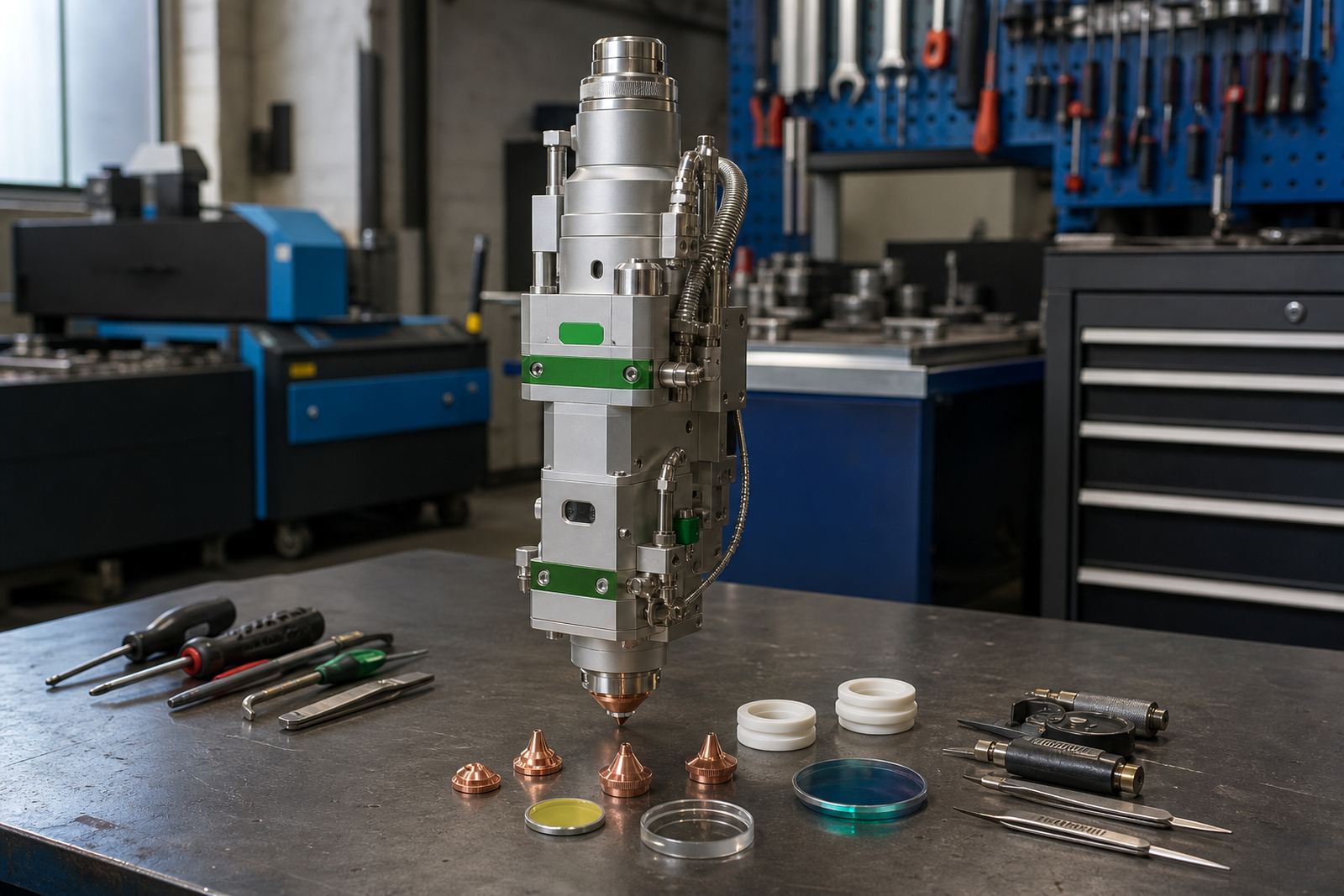
For sheet-metal cutting work, the ring normally sits in the focus lens or collimator lens pocket, depending on the head layout. It works with the lens seat, seals and protective window stack to keep the optical path stable. In South African workshop conditions, fine dust and warm air make that seating pressure matter even more, especially where mild steel, stainless steel and aluminium are cut in the same shift.
- Used to secure focus lenses and collimator lenses
- Maintains even seating pressure across the lens edge
- Supports repeatable head alignment after service or cleaning
- Helps keep the optical stack square inside the head body
Sizes and thread details that must match the head
Retaining rings are not one-size parts. The outside diameter, internal shoulder, thread pitch and ring height need to match the cutting head body and the lens carrier. Some heads use a shallow ring with a fine thread, while others use a deeper style that gives more grip on the lens holder. The wrong profile can stop the lens from seating fully or leave the cover stack under uneven pressure.
When a ring is ordered, the safest check is the full head model, the lens diameter, the thread form and whether the ring sits above a focus lens, a collimator lens or a protective window assembly. In a busy shop, a ring that looks close enough on the bench can still be wrong by a fraction and that is usually where the trouble begins.
- Common lens diameters: 20 mm, 25 mm, 30 mm and 37 mm
- Thread form: fine metric pitch, head-specific profile or captive style
- Material: anodised aluminium, plated metal or stainless steel hardware
- Seat type: flat face, chamfered face or stepped shoulder
Where the ring matters in a cutting head
Lens retaining rings suit fibre laser cutting heads used on mild steel, stainless steel and aluminium sheet in general fabrication, HVAC work, machine guards and jobbing shops. The ring sees the same vibration, thermal cycling and maintenance handling as the rest of the head, so a poor fit often turns up during nozzle centring or focus setting checks. If the ring is not holding the optical element correctly, the cut can drift even when the nozzle and gas settings are correct.
These rings are also useful after crash damage inspection, seal rebuild work or lens cleaning. If the optical pocket has been disturbed, the ring should be checked for wear marks, crossed threads and flattening at the contact face. That sort of detail is easy to overlook once the ring has been removed and refitted several times.
- Cutting heads on gantry machines and compact table systems
- Heads that use capacitive height sensing and fine focus adjustment
- Machines running mixed nesting patterns with frequent piercing
- Heads that are opened regularly for cleaning, inspection and service
Fitting notes from bench work and site alignment
Fitting a retaining ring is not hard, but it does need clean hands, a clean bench and the right lens handling habits. Dust on the threads or a nick on the seat can throw the ring off-centre. Before fitting, the lens pocket should be cleaned, the seating face checked and the ring threads inspected under light. If the head has been opened after a crash or a dirty cut, the ceramic ring, seal surfaces and protective window carrier should be checked at the same time.
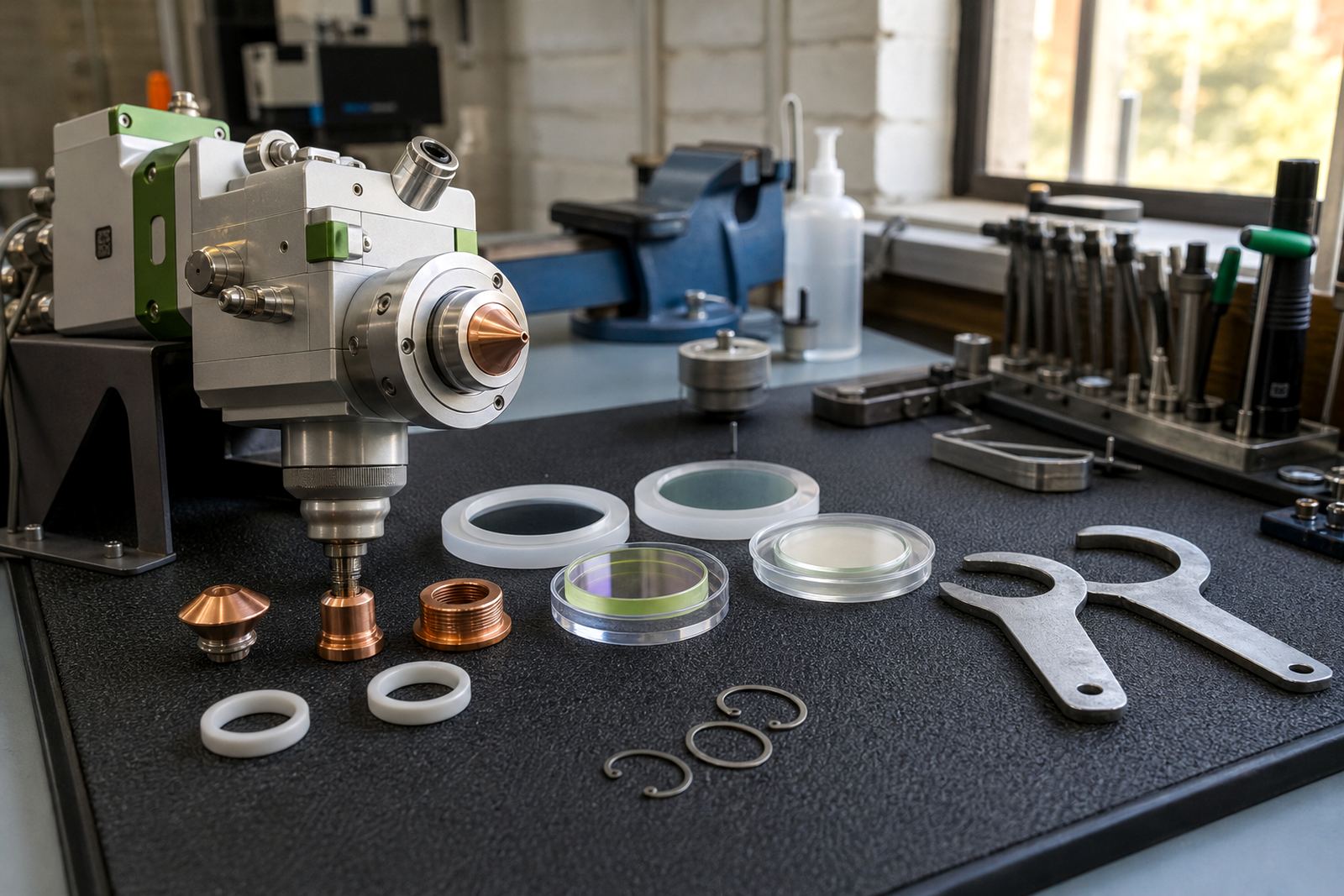
On site alignment, the ring is usually checked once the optical element is seated and the head is set back into line. The lens should sit evenly without side load, and the ring should tighten without force. If the head uses a special spanner or ring key, that tool should match the ring face so the slots do not burr or twist.
- Clean the threads before installation
- Check the ring face for burrs, dents and wear
- Seat the lens evenly before final tightening
- Use the correct tool for the ring profile
Care that helps the ring last through real workshop use
Lens retaining rings last longer when they are cleaned with the rest of the optical stack and kept away from grit, oil and hard knocks. A ring that has been over-tightened once can keep a slight twist or flattening on the contact face, so it should be inspected before being reused. If the ring is discoloured, scored or loose in the pocket, it is better to replace it than to keep chasing cut quality later.
Good care also means matching the ring to the cleaning routine. Optical cleaning fluids, lint-free wipes and dry air help, but solvent left on the threads can trap dust once the head heats up. In coastal air, even inland shops can pick up light corrosion on stored hardware, so sealed storage matters more than most teams expect.
- Store spare rings in sealed bags or lidded parts trays
- Keep thread faces free from swarf and cleaning residue
- Replace rings that have visible wear marks or distortion
- Check the ring whenever the lens has been removed for cleaning
What details to include with an order enquiry
When ordering a lens retaining ring, the details need to be exact enough for the head layout, not just the machine name. A clear photo of the old ring helps, and so does the lens diameter, thread type, head model and whether the ring is for a focus lens, collimator lens or protective window assembly. If the ring is being matched to a head after repair, include the part position and any marks on the old seat.
For stock planning in Spartan, Kempton Park and across Johannesburg, Pretoria, Durban, Cape Town and Rustenburg, the useful details are usually straightforward and physical. Measure the ring, note the seat style and confirm whether the machine uses one retaining ring or a paired arrangement around the optical element. That keeps the part search tied to the actual head, not to a guess.
- Head model and optical position
- Lens diameter and seat depth
- Thread pitch or a clear threaded sample photo
- Whether the ring is for bench service or field fitting
- Any wear, crash marks or stripped thread detail
Key facts
| Product type | Lens retaining rings for fibre laser cutting heads |
|---|---|
| Function | Secures optical elements with even seating pressure |
| Compatible parts | Focus lenses, collimator lenses and protective window assemblies |
| Common diameters | Sizes available: 20 mm, 25 mm, 30 mm and 37 mm |
| Typical materials | Anodised aluminium, plated metal, stainless steel hardware |
| Service fitment | Bench service and on-site fitting for sheet-metal cutting heads |