Bigger orifice, bigger gas window
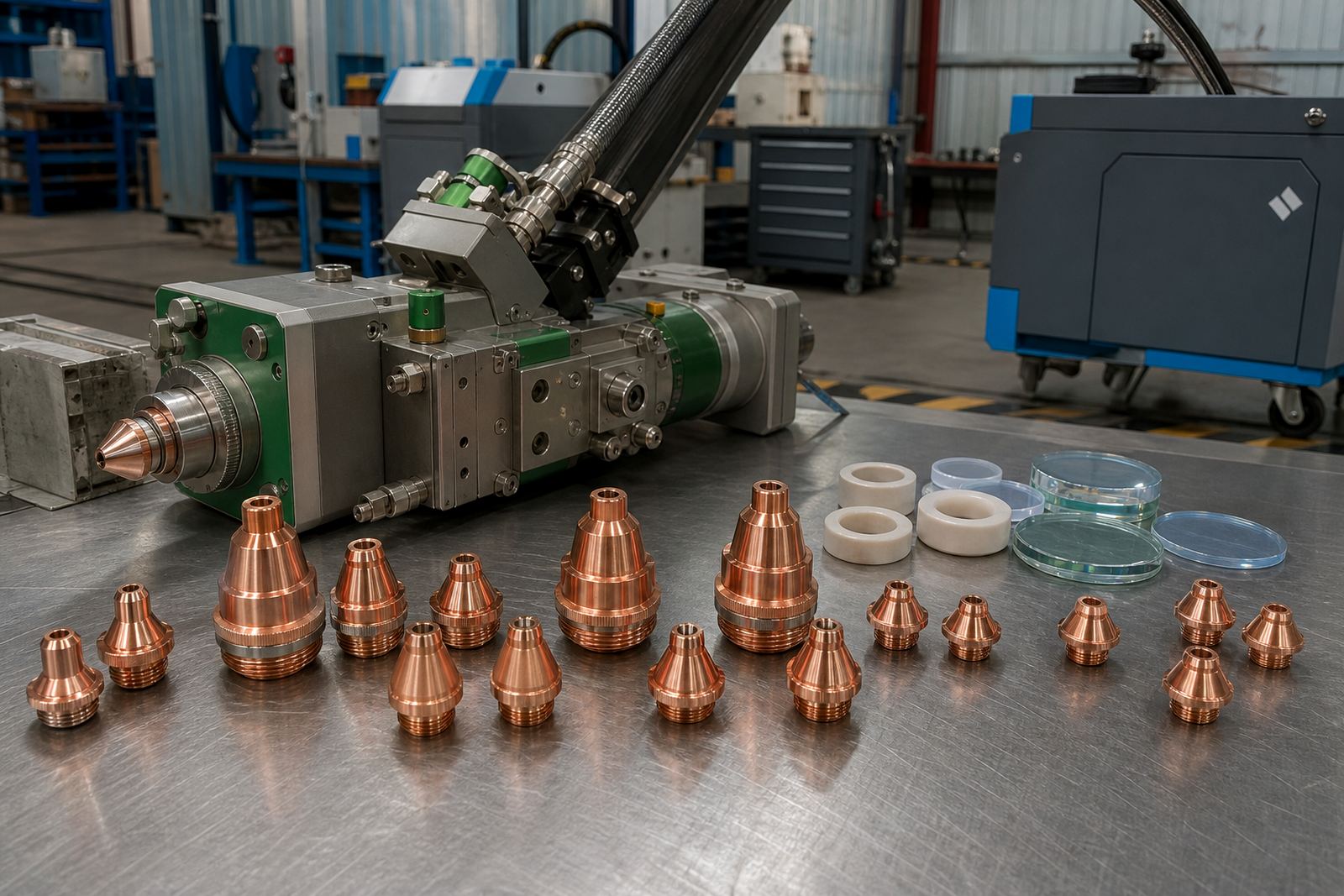
Large bore nozzles are used where the cutting process calls for more gas volume through the nozzle body, usually on thicker mild steel, stainless steel or aluminium jobs where a small orifice can choke the flow. The wider opening changes the gas pattern under the head, which helps keep the melt line open and the kerf cleaner when the machine is working harder on the edge.
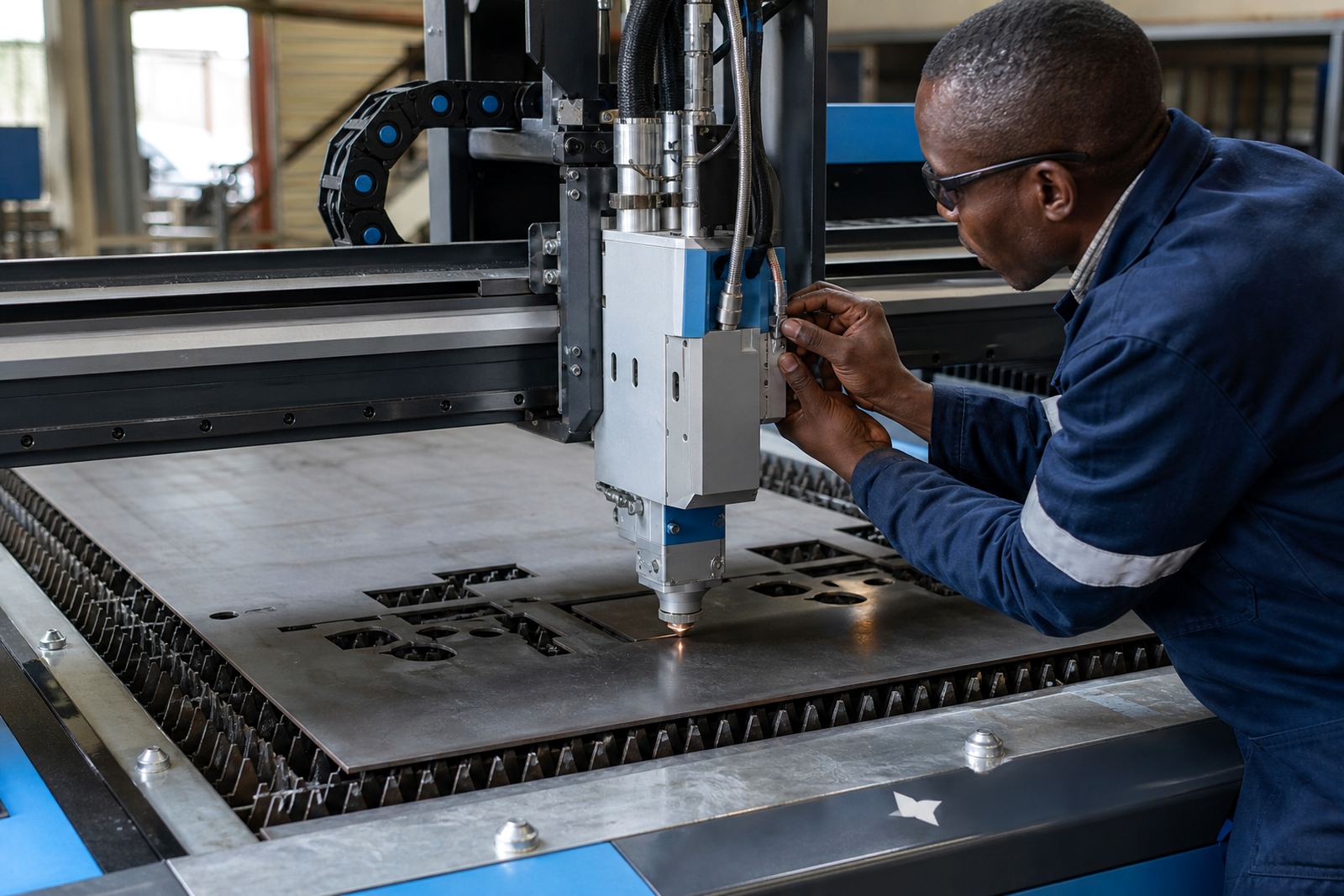
On a fibre laser head, nozzle choice sits close to the cutting result. Orifice size, nozzle height, centring and condition all affect pierce stability, dross formation and how the gas shields the cut zone. If the nozzle face is worn, deformed or contaminated, the cut can wander and the head may need extra attention on focus setting and centring.
Sizes, bodies and matching points
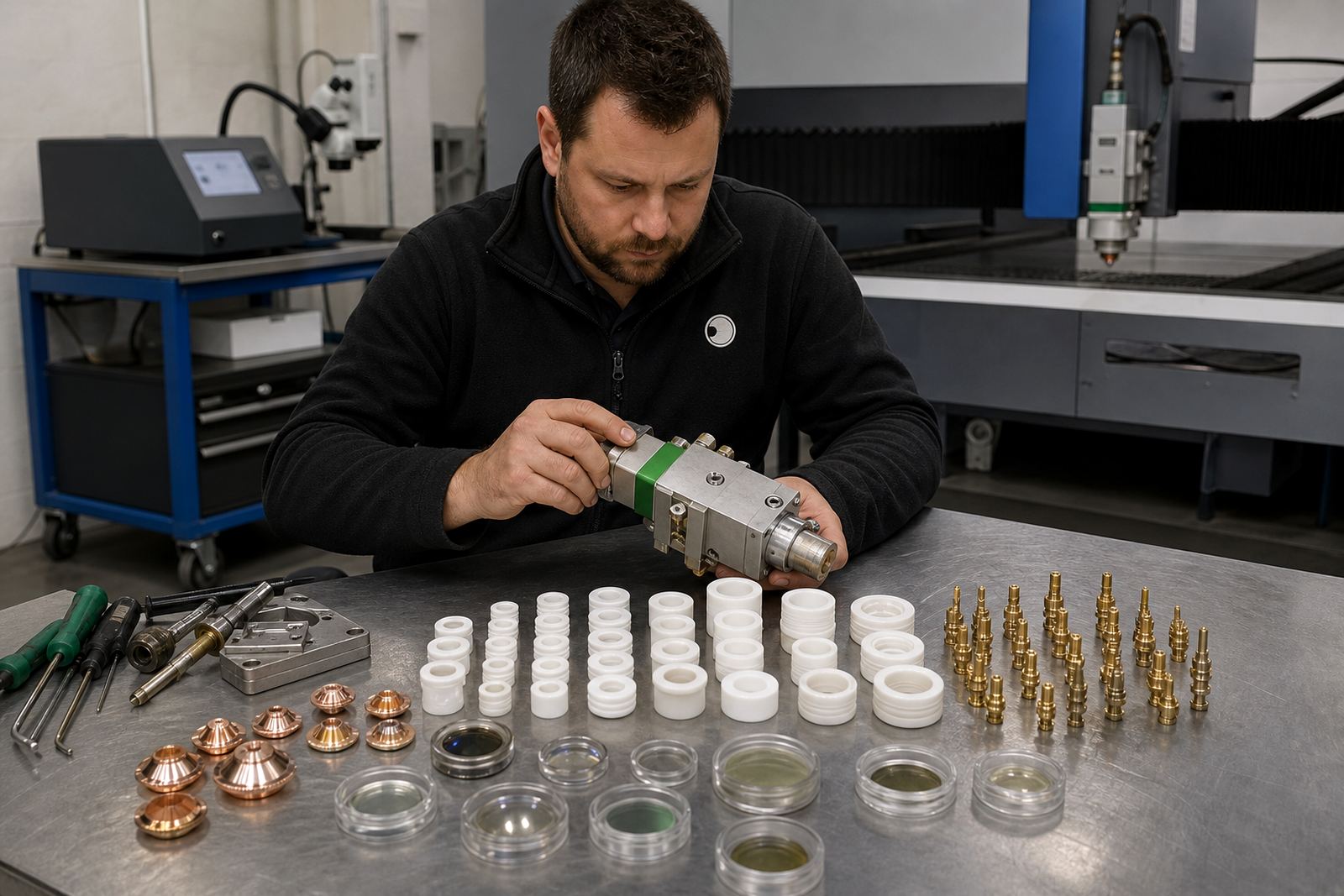
Large bore nozzles are usually selected by orifice size and by the body form that matches the cutting head. The most common working range is measured in tenths of a millimetre, and the correct choice depends on thickness, pierce style and gas type. For heavy sheet work, shops often keep more than one size on hand so the head can be set for the job rather than forcing one nozzle to do everything.
- Orifice sizes often used for thicker plate work: 1.8 mm, 2.0 mm, 2.5 mm and 3.0 mm
- Single layer and double layer styles, depending on head design and cut requirement
- Short or extended tip forms for clearance and nozzle reach
- Threaded or seated body profiles matched to the cutting head body and ceramic ring fit
- Choices for oxygen, nitrogen or air-assisted cutting, depending on the job spec
For a clean fit, the nozzle has to sit squarely against the seat and line up with the ceramic ring and head bore. A nozzle that is the wrong profile can upset centring even if the orifice size looks right on paper.
Where large bore nozzles earn their keep
These nozzles suit sheet-metal shops that spend time on thicker sections, high gas flow work and jobs where cut edge consistency matters more than squeezing out the smallest kerf possible. They are common on fabrication runs for structural parts, heavy brackets, machine guards, transport parts and repair work where the edge is not as forgiving as thin decorative sheet.
In practice, the nozzle needs to match the cutting head setup and the gas strategy on the machine. A thick plate on oxygen behaves differently from stainless on nitrogen, and the wrong nozzle size can leave rough edges, heavy dross or a pierce mark that grows wider than expected. Humidity near the coast in Durban and salty air by the shoreline can also reduce the life of exposed consumables, so storage and handling matter more than many shops expect.
- Heavier mild steel plate where a larger gas stream helps clear molten material
- Stainless and aluminium jobs that need steady assist gas control
- Shop work that switches between thick and mid-range material during one shift
- Heads that have been checked for capacitive height sensing and focus settings
- Cutting runs where nozzle wear starts to show as edge drag or uneven pierce quality
Fitting the nozzle without upsetting the head
Fitting a large bore nozzle is more than screwing a part into place. The face has to be clean, the seat has to be free of dust and oxide, and the nozzle has to sit true against the head. If the centring is off, the gas stream leaves the orifice at the wrong angle and the cut quality starts to drift. On a fibre laser head, that can also influence how the capacitive sensing behaves at the start of the cut.
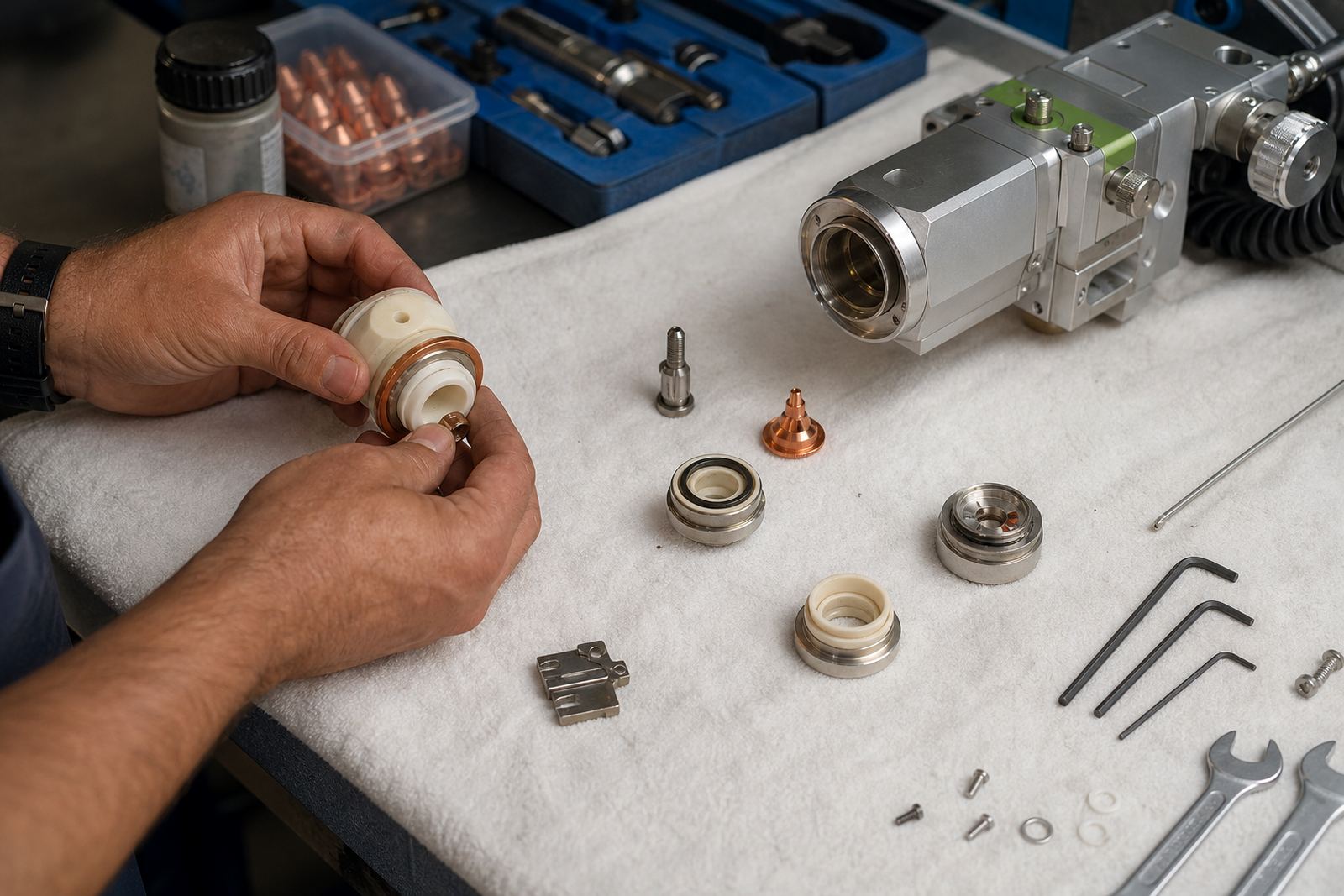
Bench fitting lets the technician inspect the head, ceramic ring, lens area and gas path before the nozzle goes back into service. On site alignment is useful when the machine has shifted after a crash, a rough material strike or a long run of poor edge quality. We also check focus setting, nozzle centring and general cleaning routines where the job calls for it, because a nozzle does its best work when the rest of the head is also in order.
- Check the seat and thread for dust, metal fines and burn marks
- Confirm the nozzle sits square and does not rock under light pressure
- Verify the centring against the cutting head bore
- Inspect the ceramic ring and protective window if the head has shown contamination
- Recheck the cut after fitting, especially on a new thickness or gas change
Care that keeps the cut honest
Large bore nozzles need regular inspection because the orifice works under heat, spatter and gas turbulence. A small dent or a rough edge on the tip can throw the stream off centre. Cleaning should be gentle, using methods that do not scratch the orifice or leave lint in the nozzle body. Aggressive scraping usually costs more than replacing the part.
Storage matters too. Keep nozzles in a dry, covered case and away from grinding dust, oil and loose scale. If the shop works near the coast or handles oily plate, a quick wipe before fitting is worth the effort. After a crash or a poor cut pattern, the nozzle should be checked with the rest of the head rather than blamed on its own. In many cases the issue sits in focus, gas path or sensor setup, not only in the brass part at the tip.
What to confirm before you order
Ordering the right large bore nozzle starts with the cutting head model and the exact job conditions. A nozzle that looks close can still miss the seat, alter the gas cone or sit too far from the protective window. That is where the detail counts, especially in shops running different machines across Johannesburg, Pretoria, Rustenburg, the East Rand, Durban and Cape Town
When you submit a request through our contact form, add the working details below so the nozzle suits the head and the cut. A clear note saves time later on fitting, centring and spare head preparation.
- Cutting head model and nozzle type required
- Orifice size in millimetres
- Single layer or double layer preference
- Material type and thickness range
- Assist gas used on the job
- Whether the head needs bench service, on-site alignment or a focus setting check
If the machine has already shown poor pierce quality, edge drag or heavy dross, add that detail too. It helps with matching the nozzle, checking the ceramic ring and deciding whether the lens, seal or gas path needs attention at the same time.
Key facts
| Orifice range | 1.8 mm to 3.0 mm, subject to head model and cut demand |
|---|---|
| Nozzle styles | Single layer and double layer |
| Typical use | Thicker sheet, higher gas flow and heavier pierce work |
| Compatible services | Nozzle centring, focus setting check, gas path inspection and head alignment |
| Fitment notes | Clean seat, true centring, correct ceramic ring and head bore match |
| Supply area | Spartan, Kempton Park, Johannesburg, Pretoria, Rustenburg, the East Rand, Durban and Cape Town |