Ceramic ring role in the cutting head
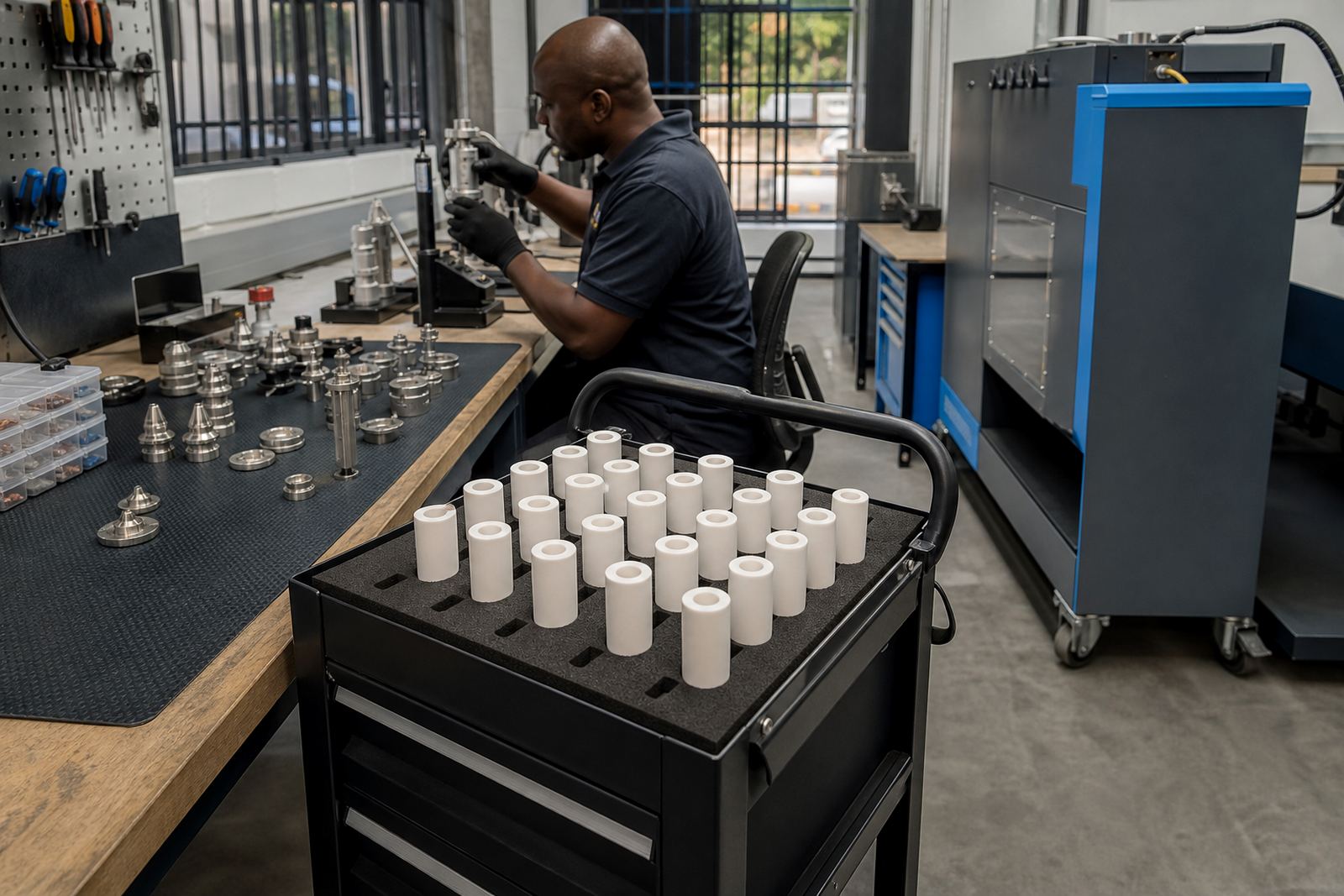
A standard ceramic ring is a small but important insulating and locating part inside a fibre laser cutting head. It supports the nozzle assembly, separates conductive parts where needed, and helps the capacitive height sensing system read the sheet surface consistently while the head moves over steel, stainless steel or aluminium. In practice, a worn ring can show up as unstable sensing, poor nozzle seating, or a cut that starts behaving in a way the operator did not expect.
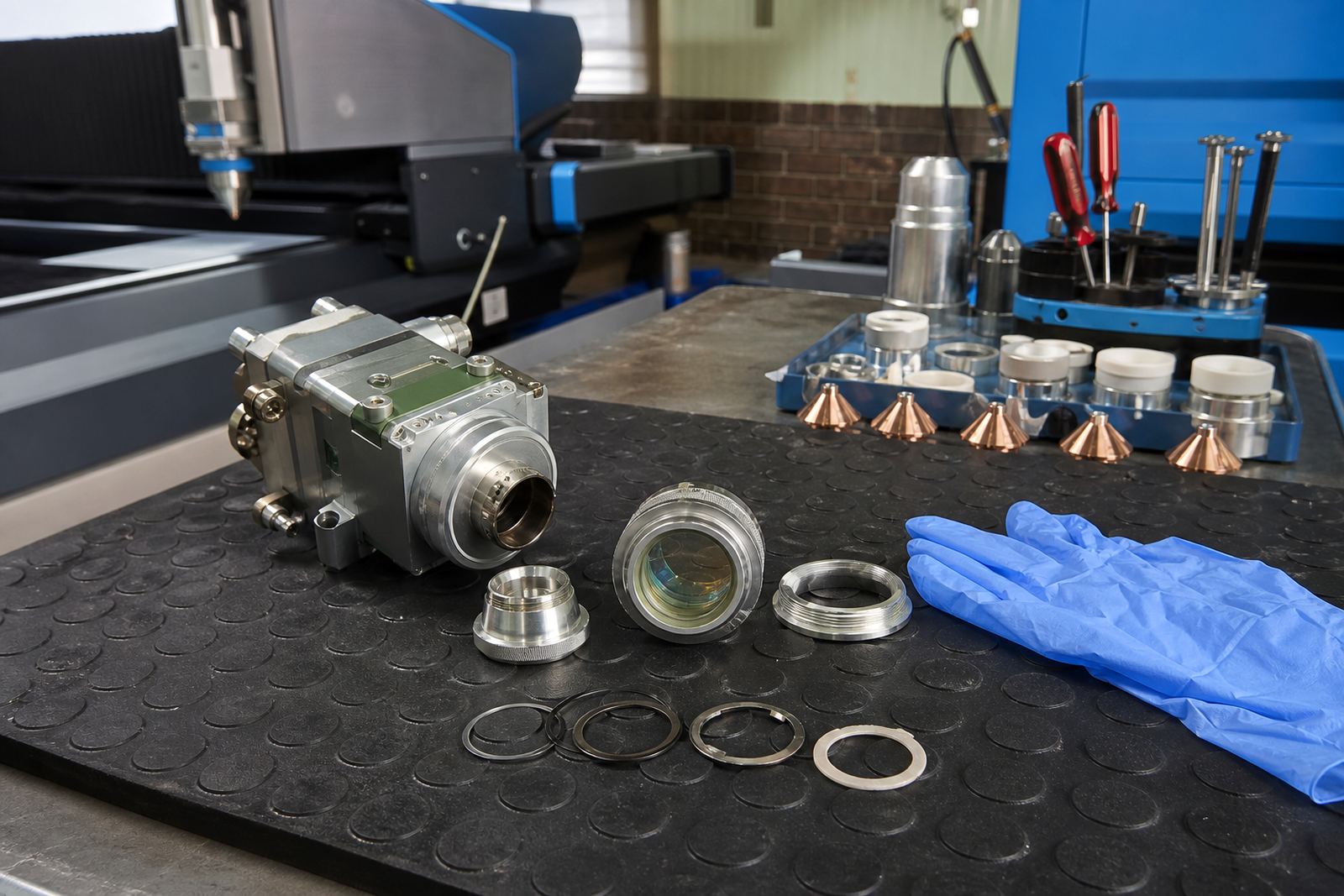
For shops running repeated nests, the ring works with the nozzle, nozzle body, protective window and focus path as one stack. If the ring is chipped, heat-marked or cracked, the head can lose its clean reference point and the nozzle may not sit square. That shows up in the cut edge, the pierce, or the way the head tracks around tight corners. The part is simple, but the tolerance around it is not.
These rings are used in laser cutting heads fitted to sheet-metal machines where nozzle centring and sensing consistency matter. They are a regular consumable in shops cutting brackets, cabinet parts, panels and similar work, especially where handling marks, crash scuffs or abrasive dust build-up are part of the week.
Sizes, fitment styles and head compatibility
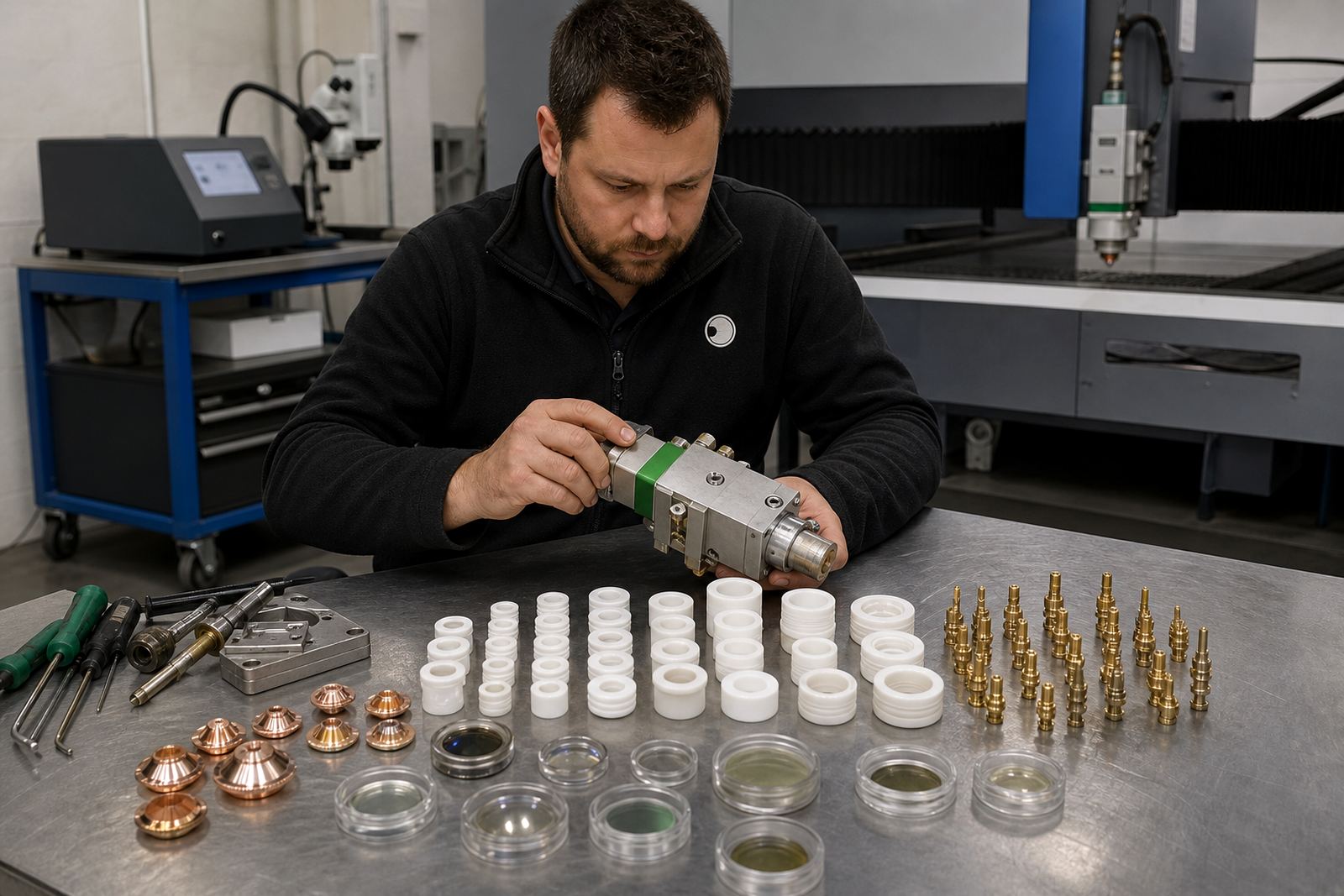
Standard ceramic rings are made to match specific cutting head formats, so the outer shape, mounting lip and internal locating features must suit the head model. One ring may look close enough to another, but a small difference in height or seat profile can change nozzle position and sensing behaviour. That is why head match, nozzle type and ring profile all need to be checked together.
Common fitment details include the ring body height, the inside and outside diameter, the top and bottom seating profile, and the way the electrical contact is carried through the head. Some heads also need the ring to align with a ceramic or metal nozzle support section in a very exact way. In a busy shop, a ring that is a fraction off can create extra cleaning and setting work later in the shift.
- Head body compatibility and mounting profile
- Ring height and overall diameter
- Nozzle seat shape and centring location
- Contact path for the sensing circuit
- Match to single layer or double layer nozzle setups
- Suitability for the machine cutting thickness range
Where standard rings suit the work best
These rings suit general sheet-metal cutting where the head is used on mild steel, stainless steel and aluminium in routine production. They are a practical choice for shops that want stable sensing on flat sheets, repeatable nozzle seating and a clean interface between the nozzle and the rest of the head. When the job mix includes short runs, frequent material changeovers or regular head checks, the ring becomes part of a normal maintenance cycle.
They are also useful when the head is run across different workshops or machines and the operator needs the nozzle section to behave predictably. In Johannesburg, Pretoria, Rustenburg, the East Rand, Durban and Cape Town, that can range from contract cutting rooms to fabrication crews dealing with changing part lists and tight delivery deadlines. Coastal humidity in Durban or Cape Town can also make cleaning and storage more important, especially when dust mixes with fine oxide or workshop residue.
Standard ceramic rings are not a one-piece answer for every cutting problem, but they are a sensible replacement item when the existing ring has wear marks, surface cracking or contamination around the sensor path. They support a clean nozzle seat, which is where a lot of small cutting issues begin.
Fitting, alignment and head service notes
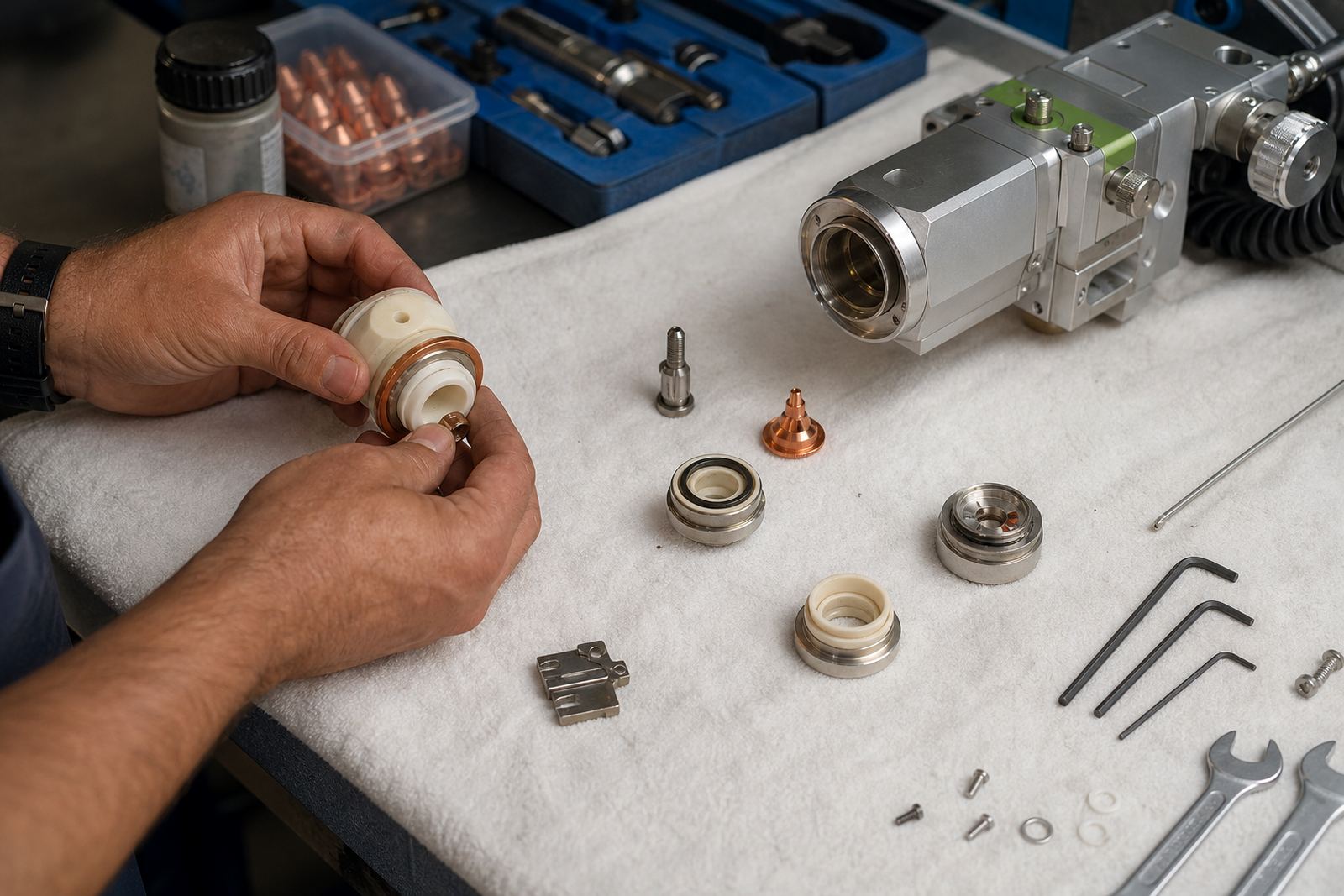
Correct fitting is as important as the ceramic ring, so the head stays aligned and the cut stays accurate. The ring must sit cleanly in the head, with no burrs, chips or dust trapped under the seat. During bench service or on-site head alignment, the technician will normally check the nozzle centring, the sensor signal path, the focus setting, and whether the ring is seated square before the head goes back into cutting work. A quick hand fit is not enough when the machine is cutting all day.
Installation often goes together with nozzle centring, lens cleaning and a capacitive sensor check, because these parts share the same working envelope. If the ring is installed after a crash or a hot cut incident, the rest of the head should be inspected as well. A bent nozzle body, marked ceramic support or damaged seal can all cause the new ring to wear out too soon. On-site alignment is useful where the head cannot be removed easily or where the machine has drifted after a mechanical knock.
- Clean the seat before fitting the new ring
- Check for chips, cracks and heat marks
- Verify nozzle centring after installation
- Inspect the sensor contact path and seals
- Confirm the focus position before cutting resumes
Care, cleaning and wear signs to watch
Ceramic rings last longer when the head stays clean and the nozzle area is checked often. Dust, dross powder and oily handling marks can sit on the ceramic surface and around the seat, which affects how the head senses the sheet. A soft, careful cleaning routine helps, but aggressive scraping or rough tools can do more harm than good. The ceramic surface is hard, yet it can still chip.
Look out for uneven wear, dark burn lines, cracking near the contact area, and marks that still show after cleaning. If the nozzle keeps needing centring, or the sensing signal begins to drift, the ring may be part of the problem even when it still seems acceptable at first glance. In a cutting room, small marks often grow into larger process faults if nobody checks them before the next failure.
Spare rings should be kept wrapped, dry and away from loose metal offcuts. When the workshop sits near the coast, or the stock room gets damp, a clean storage box makes a real difference. Ceramic parts are not heavy, but they do not like knocks from other fittings bouncing around in the same tray.
Order details that save a second round of checking
To supply the correct standard ceramic ring, the head model, nozzle type and machine family need to be matched properly. The best order details are the ones that identify the exact cutting head configuration rather than a general machine description. If the machine has had previous repairs, that matters too, because mixed parts can change the fit. A clear description helps avoid wrong-size rings that look fine on the bench but do not sit correctly in the head.
Please confirm the following when ordering through our contact form: head make and model, the old ring dimensions if available, whether the setup uses single layer or double layer nozzles, the machine thickness range, and whether the ring is for a bench rebuild or a field replacement. If there was a crash, include the signs you can see on the nozzle seat, sensor area or head body. That gives a more accurate parts match for the job at hand.
- Cutting head model and nozzle arrangement
- Outer diameter, inner diameter and height
- Single layer or double layer nozzle setup
- Machine thickness range and material mix
- Bench service or on-site replacement requirement
- Any crash marks, heat damage or sensor faults
Raytool provides standard ceramic rings from Spartan, Kempton Park to sheet-metal shops throughout South Africa, together with bench repairs and on-site head alignment for Johannesburg, Pretoria, Durban, Cape Town, Rustenburg and nearby industrial zones.
Key facts
| Part type | Standard ceramic ring for fibre laser cutting heads |
|---|---|
| Use | Nozzle support and sensing signal stability |
| Typical fitment | Matched to specific cutting head profiles |
| Related items | Nozzles, focus lenses, collimator lenses, protective windows |
| Service options | Bench Head Service, On-site Head Alignment |
| Coverage | Spartan, Kempton Park and major South African industrial centres |