Built for hotter cutting points
This cutting head is used on fibre laser machines that spend long hours on thicker mild steel, stainless steel and aluminium plate. The body, internal cooling path and optics stack are set up to keep the beam stable while the cutting zone runs hotter, especially where duty levels climb and assist gas pressure needs to stay consistent.
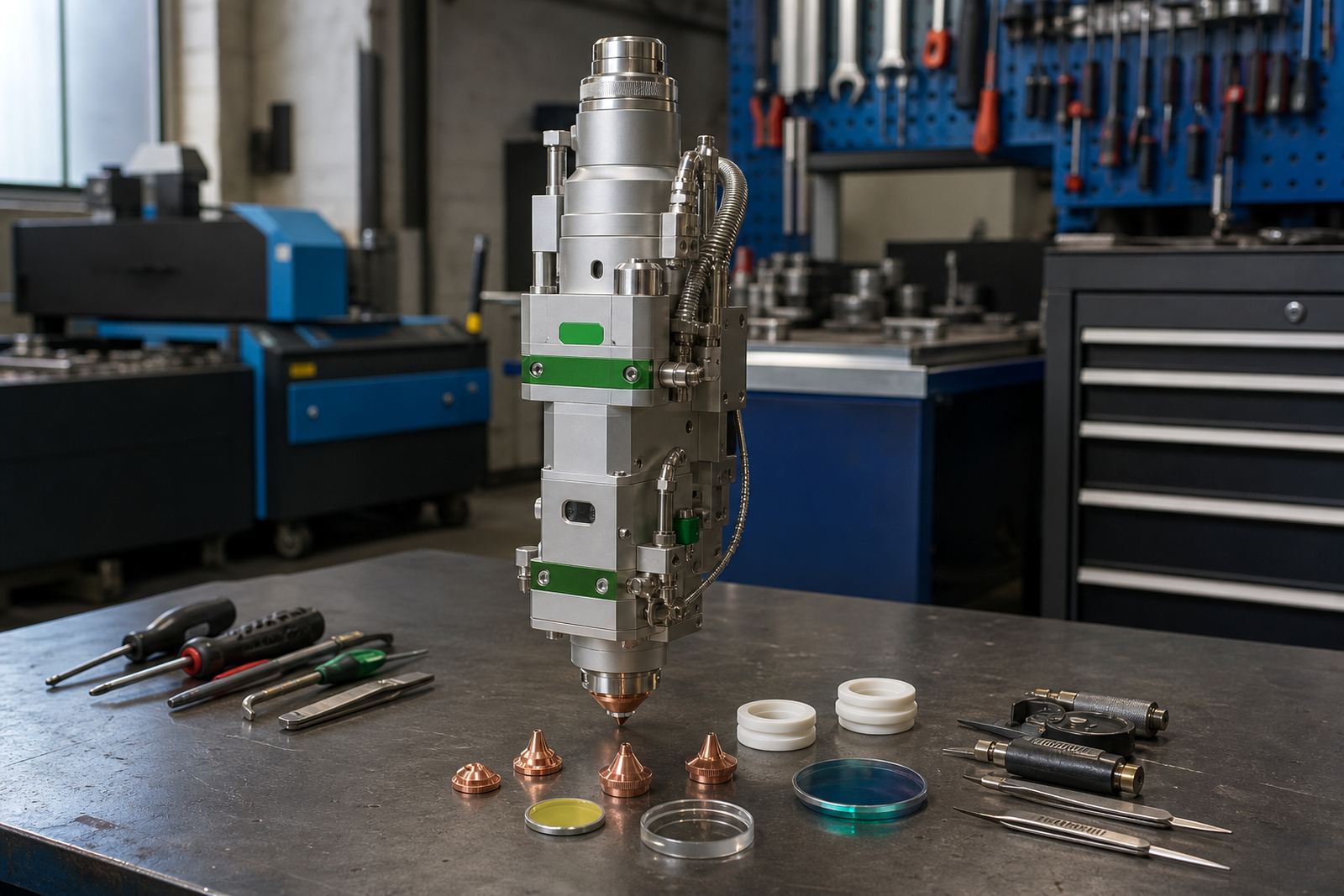
In practice, that means the head works with a focus lens, collimator lens, protective window, ceramic ring and matched nozzle arrangement. The capacitive sensing system helps hold the stand-off, while the focus setting and beam path must stay in line with the machine table and sheet condition. For busy sheet-metal shops, that balance matters more than looks or polish.
Common head styles in this class are chosen by machine frame, cutting power and the thickness band you work in. The setup must match the flange, cable routing, gas connections and beam interface, otherwise the head will not sit true on the carriage.
- Suitable for higher-duty fibre laser cutting lines
- Used with single layer or double layer nozzles
- Relies on stable beam delivery and cooling control
- Works with capacitive height sensing on modern machines
Options that affect fit and cut quality
When selecting a high power head, the key details are not just the body size. Lens type, nozzle thread, sensor layout and protective window format all affect how the cut behaves on edge quality, dross and heat marking. A head that suits 6 kW on one machine may not suit the same carriage or mounting face on another.
The most common choices are tied to beam power, focal length and cut mix. A short focus lens can help on finer work, while a longer focus setup is often preferred for thicker sections and cleaner pierce behaviour. Nozzle bore, nozzle height and centring tolerance also change with material and gas choice.
- Beam power and focal length
- Mounting face and carriage pattern
- Nozzle style, single layer or double layer
- Protective window size and retention method
- Capacitive sensor type and cable arrangement
- Assist gas mix and cutting pressure range
Where this head earns its place
High power heads suit shops cutting repeated nests on thicker plate, jobbing work with frequent material changes, and production lines where the cutting zone runs for long stretches. They are a practical fit where the machine sees frequent pierces, long traverses and tight part spacing, because heat build-up can start to show in nozzle wear and lens contamination.
In Johannesburg, Pretoria and the East Rand, many users run mixed steel orders and need a head that can stay consistent over long shifts. In Durban and Cape Town, humidity and airborne dust can make lens care and protective window checks more important than people expect. Rustenburg shops often see heavy plate and tougher schedules, so head alignment and gas path condition matter even more.
This class of head is also used where sheet thickness changes through the day. A careful focus setting check and nozzle centring step help reduce burrs, angled cuts and unstable pierces when the operator moves from thin sheet into heavier sections.
Fitting, alignment and bench service points
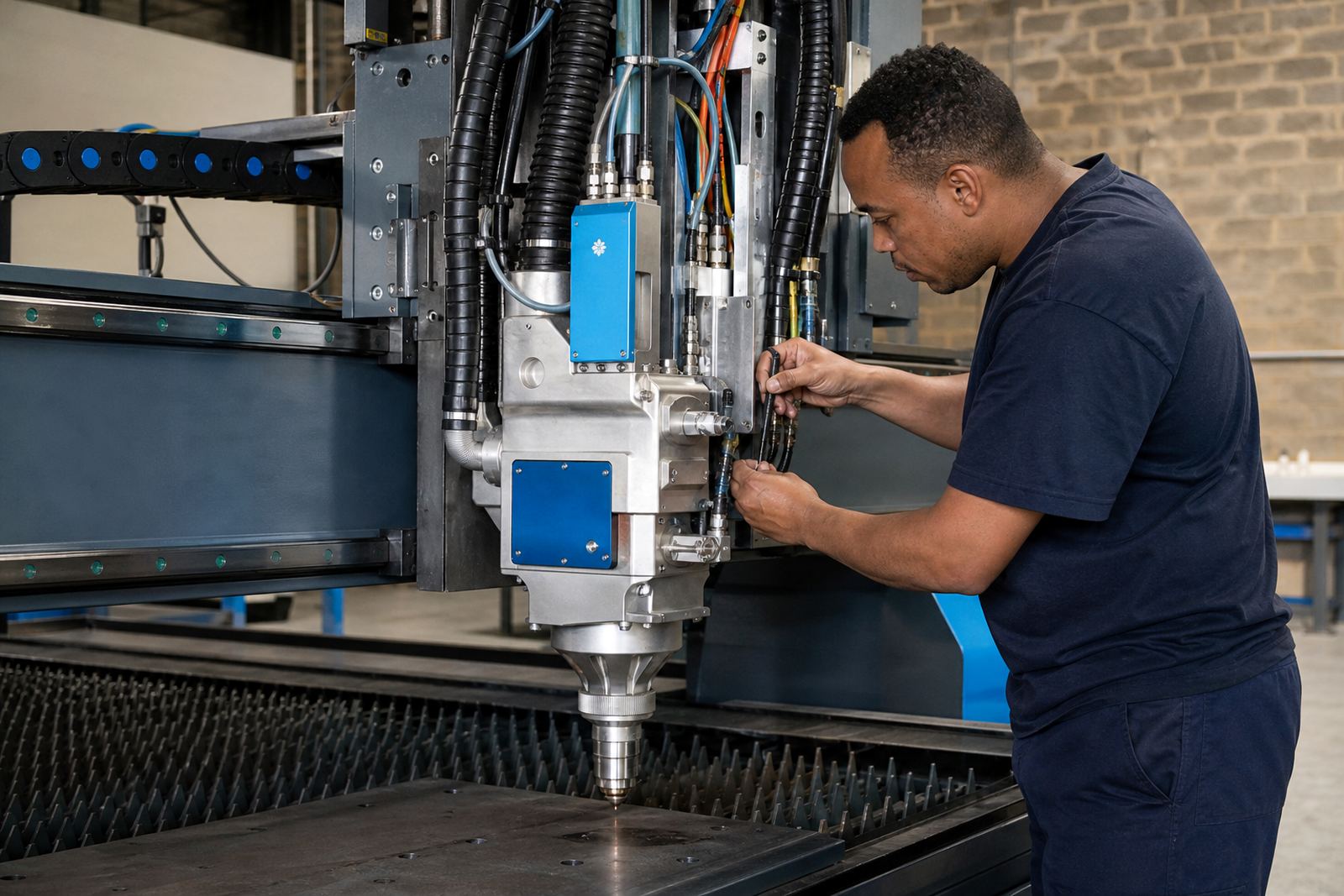
Fitting a high power head is not just a bolt-on job. The beam axis must meet the lens stack correctly, the ceramic ring has to seat cleanly, and the head body needs proper alignment on the machine side. If the head has had a knock, the nozzle seat and internal seals should be checked before it returns to production.
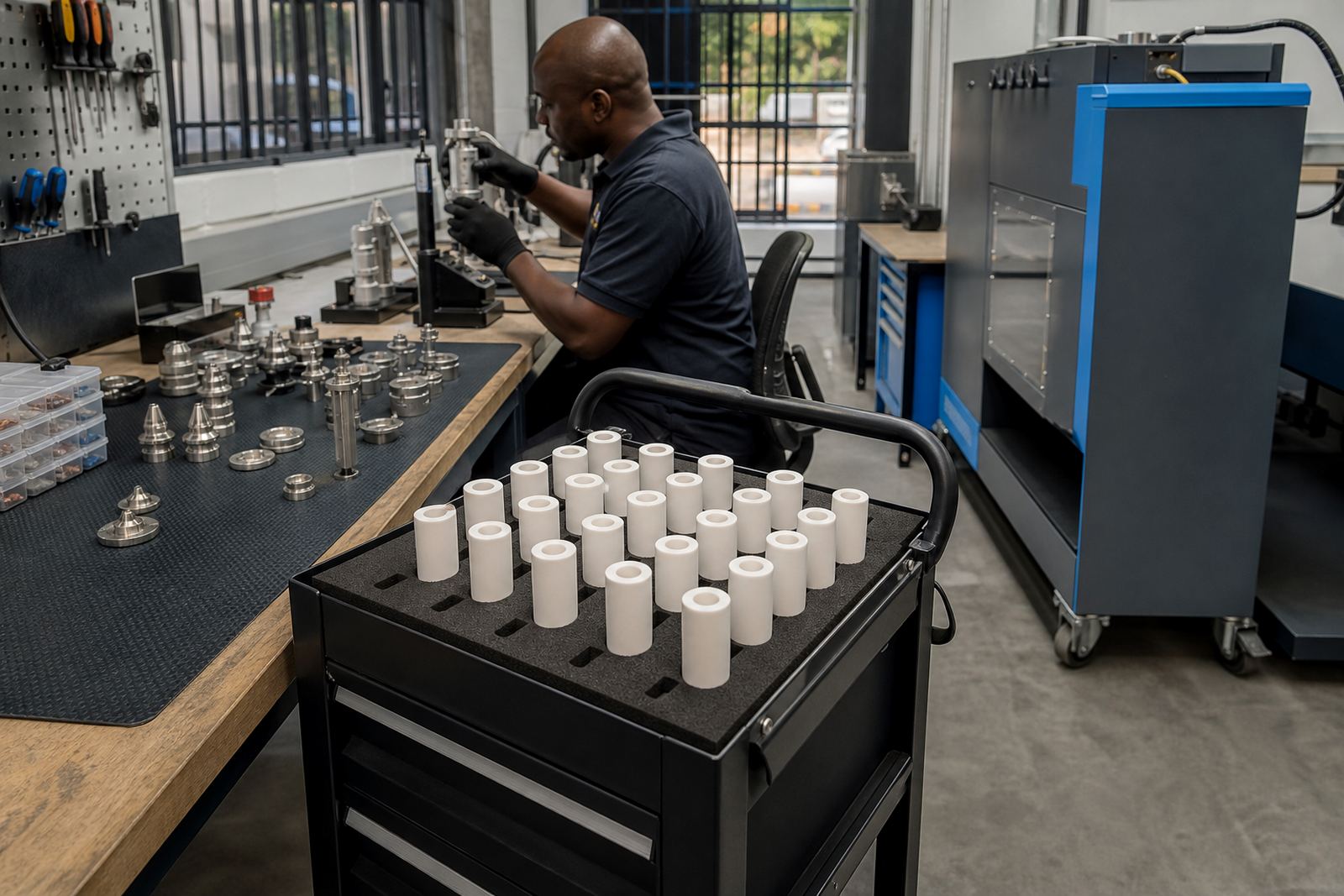
Our bench service work covers head alignment, lens cleaning, nozzle centring, protective window replacement, ceramic ring replacement and head seal rebuilds. On-site work is used when the machine cannot leave the shop floor, or when the issue lies in carriage alignment, sensor drift or gas delivery conditions.
- Check flange sit and beam entry before full fitting
- Verify nozzle height and capacitive sensor readings
- Inspect the gas path for leaks or blockages
- Set focus against the material and machine program
- Test cut quality after any lens or nozzle change
For shops in Spartan, Kempton Park and across South Africa, installation should be done by someone who understands fibre laser optics and how heat changes the cutting face. A head that is slightly off can still fire, but the cut edge tells the truth very fast.
Keeping optics clear and the cut stable
Care on a high power head starts with clean handling. Protective windows should be checked for haze, spatter marks and pinholes, while the focus lens and collimator lens must stay free of dust and residue. A small mark in the optical path can affect piercing, kerf width and the consistency of the cut edge.
Nozzles also need attention. A single layer nozzle and a double layer nozzle behave differently, so the correct type should be fitted for the material, gas and program in use. If the nozzle face is damaged or out of centre, gas flow can wander and the cut edge will usually show it.
- Keep protective windows sealed and clean
- Replace ceramic rings when seating becomes poor
- Clean lenses only with proper optical practice
- Watch for crash marks on the nozzle seat
- Recheck focus after any head service work
Heavy cutting work produces heat and fine debris, so routine inspection is part of normal shop discipline. That is especially true where the same machine cuts all day and the head sees frequent piercing on thicker plate.
What to confirm before placing an order
The correct high power head depends on a few details from the machine and the job set-up. We need the cutting power, mounting style, machine model, lens focal length, nozzle type and the sensor arrangement before a head or spare parts set can be matched properly.
It also helps to confirm the material range, gas used for cutting and whether the job leans toward fine sheet or heavier plate. If you are replacing a damaged unit, a clear note on crash damage, smoke ingress or lens breakage can help narrow the repair path. For spare parts, the thread size, window dimensions and ceramic ring shape must all line up.
- Machine make and cutting power
- Head mounting face and beam connector style
- Lens focal length and diameter
- Nozzle style, bore and thread pattern
- Protective window size and thickness
- Any crash, heat or contamination signs
We supply fibre laser cutting heads, nozzles, lenses and protective windows to sheet-metal shops from Spartan, Kempton Park, with bench servicing and on-site head alignment across Johannesburg, Pretoria, Durban, Cape Town and Rustenburg.
Key facts
| Head type | Higher-duty fibre laser cutting head |
|---|---|
| Typical use | Demanding sheet and plate cutting where heat control matters |
| Compatible optics | Focus lens, collimator lens and protective window |
| Nozzle options | Single layer and double layer |
| Sensing | Capacitive height sensing |
| Service support | Bench service and on-site alignment |
| Common spare parts | Ceramic ring, lenses, windows and nozzles |