
Long ceramic rings in the head stack
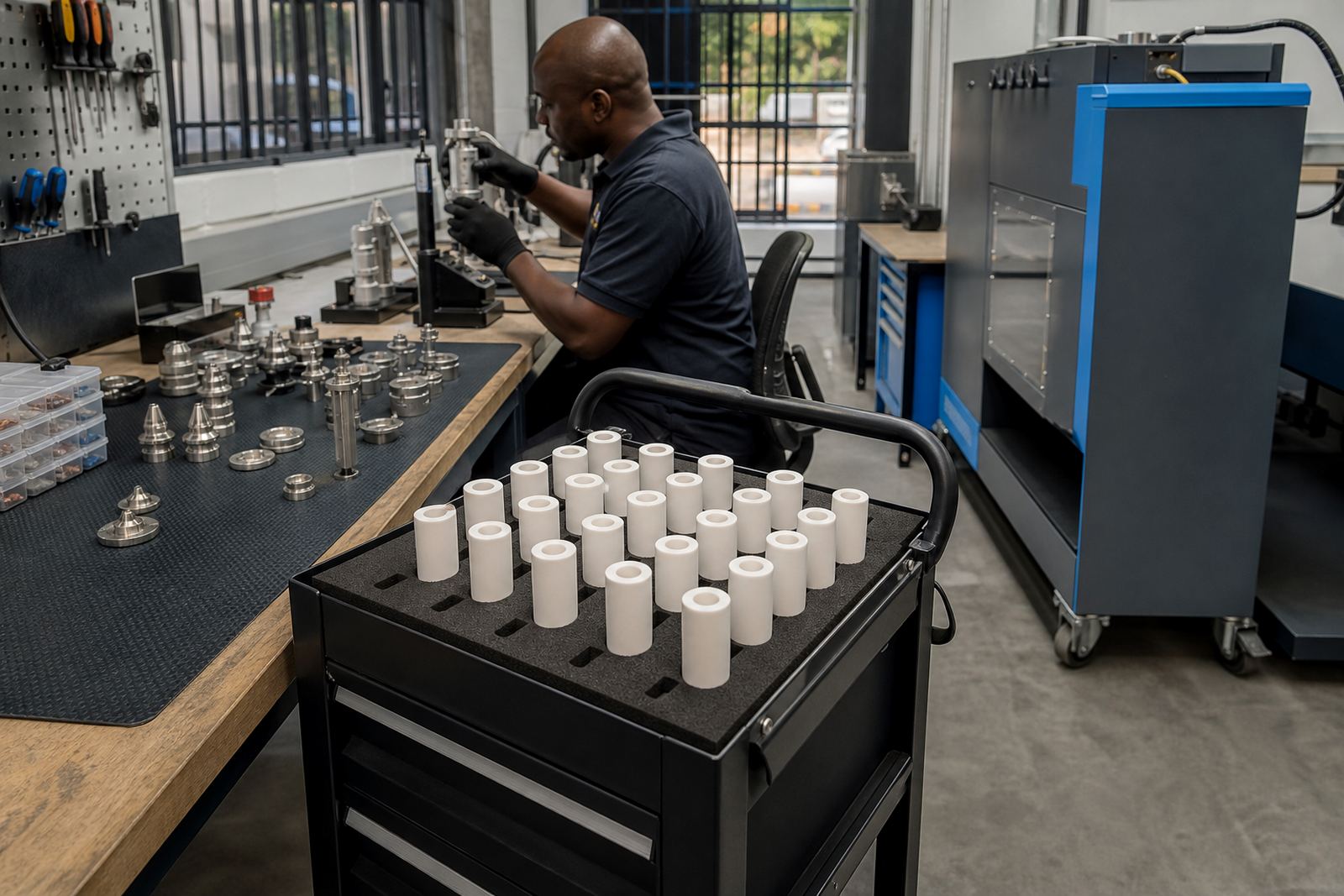
A long ceramic ring sits in the cutting head assembly as an insulating spacer and locating part, usually between the metal body and the lower consumable section. In fibre laser cutting work it helps keep the geometry consistent where the head build-up needs more length than a standard ring can offer.
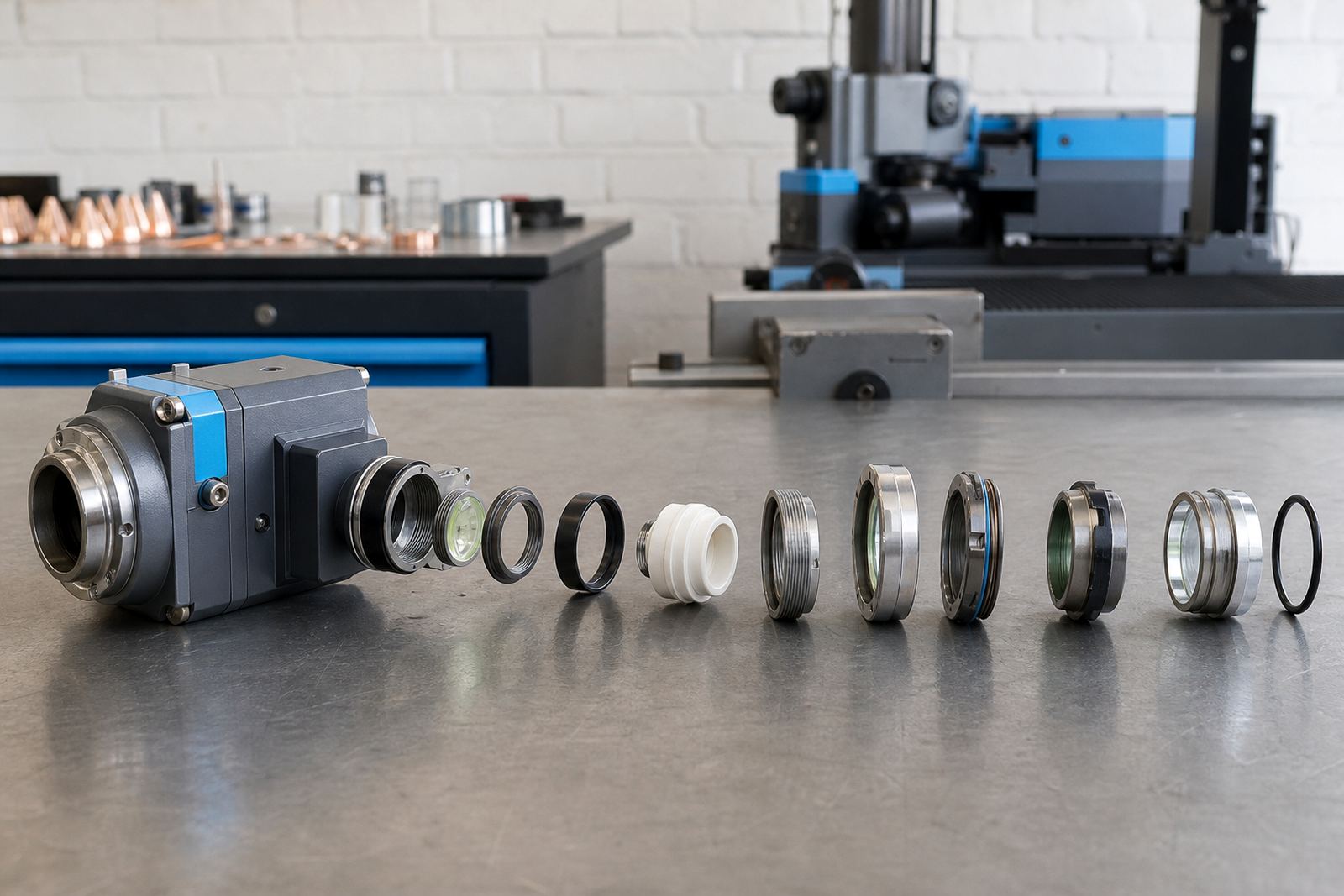
These rings are used in assemblies that carry the nozzle, sensor path and lower head parts in a fixed line. The ceramic body gives electrical isolation and keeps the lower section positioned with better repeatability, which matters when the cut gap is tight and the sheet sits close to the nozzle tip.
- Used in extended spacing head assemblies
- Helps maintain nozzle and sensor alignment
- Ceramic body provides electrical isolation
- Made for repeated thermal and handling stress
Sizes and build options that matter on the bench
Long ceramic rings are not all the same length, bore size or shoulder profile. The right one has to match the head model, the thread form or locating step, and the internal passage needed for the sensor and gas path layout. A ring that is too short can leave the stack loose, while one that is too long may change nozzle reach and upset focus position.
Typical options include different outer diameters, internal bores, stepped shoulders and overall lengths suited to the lower head assembly. On many cutting heads the fit is tight and the surface finish is important, because a rough or chipped ring can throw the nozzle off centre and make the head harder to set.
- Overall length to suit extended assemblies
- Outer diameter matched to the head seat
- Internal bore matched to the sensor or gas path layout
- Step and shoulder detail for correct seating
- Precision face surfaces to support centring
Where long rings suit daily cutting work
These rings suit shops running sheet-metal profiles, brackets, duct parts and machine panels where the cutting head sees regular changeovers and the lower assembly takes knocks from nozzle swaps or sheet lift issues. They also suit heads that are aligned on the bench before going back to a machine in Johannesburg, Pretoria, Durban, Cape Town or Rustenburg.
In production bays with mixed thickness material, a longer ring can help maintain the same build geometry after a head service or seal rebuild. It is also useful where the machine setup calls for extra clearance around the lower consumable stack, or where an existing head design uses a long locating section to keep the sensors and nozzle position steady.
- Sheet-metal cutting shops with frequent nozzle changes
- Heads that need bench alignment after service
- Assemblies with extra lower-body clearance
- Machines working on mixed thickness material
- Heads that must keep a fixed sensor and nozzle stack height
Fitting details that keep the head true
Long ceramic rings need clean seating faces, a correct tightening feel and a careful check of the mating parts before the head goes back into service. If the ring is fitted with dust, burrs or a chipped shoulder, the lower stack can sit off-line and the nozzle centring work becomes harder to hold.
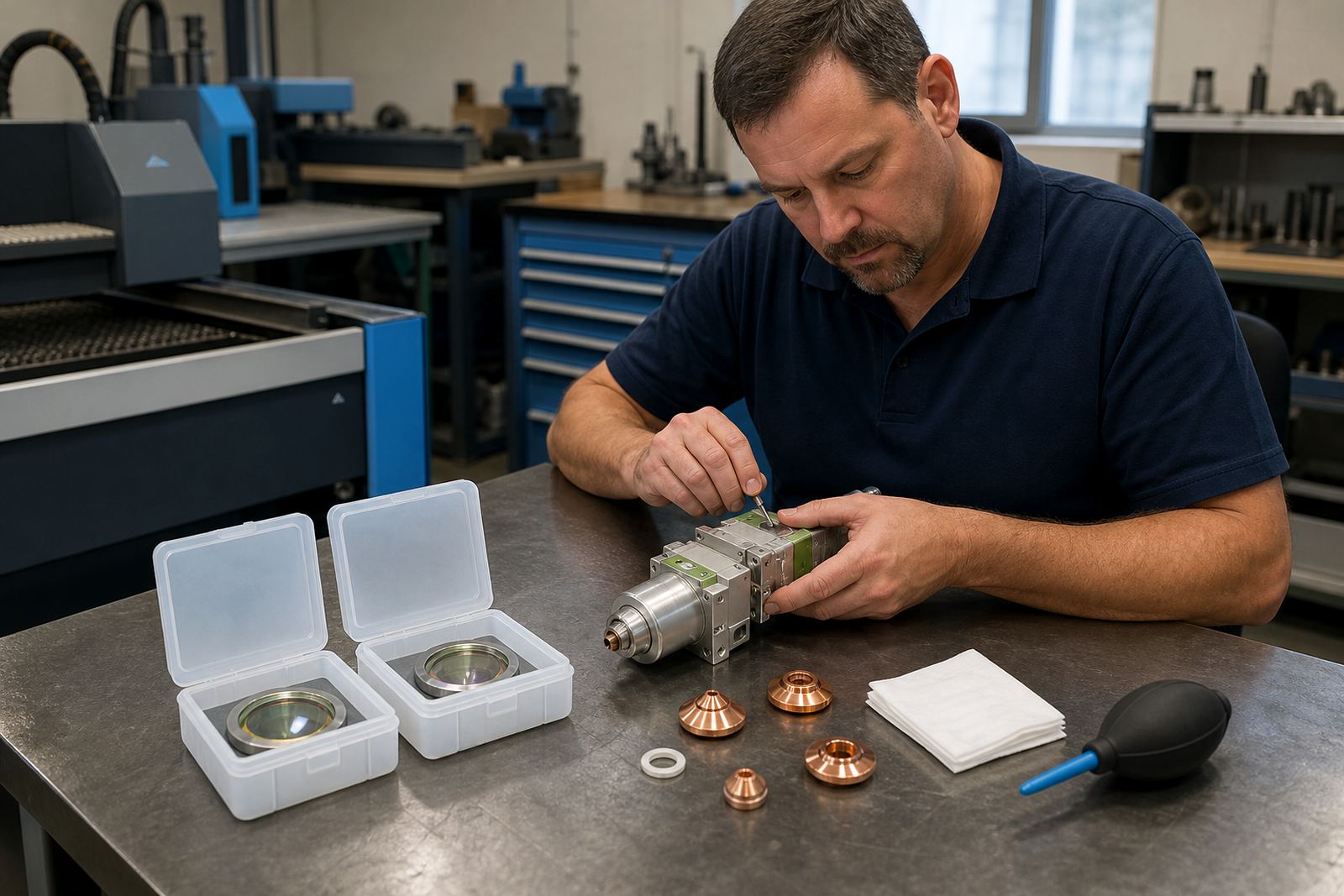
On a service bench the technician should check the ceramic for hairline cracks, marks from over-tightening and any wear where it has rubbed against the metal body. The threads or locating surfaces in the matching parts should be clean, and the ring must sit square before the nozzle, lens path and sensor parts are set.
- Inspect for chips, cracks and shoulder wear
- Clean all seating faces before fitting
- Check the head body for thread damage or debris
- Set the ring square before final assembly
- Recheck nozzle centring after installation
Care after service and day-to-day handling
Ceramic parts are tough in service, but they do not like impact, rough bench handling or overtightening. A ring can look fine at a glance and still carry a small crack that opens up under heat and vibration, so the part should be handled like a precision component, not a general spacer.
Store the ring clean and dry, away from grinding dust. If the head has been exposed to coolant mist, abrasive fines or rough cleaning cloths, the ceramic and the seating faces should be checked before the machine goes back to cutting. A careful routine around lens cleaning, protective window changes and gas path inspection helps protect the lower assembly as a whole.
- Store in a dry, padded parts tray
- Avoid knocks on the edges and shoulders
- Keep away from abrasive dust and metal chips
- Inspect after crash damage or heavy nozzle contact
- Pair ring checks with lens and window service
Details to confirm before ordering
Long ceramic rings need the right head family, the right length and the right locating style. A small mismatch can change the nozzle stand-off or disturb the capacitive sensing path, and then the focus setting check becomes less useful because the lower stack is already sitting wrong.
When sending the details, confirm the head model, the ring length, the external and internal diameters, the shoulder shape and whether the assembly uses a particular sensor or gas path arrangement. If the ring is part of a broader service job, note whether the head also needs nozzle centring, protective window replacement, ceramic ring replacement, or a bench inspection for crash damage.
- Cutting head model and assembly type
- Overall length and shoulder profile
- Outer diameter and bore size
- Fit with capacitive sensing and nozzle stack
- Whether the ring is for bench service or on-site alignment
Key facts
| Product type | Long ceramic ring for fibre laser cutting head assemblies |
|---|---|
| Material | Precision ceramic insulating component |
| Typical use | Extended spacing between lower head parts and the main body |
| Fit points | Head seat, nozzle stack, sensor path and locating shoulder |
| Common checks | Cracks, chips, seating wear, bore match and centring |
| Service context | Bench Head Service, On-site Head Alignment, Nozzle Centring, Capacitive Sensor Check |