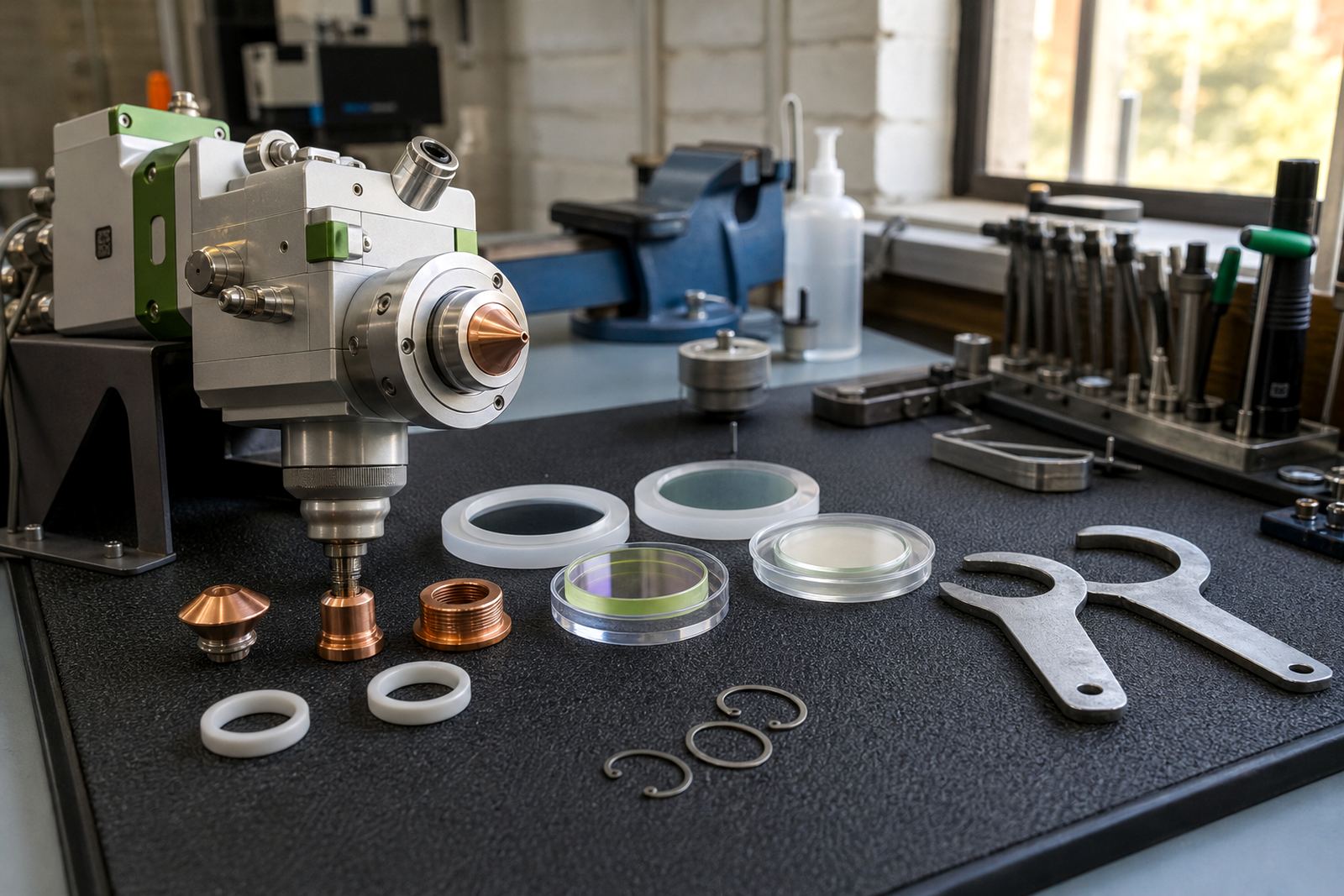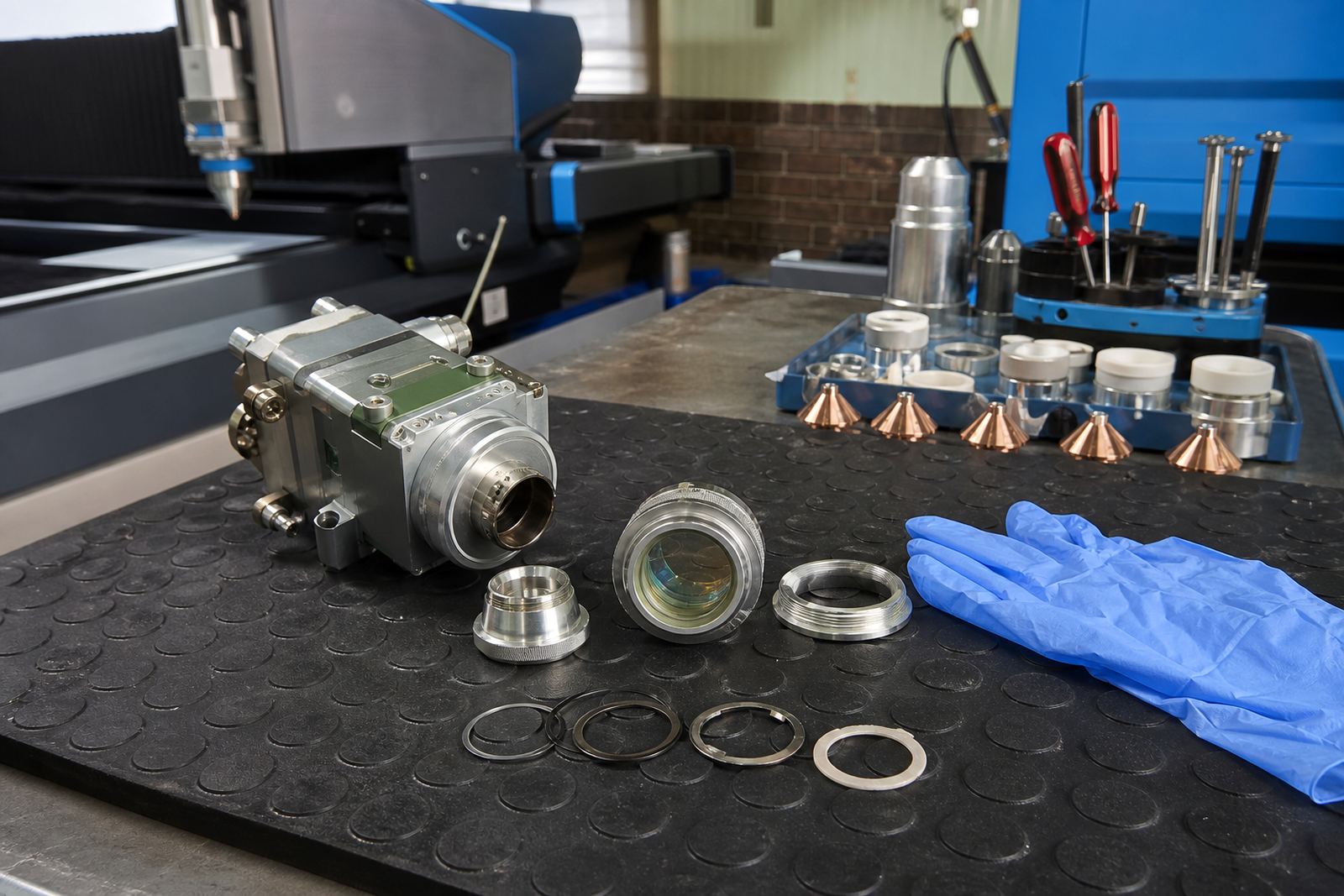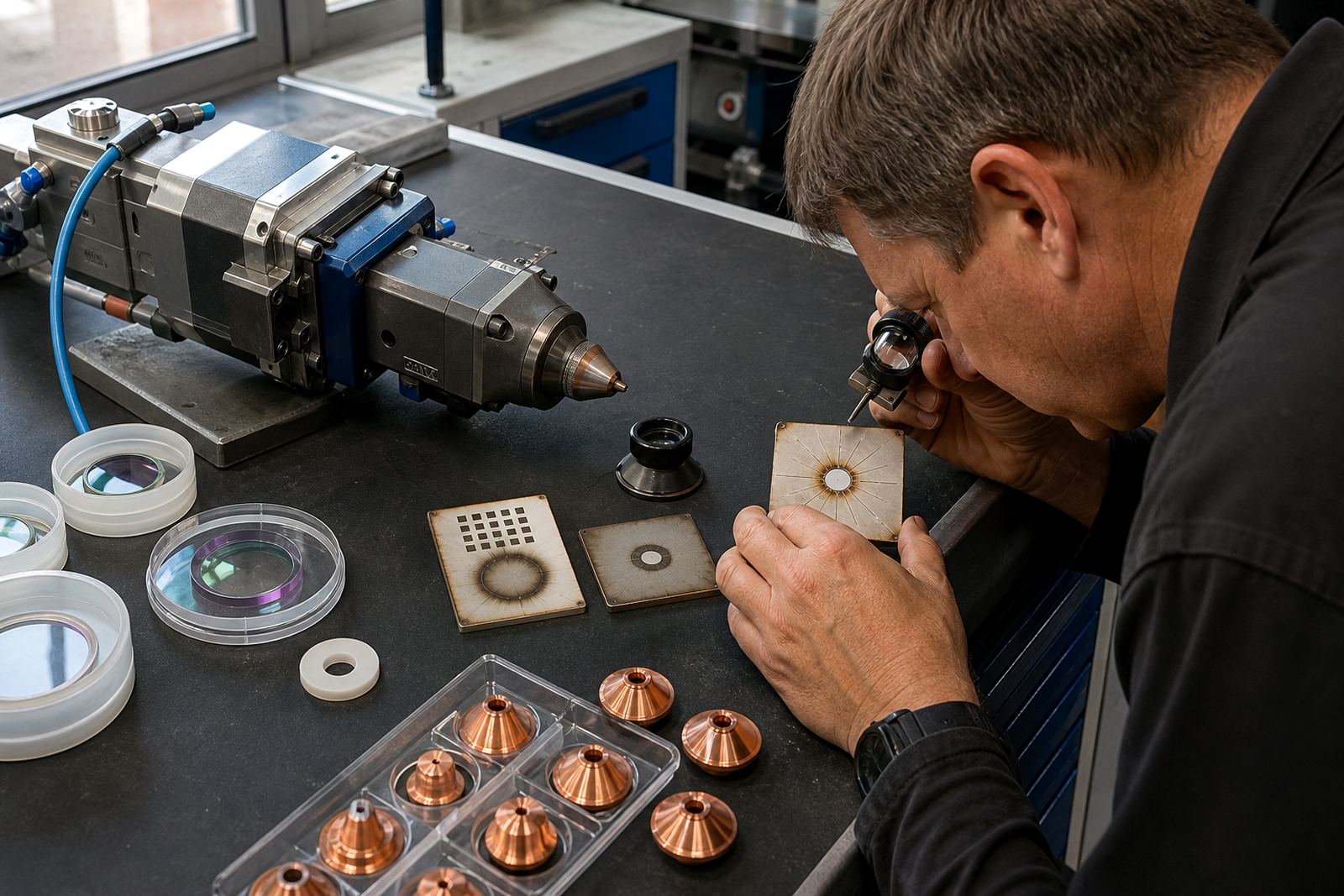
Targets used for beam-centre checks
Alignment targets are plain checking pieces fitted into the cutting head so the beam can be viewed against a marked centre point. On a fibre laser machine the target helps show whether the beam is sitting true through the nozzle, focus lens and protective window path, which matters when cut edges start to show drag lines or a slight taper. The part is usually used during head setup, after a nozzle change, after lens cleaning or when the head has taken a light knock on the shop floor.
These checking pieces are handled as service items, not as cutting consumables. A good target gives a clear burn mark or witness point, lets the technician see offset, and makes nozzle centring and lens alignment easier to judge without guessing.
- Used for optical centring on fibre laser cutting heads
- Helpful after nozzle replacement or lens cleaning
- Supports setup checks on the bench or in the machine
- Shows beam position against the designed centre mark
Sizes, fits and the head types they suit
Alignment targets are not all the same. The correct piece depends on the cutting head body, the internal seat depth, and the way the nozzle holder or protective stack is arranged. Some heads take a slim insert and others a thicker checking piece with a wider shoulder. The aim is a snug fit that sits square, without forcing it into place or allowing it to wobble during inspection.
For sheet-metal shops in Gauteng, KwaZulu-Natal and the Western Cape, the target must suit the head model already fitted to the machine. A mismatch can give a false centre mark, which leads to poor nozzle centring and repeated correction work. We check the physical dimensions, the seating face and the reference profile before any fitting is done.
- Outer diameter to match the head seat
- Thickness or stack height to suit the internal cavity
- Reference mark or centre point for visual checking
- Material and finish that handle repeated service work
Where alignment targets earn their keep
These pieces suit laser shops that run mixed sheet-metal work, especially where mild steel, stainless steel and aluminium are cut in the same week. They are useful after crash damage checks, after nozzle centring, or when a protective window has been replaced and the optical path needs to be confirmed again. In busy shops around Johannesburg, Pretoria, Durban, Cape Town and Rustenburg, a target is often kept with the service kit so the technician can check a head without stripping the whole assembly.
They are also useful on spare heads prepared for changeover. A spare head that has been checked with a target is easier to install with confidence, because the beam reference has already been verified before it reaches the machine.
- Bench servicing of fibre laser cutting heads
- On-site alignment after transport or minor impact
- Spare head preparation before machine fitment
- Verification after lens, nozzle or ceramic ring work
Fitting notes for bench and field work
Alignment targets are fitted by a technician who understands the head build, the focus setting and the sequence of inspection points. The target must sit cleanly in the cavity, with the nozzle removed or positioned as the service method requires. In some heads the protective window and lens stack are checked first, then the target is used to confirm beam position before the rest of the alignment work continues.
On site, the target is normally used with the machine parked safely and the head made ready for inspection. Clean hands matter here, because dust on the seating face can shift the reading and send the mark off centre. If the head has a ceramic ring, nozzle body or sensor face that has been disturbed, those parts should be checked before the final reading is taken.
- Seat the target square and avoid cross-loading
- Keep the seating face clean and dry
- Check the nozzle, lens and sensor parts first
- Use the same reference method each time
Care, storage and handling between services
Alignment targets are small parts, but they still need careful handling. A scratched face or a dented shoulder can throw off the reference point and waste time on the next check. Store them in a clean tray, away from grinding dust, oil spray and loose swarf. In humid coastal conditions like Durban and Cape Town, it helps to keep service pieces dry and covered so light corrosion does not build up on the contact surface.
Before use, wipe the target with a clean lint-free cloth and inspect the centre mark under good light. If the marking has faded, or the body shows wear at the seating edge, replace it rather than forcing another inspection from a poor surface.
- Keep in a dry case or compartment
- Wipe away dust before each use
- Inspect the centre mark for wear
- Replace damaged or bent pieces
Details to confirm when ordering a target
Before a target is supplied, the head model, seat size and service purpose need to be clear. A part for a bench check may differ from one used during on-site alignment, and the wrong fit can leave the beam reading offset even when the head is sound. It helps to have the head type, nozzle style, focus range and any sensor or ceramic arrangement listed with the request.
We also check whether the target is needed for routine centring, post-crash inspection or a full service with nozzle and lens work. That keeps the part matched to the actual job, not just the machine family.
- Cutting head model and seat dimensions
- Purpose of use, bench or on-site
- Nozzle style and focus range
- Related service parts in the head stack
Key facts
| Product type | Alignment target for fibre laser cutting head setup and beam-centre checking |
|---|---|
| Use | Optical centring, focus verification and setup confirmation |
| Fits | Selected fibre laser head bodies with matching seat profile |
| Materials | Service-grade metal target with marked centre reference |
| Typical handling | Bench checks, on-site alignment and spare head preparation |
| Related parts | Nozzles, focus lenses, protective windows, ceramic rings and sensor components |