What a 100 mm focus lens does inside the cutting head
A 100 mm focus lens forms the beam into a usable focal point for fibre laser cutting, with a working balance that suits many general cutting jobs. In practical terms, it is selected when a shop needs dependable penetration and edge quality on common mild steel, stainless steel and aluminium thicknesses without moving into a very short or very long focal setup.
The lens sits in the optical path between the collimated beam and the work zone, so the surface finish, kerf width and cut stability all depend on its condition, cleanliness and correct focal position. A worn or marked lens can show up as rough edges, widening kerfs or uneven piercing, especially on repeated runs through a busy cutting day.
- Focal length: 100 mm
- Use: general-purpose sheet cutting
- Optical role: focuses the fibre beam to the cutting point
- Common companions: nozzle, protective window and ceramic ring
Sizes, coatings and fit details that matter on the bench
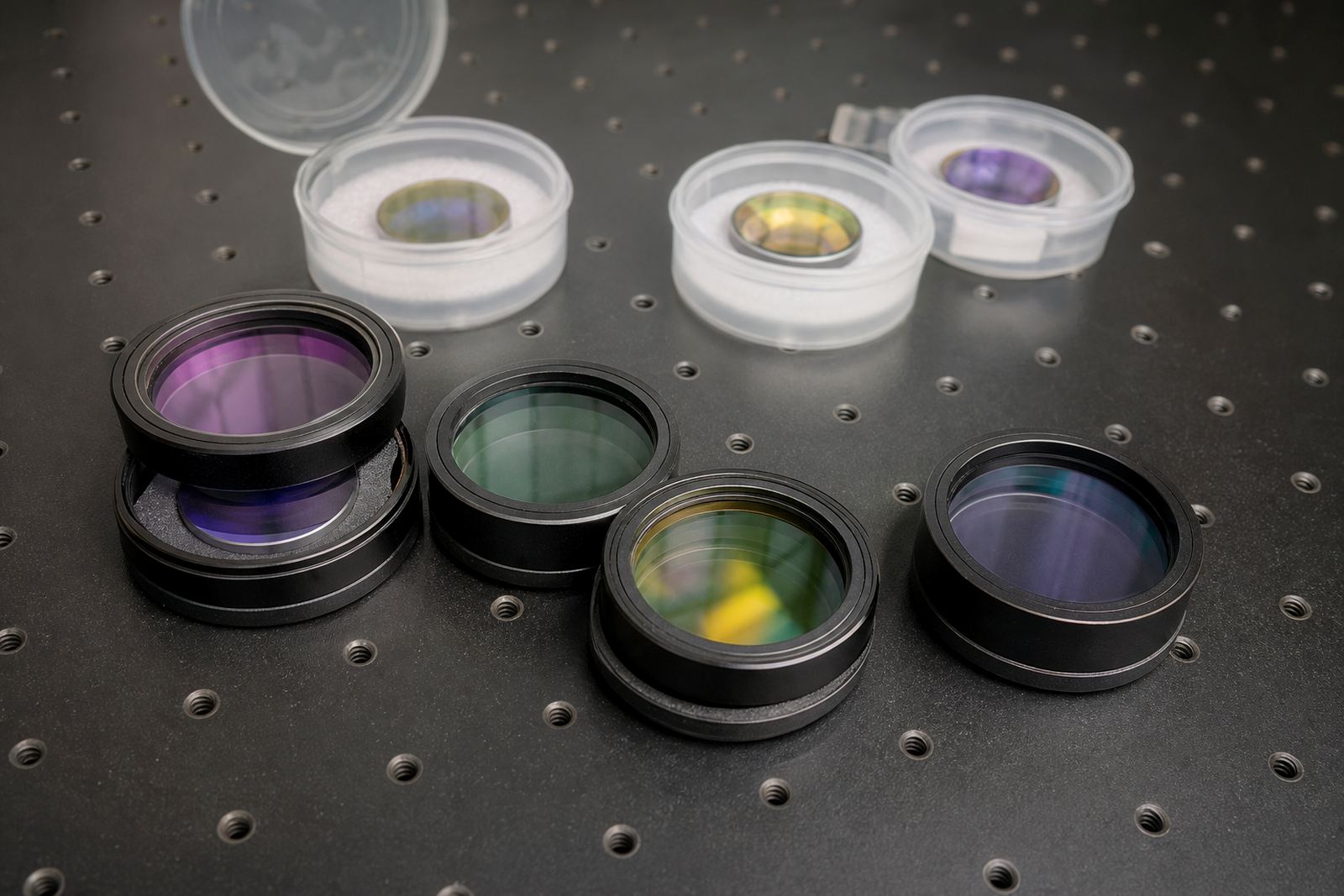
Focus lenses are not all the same outside diameter, thickness or coating build. The lens must match the cutting head model, the retaining hardware and the optical stack that the machine was set up for. A correct fit keeps the lens square in its seat and protects the beam path from tilt or uneven clamping.
When a lens is specified, the glass size and edge treatment matter just as much as the focal length. In a fibre head, the lens normally works with a protective window above it, so both parts need to match the head body and the expected beam diameter.
- Focal length: 100 mm
- Lens diameter and thickness: match to head specification
- Coating: suitable for fibre laser wavelengths
- Mounting: clean, square seating with correct retaining parts
- Compatibility: cutting head model and optical carrier arrangement
Where 100 mm focus lenses suit cutting work
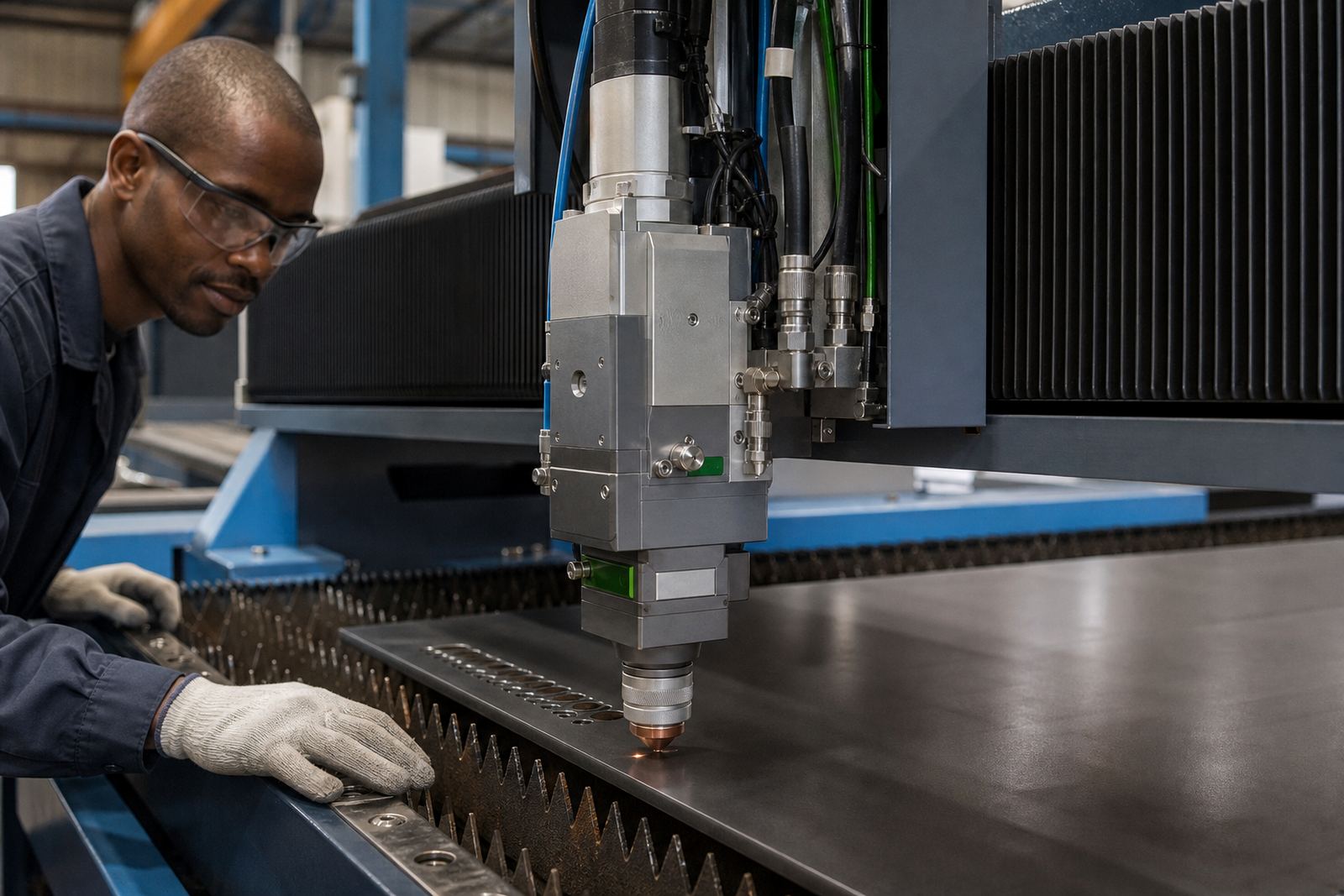
This focal length is widely used on general fabrication lines that cut day to day sheet material, part nests and mixed batch work. It suits shops that want a practical middle ground for edge quality, pierce behaviour and stable cutting over common gauges. For many local sheet-metal operations, that means less time chasing focus settings when the job mix changes through the week.
It is also a sensible choice where the machine runs a variety of materials and the cutting head needs a dependable all-round setup rather than a narrow specialist setup. On thinner sheet, the lens can still deliver a neat cut if nozzle condition, gas choice and focus position are set properly.
- General sheet-metal cutting
- We handle mixed-material work in mild steel, stainless steel and aluminium.
- Production work where stable focus is needed across varying thicknesses
- Jobs that rely on repeatable pierce and cut behaviour
Fitting, focus setting and head handling on real machines
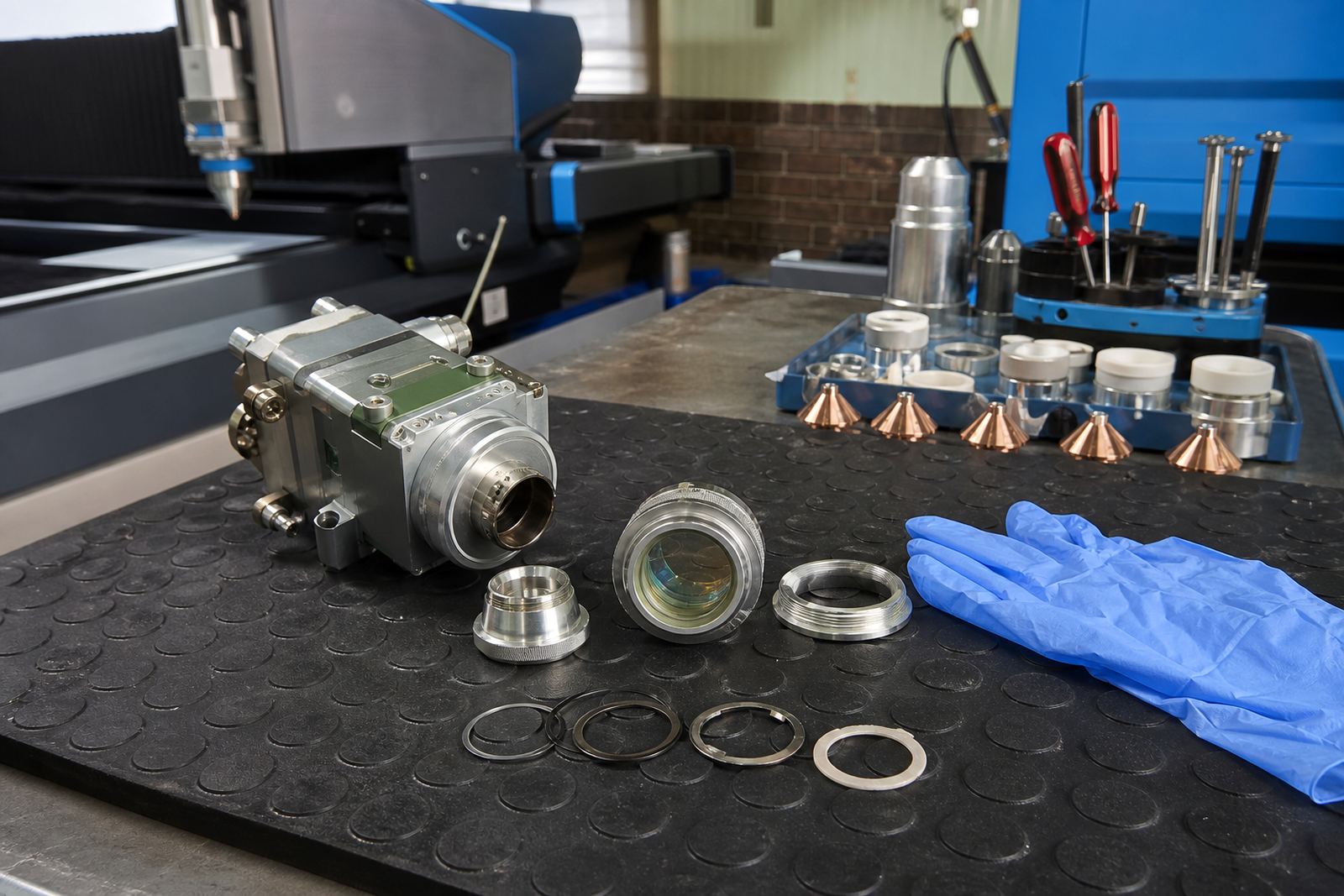
A 100 mm focus lens must be fitted with clean hands, clean tools and a clean optical path. Dust, smoke film and a small fingerprint can affect cut quality far more than many operators expect. When the lens is changed, the head should be checked for correct stack order, seal condition and the state of the ceramic ring before the machine returns to cutting.
Focus setting is part of the fitting job, not a separate afterthought. The cutting head needs the right stand-off, nozzle centring and capacitive height sensing so the beam lands where the machine expects it. If the head has taken a bump, a bench service or on-site alignment check is often needed to bring the focal position and beam path back into line.
- Check lens orientation and seating order
- Clean the optical path before fitting
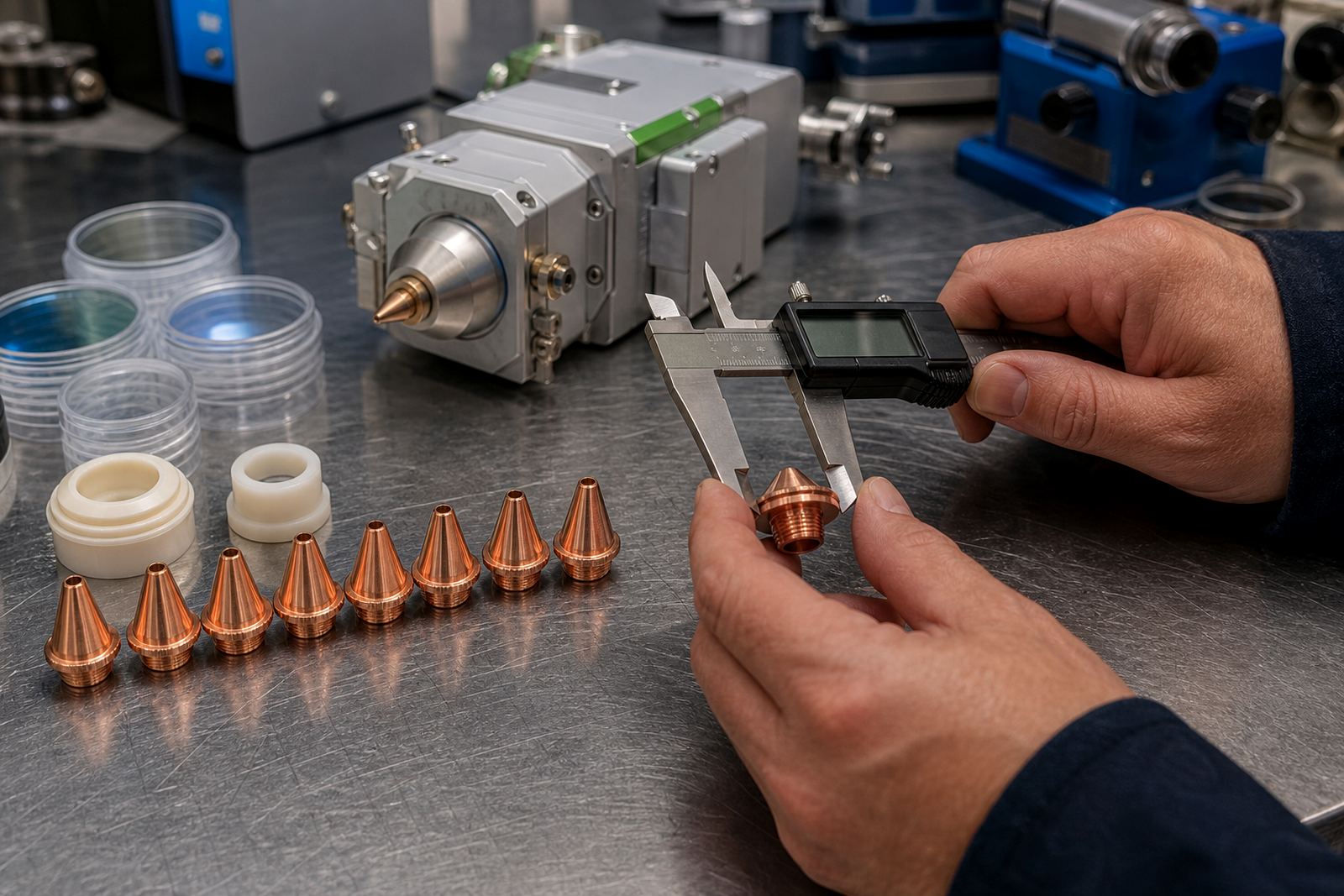
- Confirm nozzle centring after lens changes
- Check capacitive sensing and cutting height
- Inspect seals, ceramic ring and the protective window
Care that keeps the lens useful for longer
Lens care is mostly about handling discipline and keeping contamination out of the head. Airborne dust, fine metal smoke and coolant mist can settle on optics if the machine is not kept clean. In coastal workshops, humidity can add another layer of trouble because moisture encourages haze on stored optics and on parts left open during maintenance.
A clean lens should still be checked under good light before it goes into service. If there are marks, cloudy patches or edge damage, the safer move is replacement. Cleaning should be gentle and done with the right optical materials, not with workshop rags that leave lint behind.
- Store lenses in sealed, dry packaging
- Avoid finger contact on the coated face
- Use optical-grade wipes and approved cleaning fluid
- Keep the head cavity free of dust and metal fines
- Replace damaged or cloudy lenses rather than forcing service
Details to confirm when ordering for a fibre cutting head
Ordering the right 100 mm focus lens is mostly about matching the head and the optical stack exactly. A lens that looks close can still be wrong in diameter, coating, edge profile or thickness, which leads to fitting trouble and poor cut performance. The useful details are usually on the cutting head model plate, the existing lens, or the service record from the machine room.
For shops in Spartan, Kempton Park and across Johannesburg, Pretoria, Durban, Cape Town and Rustenburg, it is helpful to keep the head details and spare parts request together. That makes it easier to match the lens to the cutting head and to the service work if the head also needs nozzle centring, a ceramic ring change or a protective window replacement.
- Cutting head model
- Focal length: 100 mm
- Lens diameter and thickness
- Coating type for fibre laser use
- Beam path or carrier size where relevant
- Whether the head also needs bench service or alignment
Raytool support for lenses, heads and related parts
From our Spartan, Kempton Park team, we supply fibre laser cutting heads, nozzles, focus and collimator lenses, protective windows and ceramic rings for sheet-metal cutting machines. Our bench service work covers head servicing, lens cleaning, head seal rebuilds, capacitive sensor checks and spare head preparation, while on-site alignment is used when the cutting head needs setup at the machine.
The job is usually clearer when the lens order is tied to the rest of the head condition. A fresh lens helps only if the nozzle is centred, the protective window is clean and the focus setting is checked against the actual cutting result. That is why many shops treat the lens as part of the full head service rather than a loose spare on its own.
- Bench Head Service
- On-site Head Alignment
- Nozzle Centring
- Focus Setting Check
- Protective Window Replacement
- Lens Cleaning
Key facts
| Product | 100 mm focus lens for fibre laser cutting heads |
|---|---|
| Focal length | 100 mm |
| Application | General sheet-metal cutting |
| Compatible materials | Mild steel, stainless steel and aluminium |
| Related parts | Nozzle, protective window, ceramic ring |
| Service support | Bench fitting, alignment and focus checks |