Motorised focus control for mixed sheet-metal work
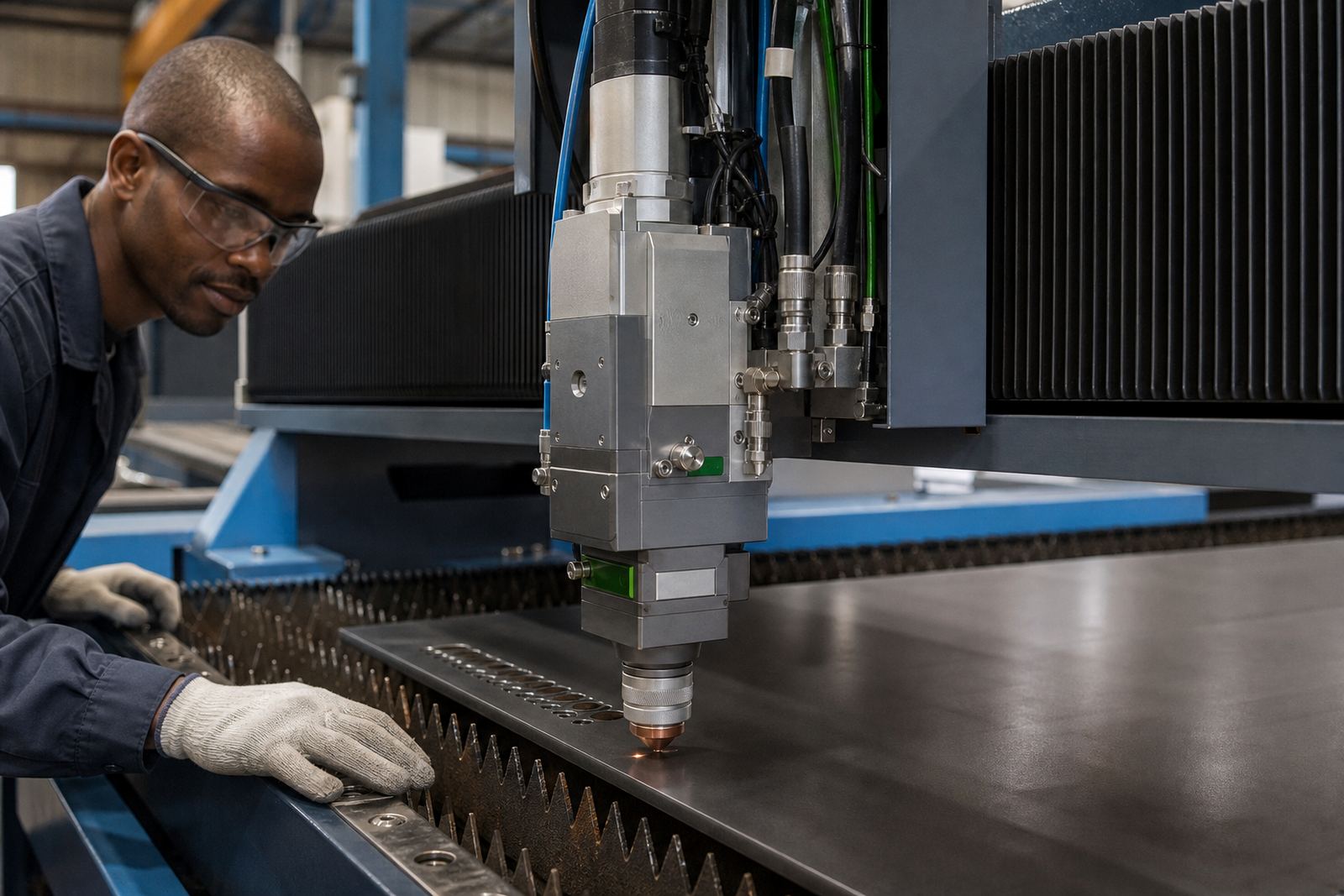
This cutting head is configured for motorised focus positioning, so the focal point can be moved to match the job sheet without manual guesswork at the machine. In practice that helps on mixed production where mild steel, stainless steel and aluminium call for different focus points, nozzle gaps and pierce behaviour.
The head body carries the optics, sensor path and nozzle section in one assembly. On a well-set system the beam stays centred, the focus move is repeatable and the cut face stays more consistent from one nest to the next. That matters on high-detail profiles, pierced parts with small web sections and jobs where edge finish affects later bending or welding.
- Motorised focus positioning for recipe-based cutting
- Suitable for standard production changes across thicknesses
- Works with common fibre laser sheet-metal cutting setups
- Supports repeatable centring, focus control and pierce stability
Head sizes, lens sets and nozzle options
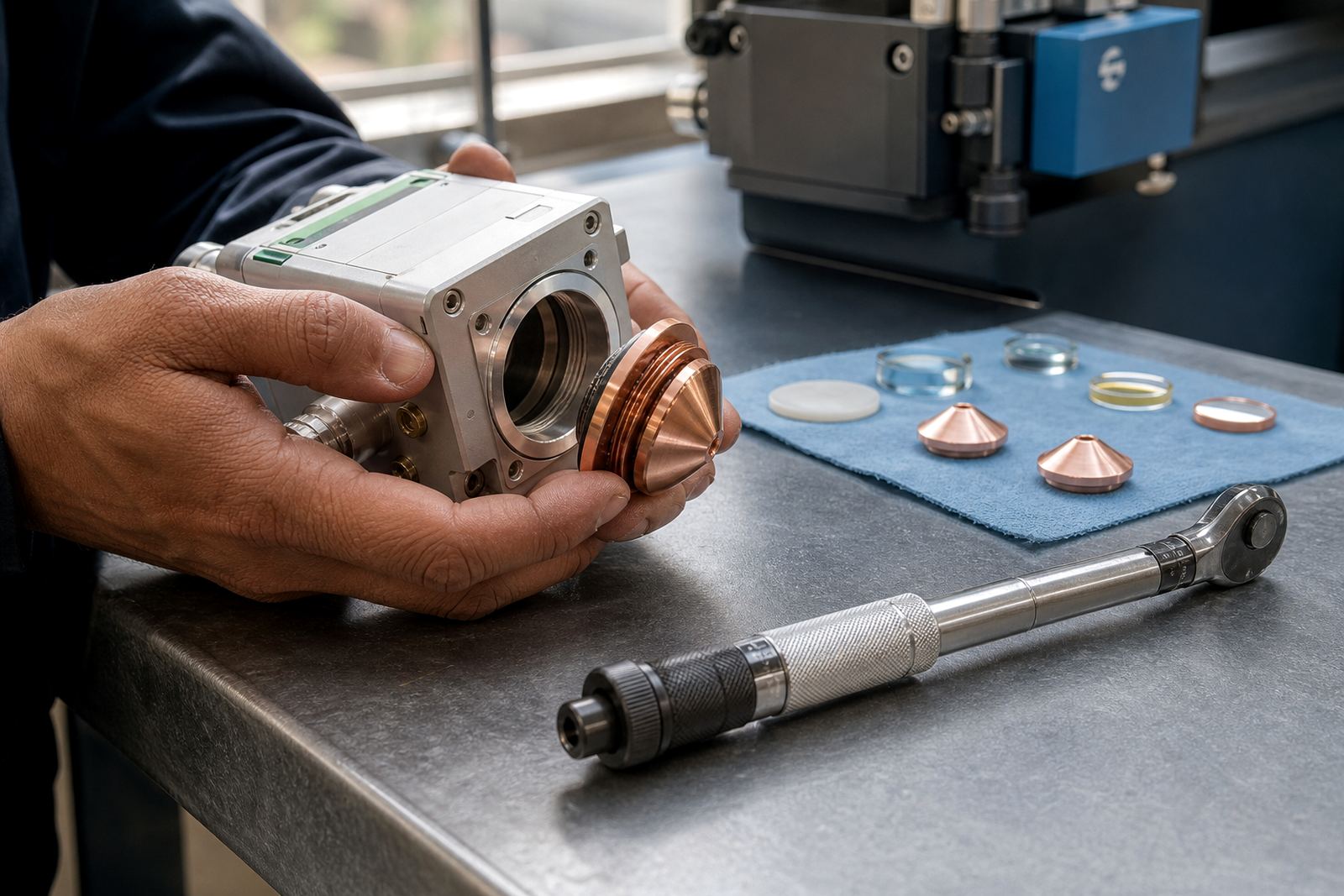
Auto focus heads are specified by mount style, beam path, lens diameter and the nozzle arrangement used at the cutting face. The optical section normally takes a matched collimator lens and focus lens pair, with protective windows fitted ahead of the main optics to guard against spatter and dust. Nozzle options include single layer and double layer types, depending on the cutting gas strategy and the material being run.
For thicker plate and heavier piercing duty, the head needs a solid ceramic ring, a clean gas path and correct stand-off. For finer work, the focus range and sensor stability matter more than brute pressure. The right build depends on the laser source power, the machine carriage layout and the cutting head interface on the gantry.
- Single layer nozzles for standard cutting and gas delivery
- Double layer nozzles for selected cutting conditions and tighter flow control
- Matched focus and collimator lenses for the beam diameter in use
- Protective windows in the correct optical grade and size
- Ceramic rings matched to the head body and sensor layout
Where this head fits in a busy shop
This type of head suits sheet-metal shops running varied part lists, short production batches and repeated setup changes. It is common on laser tables cutting cabinet parts, brackets, enclosures, machine guards and general fabrication items where one thickness does not stay in the queue for long. Shops in Johannesburg, Pretoria, Durban, Cape Town, Rustenburg and the East Rand choose this head style when the job needs precise focus changes and a dependable sensor signal.
It also suits sites that monitor cut edge quality closely. If the focus drifts, the nozzle is damaged or the protective window is dirty, the cut can start to show dross, rough striations or unstable piercing. On the floor that shows up as extra finishing work, more scrap and unnecessary stop-start adjustments.
- Short-run fabrication with frequent material changes
- Jobs that use stored process recipes
- Cutting where edge finish matters before folding or welding
- Shops that need bench checks and field alignment support
Fitting notes for the machine builder or maintenance crew
Fitting an auto focus head starts with the correct mechanical mount, beam centre and cable route. The motorised focus drive needs the right electrical interface, and the cutting gas path must be clean, dry and properly regulated. Alignment is more than bolting the head in place, because the lens stack, nozzle centring and capacitive height sensing all work together.
When the head is fitted or rebuilt, the technician should verify the focus travel, set the nozzle stand-off and check the sensor reading against the work surface. If the machine has taken a crash, the body, ceramic seat and internal optics all need a close inspection before production starts again. A small offset at the head can show up fast on thin sheet or high-power cutting.
- Check mechanical mount and beam centre before running parts
- Confirm electrical connection for motorised focus movement
- Verify capacitive height sensing against the sheet surface
- Test nozzle centring before full production cutting
Care that keeps the optics clear
Optical care on this head is mostly about keeping contamination out. Protective windows should be inspected for haze, spatter marks and edge chips, while lenses need careful handling with clean tools and lint-free wipes. A dirty window can distort the beam path and make the head run hotter than it should, which is hard on seals and fine lens coatings.
Nozzle cleaning and ceramic ring inspection matter just as much. If the nozzle orifice is worn, out of round or caked with residue, the gas flow can lose shape and the cut edge can suffer. The same goes for the sensor face and the internal seal area. Routine checks are best done with the lens stack removed, the cavity clean and the focus travel tested after reassembly.
- Inspect protective windows for haze, spatter and cracks
- Clean lenses with suitable optics-safe materials only
- Check nozzle wear and centring before long runs
- Replace ceramic rings when seating is loose or damaged
- Confirm the focus motor runs smoothly through its travel
What to confirm when ordering a replacement head
When ordering an auto focus head, the critical details are the machine interface, beam specification and the working range needed for your sheet thickness. The cutting head has to match the laser source power, flange pattern, focusing optics and sensor arrangement already on the machine. If those details are off, the head may physically fit but still perform poorly at the cutting face.
It helps to have the old head details, nozzle style, lens diameter and cable lengths on hand. If the job includes on-site fitting, the alignment target, gas type and the current cut issues should be noted as well. That gives the bench team and field technician a proper starting point for checks and replacement parts.
- Machine model and mounting pattern
- Laser source power and beam specification
- Focus travel range and recipe requirements
- Nozzle style, lens size and protective window size
- Current fault signs such as crash marks, poor centring or unstable focus
- Whether the head is needed for bench service or on-site alignment
Key facts
| Product type | Auto focus fibre laser cutting head |
|---|---|
| Focus control | Motorised focus positioning for recipe changes |
| Optics | Matched collimator lens and focus lens |
| Protection | Protective window and ceramic ring interface |
| Nozzle support | Single layer and double layer nozzle use |
| Service coverage | Bench service and on-site alignment across South Africa |