What a 125mm collimator lens does in the cutting head
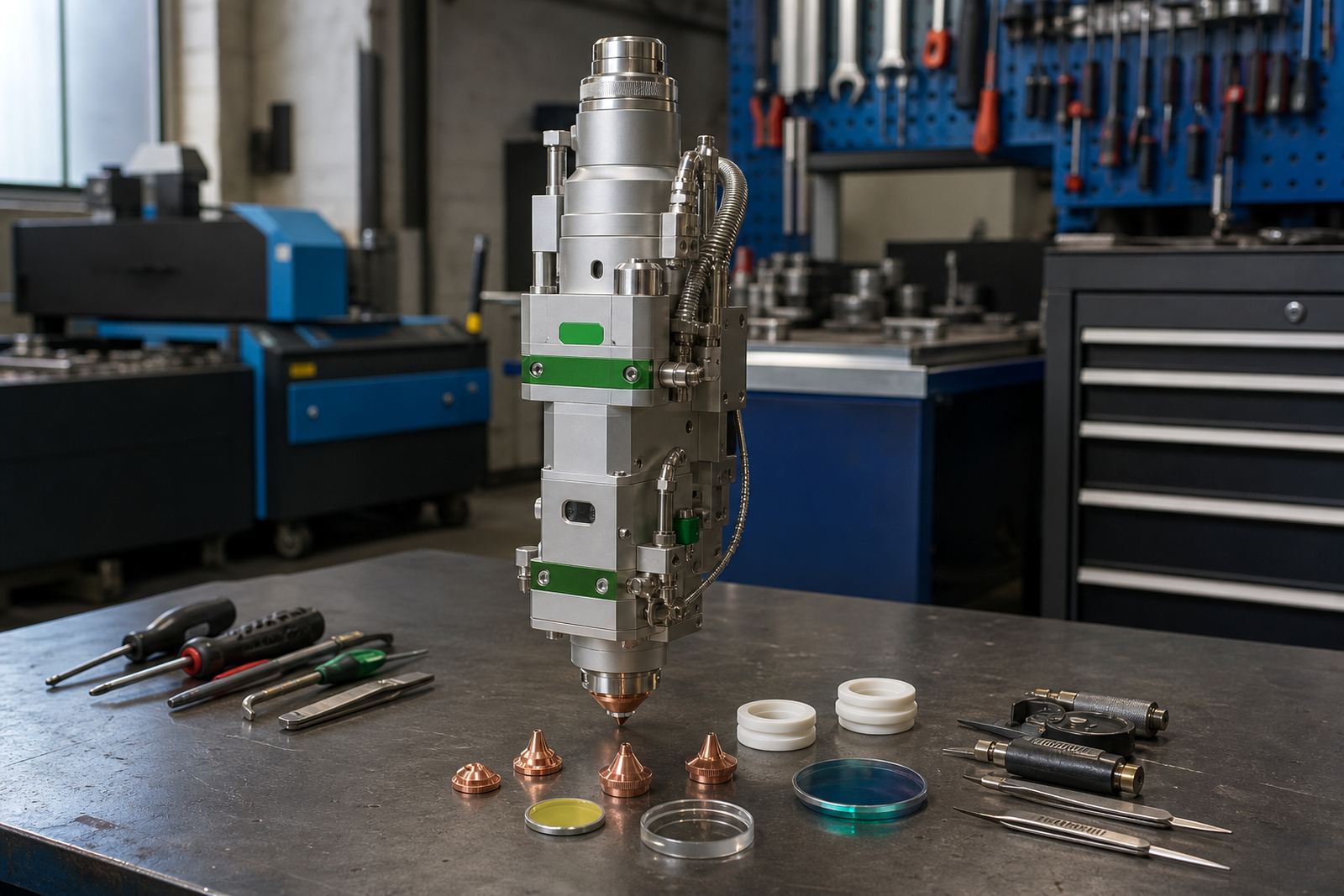
A collimator lens sits in the beam path before the focus lens, where it helps turn the diverging beam from the fibre into a more parallel column of light. In a laser cutting head, that spacing matters because the beam has to stay centred through the lenses, nozzle and ceramic ring before it reaches the workpiece.
With a 125 mm collimator arrangement, the lens is matched to the head design and the beam delivery geometry already set in the machine. On sheet-metal jobs, that supports steadier pierce behaviour and more predictable cut width, provided the rest of the head is clean, centred and set correctly.
- Used in fibre laser cutting heads for sheet metal cutting.
- Helps condition the beam before the focus lens.
- Works together with nozzle centring and focus setting.
- Suitability depends on the head design and optical layout.
Lens sizes, coatings and matching details
Even where the lens diameter is described as 125 mm, the full specification still needs the right focal arrangement, lens thickness and coating to suit the machine head. Some heads use a paired setup with a collimator lens and a separate focus lens, while others differ in optical spacing and mounting depth.
For spare parts selection, the exact lens build matters more than the name on the glass. A lens that is too close, too deep or made for the wrong beam path can shift the spot size and leave the operator chasing focus at the machine controls, which wastes material on thin and medium plate.
- Lens diameter: 125 mm format where specified by the head design.
- Beam path: single or paired optical arrangement as fitted in the head.
- Coating: matched to fibre laser wavelengths used for cutting.
- Mounting: correct seat depth, spacer arrangement and retaining method.
Where these lenses suit daily cutting work
These lenses are used in fibre laser cutting heads on shops that cut mild steel, stainless steel and aluminium sheet, from light gauge work to thicker plate where head stability is important. In busy sheet-metal rooms, the lens has to hold its optical shape through long cutting runs, regular nozzle changes and routine cleaning.
That makes the lens choice relevant to fabrication teams in Spartan, Kempton Park, Johannesburg, Pretoria, Durban, Cape Town and Rustenburg, where cutting tables often run mixed jobs in the same shift. Humidity near the coast in Durban or Cape Town can also make careful storage and handling more important, because moisture and dust on the optic face harm cut quality.
- Sheet-metal fabrication and jobbing shops.
- Mixed-material cutting where focus consistency matters.
- Heads used with capacitive height sensing and fine nozzle control.
- Plants that keep spare optics for faster bench changeovers.
Fitting work and the checks that go with it
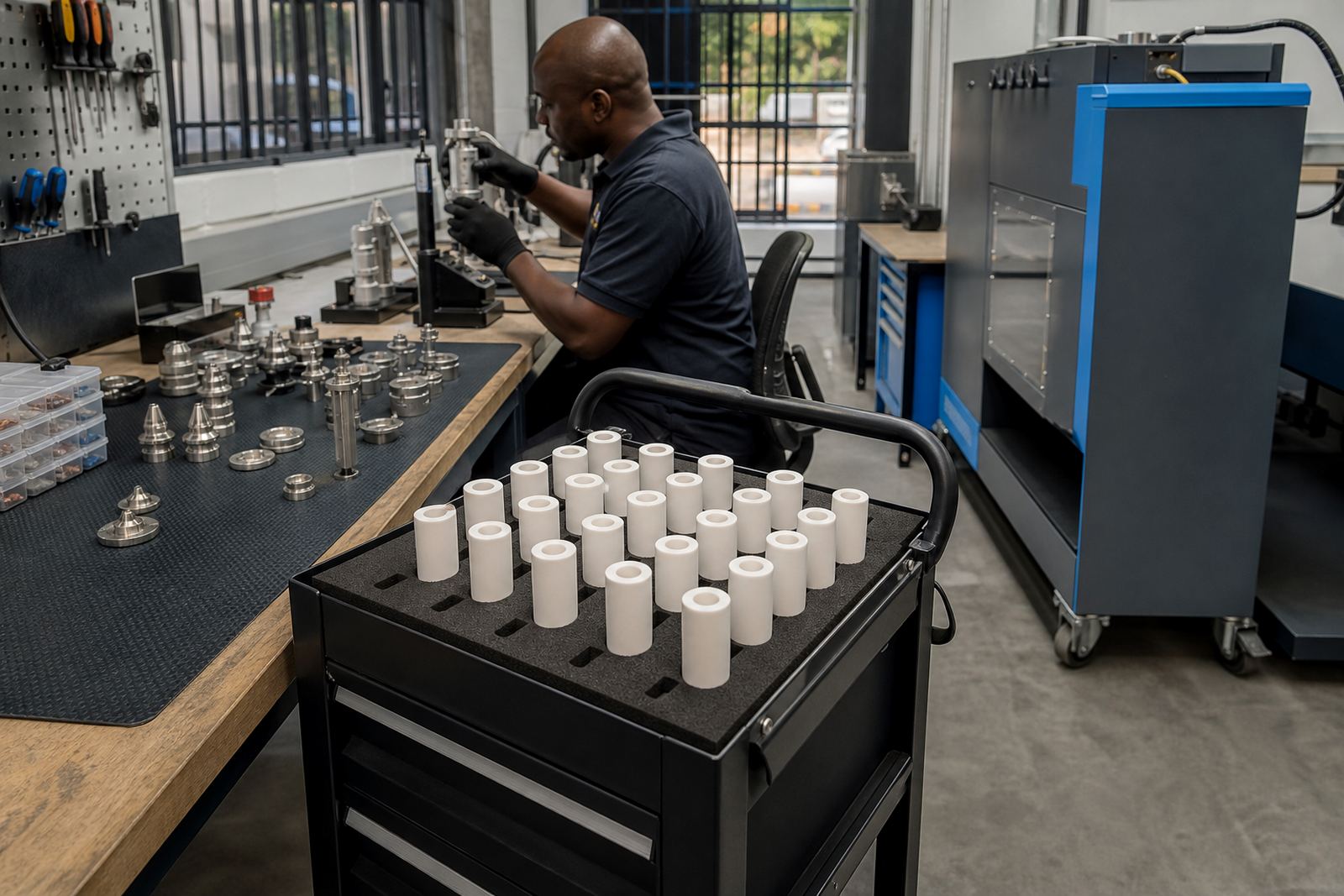
Fitting a collimator lens is not just a matter of swapping glass. The head needs a clean bench, proper handling, correct seating torque and a check on the surrounding parts before the machine goes back into service. If the ceramic ring is worn, or the nozzle is off-centre, the new lens can still show poor beam behaviour at the cut.
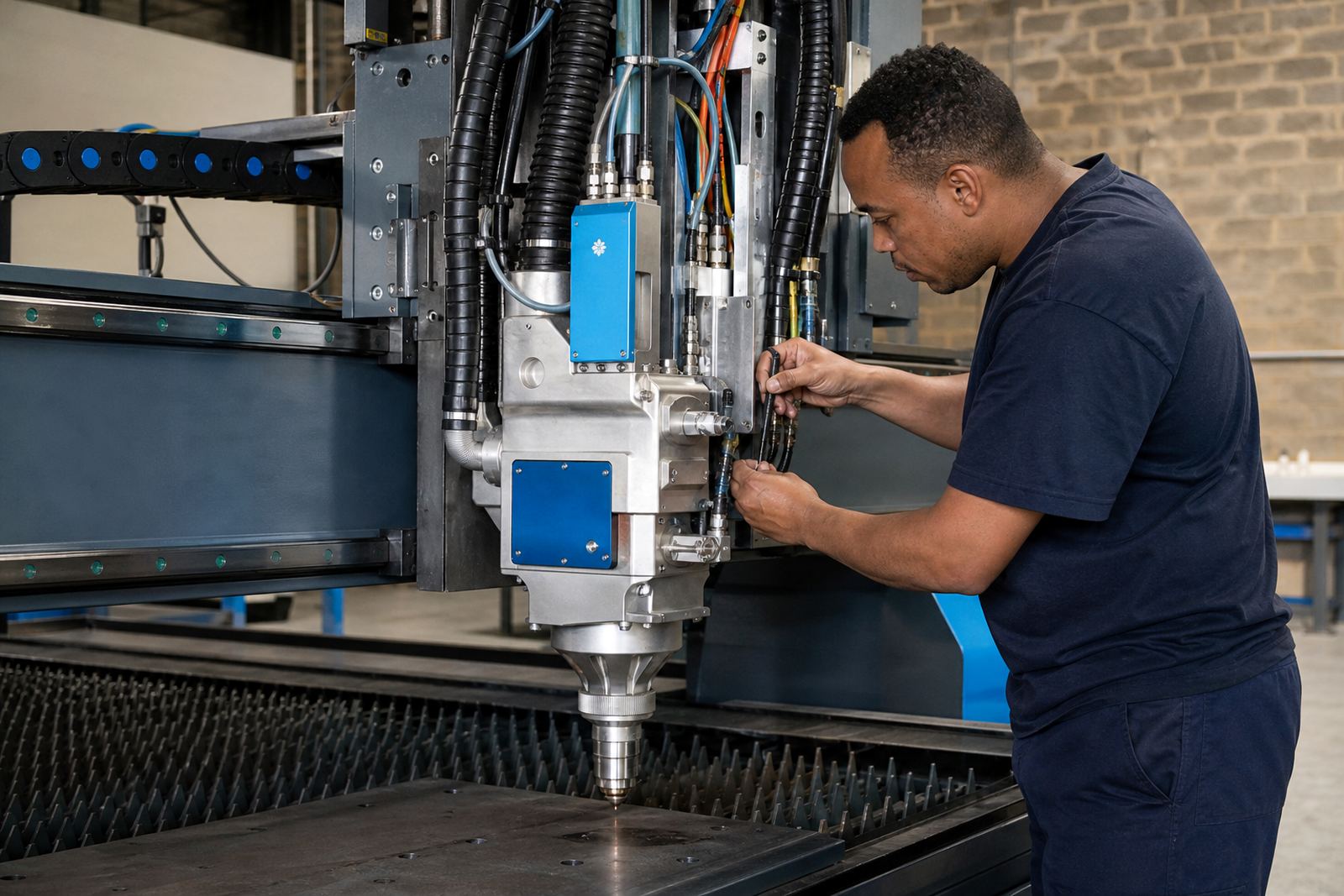
On site, head alignment work should include the optical path, the nozzle face and the sensor setting where the head uses capacitive height sensing. We also check for damage from crash events, dust ingress and seal wear, because each of those can spoil the benefit of a fresh lens.
- Bench fitting with correct lens seating and cleanliness.
- Nozzle centring after any optical or crash-related work.
- Focus setting check after reassembly.
- Sensor and gas path inspection where the head design uses them.
Keeping the lens clean and the beam path steady
Good lens care starts with clean handling and ends with a full optical check before the head goes back to cutting. A light film of dust, oil mist or spatter residue can scatter the beam and leave a rough edge, even when the machine settings look right on screen.
Operators should keep the lens covered when it is out of the head, avoid touching the coated surface and use cleaning materials suited to laser optics. If the machine works in a dusty fabrication bay or near grinding stations, more frequent inspection makes sense, because fine particles can move into the head and settle on the protective window or the collimator face.
- Store the optic in a clean, dry container.
- Handle by the edge only and keep the coated face clear.
- Inspect after nozzle crashes or rough pierce cycles.
- Replace related wear parts when cleaning no longer restores clarity.
What to confirm before ordering the lens
The safest order is the one matched to the exact cutting head, not only to the machine model. Two heads can look similar from the outside and still use different lens spacing, retaining parts or beam heights. If those details are off, the lens may fit physically but still fail to cut well.
When sending a request through our contact form, include the head details and the current optical layout so the right part can be matched. A clear parts check saves time on the bench and avoids fitting a collimator lens that does not match the beam delivery arrangement already in place.
- Head model and the machine it is fitted to.
- Lens diameter, focal arrangement and coating requirement.
- Whether the setup uses a paired collimator and focus lens.
- Condition of the ceramic ring, nozzle and protective window.
- Any signs of crash damage, fogging or beam misalignment.
Key facts
| Product | 125mm collimator lens for fibre laser cutting heads |
|---|---|
| Use | Beam conditioning in sheet-metal laser cutting heads |
| Diameter | 125 mm |
| Optical fit | Matched to the head design and beam delivery arrangement |
| Related checks | Nozzle centring, focus setting, ceramic ring, protective window |
| Service context | Bench servicing and on-site head alignment across South Africa |