Where a 100 mm collimator lens fits in the head
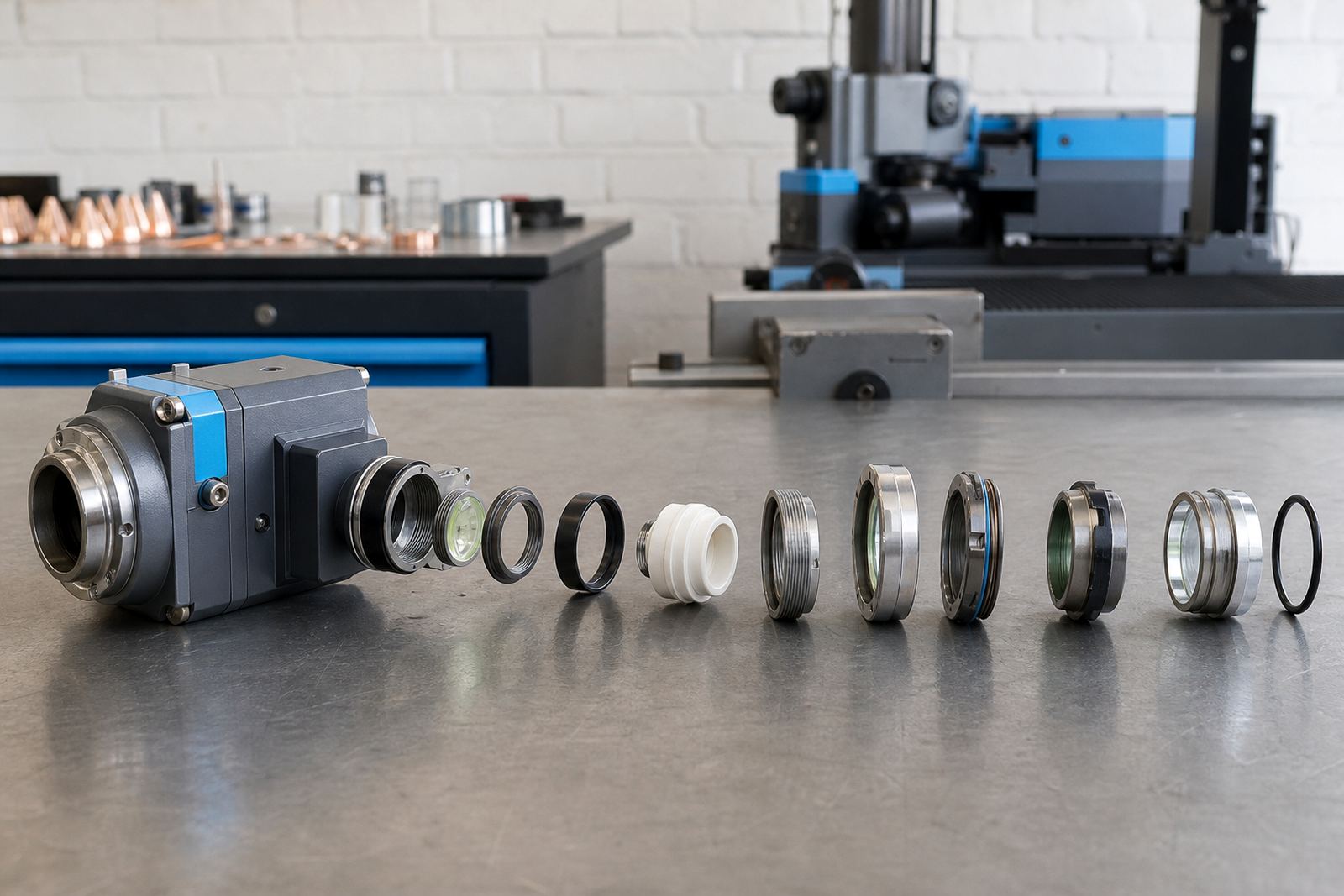
A collimator lens takes the diverging beam from the fibre delivery path and turns it into a more controlled, parallel beam for the rest of the optical stack. In practical shop terms, that means the lens sits upstream of the focus lens, protective window and nozzle assembly, and it has to match the head body and optical spacing exactly.
100 mm collimator lenses are used on selected head geometries where the optical design calls for a 100 mm focal length at the collimator stage. That figure is not a loose guide. It affects beam diameter, spot behaviour and how the focus range behaves when the machine runs different plate thicknesses. On sheet-metal lines, a poor match shows up as rough edges, unstable piercing or a cut that needs more correction than it should.
- Optical element used before the focus lens
- Matched to selected fibre laser head geometries
- Supports controlled beam shaping for cutting heads
- Used with the correct protective window and ceramic ring set
Optical options and matching details
These lenses are supplied for heads that call for a 100 mm collimator in the optical stack. The important part is not only the diameter of the glass, but the full assembly match: lens seat, housing dimensions, coating type and the beam path inside the head. A lens that looks right on the bench can still be wrong for the head if the optical stack requirement is off by a small amount.
When a shop orders a replacement, we look at the head type, the lens diameter, the mounting format and the machine duties. A cutting cell working through mild steel, stainless steel and aluminium in Durban or Gauteng may need a different setup from a lighter-duty sheet-metal line in Rustenburg. The lens choice has to suit the beam quality and the power class the head was built for, otherwise the cutting window becomes harder to hold.
- 100 mm focal length collimator lens
- Matched to the specified head body and lens housing
- Coating and aperture must suit the beam path
- Selected for the machine power class and cutting duty
Cutting jobs that call for this lens size
A 100 mm collimator lens is often used where the machine needs a steadier optical setup for mixed sheet work, fine kerf control and repeated cutting through varying thicknesses. It suits shop floors running steady production in Johannesburg, Pretoria, Durban, Cape Town and the East Rand, where the head may move between sheets, shifts and different operators.
It can also suit jobs that depend on a tight focus setting and a clean nozzle centre line, because the optical path has to stay stable while the head works near the sheet. When the head is set up correctly, the lens helps keep the beam shape consistent and gives the operator less drift to chase in the cut programme. That matters on stainless jobs, galvanised sheet and other flat stock where the edge finish is watched closely.
- General sheet-metal cutting lines
- Mixed-material production where focus stability matters
- Jobs that depend on accurate nozzle centring
- Heads that run regular focus setting checks
Fitting, bench service and alignment work
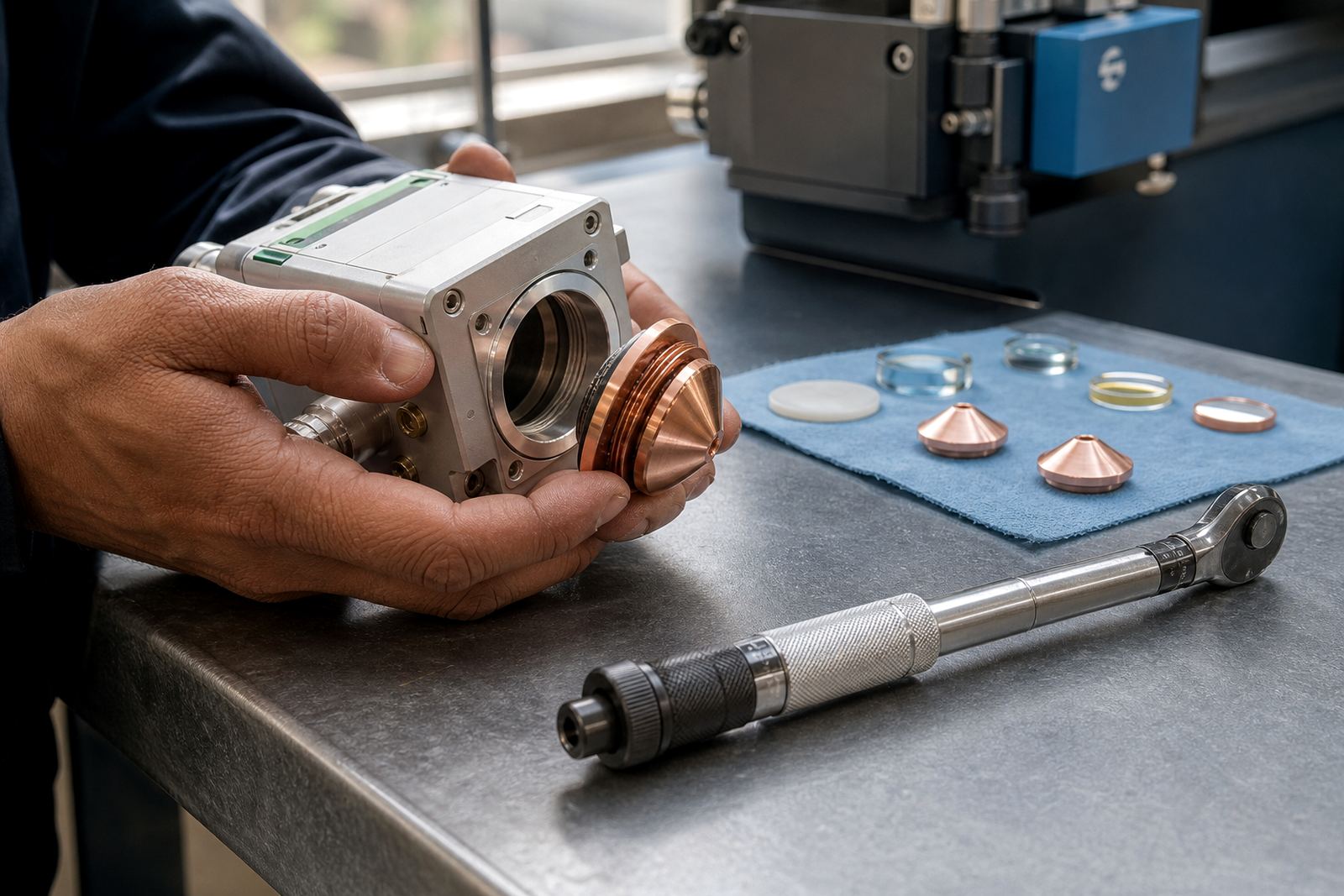
Collimator lens fitting is best handled as part of the full head service, not as a loose parts swap. The lens has to be installed cleanly, seated without strain and checked against the rest of the optical stack. If the head has seen a crash, the lens seat, ceramic ring, nozzle mount and protective window path all need inspection before the unit goes back into service.
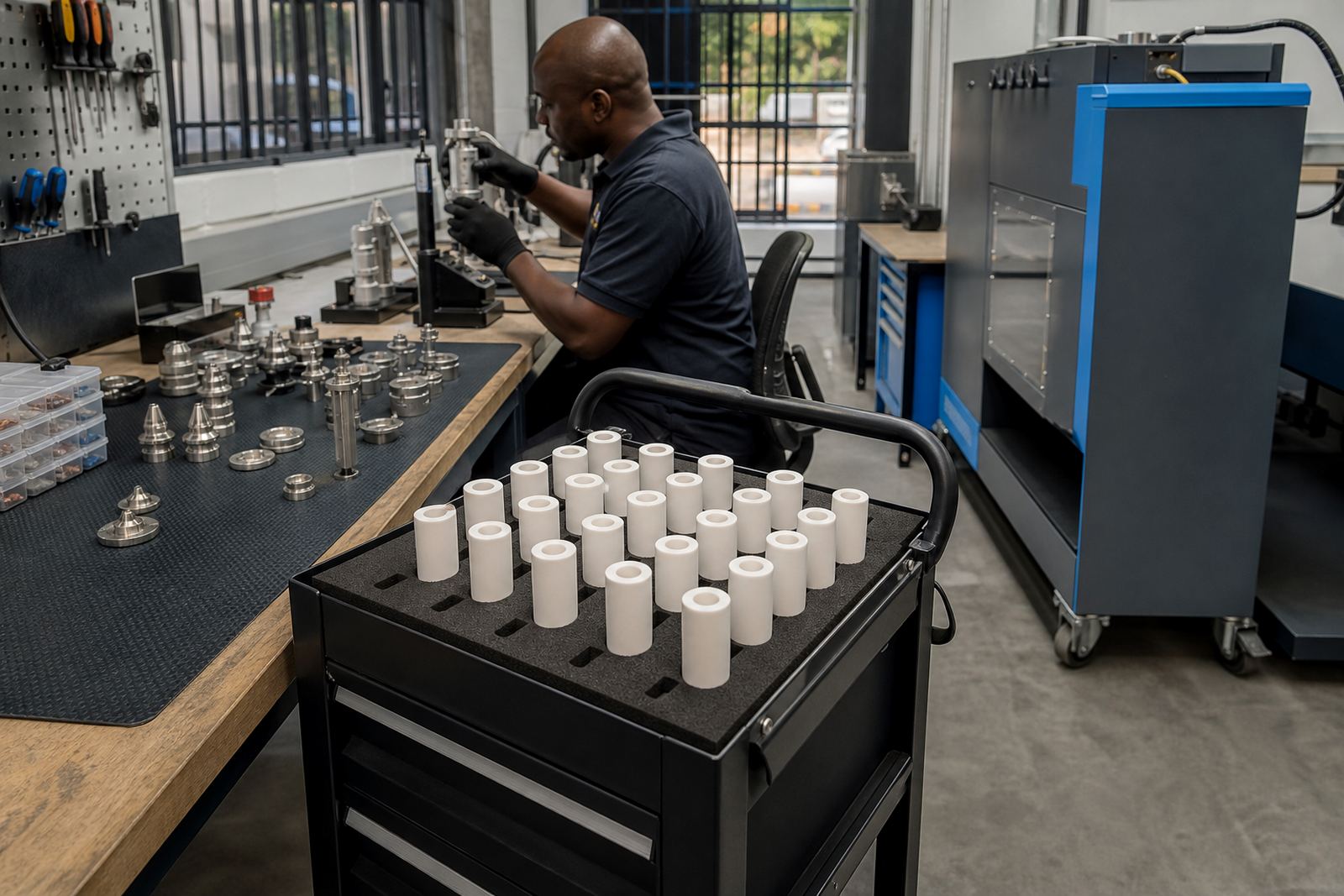
Our bench service includes head strip-down, lens replacement, cleaning, sealing checks and optical alignment. On site, the work is usually about getting the head back into a steady cutting position, checking capacitive height sensing and making sure the focus setting and nozzle position are working together. If the head body has taken a knock, the alignment can shift enough to affect pierce quality and edge finish even when the lens itself is sound.
- Bench fitting for selected heads and optical housings
- On-site alignment for heads already mounted on the machine
- Lens seat inspection after crash damage or heat stress
- Focus setting check after replacement or cleaning
We show how to care for, clean and handle collimator lenses safely on the shop floor
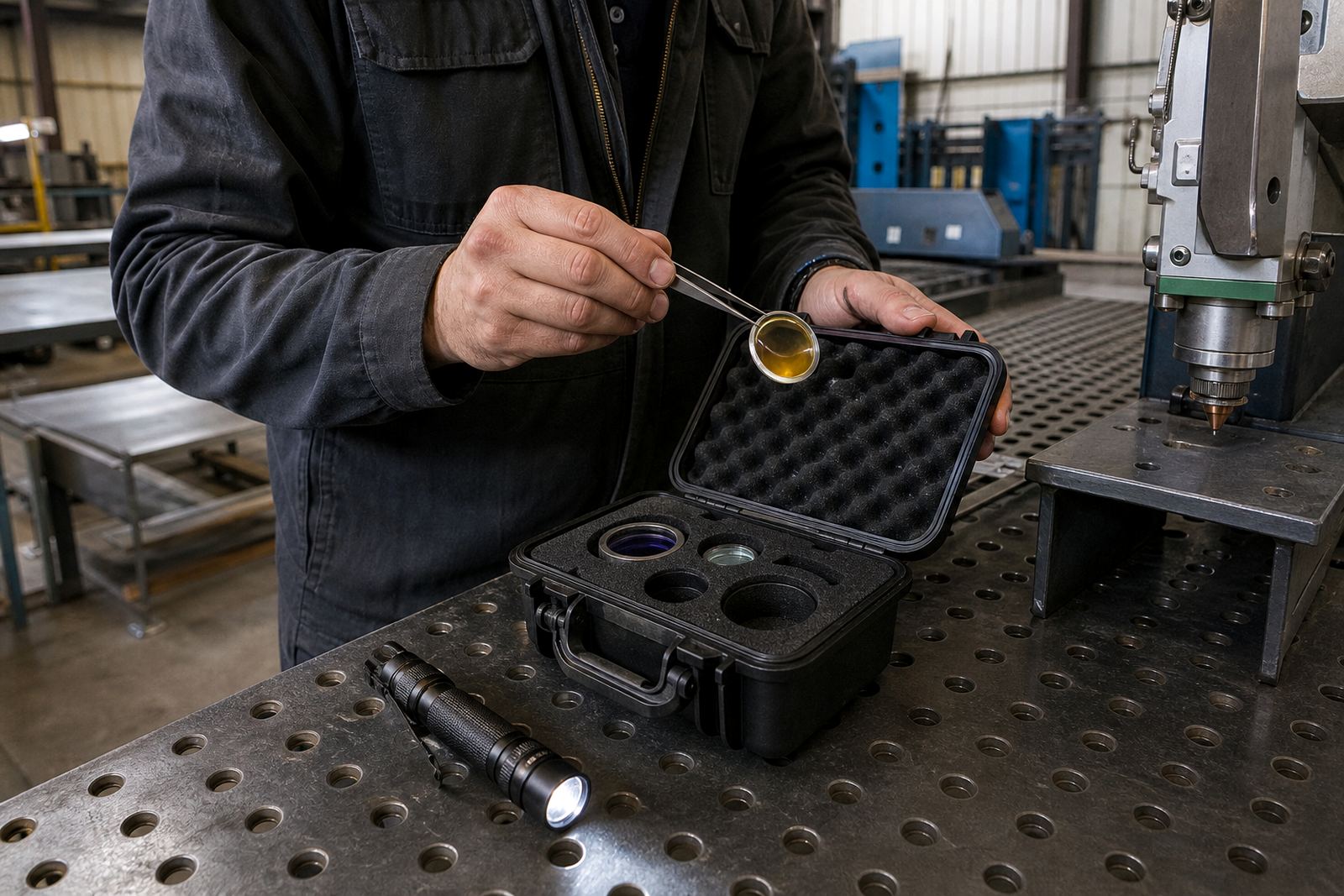
Collimator lenses need careful handling because a small mark in the coating can show up in the cut. Keep the work area free of fibre dust, metal fines and fingerprints, and handle the glass with lint-free gloves or clean tools made for optical parts. A hurried wipe with the wrong cloth often leaves a smear that burns into the next cutting cycle.
Cleaning should be light and controlled. Use approved optical cleaning fluid, clean swabs and a dry, dust-free method that suits the coating on the lens. Check the protective window first if the cut starts to drift, because contamination there can hide the real state of the collimator lens. In humid coastal shops, careful storage matters too, as moisture and dust can mark the optics faster than people expect.
- Store in a sealed, clean container when not fitted
- Avoid touching coated optical surfaces by hand
- Inspect for haze, specks and edge chips before fitting
- When lenses are damaged, replace them instead of trying to polish out the marks.
What to check before ordering
For the right 100 mm collimator lens, we need the head geometry, the lens diameter, the mounting format and the optical stack requirement. The head model matters, but so does the internal seat and the way the lens works with the focus lens, nozzle and protective window. A part that is close is not enough on a fibre laser head, because the beam path is unforgiving.
It helps to confirm whether the machine is in a bench service cycle, a crash recovery job or a normal spare-parts replacement. If the head has shown unstable cutting, mention the material type, thickness and the nozzle style in use, because those details point to alignment or contamination issues around the lens. The team in Spartan, Kempton Park can work from clear part details and the machine information that belongs to your cutting line.
- Head model and lens housing dimensions
- 100 mm optical requirement and lens diameter
- Machine power class and cutting application
- Condition of the protective window, nozzle and ceramic ring
- If the work is bench service or on-site alignment
Key facts
| Product | 100 mm collimator lens |
|---|---|
| Lens size | 100 mm focal length |
| Use | Selected fibre laser cutting heads |
| Fitment | Bench fitting or on-site alignment |
| Related parts | Focus lens, protective window, ceramic ring, nozzle |
| Service area | Spartan, Kempton Park and major South African metro areas |