A low-profile ring for tight head geometry
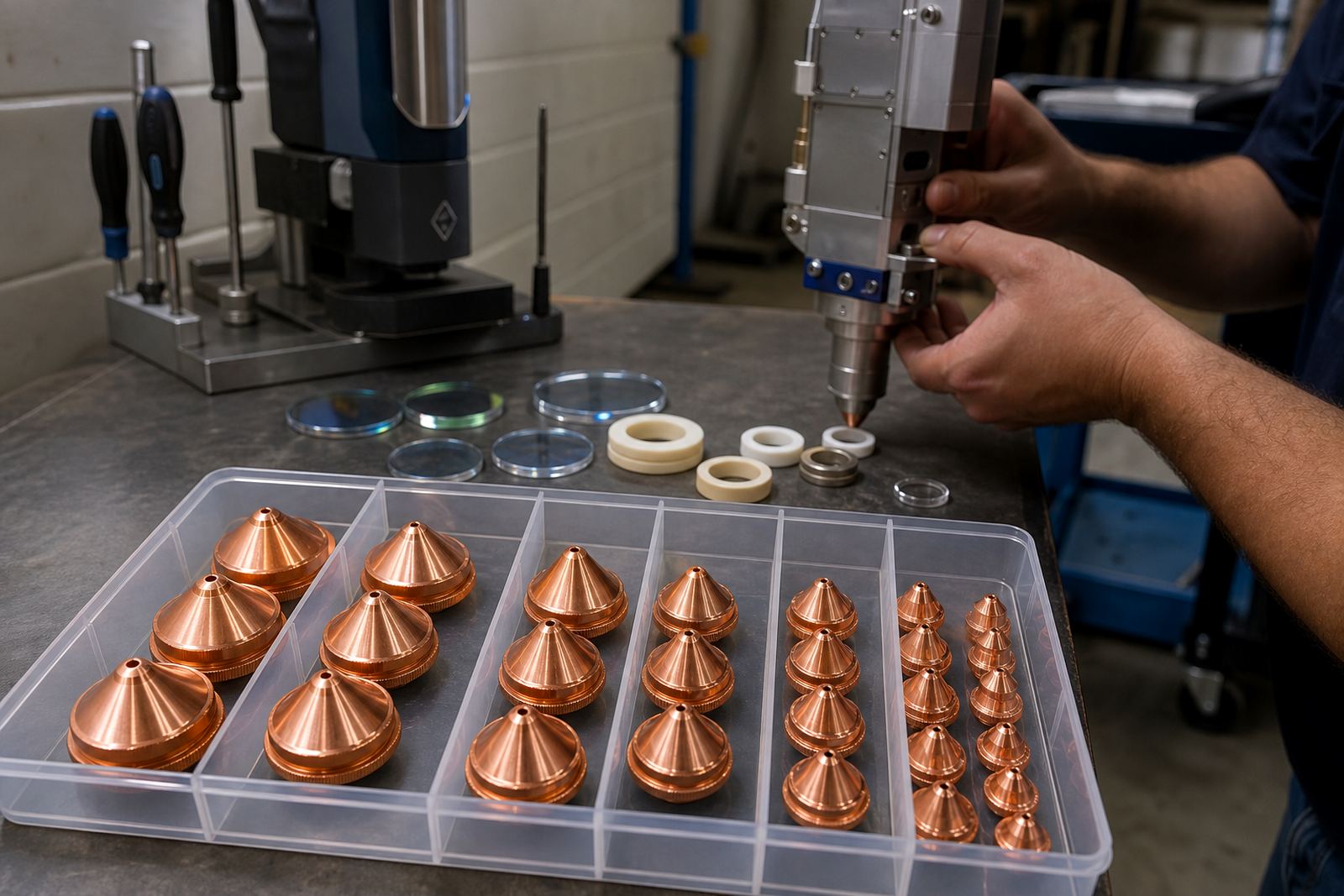
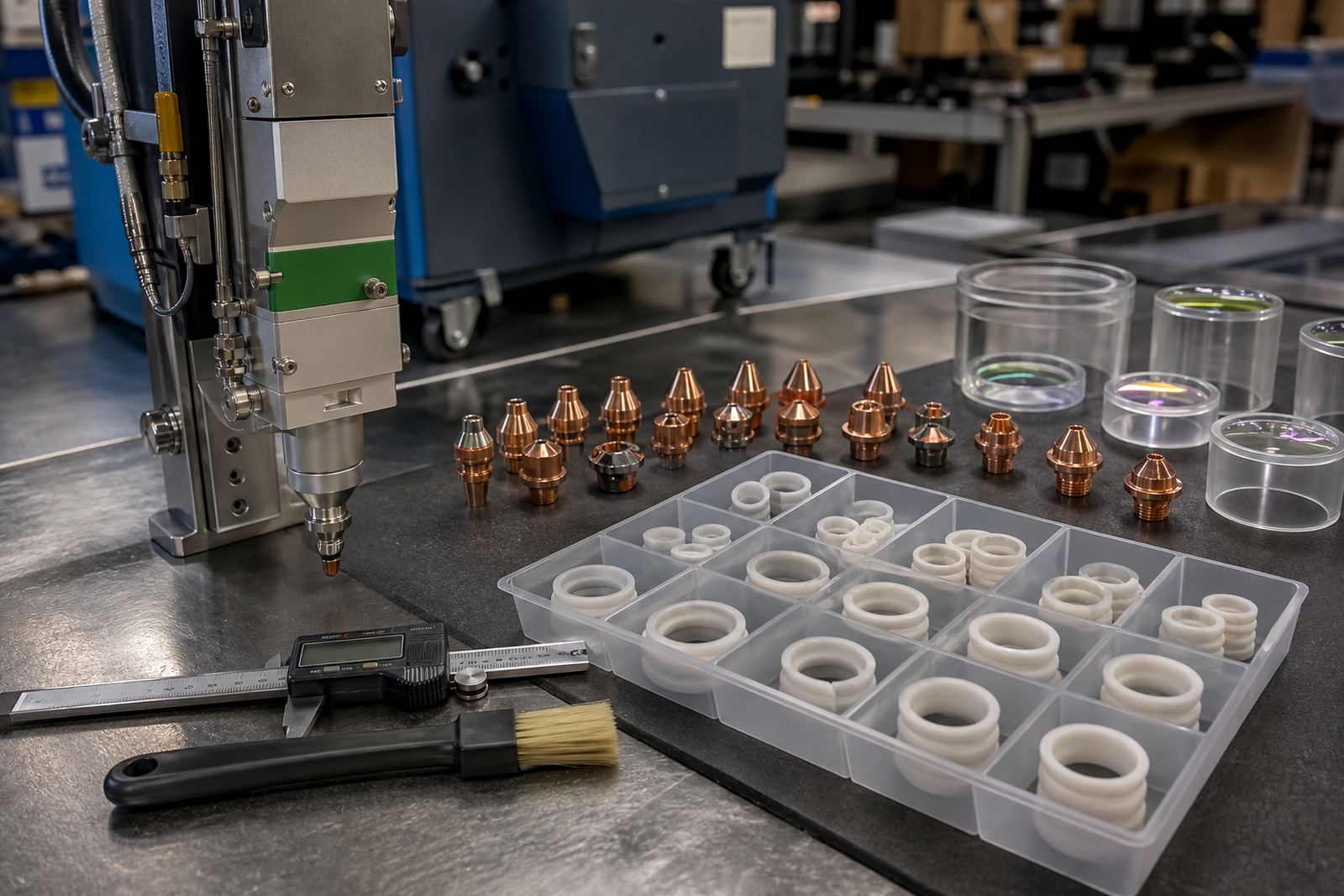
A short ceramic ring is the insulating and locating part that sits in the lower section of a fibre laser cutting head, around the nozzle assembly. In a shorter format it leaves less vertical stack in the head body, which matters when the design, nozzle reach or sensor position leaves little room to spare.
On many sheet-metal machines the ring helps keep the nozzle assembly central, stable and electrically isolated from the conductive parts around it. That matters for the capacitive height sensing path, for a steady stand-off over mild steel, stainless steel and aluminium, and for keeping the consumable stack neat after cleaning or a crash inspection.
- Short stack height for compact head layouts
- Insulating ceramic body for laser head assembly use
- Works with single layer and double layer nozzle setups
- Supports stable nozzle centring and sensing consistency
Where the shorter format suits best
These rings suit cutting heads where the lower hardware sits close to the workpiece and the fitting space is limited. They are commonly used in spare head builds, repaired heads and machines where the nozzle, sensor and protective window stack has to stay within a particular head depth.
That makes them useful for shops running sheet-metal cutting on thin gauge material, general fabrication and mixed production where nozzle changes are frequent and head alignment has to stay tidy. In Spartan and across the East Rand we often see them specified where a standard-height ring would leave the assembly sitting too tall for the head body or sensor path.
- Compact cutting head designs
- Repaired heads with reduced internal clearance
- Heads that rely on close nozzle and sensor spacing
- Machines that use regular nozzle swaps during production
Sizes, fit and the details that matter
Short ceramic rings are not chosen by description alone. The diameter, seat profile, thread form and overall height all need to match the head body and nozzle holder, otherwise the ceramic can bind, sit crooked or leave the nozzle out of centre. A small mismatch can affect cut quality, pierce consistency and the shape of the gas stream at the nozzle tip.
For ordering and fitting, the useful details are the head model type, the ring height, the outside diameter, the bore or centre opening and the seating style. If the head uses a matching nozzle body or collimator assembly, those dimensions should be checked against the ring before the part is fitted. Where there has been crash damage, the seat and nearby insulation should be checked too.
- Height of the ring in millimetres
- Outside diameter and internal bore
- Seat style and mounting profile
- Head model, nozzle holder type and sensor arrangement
Fitting notes from the bench and on site
A ceramic ring should sit cleanly in the lower head section, with no grit, metal dust or chipped edges under the seating face. When the ring is installed the nozzle must centre properly, the capacitive sensing path should remain consistent and the protective window area should be kept free of residue from cutting dust or oil mist.
On the bench we check the head for wear, damaged threads, bent seating faces and any marks left by a previous crash. At site, that part is usually fitted after the head has been aligned and the nozzle path checked, because a ring can only work properly when the lower head is square and the focus position sits where it should.
- Clean the seat before installation
- Check nozzle centring after fitting
- Inspect for chipped ceramic after a crash
- Keep the lower head free of fine metal dust
Care, cleaning and wear checks
Ceramic is hard but it is still brittle, so the ring should be handled with care during nozzle changes and head cleaning. A light tap can chip the edge, and a hairline crack can be enough to throw the nozzle off centre or upset the sensing signal on the next job.
Routine care is straightforward. Keep the ring clean, avoid forcing threads, and inspect the seating face whenever the nozzle, protective window or focus setting is being checked. If the machine has repeated misses at the edge of the cut, unstable height sensing or odd marks on the nozzle tip, the ring is one of the first parts worth looking at.
- Wipe off dust and slag residue during service
- Replace if cracked, chipped or loose in the seat
- Check it whenever nozzles are changed
- Watch for heat marks after repeated pierces
What to confirm before sending an order
Short ceramic rings are small parts, but the wrong one can stop a head from seating properly. The safest order details are exact, especially when the machine has been modified, a spare head is being prepared or the original ring is no longer readable on the bench.
When you send the details through our contact form, include the head type, ring height, diameter, seat style, and machine model if known. If the request is tied to a nozzle centring issue, focus setting check or protective window replacement, mention that too so the part can be matched to the rest of the lower head layout.
- Head type and machine model
- Ring height in mm and seat diameter
- Single layer or double layer nozzle setup
- Any crash marks, thread wear or sensing issues
Key facts
| Product type | Short ceramic ring for fibre laser cutting heads |
|---|---|
| Use | Insulating and locating part in the lower nozzle area |
| Height range | Short stack variants, matched to head layout |
| Common fitment | Compact heads, spare heads, repaired heads |
| Material | Technical ceramic |
| Order details | Height, diameter, seat style, head type and nozzle setup |