Pretoria shops we support in the cutting line
Pretoria production floors handle mild steel, stainless steel and aluminium in daily batches, often with a mix of structural work, cabinet parts and general jobbing. The cutting head sees all of it first, so nozzle condition, lens cleanliness and the height sensing path need steady attention if the cut edge is to stay usable and predictable.
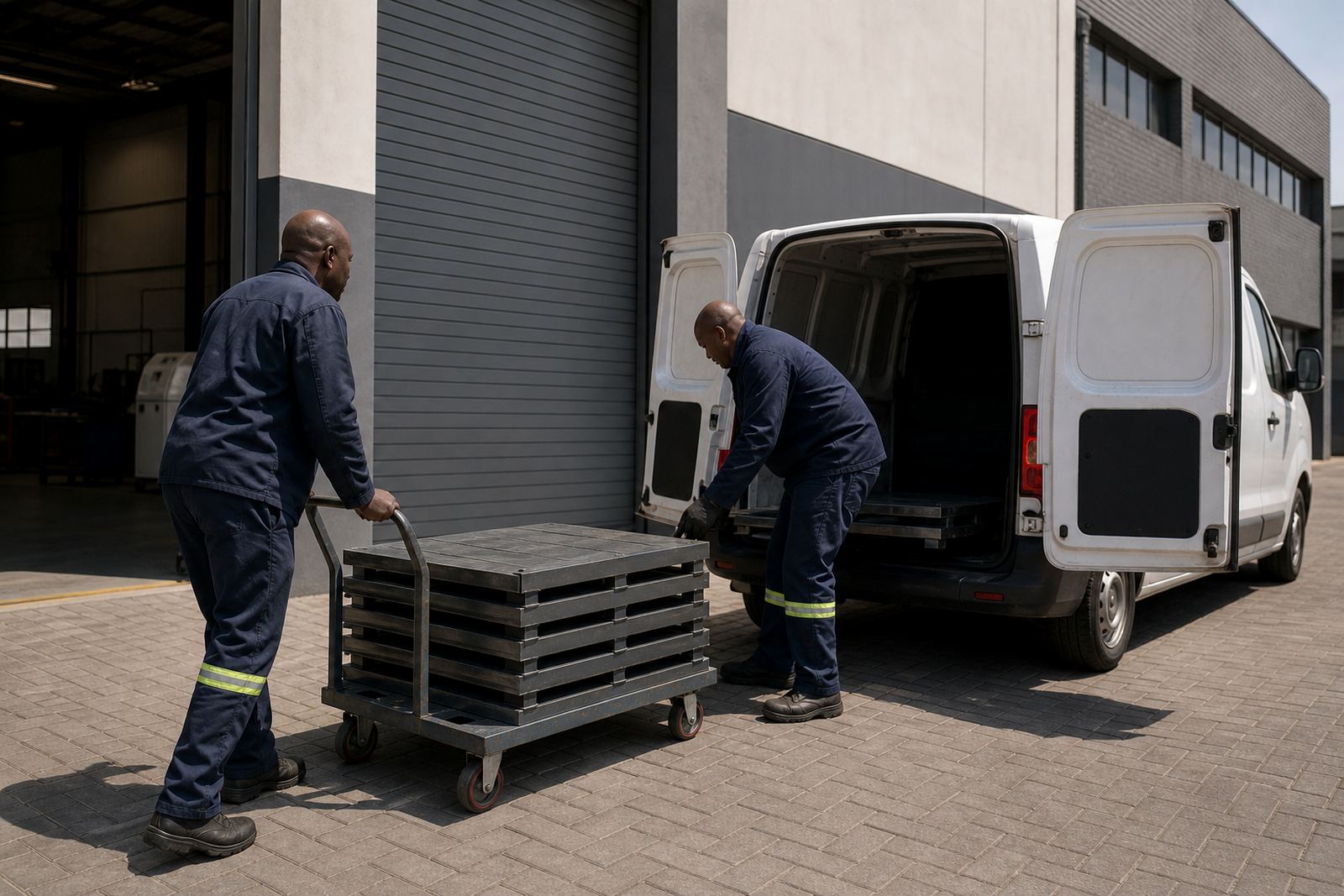
We work with sheet-metal shops that run flat out on the plant floor, plus smaller jobbing teams that need a practical parts and service point without dragging a machine across town. Pretoria is close enough for planned site visits from Spartan, Kempton Park, and that matters when the machine is tied to live orders and cannot sit idle for long.
The local mix includes light fabrication in industrial areas, subcontract cutting for bigger OEM work, and workshop-based service centres that want a straight fix rather than a long explanation. Dust, handling marks and heat tint are common in these spaces, and the head internals often show it before the operator does.
What we cover on the head and consumable side
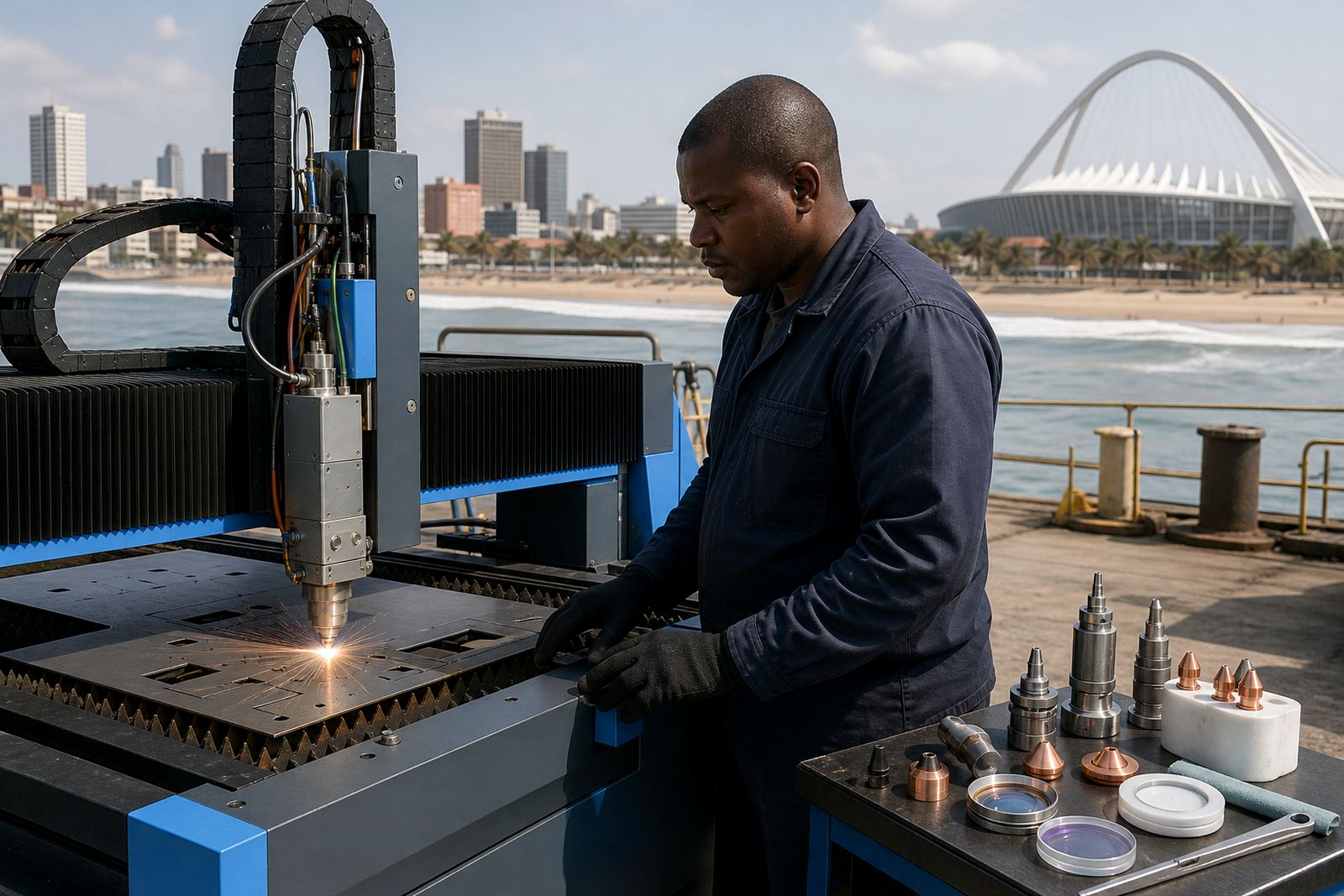
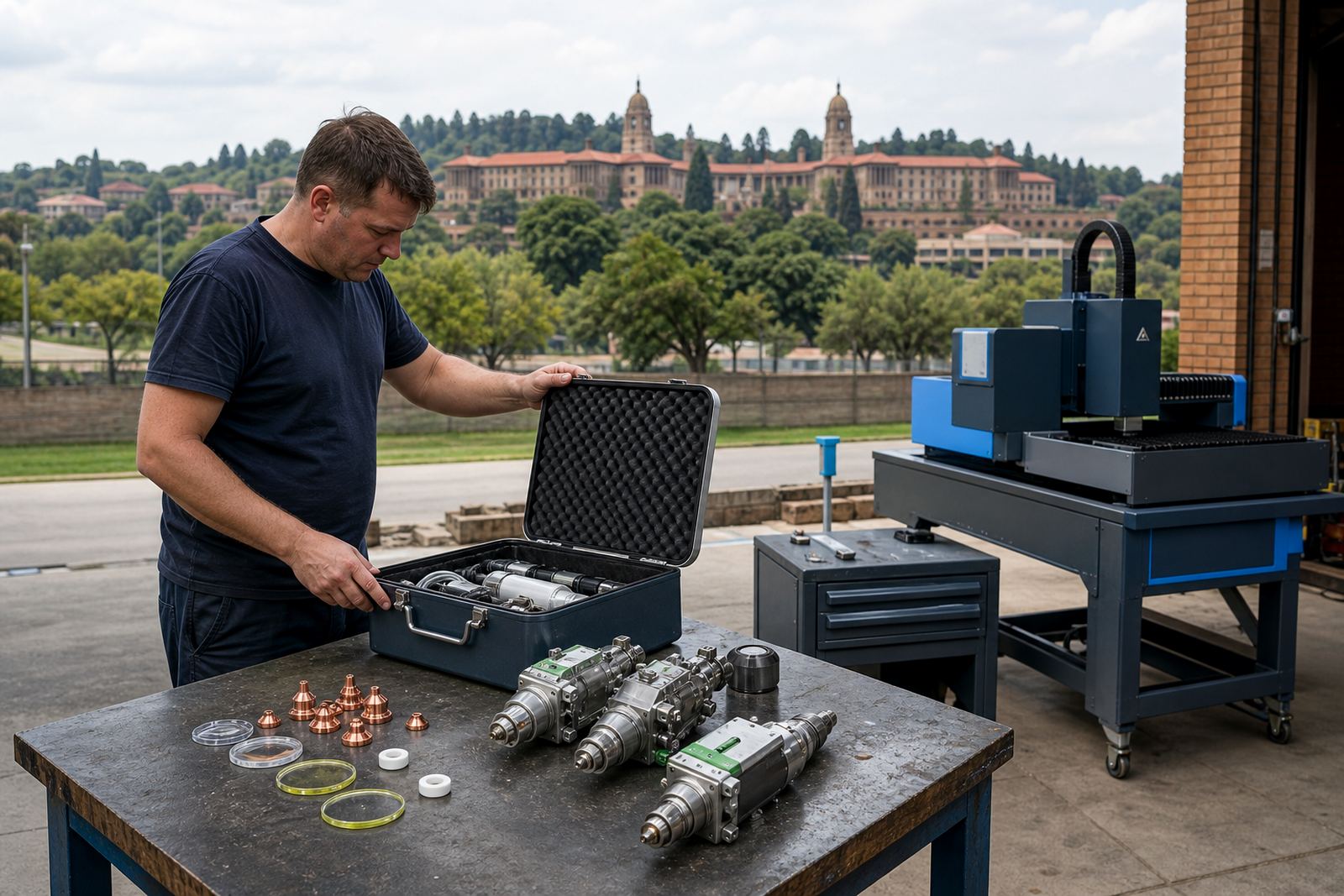
Our parts support covers fibre laser cutting heads, single and double layer nozzles, focus lenses, collimator lenses, protective windows and ceramic rings. We also deal with the practical checks around capacitive height sensing, focus setting, gas path condition and the cleaning routine that keeps a head working within its normal tolerance.
- Single layer and double layer nozzles for different plate thickness ranges
- Focus and collimator lenses for beam condition and beam size control
- Protective windows that shield the optical path from spatter and smoke
- Ceramic rings that keep the nozzle body seated and insulated
- Capacitive sensor checks, nozzle centring and focus setting review
- Gas path inspection, seal rebuilds and crash damage inspection
When a head has lost cut quality, the fault is not always one part alone. A nozzle can be worn, the lens can be dirty, the window may be marked, or the ceramic ring can be cracked enough to shift the head behaviour under load. We look at the visible wear first, then work through alignment and basic mechanical condition before parts are fitted or replaced.
Bench work that suits Pretoria production schedules
Some heads are better stripped, checked and aligned on the bench. That allows a cleaner inspection of the lens stack, nozzle seat, ceramic ring and seal surfaces, without the pressure of a machine standing open on the shop floor. Bench service is useful after a crash, after poor cut quality, or when the operator has chased settings without getting the edge back.
Bench head service is also the safer route when contamination has worked into the optical path. Fine dust, oil mist and spatter marks build up slowly, and once they sit on the protective window or lens, the cut can drift into rough edges, flare, dross and extra rework. A proper strip and clean can show whether the issue is only contamination or something deeper in the head body.
We prepare spare heads for teams that want a changeover option while the main unit is being serviced. That helps where the cutting room is carrying deadlines for local fabrication, and the machine schedule has no room for a long pause.
On-site alignment where the machine already stands
Some jobs need the machine left in place. For those, we do on-site head alignment in Pretoria and the wider Gauteng area, including the East Rand route when the schedule fits the work. On-site alignment is useful when the head needs centring, the focus check needs setting against the machine condition, or the capacitive sensing behaviour has shifted after a crash or rough maintenance.
Field work lets us check the head in its real operating position. That matters because vibration, table condition, gas delivery and the machine frame all play a part. A head may look perfect on the bench and still act up once it is back over the cutting bed, so the final check has to happen where the cut is made.
- Nozzle centring and focus setting check at machine level
- Capacitive sensor check where the height control feels unstable
- Gas path inspection for blockage, leakage or poor flow behaviour
- Crash damage inspection before further running risks the optics
- Head seal rebuild when dust or gas leakage has reached the internal joints
Pretoria workshops often run mixed shifts and short job runs, so a field visit needs to be direct and well planned. We keep the work practical and specific to the machine in front of us, not a generic pass over the problem.
Conditions that push wear faster in Pretoria
Pretoria’s dry inland air is kinder than coastal humidity, but the workshop itself still creates its own problems. Fine metal dust, heat from extended runs and careless handling around nozzle changes all shorten the life of the consumables. A dropped nozzle or a scratched protective window can upset the cut more than people expect.
Sheet-metal shops also see wear from repetitive cutting patterns. Thin sheet can expose focus drift, while thicker plate shows up gas and alignment faults more sharply. If the nozzle seat is dirty or the ceramic ring is out of shape, the cut edge can change from part to part even when the same program is running.
Cleaning routines matter here. The head should not be treated like a part that can wait until failure shows up. Lens cleaning, window inspection and nozzle condition checks are part of ordinary maintenance, not special treatment, and the people running the machine usually know when the edge has started to tell the truth.
Parts support from Spartan for Pretoria orders
Our Spartan, Kempton Park base keeps the common cutting parts close at hand for Pretoria customers. That covers nozzles, lenses, protective windows and ceramic rings, along with the service items needed for bench work and alignment checks. The goal is to suit the part to the machine’s condition, not to shift stock without reason.
For Pretoria production and jobbing shops, the useful stock is usually the practical stock: consumables that wear, parts that crack under handling, and components that take the optical path out of line when they are not right. We also handle spare head preparation for teams that want a serviced unit ready for swap-over when the main head is under inspection.
Teams in Pretoria, Centurion, Midrand and nearby industrial pockets often work with a narrow window between orders. That is why the parts side and the service side need to sit together. A nozzle can be fitted, a window can be replaced, or a head can be checked on the bench without turning the whole week upside down.
For Pretoria enquiries, send the details through our contact page form so the machine information and service need can be shared in one place. That keeps the request tied to the actual head, the actual fault and the actual job at hand.
Who usually calls us from the Pretoria side
We hear from laser-cutting rooms, fabrication shops, signage and enclosure makers, and jobbing teams that handle one-off plate work for local industry. Some are set up for steady series cutting, while others work through mixed material and short runs that punish worn consumables more quickly.
The common thread is simple. They need the cut edge back in line, the head checked properly, and the parts matched to the machine rather than guessed. That is where bench service, on-site alignment and consumable support fit together for Pretoria.
When the machine room is running well, the operator notices it in the first clean edge. When it is not, the signs show up in extra burr, erratic piercing, poor focus and repeated trimming. Pretoria shops know those signs, and they tend to act before the work pile grows.