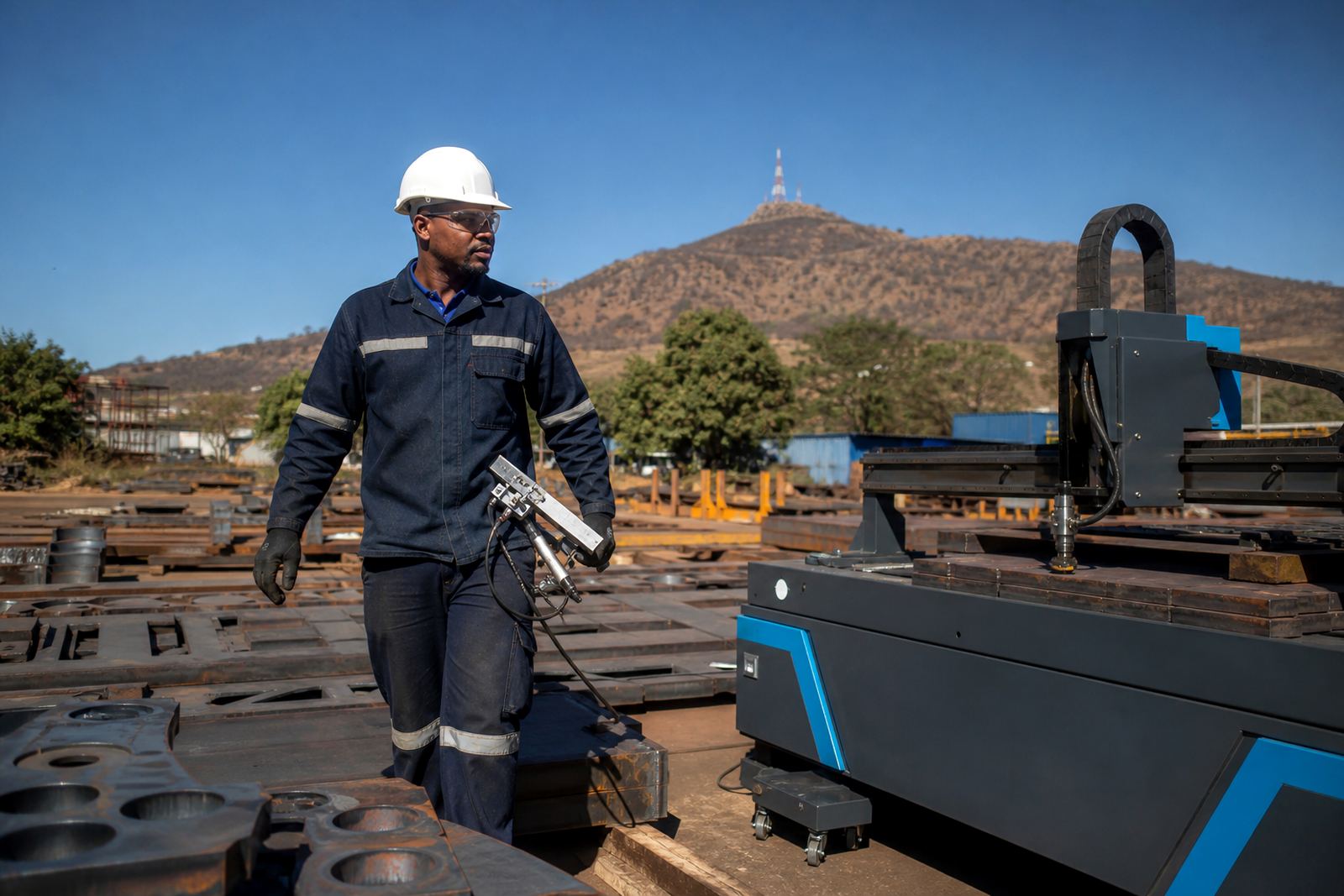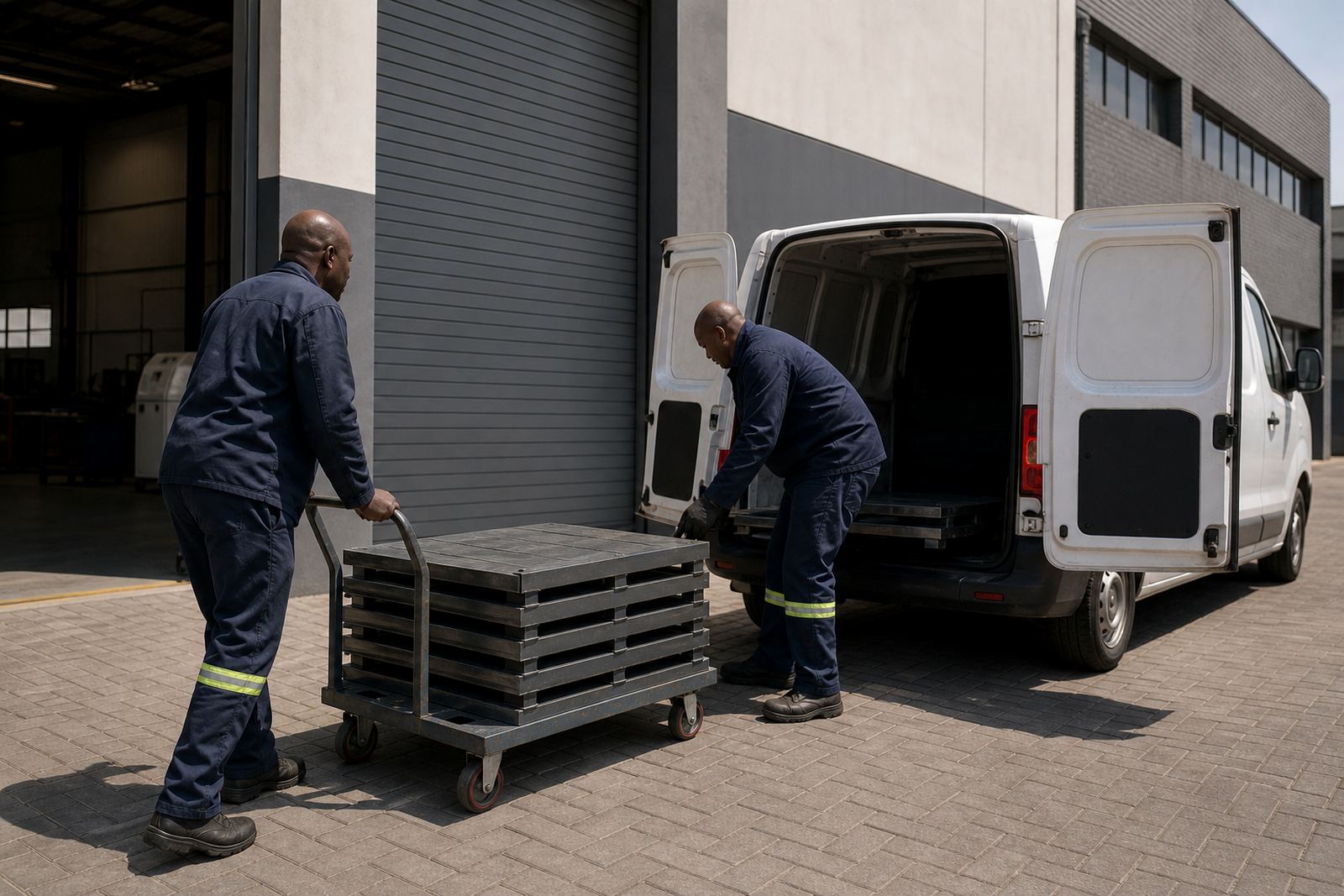
Spartan support for cutting shops across the East Rand
From our Spartan base in Kempton Park, we work with sheet-metal shops that run fibre laser cutting machines on regular production patterns. Many of the jobs we see start with a cut quality complaint, then trace back to nozzle wear, lens contamination, a tired ceramic ring or a head that is no longer sitting square on the machine arm.
The East Rand has a hard working mix of jobbing shops, batch cutting rooms and fabrication teams that need parts on hand without overbuying. Humidity near the industrial belts, fine dust from handling steel sheet and repeated pierces all affect the cutting head in small ways. We cover that reality with practical parts support and bench attention that keeps the head cleaner, aligned and easier to read during a shift.
- Fibre laser cutting heads for replacement and spare-head preparation
- Single layer and double layer nozzles for common cutting jobs
- Focus and collimator lenses, protective windows and ceramic rings
- Bench service, on-site alignment and inspection work
What usually comes through from Kempton Park shops
Nearby shops often ask for parts after a run of poor pierce quality, rising dross, more spatter or a change in the cut edge at the same power and speed. In many cases the issue is not one thing but a mix of nozzle centring, focus position, gas path condition and the state of the protective window. A careful check of those points often shows whether the head needs a simple service or a deeper rebuild.
We also see heads that have taken a light crash on the table or during sheet loading. A crash does not always mean total replacement, but it can shift the nozzle seat, damage the ceramic ring, or upset the sensing path. That is where a bench inspection helps, because the head can be stripped, cleaned and checked before it goes back into production.
- Cut edge showing flare or heavy slag
- Unstable pierce on thicker sheet
- Nozzle marks that move from job to job
- Protective window clouding from smoke or dust
- Height sensing that reads unevenly across the sheet
Bench service for fibre laser cutting heads
Bench work gives us room to inspect the head properly, clean the optical path and check the parts that are not easy to judge while the machine is live. That includes the lens seats, the ceramic ring, seals, nozzle alignment and the condition of the protective window. When needed we replace worn parts and reset the head so the machine can return to cutting with a cleaner signal path.
We keep the work practical. A bench service is often the right call when a head has recurring contamination, doubtful focus movement or a history of poor cut consistency on thin and medium plate. The job can also include a gas path inspection, head seal rebuild and a check on the capacitive sensing setup, because small leaks and poor sensing can show up as cut instability long before a full failure.
- Lens cleaning and contamination inspection
- Protective window replacement and seat check
- Head seal rebuild where wear has built up
- Capacitive sensor check and signal review
- Crash damage inspection and fault tracing
On-site alignment for machine rooms and factory floors
Some heads need attention at the machine, especially when a cutting room cannot spare the time needed to remove the full assembly. On-site alignment covers the practical work of bringing the head into proper working position, checking nozzle centring and confirming that the focus setting matches the job at hand. It suits an active floor with mixed sheet sizes and changing production queues.
Johannesburg, Pretoria, Durban, Cape Town and Rustenburg all see different working patterns, but the same head problems keep showing up in one form or another. Coastal air in Durban can bring extra corrosion risk around fittings and fasteners. Cape Town shops often work with stronger wind-blown dust from nearby industrial zones and the salt in the air. Inland rooms around Pretoria and the East Rand often deal with fine grime from handling and grinding. Each setting changes how often a head needs cleaning and how carefully the optical path should be watched.
- Nozzle centring on the machine
- Focus setting check against the cutting schedule
- Capacitive height sensing review
- Gas path inspection at the machine
- Crash damage inspection without stripping the whole line
Parts that suit routine cutting work
Many shops keep a practical mix of consumables rather than waiting for a failure. That usually means nozzles in common sizes, protective windows, ceramic rings, focus lenses and collimator lenses, plus spare heads where a line cannot stop for a full rebuild. The point is not to fill a shelf for show, but to keep the machine ready for steel, stainless steel and aluminium work that changes from day to day.
Single layer nozzles are often used where the cut process needs a direct stream and a clean pierce. Double layer nozzles are used where the gas flow needs more control. The right choice depends on material, thickness and the head setup. Focus and collimator lenses need careful handling and a clean fitting surface. A window that looks only slightly dull can still affect the beam path, so it is worth replacing before the cut quality drifts too far.
Our parts cover the small items that make a large difference when the machine runs for long stretches and the sheet stack keeps moving.
Kempton Park work conditions and day-to-day realities
Kempton Park is an industrial area where dust, vibration and regular handling all find their way into machine rooms. Shops around Spartan, Isando and the wider East Rand often run mixed batches and short production windows, so a head needs to stay predictable. In that setting, cleaning routines matter as much as a replacement part. A nozzle that is not centred, or a window left too long before replacement, can add scrap to a run before the fault becomes obvious.
We often talk through the practical side of care around the head: keep the optical area clean, inspect the ceramic ring during routine maintenance, and do not leave residue building up around the nozzle seat. Focus settings also need checking when material grades change or when a machine starts cutting a different thickness range. These are small tasks, but they keep the head easier to trust during a busy week.
- Routine cleaning of the optical and gas path areas
- Regular check on focus position when material changes
- Replacement of worn rings, seals and windows
- Extra care after a light crash or hard pierce cycle
How enquiries move through our contact page
If you are in Kempton Park or the surrounding service area, send enquiries through our contact form on the contact page. That is where shops can note the machine type, head fault, part request or alignment need, plus whether the work is needed on the bench or at the site. It helps to mention sheet thickness, the material type and any cut change that started the problem, because those details often point toward the right inspection first.
The team around the job includes Marius Johannes van der Merwe, Thandiwe Rapetswa, Jaco Essop, Lerato Tau, Anele Daniels and Willem Pretorius. Each one handles a different part of the work, from parts support to field alignment and technical checks. That mix suits a region where a cutter can be running smoothly in the morning and asking for a new nozzle, a lens clean or a head alignment before the day is out.