
Durban workshops and the cutting jobs that keep moving
In Durban, sheet-metal shops often cut mixed batches for canopies, tanks, guards, brackets and general fabrication. Coastal air puts extra pressure on cutting heads, nozzles and windows, especially where dust from loading bays and salt in the atmosphere settle onto the optics. That is where a disciplined service routine matters more than guesswork.
We support Durban and nearby industrial areas from Spartan, Kempton Park with parts supply and practical head work for fibre laser machines. The usual requests involve worn nozzles, drift in focus setting, dirty protective windows, ceramic ring damage and heads that need careful alignment after a crash or an unstable cut. Those faults can look small at first, then the cut edge starts to show it.
- Fibre laser cutting heads for service and spare preparation
- Single layer and double layer nozzles for routine cutting work
- Focus and collimator lenses for optical maintenance
- Protective windows, ceramic rings and sealing parts
What coastal humidity does to a head and lens set
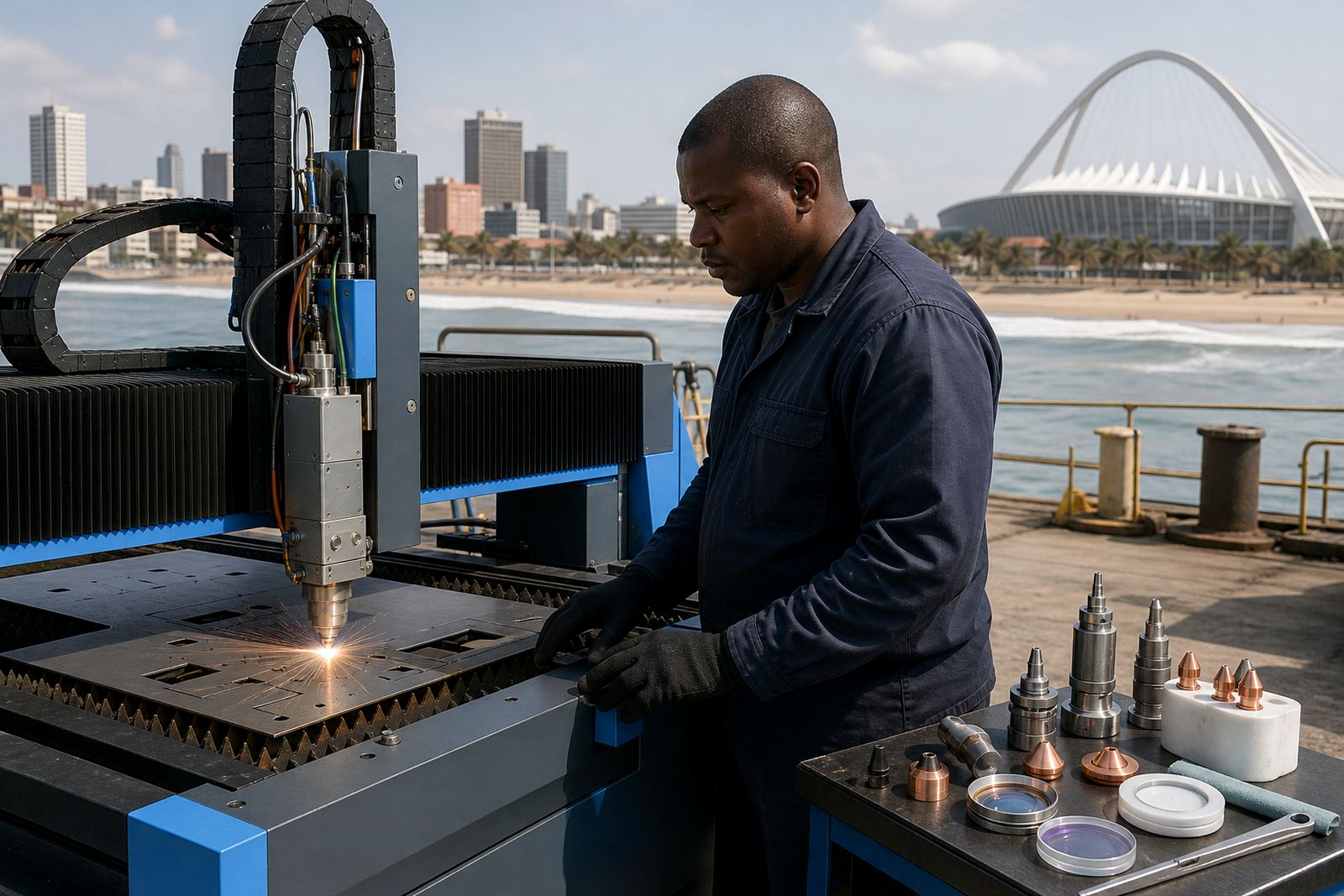
Durban humidity can leave fine film on a protective window faster than many inland shops expect. When that film heats up during cutting, the beam can scatter, the kerf widens and the operator ends up chasing settings that were fine the day before. A clean window and correct nozzle condition do more than people sometimes think.
We handle the parts and checks that sit closest to the cut. That includes lens cleaning, protective window replacement, ceramic ring replacement and a capacitive sensor check where the machine uses height sensing to keep the standoff steady. If the focus is not sitting where it should, the edge shows it through dross, taper or a rough pierce.
- Lens cleaning for focus and collimator assemblies
- Capacitive height sensing checks for stable cut spacing
- Gas path inspection where flow or pressure seems uneven
- Head seal rebuild work after contamination or wear
Bench service for Durban parts that need proper attention
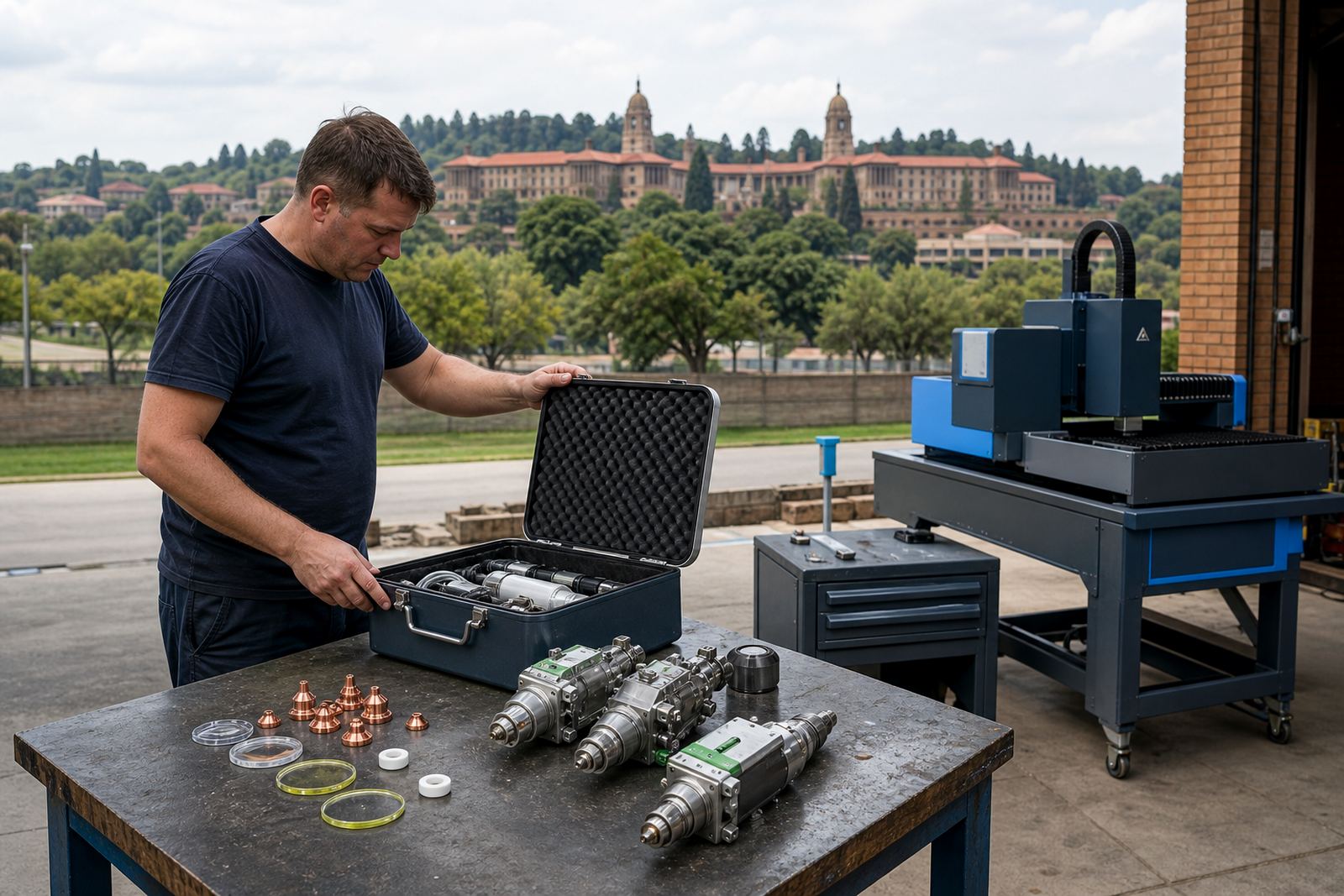
Some heads can stay in the workshop and be serviced on the bench, which suits Durban customers who want optics checked under controlled conditions. Bench work lets us inspect the head body, lenses, ceramic ring seat, seals and nozzle interface without the disruption of a machine downtime scramble. It is a cleaner way to deal with wear before it turns into scrap.
We keep the work practical. A head that has taken a light knock may only need nozzle centring, focus setting check and a new window. A harder crash can mean deeper inspection, replacement of damaged parts and preparation of a spare head so the machine is not left exposed when production pressure rises.
- Nozzle centring for single layer and double layer nozzle types
- Focus setting check for cut quality and pierce stability
- Crash damage inspection on the head body and optics path
- Spare head preparation for busy cutting programmes
On-site alignment for Durban floors and long production runs
When a machine is not cutting cleanly and the head needs to stay in place, on-site alignment is often the better route. Durban shops with packed floors, long sheet runs and fixed machine layouts usually want the head sorted where the machine stands. We travel with the tools needed for alignment, inspection and calibration work on the cutting side of the machine.
That can include checking nozzle centring, verifying the focus setting, reviewing the capacitive sensor response and confirming the gas path. Where a machine has a recurring cut issue, it often takes a full look at the head condition and the installation around it, not just one part swapped in and out. Coastal dust and daily cleaning habits both play a role here.
- On-site head alignment for Durban and surrounding industrial areas
- Field checks for nozzle, lens and sensor behaviour
- Inspection after impact, misfeed or poor cut edge changes
- Support for machine operators and maintenance teams
Durban stock lines that match the work
Our parts coverage for Durban includes the consumables and optical items that sheet-metal workshops replace most often. The point is to keep the machine cutting with the correct nozzle size, clear optics and a head that sits square to the work. If the consumable path is off, the cut quality usually tells the story before anything else does.
We cover the common service items used on fibre laser cutting heads and related head assemblies. The stock and service scope includes the items below, with care taken over fitment, handling and cleanliness when the parts are prepared for dispatch or fitted during service work.
- Cutting heads and spare head preparation
- Nozzles, including single layer and double layer types
- Focus lenses and collimator lenses
- Protective windows for beam protection
- Ceramic rings and seal parts
- Capacitive sensing related checks and consumables
Durban, the coast and the way shops keep production steady
Durban, Umlazi industrial edges, Pinetown, Hammarsdale and the wider coastal belt all bring their own mix of moisture, dust and production pressure. Some shops run light gauge work, others cut thicker plate for fabrication and repair. In both cases, a head that is clean, centred and properly set makes the job less erratic.
For Durban customers, the useful routine is plain: inspect the window, check the nozzle, keep the lens clean, confirm the focus and watch the gas path. If a head has taken a knock, the damage may not be obvious until the cut starts wandering. That is where a careful inspection and measured service beats a rushed swap.
Enquiries for Durban support go through our contact page form, and we use the details to line up the right parts and service work for the machine in question.