Cape Town cutting rooms that need steadier head setup
In Cape Town, cutting rooms often run mixed work: stainless covers for food equipment, signage blanks, brackets, covers and jobbing parts that move through a busy floor. Those jobs put pressure on nozzle condition, lens cleanliness and head alignment, because a small shift at the head shows up as rough edges, dross or a cut that starts clean and then drifts.
Our Cape Town service area covers industrial pockets from Paarden Eiland and Montague Gardens to Epping, Killarney Gardens and the wider metro. We also work with East Rand customers who move stock through Cape Town projects, and with shops that need spare parts set aside before a run starts. Coastal humidity matters here, so storage of windows, rings and lenses needs a tidy shelf, dry wrapping and careful handling.
Head service for fibre machines, on the bench or on site
Some cutting heads need bench work, others need alignment on the machine where the fault shows up under real cutting conditions. Bench service suits heads with worn seals, contamination inside the optics path or a body that has taken a knock. On-site alignment suits jobs where the beam is not landing where it should, or the focus point has wandered after a crash, a lens change or a rough maintenance cycle.
- Bench Head Service for strip-down, inspection and rebuild work
- On-site Head Alignment where the machine and head must be checked together
- Focus Setting Check when cut quality changes across thicknesses
- Nozzle Centring for cleaner pierce and cut starts
- Head Seal Rebuild and Crash Damage Inspection where impact marks are present
We work with fibre laser cutting heads used on sheet metal jobs, and we handle the details that keep the beam path tidy: centring, focus position, sealing surfaces and the condition of the gas path. If the head has been run hard on thin material or thick plate, the signs usually show in the edges first and then in the scrap bin.
Parts Cape Town shops ask for most often
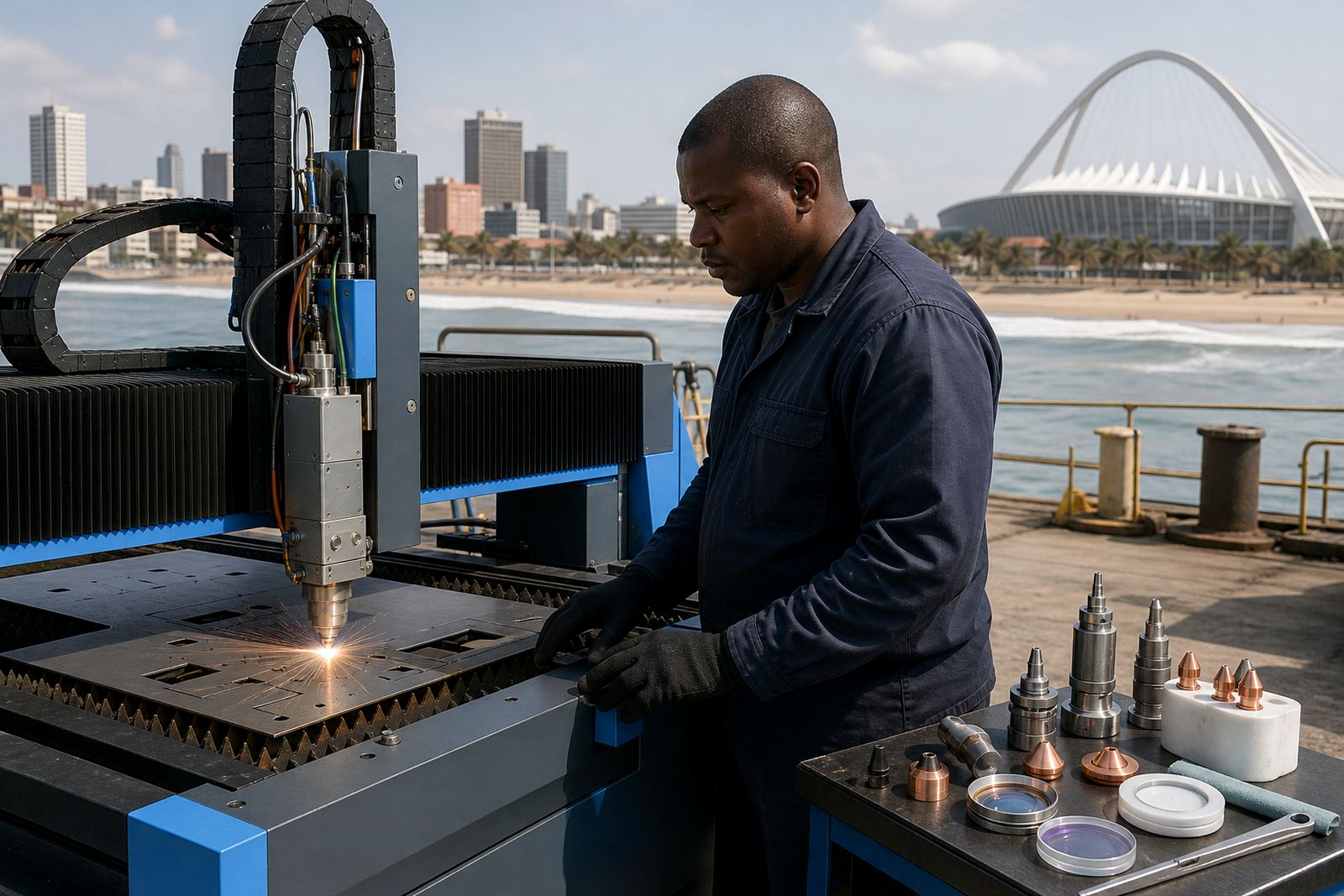
Many Cape Town shops keep a small parts shelf because downtime on a cutting line is costly, especially when customer jobs are stacked for dispatch. We cover nozzles, focus lenses, collimator lenses, protective windows and ceramic rings for common fibre head setups. Single layer and double layer nozzles are both part of daily work, depending on material thickness, assist gas and cut detail.
- Nozzles in single layer and double layer forms for general sheet work
- Focus and collimator lenses for beam control and focus stability
- Protective windows to shield the internal optics path from spatter and dust
- Ceramic rings for head mounting and electrical separation points
- Spare head preparation for shops that want a ready unit on hand
Lens cleaning is part of the same picture, but it has to be done with care. A good cleaning routine keeps the surface clear without scratching the optic or pushing contamination deeper into the head. When a window is marked, cloudy or heat stained, it is usually better to replace it than to push it through another shift.
How Cape Town conditions affect cutting quality
Salt in the air, damp mornings and storage rooms that are not fully sealed can all change how optical parts behave over time. Cape Town shops that cut stainless for kitchen work or decorative panels often notice that a clean head setup still needs regular checking if the machine stands close to a loading bay or an open door. Dust, fine metal particles and moisture build up around the nozzle area and the ceramic ring faster than many teams expect.
Capacitive height sensing also needs attention where cutting tables run hard and the sheet surface is not always flat. If the sensor reads badly, the head may sit too high or too low and the cut will show that. We check the sensor path, the nozzle condition and the head seal, then look at the focus setting against the job type. That keeps the head working the way the sheet needs, not the way the fault wants.
Turnaround planning for Cape Town jobs and spares
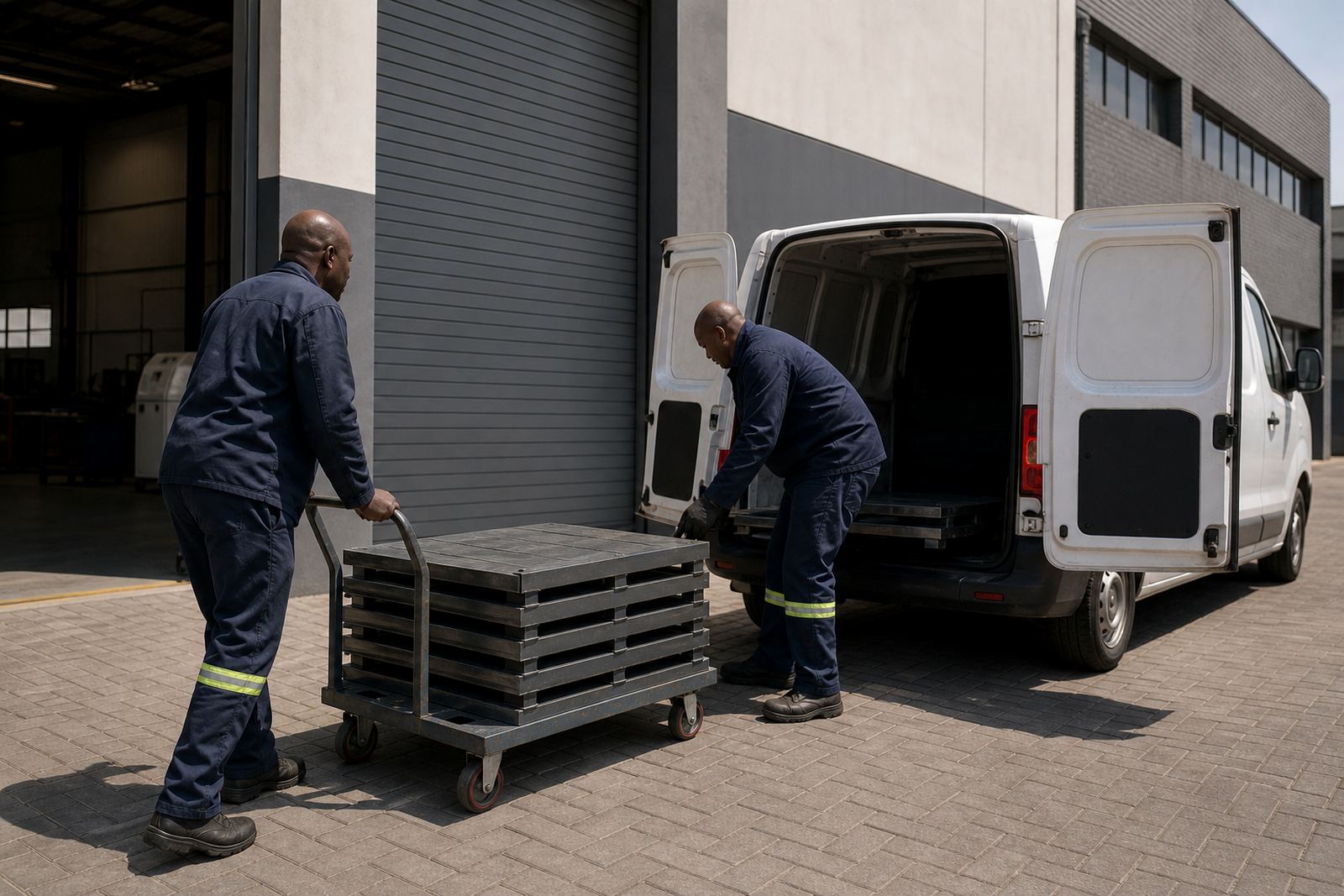
Raytool handles Cape Town work from Spartan, Kempton Park, with parts prepared for dispatch and service work planned around the machine fault, the material on hand and the urgency of the job. Some customers send heads and parts to the bench for inspection, others need on-site alignment at the plant because the machine cannot be taken out of production for long. Either way, the practical issue is the same: the head must cut cleanly and stay aligned through the batch.
We cover Johannesburg, Pretoria, Durban, Cape Town and Rustenburg from the same technical base, which helps when a shop in the Western Cape wants matching parts for more than one machine. If a nozzle set, lens pair or ceramic ring spec needs to be matched to the existing head, we work from the current setup rather than forcing a guess. That matters on fine detail work, on thicker stainless and on mixed jobs where the pierce and cut path must stay controlled.
Talk to the Spartan team about Cape Town support
Our Cape Town branch service is handled from Spartan by a small team that deals with parts, service and alignment every day. Marius Johannes van der Merwe oversees the operation, while the bench and field work is handled by technicians and support staff who know the sequence of a fibre head strip, rebuild and setup check. That includes the nozzle centring step, the lens inspection, the ceramic ring check and the gas path inspection that often finds the real fault.
For Cape Town enquiries, send the machine make, the head fault and the parts required through the contact form. A clear note helps avoid the wrong lens, the wrong nozzle style or a head that needs bench work rather than an on-site call. If the job involves stainless, signage or general sheet work, add the material thickness as well, as focus and nozzle choice shift with the cut.